

Kirjahaku
Etsi kirjoja tekijän nimen, kirjan nimen tai ISBN:n perusteella.
1000 tulosta hakusanalla Frederick C Suppe
Catholic Theology
Frederick C. Bauerschmidt; James J. Buckley
Wiley-Blackwell (an imprint of John Wiley Sons Ltd)
2016
sidottu
Introduction to Catholic Theology is an accessible but in-depth examination of the ways in which Catholic theology is rooted in and informs Catholic practice. Weaves together discussion of the Bible, historical texts, reflections by important theologians, and contemporary debates for a nuanced look at belief and practice within the Catholic faithProvides an overview of all major theological areas, including scriptural, historical, philosophical, systematic, liturgical, and moral theologyAppropriate for students at all levels, assuming no prior knowledge yet providing enough insight and substance to interest those more familiar with the topicWritten in a dynamic, engaging style by two professors with more than 50 years of classroom experience between them

Introduction to Catholic Theology is an accessible but in-depth examination of the ways in which Catholic theology is rooted in and informs Catholic practice. Weaves together discussion of the Bible, historical texts, reflections by important theologians, and contemporary debates for a nuanced look at belief and practice within the Catholic faithProvides an overview of all major theological areas, including scriptural, historical, philosophical, systematic, liturgical, and moral theologyAppropriate for students at all levels, assuming no prior knowledge yet providing enough insight and substance to interest those more familiar with the topicWritten in a dynamic, engaging style by two professors with more than 50 years of classroom experience between them

University of Illinois Studies in the Social Sciences. Vol. IX, No. 3, September, 1920. English Government Finance, 1485-1558
Frederick C Dietz
Trieste Publishing
2018
nidottu

State of Michigan. Game and Fish Laws. and Laws Relative to Destruction of Noxious Animals. Revision of 1914
Frederick C Martindale
Trieste Publishing
2018
nidottu

Revision of 1909. State of Michigan. General School Laws
Frederick C Martindale
Trieste Publishing
2018
nidottu
The Early Romantics met resistance from artists and academics alike in part because they defied the conventional wisdom that philosophy and the arts must be kept separate. Indeed, as the literary component of Romanticism has been studied and celebrated in recent years, its philosophical aspect has receded from view. This book, by one of the most respected scholars of the Romantic era, offers an explanation of Romanticism that not only restores but enhances understanding of the movement's origins, development, aims, and accomplishments--and of its continuing relevance.Poetry is in fact the general ideal of the Romantics, Frederick Beiser tells us, but only if poetry is understood not just narrowly as poems but more broadly as things made by humans. Seen in this way, poetry becomes a revolutionary ideal that demanded--and still demands--that we transform not only literature and criticism but all the arts and sciences, that we break down the barriers between art and life, so that the world itself becomes "romanticized." Romanticism, in the view Beiser opens to us, does not conform to the contemporary division of labor in our universities and colleges; it requires a multifaceted approach of just the sort outlined in this book.
One of the very few accounts in English of German idealism, this ambitious work advances and revises our understanding of both the history and the thought of the classical period of German philosophy. As he traces the structure and evolution of idealism as a doctrine, Frederick Beiser exposes a strong objective, or realist, strain running from Kant to Hegel and identifies the crucial role of the early romantics—Hölderlin, Schlegel, and Novalis—as the founders of absolute idealism.

The Fate of Reason is the first general history devoted to the period between Kant and Fichte, one of the most revolutionary and fertile in modern philosophy. The philosophers of this time broke with the two central tenets of the modern Cartesian tradition: the authority of reason and the primacy of epistemology. They also witnessed the decline of the Aufklärung, the completion of Kant’s philosophy, and the beginnings of post-Kantian idealism.Thanks to Frederick C. Beiser we can newly appreciate the influence of Kant’s critics on the development of his philosophy. Beiser brings the controversies, and the personalities who engaged in them, to life and tells a story that has uncanny parallels with the debates of the present.
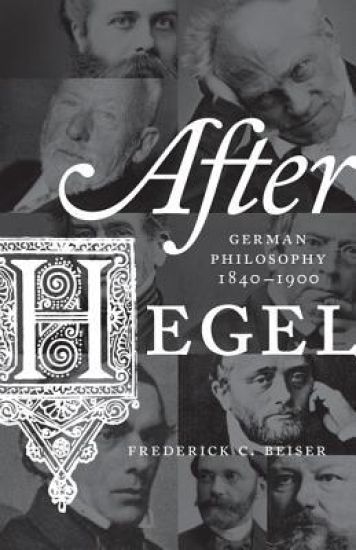
Histories of German philosophy in the nineteenth century typically focus on its first half--when Hegel, idealism, and Romanticism dominated. By contrast, the remainder of the century, after Hegel's death, has been relatively neglected because it has been seen as a period of stagnation and decline. But Frederick Beiser argues that the second half of the century was in fact one of the most revolutionary periods in modern philosophy because the nature of philosophy itself was up for grabs and the very absence of certainty led to creativity and the start of a new era. In this innovative concise history of German philosophy from 1840 to 1900, Beiser focuses not on themes or individual thinkers but rather on the period's five great debates: the identity crisis of philosophy, the materialism controversy, the methods and limits of history, the pessimism controversy, and the Ignorabimusstreit. Schopenhauer and Wilhelm Dilthey play important roles in these controversies but so do many neglected figures, including Ludwig Buchner, Eugen Duhring, Eduard von Hartmann, Julius Fraunstaedt, Hermann Lotze, Adolf Trendelenburg, and two women, Agnes Taubert and Olga Pluemacher, who have been completely forgotten in histories of philosophy. The result is a wide-ranging, original, and surprising new account of German philosophy in the critical period between Hegel and the twentieth century.

The Sovereignty of Reason is a survey of the rule of faith controversy in seventeenth-century England. It examines the arguments by which reason eventually became the sovereign standard of truth in religion and politics, and how it triumphed over its rivals: Scripture, inspiration, and apostolic tradition. Frederick Beiser argues that the main threat to the authority of reason in seventeenth-century England came not only from dissident groups but chiefly from the Protestant theology of the Church of England. The triumph of reason was the result of a new theology rather than the development of natural philosophy, which upheld the orthodox Protestant dualism between the heavenly and earthly. Rationalism arose from a break with the traditional Protestant answers to problems of salvation, ecclesiastical polity, and the true faith. Although the early English rationalists were not able to defend all their claims on behalf of reason, they developed a moral and pragmatic defense of reason that is still of interest today. Beiser's book is a detailed examination of some neglected figures of early modern philosophy, who were crucial in the development of modern rationalism. There are chapters devoted to Richard Hooker, the Great Tew Circle, the Cambridge Platonists, the early ethical rationalists, and the free-thinkers John Toland and Anthony Collins. Originally published in 1996. The Princeton Legacy Library uses the latest print-on-demand technology to again make available previously out-of-print books from the distinguished backlist of Princeton University Press. These editions preserve the original texts of these important books while presenting them in durable paperback and hardcover editions. The goal of the Princeton Legacy Library is to vastly increase access to the rich scholarly heritage found in the thousands of books published by Princeton University Press since its founding in 1905.

The Sovereignty of Reason is a survey of the rule of faith controversy in seventeenth-century England. It examines the arguments by which reason eventually became the sovereign standard of truth in religion and politics, and how it triumphed over its rivals: Scripture, inspiration, and apostolic tradition. Frederick Beiser argues that the main threat to the authority of reason in seventeenth-century England came not only from dissident groups but chiefly from the Protestant theology of the Church of England. The triumph of reason was the result of a new theology rather than the development of natural philosophy, which upheld the orthodox Protestant dualism between the heavenly and earthly. Rationalism arose from a break with the traditional Protestant answers to problems of salvation, ecclesiastical polity, and the true faith. Although the early English rationalists were not able to defend all their claims on behalf of reason, they developed a moral and pragmatic defense of reason that is still of interest today. Beiser's book is a detailed examination of some neglected figures of early modern philosophy, who were crucial in the development of modern rationalism. There are chapters devoted to Richard Hooker, the Great Tew Circle, the Cambridge Platonists, the early ethical rationalists, and the free-thinkers John Toland and Anthony Collins. Originally published in 1996. The Princeton Legacy Library uses the latest print-on-demand technology to again make available previously out-of-print books from the distinguished backlist of Princeton University Press. These editions preserve the original texts of these important books while presenting them in durable paperback and hardcover editions. The goal of the Princeton Legacy Library is to vastly increase access to the rich scholarly heritage found in the thousands of books published by Princeton University Press since its founding in 1905.

China's Road to Disaster: Mao, Central Politicians and Provincial Leaders in the Great Leap Forward, 1955-59
Frederick C Teiwes; Warren Sun
Routledge
1998
sidottu
This text analyzes the dramatic shifts in Chinese Communist Party economic policy during the mid to late 1950s which eventually resulted in 30 to 45 million deaths through starvation as a result of the failed policies of the Great Leap Forward. Teiwes examines both the substance and the process of economic policy-making in that period, explaining how the rational policies of opposing rash advance in 1956-57 gave way to the fanciful policies of the Great Leap, and assessing responsibility for the failure to adjust adequately those policies even as signs of disaster began to reach higher level decision makers. In telling this story, Teiwes focuses on key participants in the process throughout both "rational" and "utopian" phases - Mao, other top leaders, central economic bureaucracies and local party leaders. The analysis rejects both of the existing influential explanations in the field, the long dominant power politics approach focusing on alleged clashes within the top leadership, and David Bachman's recent institutional interpretation of the origins of the Great Leap. Instead, this study presents a detailed picture of an exceptionally Mao-dominated process, where no other actor challenged his position, where the boldest step any actor took was to try and influence his preferences, and where the system in effect became paralyzed while Mao kept changing signals as disaster unfolded.

China's Road to Disaster: Mao, Central Politicians and Provincial Leaders in the Great Leap Forward, 1955-59
Frederick C Teiwes; Warren Sun
Routledge
1998
nidottu
This text analyzes the dramatic shifts in Chinese Communist Party economic policy during the mid to late 1950s which eventually resulted in 30 to 45 million deaths through starvation as a result of the failed policies of the Great Leap Forward. Teiwes examines both the substance and the process of economic policy-making in that period, explaining how the rational policies of opposing rash advance in 1956-57 gave way to the fanciful policies of the Great Leap, and assessing responsibility for the failure to adjust adequately those policies even as signs of disaster began to reach higher level decision makers. In telling this story, Teiwes focuses on key participants in the process throughout both "rational" and "utopian" phases - Mao, other top leaders, central economic bureaucracies and local party leaders. The analysis rejects both of the existing influential explanations in the field, the long dominant power politics approach focusing on alleged clashes within the top leadership, and David Bachman's recent institutional interpretation of the origins of the Great Leap. Instead, this study presents a detailed picture of an exceptionally Mao-dominated process, where no other actor challenged his position, where the boldest step any actor took was to try and influence his preferences, and where the system in effect became paralyzed while Mao kept changing signals as disaster unfolded.

The End of the Maoist Era: Chinese Politics During the Twilight of the Cultural Revolution, 1972-1976
Frederick C Teiwes; Warren Sun
Routledge
2007
sidottu
This book launches an ambitious reexamination of the elite politics behind one of the most remarkable transformations in the late twentieth century. As the first part of a new interpretation of the evolution of Chinese politics during the years 1972-82, it provides a detailed study of the end of the Maoist era, demonstrating Mao's continuing dominance even as his ability to control events ebbed away. The tensions within the "gang of four," the different treatment of Zhou Enlai and Deng Xiaoping, and the largely unexamined role of younger radicals are analyzed to reveal a view of the dynamic of elite politics that is at odds with accepted scholarship. The authors draw upon newly available documentary sources and extensive interviews with Chinese participants and historians to develop their challenging interpretation of one of the most poorly understood periods in the history of the People's Republic of China.
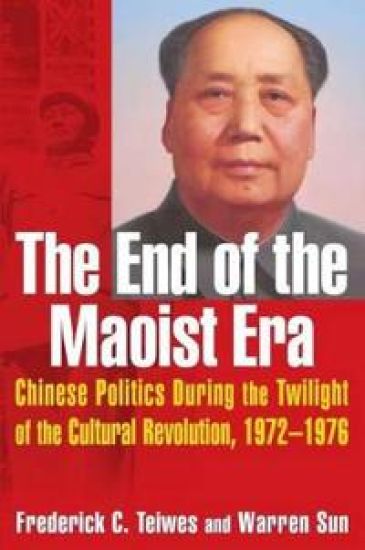
The End of the Maoist Era: Chinese Politics During the Twilight of the Cultural Revolution, 1972-1976
Frederick C Teiwes; Warren Sun
Routledge
2008
nidottu
This book launches an ambitious reexamination of the elite politics behind one of the most remarkable transformations in the late twentieth century. As the first part of a new interpretation of the evolution of Chinese politics during the years 1972-82, it provides a detailed study of the end of the Maoist era, demonstrating Mao's continuing dominance even as his ability to control events ebbed away. The tensions within the "gang of four," the different treatment of Zhou Enlai and Deng Xiaoping, and the largely unexamined role of younger radicals are analyzed to reveal a view of the dynamic of elite politics that is at odds with accepted scholarship. The authors draw upon newly available documentary sources and extensive interviews with Chinese participants and historians to develop their challenging interpretation of one of the most poorly understood periods in the history of the People's Republic of China.
Shakespeare's Tercentenary Commemoration 1616-1916
Frederick C. Wellstood; Sidney Lee
Kessinger Pub
2003
pokkari
Luther's Works, Volume 36
Frederick C. Ahrens; Martin Luther; Abdel Ross Wentz
Augsburg Fortress
1959
sidottu
Six major movements of the resultant symphony are included in this volume, all dealing with the doctrine of the Lord's Supper. In addition to providing observations on vows, sin, celibacy, sainthood, and spirits, Luther expresses his views concerning authority in the church, the place of Scripture, and the merits and limitations of a "Lutheran" confession.

A unique history of Nebraska is presented in these pages, drawing on fifty-eight short topical chapters and a rich gallery of illustrations. Professor Frederick C. Luebke's lifelong commitment to the study of his state informs the book in every detail, as does his concern for clear and readable narrative. The treasure trove of images, many never published before, cast new light on many aspects of Nebraska's history. These include the culture of the state's Native peoples and their lives today, the building of the transcontinental railroad, the hardship endured by European immigrants, and the contributions of women, African Americans, Hispanic Americans, and Asian Americans to the state. This is a book that every Nebraskan will want to own, read, and enjoy. This second edition includes updated chapters on the current social, economic, and political climate of Nebraska and some new illustrations.