Kirjahaku
Etsi kirjoja tekijän nimen, kirjan nimen tai ISBN:n perusteella.
1000 tulosta hakusanalla Gabrielle Bluestone

Gabrielle's Big RaceGabrielle was just turning two years old and loved going on adventures with her parents.She watched with excitement people on the beach running, some slowly, some at a medium pace, and some running very fast. Gabrielle's parents would run with her on the beach and to their surprise, Gabrielle was very fast.A rewarding adventure was going to the park and chasing squirrels. Although she would run very fast, Gabrielle could never catch them.Gabrielle's parents were so impressed with Gabrielle's interest in running and her running ability, they registered her in a children's charity run to raise funds for the Children's Hospital.Gabrielle practiced running with her mother and father every Saturday morning. This was her happy time, running, running, and running.The day of the big race Gabrielle was ready for the quarter-mile run, and she began her run.

Gabrielle Destrees (1778)
Louis Edme Billardon De Sauvigny; Charles Robustel
KESSINGER PUBLISHING, LLC
2009
pokkari


Gabrielle D'Estrees Et La Politique De Henri IV (1859)
Baptiste Capefigue
KESSINGER PUBLISHING, LLC
2010
pokkari

![Gabrielle Vaughan. [A Novel.]](/covers/9781240880980.jpg)
![Gabrielle, a Tale of the Swiss Mountains. [In Verse, with Other Short Poems.]](/covers/9781241061739.jpg)
Gabrielle, a Tale of the Swiss Mountains. [In Verse, with Other Short Poems.]
Cyrus Redding
British Library, Historical Print Editions
2011
pokkari


Gabrielle Transgressor (1906)
KESSINGER PUBLISHING, LLC
2008
pokkari



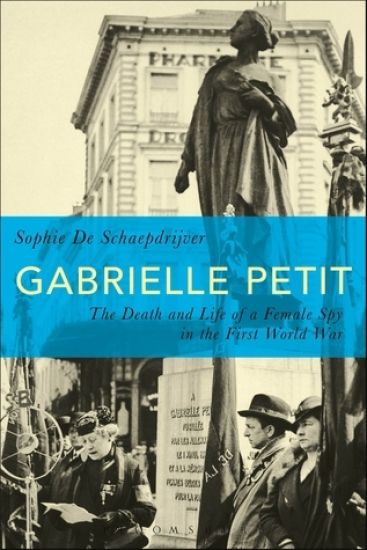
In central Brussels stands a statue of a young woman. Built in 1923, it is the first monument to a working-class woman in European history. Her name was Gabrielle Petit. History has forgotten Petit, an ambitious and patriotic Belgian, executed by firing squad in 1916 for her role as an intelligence agent for the British Army. After the First World War she was celebrated as an example of stern endeavour, but a hundred years later her memory has faded. In the first part of this historical biography Sophie De Schaepdrijver uses Petit's life to explore gender, class and heroism in the context of occupied Europe. Petit's experiences reveal the reality of civilian engagement under military occupation and the emergence of modern espionage. The second part of the book focuses on the legacy and cultural memory of Petit and the First World War. By analysing Petit's representation in ceremony, discourse and popular culture De Schaepdrijver expands our understanding of remembrance across the 20th century.

In central Brussels stands a statue of a young woman. Built in 1923, it is the first monument to a working-class woman in European history. Her name was Gabrielle Petit. History has forgotten Petit, an ambitious and patriotic Belgian, executed by firing squad in 1916 for her role as an intelligence agent for the British Army. After the First World War she was celebrated as an example of stern endeavour, but a hundred years later her memory has faded. In the first part of this historical biography Sophie De Schaepdrijver uses Petit's life to explore gender, class and heroism in the context of occupied Europe. Petit's experiences reveal the reality of civilian engagement under military occupation and the emergence of modern espionage. The second part of the book focuses on the legacy and cultural memory of Petit and the First World War. By analysing Petit's representation in ceremony, discourse and popular culture De Schaepdrijver expands our understanding of remembrance across the 20th century.