Wilson's Creek, Pea Ridge, and Prairie Grove were three of the most important battles fought west of the Mississippi River during the Civil War. They influenced the course of the first half of the war in that region by shaping Union military efforts while significantly contributing to Confederate defeat. Wilson's Creek, Pea Ridge, and Prairie Grove, the first book to provide a detailed guide to these battlefields, takes the visitor step-by-step through the major sites of each engagement. With numerous maps and illustrations that enhance the authors' descriptions of what happened at each stop, the book also includes analytical accounts explaining tactical problems associated with each battle as well as vignettes evoking for readers the personal experience of those who fought there. An indispensable companion for the battlefield visitor, this guide offers not only touring information and driving tours of sites associated with the campaigns that led to the battles, but also a brief history of each battle and an overview of the larger strategy and tactics of the military action in which these battles figured.
This work has been selected by scholars as being culturally important and is part of the knowledge base of civilization as we know it.This work is in the public domain in the United States of America, and possibly other nations. Within the United States, you may freely copy and distribute this work, as no entity (individual or corporate) has a copyright on the body of the work.Scholars believe, and we concur, that this work is important enough to be preserved, reproduced, and made generally available to the public. To ensure a quality reading experience, this work has been proofread and republished using a format that seamlessly blends the original graphical elements with text in an easy-to-read typeface.We appreciate your support of the preservation process, and thank you for being an important part of keeping this knowledge alive and relevant.
This book has been considered by academicians and scholars of great significance and value to literature. This forms a part of the knowledge base for future generations. We have represented this book in the same form as it was first published. Hence any marks seen are left intentionally to preserve its true nature.
William Dean Howells ( March 1, 1837 - May 11, 1920) was an American realist novelist, literary critic, and playwright. Nicknamed "The Dean of American Letters", he was particularly known for his tenure as editor of The Atlantic Monthly as well as his own prolific writings, including the Christmas story "Christmas Every Day", and the novels The Rise of Silas Lapham and A Traveler from Altruria. Early life and family William Dean Howells was born on March 1, 1837, in Martinsville, Ohio (now known as Martins Ferry, Ohio), to William Cooper, and Mary Dean, Howells.He was the second of eight children. His father was a newspaper editor and printer, who moved frequently around Ohio. In 1840, the family settled in Hamilton, Ohio, where William Cooper Howells oversaw a Whig newspaper and followed Swedenborgianism;their nine years there marked the longest they would stay in one place.Though the family had to live frugally, the young Howells was encouraged by his parents in his literary interests.Howells began to help his father with typesetting and printing work at an early age, a job known at the time as a printer's devil. In 1852, his father arranged to have one of Howells' poems published in the Ohio State Journal without telling him. Early career In 1856, Howells was elected as a clerk in the State House of Representatives. In 1858 he began to work at the Ohio State Journal where he wrote poetry, short stories, and also translated pieces from French, Spanish, and German. He avidly studied German and other languages and was greatly interested in Heinrich Heine. In 1860 he visited Boston and met with other American writers James Thomas Fields, James Russell Lowell, Oliver Wendell Holmes, Sr., Nathaniel Hawthorne, Henry David Thoreau, and Ralph Waldo Emerson, and became a personal friend to many, including Henry Adams, William James, Henry James and Oliver Wendell Holmes, Jr.Said to have been rewarded for an official biographyof Abraham Lincoln used during the election of 1860, he gained a consulship in Venice. On Christmas Eve 1862, at the American embassy in Paris, he married Elinor Mead, a sister of the sculptor Larkin Goldsmith Mead and the architect William Rutherford Mead, the Mead of McKim, Mead, and White. Among their children was the future architect John Mead Howells.. Edmund Henry Garrett (1853-1929) was an American illustrator, bookplate-maker, and author-as well as a highly respected painter-renowned for his illustrations of the legends of King Arthur.Garrett was born in Albany, New York on October 19, 1853. While little is known of his initial art education, Garrett rose through the ranks to become a distinguished member of the Boston Art Club and the Copley Society of Art, and was an acquaintance and colleague of renowned impressionist artist Childe Hassam. He studied at the Acad mie Julian in Paris under Gustave Boulanger, Jules Lefebvre, John Paul Laurens, and Hector Leroux. After residing in Paris for approximately five years, he returned to America to establish a successful studio in Boston.His first original wood engraving was created in 1879 under the tutelage of Robert Swain Gifford. His first original prints specialized in both architectural views and landscapes, with his later etchings mostly featuring areas around Boston.......
James Leo Garrett Jr. has been called ""the last of the gentlemen theologians"" and ""the dean of Southern Baptist theologians."" In The Collected Writings of James Leo Garrett Jr., 1950-2015, the reader will find a truly dazzling collection of works that clearly evince the meticulous scholarship, the even-handed treatment, the biblical fidelity, the wide historical breadth, and the honest sincerity that have made the work and person of James Leo Garrett Jr. so esteemed and revered among so many for so long. Volume 7 contains Dr. Garrett's writings on church, state, and religious liberty, writings that arise from his editorship of The Journal of Church and State, from his time as director of the J. M. Dawson Institute of Church-State Studies at Baylor University, and from his many years of academic study of and engagement with these important topics. Spanning sixty-five years and touching on topics from Baptist history, theology, ecclesiology, church history and biography, religious liberty, Roman Catholicism, and the Christian life, The Collected Writings of James Leo Garrett, Jr., 1950-2015 will inform and inspire readers regardless of their religious or denominational affiliations.
James Leo Garrett Jr. has been called "the last of the gentlemen theologians" and "the dean of Southern Baptist theologians." In The Collected Writings of James Leo Garrett Jr., 1950-2015, the reader will find a truly dazzling collection of works that clearly evince the meticulous scholarship, the even-handed treatment, the biblical fidelity, the wide historical breadth, and the honest sincerity that have made the work and person of James Leo Garrett Jr. so esteemed and revered among so many for so long. Volume 7 contains Dr. Garrett's writings on church, state, and religious liberty, writings that arise from his editorship of The Journal of Church and State, from his time as director of the J. M. Dawson Institute of Church-State Studies at Baylor University, and from his many years of academic study of and engagement with these important topics. Spanning sixty-five years and touching on topics from Baptist history, theology, ecclesiology, church history and biography, religious liberty, Roman Catholicism, and the Christian life, The Collected Writings of James Leo Garrett, Jr., 1950-2015 will inform and inspire readers regardless of their religious or denominational affiliations.
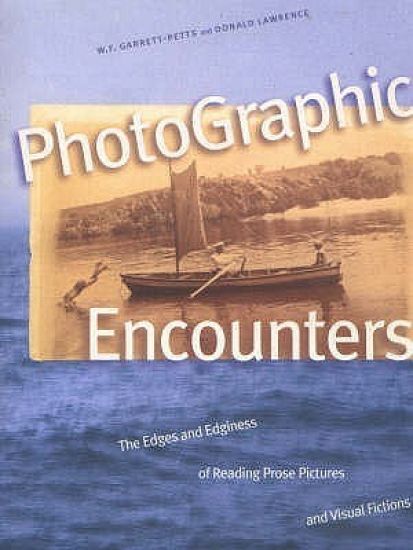
Literacy is broadly understood to refer to the ability to read and write. But the term is heavily value-laden and is often used to elevate print at the expense of other forms of communication. In PhotoGraphic Encounters, the authors challenge this reductive notion of literacy and propose instead an integrated span of literacies: reaching across disciplinary boundaries to discover a text that draws upon both the visual and the verbal. PhotoGraphic Encounters discusses Canadian writers like Margaret Atwood, George Bowering, Robert Kroetsch, and Daphne Marlatt, and Canadian artists like Fred Douglas, Ernie Kroeger, Brenda Pelkey, and Michael Snow, then looks at the cross-fertilization of visual and verbal processes in their works. The authors present a new narrative practice, one that fully engages lived experience. The vernacular, they argue, is vital to our participation as readers and viewers of high art. Making the connection between the vernacular and high culture creates an enabling moment in artistic production and reception and in teaching, learning, and talking about art and literature. PhotoGraphic Encounters offers a compelling perspective on questions of literacy in a postmodern culture. Artists, writers, scholars, and critics alike will want this volume in their libraries. Includes more than 120 B&W photographs, 20 colour plates, index, bibliography.