Kirjojen hintavertailu. Mukana 11 699 587 kirjaa ja 12 kauppaa.

Kirjahaku

Etsi kirjoja tekijän nimen, kirjan nimen tai ISBN:n perusteella.

1000 tulosta hakusanalla Gary A. Keith

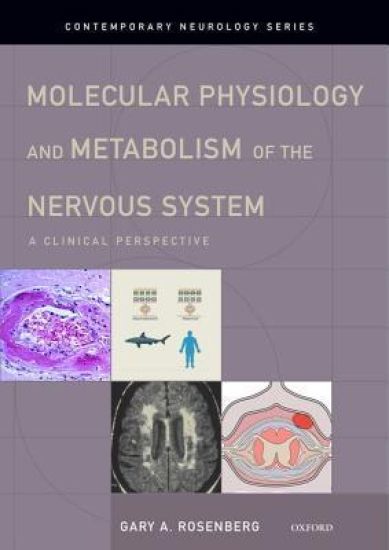
Molecular Physiology and Metabolism of the Nervous System

Molecular Physiology and Metabolism of the Nervous System

Gary A. Rosenberg

Oxford University Press Inc
2012
sidottu
The molecular basis for the physiology of the brain has advanced enormously in the past twenty years with an influx of new information gleaned through technological developments in neuroimaging and molecular discoveries. Molecular Physiology and Metabolism of the Nervous System, authored by Gary A. Rosenberg, an authority on the physiology of brain fluids and metabolism, combines the classic physiology that dates back to the beginning of the nineteenth century with the advances in molecular sciences, providing a strong framework for understanding the diseases that are commonly treated by neurologists. Molecular Physiology and Metabolism of the Nervous System focuses on the current neuropathology and implications of cerebrospinal fluid diseases and diseases of the blood-brain barrier: how the two affect stroke, infection, brain tumors, and increased intracranial pressure. The book discusses the effects of blood flow in stroke and dementia, the disruption of the blood-brain barrier in neuroinflammation, and the dysfunction due to brain edema and increased intracranial pressure. Molecular Physiology and Metabolism of the Nervous System is necessary reading for neurologists, neuroscientists, and residents in neurology, neurosurgery, and psychiatry, giving them a strong grounding in physiology and metabolism that will aid them in diagnosis and treatment.
The Locust Effect

The Locust Effect

Gary A. Haugen; Victor Boutros

Oxford University Press Inc
2014
sidottu
World poverty is both an intractable and ever-mutable problem. It has afflicted humanity since the earliest times, but its basic features -- aside from the constant, want -- have evolved as history has moved from epoch to epoch. Today, there is broad recognition that a significant segment of the global population (the 'bottom billion,' to use Paul Collier's term) is impoverished despite the globalization of the world economy. Two questions -- why destitution is so persistent despite massive global economic growth and what can be done about it -- have animated debates among development scholars and poverty researchers for decades. Those who concentrate on the first question focus on the failure of anti-poverty efforts and typically stress why particular solutions on offer have not worked. Those addressing the second question have focused on either improving material conditions or on creating institutional frameworks (economic, social and political) that will allow the masses in poor countries to escape from poverty. Yet until now, virtually no one has addressed in a substantial way the most basic precondition for alleviating poverty: human safety. In most poverty-stricken areas of the world, violence is endemic. Whether it is generated by criminals who operate with complete abandon or by the state itself via predatory police forces, violence and threat of it have locked hundreds of millions of people into poverty. Gary Haugen and Victor Boutros's The Locust Effect focuses on the central role of violence in perpetuating poverty, and shows that if any headway is to be made, this issue has to become a top priority for policymakers. Simply put, if people aren't safe, nothing else matters. Shipping grain to the poor, helping them vote, or assisting their efforts to start a farm is irrelevant. Whatever material improvements we provide will simply wash away in the face of the corrupt police forces, out-of-control, armies, private militias, organized criminals, and -- not least -- failed justice systems that plague poor countries. Throughout, the book will feature real-world stories ranging from Thailand to Bolivia to India to Nigeria that vividly depict how violence undercuts antipoverty efforts. While they argue that this violence is the fundamental issue facing the antipoverty movement, they do not merely identify the problem. They also draw from their experience running the International Justice Mission to show that ground-up efforts to reform legal and public justice systems can generate real, positive results. Sweeping in geographical scope and filled with unforgettable stories of individuals trapped within the mutually reinforcing cycle of poverty and violence, The Locust Effect will force us to rethink everything we know about the causes of poverty and why it is so difficult to root out.
Ethics and the Orator

Ethics and the Orator

Gary A. Remer

University of Chicago Press
2017
sidottu
For thousands of years, critics have attacked rhetoric and the actual practice of politics as unprincipled, insincere, and manipulative. In Ethics and the Orator, Gary A. Remer disagrees, offering the Ciceronian rhetorical tradition as a rejoinder. He argues that the Ciceronian tradition is based on practical or "rhetorical" politics, rather than on idealistic visions of a politics-that-never-was a response that is ethically sound, if not altogether morally pure. Remer's study is distinct from other works on political morality in that it turns to Cicero, not Aristotle, as the progenitor of an ethical rhetorical perspective. Contrary to many, if not most, studies of Cicero since the mid-nineteenth century, which have either attacked him as morally indifferent or have only taken his persuasive ends seriously (setting his moral concerns to the side), Ethics and the Orator demonstrates how Cicero presents his ideal orator as exemplary not only in his ability to persuade, but in his capacity as an ethical person. Remer makes a compelling case that Ciceronian values balancing the moral and the useful, prudential reasoning, and decorum are not particular only to the philosopher himself, but are distinctive of a broader Ciceronian rhetorical tradition that runs through the history of Western political thought post-Cicero, including the writings of Quintilian, John of Salisbury, Justus Lipsius, Edmund Burke, the authors of The Federalist, and John Stuart Mill.
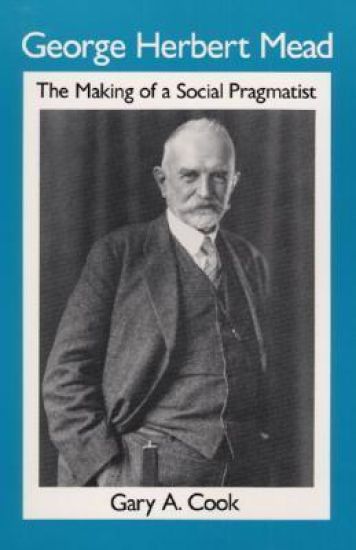
George Herbert Mead

George Herbert Mead

Gary A. Cook

University of Illinois Press
1993
nidottu
This groundbreaking study details the intellectual development of George Herbert Mead as a thinker of great originality and as a practitioner of social reform. Gary Cook traces the genesis of Mead's social psychological and philosophical ideas by analyzing his journal articles and posthumously published writings.
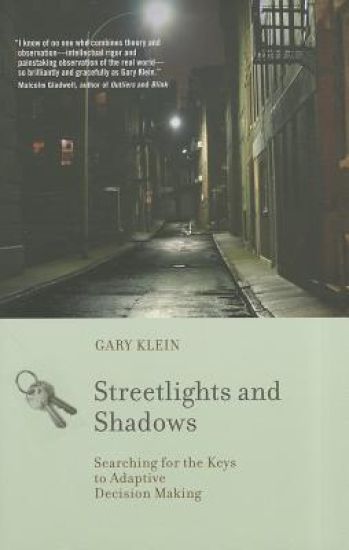
Streetlights and Shadows

Streetlights and Shadows

Gary A. Klein

MIT Press
2011
pokkari
An expert explains how the conventional wisdom about decision making can get us into trouble-and why experience can't be replaced by rules, procedures, or analytical methods.In making decisions, when should we go with our gut and when should we try to analyze every option? When should we use our intuition and when should we rely on logic and statistics? Most of us would probably agree that for important decisions, we should follow certain guidelines-gather as much information as possible, compare the options, pin down the goals before getting started. But in practice we make some of our best decisions by adapting to circumstances rather than blindly following procedures. In Streetlights and Shadows, Gary Klein debunks the conventional wisdom about how to make decisions. He takes ten commonly accepted claims about decision making and shows that they are better suited for the laboratory than for life. The standard advice works well when everything is clear, but the tough decisions involve shadowy conditions of complexity and ambiguity. Gathering masses of information, for example, works if the information is accurate and complete-but that doesn't often happen in the real world. (Think about the careful risk calculations that led to the downfall of the Wall Street investment houses.) Klein offers more realistic ideas about how to make decisions in real-life settings. He provides many examples-ranging from airline pilots and weather forecasters to sports announcers and Captain Jack Aubrey in Patrick O'Brian's Master and Commander novels-to make his point. All these decision makers saw things that others didn't. They used their expertise to pick up cues and to discern patterns and trends. We can make better decisions, Klein tells us, if we are prepared for complexity and ambiguity and if we will stop expecting the data to tell us everything.
The Things We Do

The Things We Do

Gary A. Cziko

Bradford Books
2016
pokkari
Cziko shows how the lessons of Bernard and Darwin, updated with the best of current scientific knowledge, can provide solutions to certain long-standing theoretical and practical problems in behavioral science and enable us to develop new methods and topics for research.The remarkable achievements that modern science has made in physics, chemistry, biology, medicine, and engineering contrast sharply with our limited knowledge of the human mind and behavior. A major reason for this slow progress, claims Gary Cziko, is that with few exceptions, behavioral and cognitive scientists continue to apply a Newtonian-inspired view of animate behavior as an organism's output determined by environmental input. This one-way cause-effect approach ignores the important findings of two major nineteenth-century biologists, French physiologist Claude Bernard and English naturalist Charles Darwin.Approaching living organisms as purposeful systems that behave in order to control their perceptions of the external environment provides a new perspective for understanding what, why, and how living things, including humans, do what they do. Cziko examines in particular perceptual control theory, which has its roots in Bernard's work on the self-regulating nature of living organisms and in the work of engineers who developed the field of cybernetics during and after World War II. He also shows how our evolutionary past together with Darwinian processes currently occurring within our bodies, such as the evolution of new brain connections, provide insights into the immediate and ultimate causes of behavior.Writing in an accessible style, Cziko shows how the lessons of Bernard and Darwin, updated with the best of current scientific knowledge, can provide solutions to certain long-standing theoretical and practical problems in behavioral science and enable us to develop new methods and topics for research.
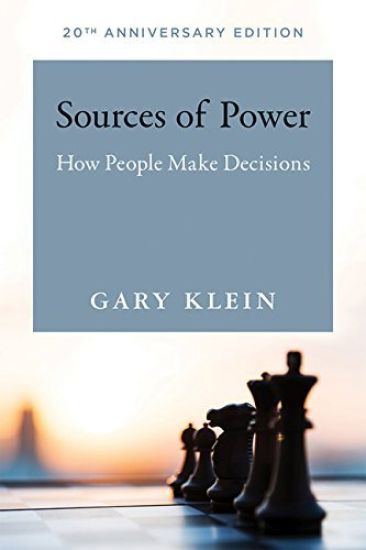
Sources of Power

Sources of Power

Gary A. Klein

MIT Press
2017
pokkari
A modern classic about how people really make decisions: drawing on prior experience, using a combination of intuition and analysis.Since its publication twenty years ago, Sources of Power has been enormously influential. The book has sold more than 50,000 copies, has been translated into six languages, has been cited in professional journals that range from Journal of Marketing Research to Journal of Nursing, and is mentioned by Malcolm Gladwell in Blink. Author Gary Klein has collaborated with Nobel laureate Daniel Kahneman and served on a team that redesigned the White House Situation Room to support more effective decision making. The model of decision making Klein proposes in the book has been adopted in fields including law enforcement training and petrochemical plant operation. What is the groundbreaking new way to approach decision making described in this modern classic? We have all seen images of firefighters rescuing people from burning buildings and paramedics treating bombing victims. How do these individuals make the split-second decisions that save lives? Most studies of decision making, based on artificial tasks assigned in laboratory settings, view people as biased and unskilled. Klein proposes a naturalistic approach to decision making, which views people as gaining experience that enables them to use a combination of intuition and analysis to make decisions. To illustrate this approach, Klein tells stories of people—from pilots to chess masters—acting under such real-life constraints as time pressure, high stakes, personal responsibility, and shifting conditions.
Snapshots of the Mind

Snapshots of the Mind

Gary A. Klein

MIT PRESS LTD
2022
nidottu
How people make decisions, size up situations, spot anomalies, and anticipate problems in real-world settings. Gary Klein, author of the bestselling Sources of Power, is the cognitive psychologist who discovered how people actually make decisions, particularly under time pressure and uncertainty. In Snapshots of the Mind, he offers a set of short essays--"snapshots" of different aspects of cognitive functioning in real-world settings that will help us learn to recognize the cognitive processes that underlie and drive performance. In these essays Klein provides practical tools for escaping fixation on initial hunches and learning to detect the ways that people make decisions, size up situations, spot anomalies, and anticipate problems. Snapshots of the Mind grows out of the Naturalistic Decision Making movement, which studies how decision makers handle uncertainty and complexity in high-stakes situations. In the essays, Klein examines how people make tough choices and assessments in the real-world, discussing such topics as training, information technology, teamwork, expertise, and insights. Debunking the idea that artificial intelligence will soon take over human decision making, he argues instead for machines that make us smarter and expand our expertise. He describes his Recognition-Primed Decision (RPD) model, which has been incorporated into Army doctrine and was one of the inspirations for Malcolm Gladwell's Blink. Snapshots of the Mind offers fresh takes on such topics as confirmation bias, anomaly detection, intuition, anticipatory thinking and perspective-taking. Readers come away attuned to the primary aspects of expert cognition: the mindsets, mental models, and perceptual sensitivity.
Inside Political Campaigns

Inside Political Campaigns

Gary A. Copeland; Karen S. Johnson-Cartee

Praeger Publishers Inc
1997
sidottu
As Dan Nimmo notes in his introduction, Inside Political Campaigns endeavors to trace the sources of professional campaign wizardry by encapsulating the theories and concepts that practitioners and scholars alike claim to guide and rationalize consultants' magical weaving of strategies, tactics, and techniques into a 'winning tapestry of political communication.' This study presents the theoretical areas political communication consultants draw upon in making strategic and tactical decisions in political campaigns. And it provides an understanding of what motivates political consultants to choose a particular campaign strategy by explaining how various strategies work with the voting public. While the book is research-driven, its academic findings are tempered and expanded by the authors' personal political consulting experiences. The text will be of interest to scholars, students, and practitioners alike in political communication, advertising, public opinion, political science, political rhetoric, and campaigns and elections.
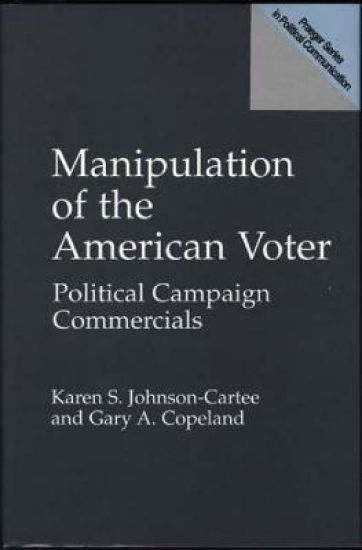
Manipulation of the American Voter

Manipulation of the American Voter

Gary A. Copeland; Karen S. Johnson-Cartee

Praeger Publishers Inc
1997
sidottu
Manipulation of the American Voter is a research-based examination of the theoretical and practical reasons for successful political advertising. It provides the means necessary to analyze political commercials, and by presenting the motives behind advertising strategies and tactics used in contemporary politics, the authors seek to free their readers from the inherent manipulation in political advertising. By analyzing political advertising as both a science and an art form, the authors unlock the mysteries of how millions of voters are manipulated each campaign season. This study, therefore, offers scholars and students of the electoral process the knowledge to see through the veil of political advertising and participate more fully in the political system.
Abundance and Anxiety

Abundance and Anxiety

Gary A. Donaldson

Praeger Publishers Inc
1997
sidottu
The United States had tremendous opportunities after World War II. The nation's industrial might, geared to defeat Germany and Japan, could now be focused on domestic production. Real wages were up, the GNP was on the rise, industrial production was up, and inflation was under control. The future looked bright for the average American. But this abundance was punctuated with anxiety. Within four years of the end of the war, the Soviet Union had become the new enemy: they had the bomb and China and Eastern Europe had fallen into the Soviet sphere of influence. These two points, the abundance of the growing economy and the anxiety of the Cold War, defined the period from 1945-1960.
Sin

Sin

Gary A. Anderson

Yale University Press
2010
pokkari
What is sin? Is it simply wrongdoing? Why do its effects linger over time? In this sensitive, imaginative, and original work, Gary Anderson shows how changing conceptions of sin and forgiveness lay at the very heart of the biblical tradition. Spanning nearly two thousand years, the book brilliantly demonstrates how sin, once conceived of as a physical burden, becomes, over time, eclipsed by economic metaphors. Transformed from a weight that an individual carried, sin becomes a debt that must be repaid in order to be redeemed in God's eyes. Anderson shows how this ancient Jewish revolution in thought shaped the way the Christian church understood the death and resurrection of Jesus and eventually led to the development of various penitential disciplines, deeds of charity, and even papal indulgences. In so doing it reveals how these changing notions of sin provided a spur for the Protestant Reformation. Broad in scope while still exceptionally attentive to detail, this ambitious and profound book unveils one of the most seismic shifts that occurred in religious belief and practice, deepening our understanding of one of the most fundamental aspects of human experience.
Charity

Charity

Gary A. Anderson

Yale University Press
2015
pokkari
A leading biblical scholar places charity back at the heart of the Judeo-Christian tradition, arguing for its biblical roots It has long been acknowledged that Jews and Christians distinguished themselves through charity to the poor. Though ancient Greeks and Romans were also generous, they funded theaters and baths rather than poorhouses and orphanages. How might we explain this difference? In this significant reappraisal of charity in the biblical tradition, Gary Anderson argues that the poor constituted the privileged place where Jews and Christians met God. Though concerns for social justice were not unknown to early Jews and Christians, the poor achieved the importance they did primarily because they were thought to be “living altars,” a place to make a sacrifice, a loan to God that he, as the ultimate guarantor, could be trusted to repay in turn. Contrary to the assertions of Reformation and modern critiques, belief in a heavenly treasury was not just about self-interest. Sifting through biblical and postbiblical texts, Anderson shows how charity affirms the goodness of the created order; the world was created through charity and therefore rewards it.
Diseases of Wild Waterfowl

Diseases of Wild Waterfowl

Gary A. Wobeser

Kluwer Academic / Plenum Publishers
1997
sidottu
This second edition of the only reference devoted to diseases of wild waterfowl has been completely revised to include several new viral agents and toxins. The entire text reflects an increased emphasis on the relationships among habitat, management, and the occurrence of disease. Chapter format is consistent throughout, with the cause ecology, clinical and pathologic features, diagnostic techniques, significance, and remedial management of each disease described. Among the highlights are a chapter on diagnostic techniques (which includes the necropsy procedure) and an extensive reference list.
Fundamentals of Oncologic PET/CT

Fundamentals of Oncologic PET/CT

Gary A. Ulaner

Elsevier - Health Sciences Division
2018
nidottu
In the fast-changing age of precision medicine, PET/CT is increasingly important for accurate cancer staging and evaluation of treatment response. Fundamentals of Oncologic PET/CT, by Dr. Gary A. Ulaner, offers an organized, systematic introduction to reading and interpreting PET/CT studies, ideal for radiology and nuclear medicine residents, practicing radiologists, medical oncologists, and radiation oncologists. Synthesizing eight years' worth of cases and lectures from one of the largest cancer centers in the world, this title provides a real-world, practical approach, taking you through the body organ by organ as it explains how to integrate both the FDG PET and CT findings to best interpret each lesion. Based on the Annual Oncologic PET/CT Continuing Education Course founded and directed by Dr. Ulaner. Provides step-by-step guidance on how to interpret PET/CT images for patients with cancer. Uses a unique, highly practical format, presenting common and uncommon findings for each organ system, and then explaining how to best arrive at a diagnosis for those findings. Describes how to integrate PET findings with CT, MR, ultrasound, and radiography, to increase specificity of PET findings. Features more than 1,000 high-quality PET, CT, and correlative radiographic images, with over 600 in full color. Discusses how to avoid common interpretive pitfalls. Demonstrates how to organize an FDG PET/CT report efficiently and concisely. Includes a separate chapter on novel radiotracers - including Sodium Fluoride, DOTATATE, Choline, Fluciclovine, and PSMA targeting agents. Expert ConsultT eBook version included with purchase. This enhanced eBook experience allows you to search all of the text, figures, and references from the book on a variety of devices.
Securing Integrated Transportation Networks

Securing Integrated Transportation Networks

Gary A. Gordon; Richard R. Young

Elsevier - Health Sciences Division
2024
nidottu
Securing Integrated Transportation Networks provides a comprehensive look at multimodal transportation security—its dynamics, evolving threats, and technology advances that enhance operational security and related infrastructure protection and hardening, as well as the regulatory environment. As threats are evolving, so is the technology used in enhancing transportation security, operational procedures, and regulations. This book addresses this dynamic evolution of transportation security, serving as a primary reference for information on the range of activities and components involved in transportation security. It covers the myriad parts involved in the relationship between, and among, logistics, the supply chains and transportation entities, and more. In addition, it looks at operations, infrastructure, equipment, laws and regulations, policies and procedures, and risk focused on transportation safety and security by mode and transportation in general. Cooperation and partnering with and among the industry, to include transportation providers and government agencies, is the way forward to ensure that security is maintained and keeps pace with the evolving threat and regulatory landscape.
Breakaway Heart

Breakaway Heart

Gary a Piazza

Lulu.com
2018
sidottu
From 75-96 more than a million people fled Vietnam in search of a better life. Thirty percent lost their lives at sea or in camps. This is the story of one person's struggle of survival, redemption and retribution.
New Agricultural Crops

New Agricultural Crops

Gary A Ritchie

CRC Press
2019
sidottu
Current and projected worldwide shortages of energy, fertilizer, and irrigation water, coupled with a rapidly expanding population, are prompting agricultural scientists to seek, identify, and develop new crop species. Such crops should be energy- and water-efficient, well adapted to marginal lands, suited to intensive culture, and productive of ma