Kirjojen hintavertailu. Mukana 12 390 323 kirjaa ja 12 kauppaa.

Kirjahaku

Etsi kirjoja tekijän nimen, kirjan nimen tai ISBN:n perusteella.

1000 tulosta hakusanalla Gary B. Borders

Elephant Snot & Marble Kisses

Elephant Snot & Marble Kisses

Gary B Lewis

Gary Lewis
2022
pokkari
Elephant Snot & Marble Kisses - Court Yard Games Book 2 is a sequel of activities found in Court Yard Games book one. These games are based on many of the same recycled resources used in book one. Many of the games have been developed from ancient strategy games and some are just new innovative ideas.The philosophy is built on the premise of 'MINIMUM RESOURCES ... MAXIMUM IMPACT'
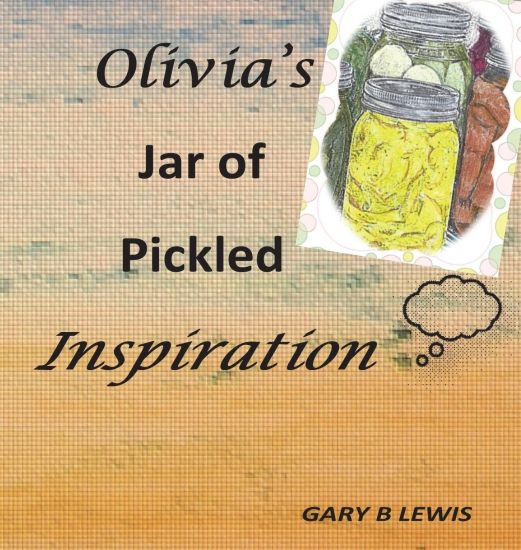
Olivia's Jar of Pickled Inspiration
Olivia is feeling confused and sad as she tries to figure out why none of her friends seem to care very much about her. Everyone she talks to about it is either too busy or unable to help her ... all except for her grandmother, Marmar. Her grandmother's passion for preserving and pickling food takes on a twist with a new flavour. And to Olivia's surprise, she discovers the sweetest taste of all.This is the third book in a trilogy focused on juvenile sadness, depression and self-esteem. This book - like the 'Jessica's Special Buttons' and 'Jackson Uncovers Hidden Treasure' - is also based on a true story. This book has a particular focus positive affirmations towards late primary and early teen girls, but is also suitable for any child from 10 - 16 years.
Jessica finds her true value

Jessica finds her true value

Gary B Lewis

Gary Lewis
2022
sidottu
Jessica felt sad ... but she did not know why. Perhaps she could talk to her Grandma.Whilst visiting her Grandma, something strange happens. Not only does she discover that her Grandma has a weird collection of objects in her apron pocket ... Jessica's sadness seems to disappear as she learns a valuable lesson about herself.This is book one of a trilogy based on a series of true stories about value, self-worth and self-esteem, and the value of children having a meaningful relationship with a significant adult in their life. The author draws upon many encounters with children from 5 to 14 years of age through his work as a Primary (elementary) School Chaplain in Victorian Government Schools (Australia) over many years.
Jackson uncovers Hidden Treasure

Jackson uncovers Hidden Treasure

Gary B Lewis

Gary Lewis
2022
sidottu
Jackson felt sad...but he did not know why.He needed to tell someone how he was feeling. Perhaps...he could talk to his Grandpa.Whilst on a fishing trip with his Grandpa, something interesting happens. Not only does he discover that his Grandpa has a secret treasure box in his fishing pack...Jackson's sadness seems to disappear as he learns a valuable lesson about himself.This is part the second book in a trilogy on juvenile sadness, depression and self-esteem. Suitable for 8 - 16 years
The Forgotten Fifth

The Forgotten Fifth

Gary B. Nash

Harvard University Press
2006
sidottu
As the United States gained independence, a full fifth of the country's population was African American. The experiences of these men and women have been largely ignored in the accounts of the colonies' glorious quest for freedom. In this compact volume, Gary B. Nash reorients our understanding of early America, and reveals the perilous choices of the founding fathers that shaped the nation's future. Nash tells of revolutionary fervor arousing a struggle for freedom that spiraled into the largest slave rebellion in American history, as blacks fled servitude to fight for the British, who promised freedom in exchange for military service. The Revolutionary Army never matched the British offer, and most histories of the period have ignored this remarkable story. The conventional wisdom says that abolition was impossible in the fragile new republic. Nash, however, argues that an unusual convergence of factors immediately after the war created a unique opportunity to dismantle slavery. The founding fathers' failure to commit to freedom led to the waning of abolitionism just as it had reached its peak. In the opening decades of the nineteenth century, as Nash demonstrates, their decision enabled the ideology of white supremacy to take root, and with it the beginnings of an irreparable national fissure. The moral failure of the Revolution was paid for in the 1860s with the lives of the 600,000 Americans killed in the Civil War. The Forgotten Fifth is a powerful story of the nation's multiple, and painful, paths to freedom.
The Urban Crucible

The Urban Crucible

Gary B. Nash

Harvard University Press
1979
sidottu
This book boldly reinterprets colonial life and the origins of the American Revolution. While retaining all the main points of analysis and interpretation, the author has reduced the full complement of statistics, sources, and technical data contained in the original edition to serve the needs of general readers and undergraduates.
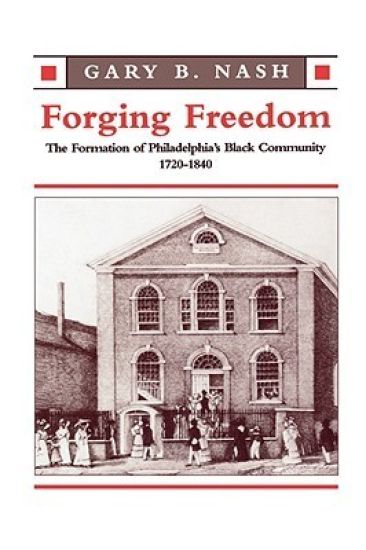
Forging Freedom

Forging Freedom

Gary B. Nash

Harvard University Press
1991
nidottu
This book is the first to trace the good and bad fortunes, over more than a century, of the earliest large free black community in the United States. Gary Nash shows how, from colonial times through the Revolution and into the turbulent 1830s, blacks in the City of Brotherly Love struggled to shape a family life, gain occupational competence, organize churches, establish neighborhoods and social networks, advance cultural institutions, educate their children in schools, forge a political consciousness, and train black leaders who would help abolish slavery. These early generations of urban blacks—many of them newly emancipated—constructed a rich and varied community life.Nash’s account includes elements of both poignant triumph and profound tragedy. Keeping in focus both the internal life of the black community and race relations in Philadelphia generally, he portrays first the remarkable vibrancy of black institution-building, ordinary life, and relatively amicable race relations, and then rising racial antagonism. The promise of a racially harmonious society that took form in the postrevolutionary era, involving the integration into the white republic of African people brutalized under slavery, was ultimately unfulfilled. Such hopes collapsed amid racial conflict and intensifying racial discrimination by the 1820s. This failure of the great and much-watched “Philadelphia experiment” prefigured the course of race relations in America in our own century, an enduringly tragic part of this country’s past.
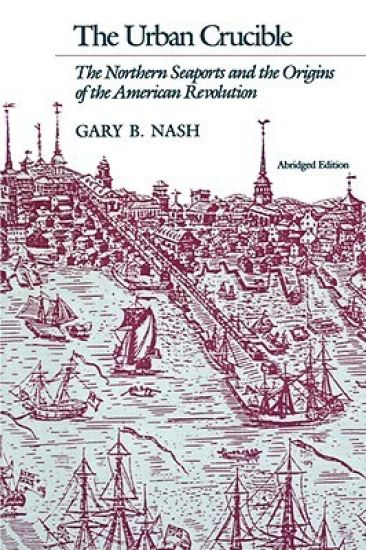
The Urban Crucible

The Urban Crucible

Gary B. Nash

Harvard University Press
1986
nidottu
The Urban Crucible boldly reinterprets colonial life and the origins of the American Revolution. Through a century-long history of three seaport towns—Boston, New York, and Philadelphia—Gary Nash discovers subtle changes in social and political awareness and describes the coming of the revolution through popular collective action and challenges to rule by custom, law and divine will. A reordering of political power required a new consciousness to challenge the model of social relations inherited from the past and defended by higher classes. While retaining all the main points of analysis and interpretation, the author has reduced the full complement of statistics, sources, and technical data contained in the original edition to serve the needs of general readers and undergraduates.
Macroeconomics and Financial Crises

Macroeconomics and Financial Crises

Gary B. Gorton; Guillermo L. Ordoñez

PRINCETON UNIVERSITY PRESS
2023
sidottu
How financial crises are inherent features of macroeconomic dynamicsThere are no bigger disruptions in the functioning of economies than financial crises. Yet prior to the crash of 2007–2008, macroeconomics incorporated financial crises simply as bad shocks, like earthquakes, failing to consider them as an intrinsic phenomenon of the evolution of macroeconomic variables, such as credit, investment, and productivity. Macroeconomics and Financial Crises rethinks how technological change, credit booms, and endogenous information production combine to generate financial crises as inherent and recurrent reactions to macroeconomic dynamics.Gary Gorton and Guillermo Ordoñez identify short-term debt, collateral, and information as common elements that are present in all financial crises. Short-term debt is a critical element for storing value over short periods without fear of loss, but there needs to be collateral backing the debt. Critically, the collateral should be such that no agent wants to produce information about its quality. The debt backed by such collateral is information-insensitive. Gorton and Ordoñez argue that, during a credit boom, as more and more firms get loans, the economy reaches a tipping point where information production becomes too tempting, disrupting short-term debt and cutting most firms out of the credit market.Showing how a financial crisis is an information event triggered by the dynamics of macroeconomic variables, Macroeconomics and Financial Crises provides new perspectives on the intricate relations between macroeconomics and financial crises.
The Guru of the Universe: A Collection of Sea Stories
These are personal memoirs of a Merchant Seaman as he struggles through his early years shipping out, to finally getting to the "big bed" as Captain. He ultimately becomes the Captain of the ship that found the Titanic in 1986, with Chief Scientist Dr. Robert Ballard on board. He describes how he was prone to seasickness and how he dealt with it. He explains how he sends 12oz styrofoam cups down to the bottom of the ocean on the submersible submarine "Alvin", and how they shrink down to the size of a thimble. And he mixes in a bunch of "sea stories", some of which are quite humorous, about the cast of characters that he's had to deal with during his 40-year career of going to sea.
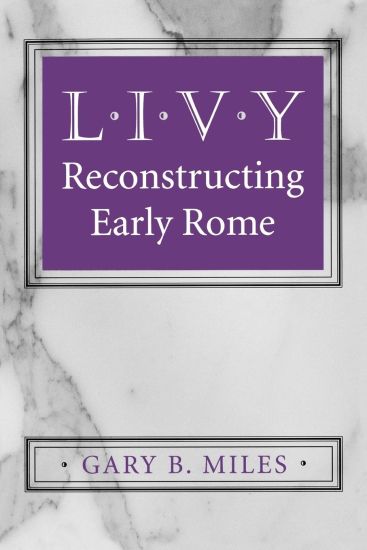
Livy

Livy

Gary B. Miles

Cornell University Press
1997
pokkari
Some critics of the Roman historian Livy (59 B.C.-A.D. 17) have dismissed his work as a compendium of stale narratives and conventional attitudes. Gary B. Miles reveals in Livy's history a creative interplay between traditional stories, contemporary ideological assumptions, and the historian's own perspective at the margins of Roman aristocracy. Drawing on a range of critical approaches, Miles considers Livy's stance as a historian, the ways in which he reworked his sources, and his interpretation of such historical phenomena as recurrence, continuity, and change. Miles focuses on the foundation stories with which Livy begins his account, detecting in Livy's rendition certain original conceptions of historical time including the suggestion that Roman identity and greatness might be preserved indefinitely through successive reenactments of a historical cycle. Miles pays particular attention to two stories—those of the abduction of the Sabine women and of Romulus and Remus, showing how Livy's versions of these traditional narratives—far from leading to a simplistic moral—address unresolved political issues of his day. According to Miles, Livy shows an unusually tenacious willingness to confront dilemmas in historiography and Roman ideology which were commonly ignored or suppressed by both his predecessors and his contemporaries.
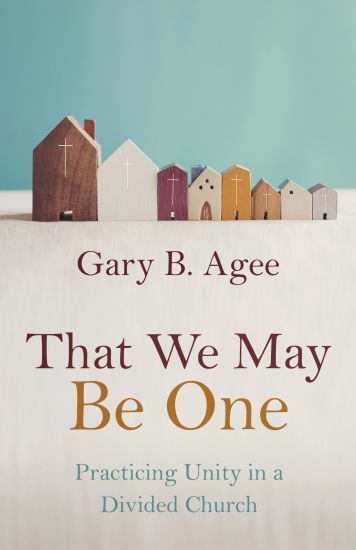
That We May Be One

That We May Be One

Gary B Agee

WILLIAM B EERDMANS PUBLISHING CO
2022
pokkari
Transcending divisions and healing the broken Body of Christ. Disunity is a reality within churches today. Left unaddressed, political disagreements and racial inequities can fester into misunderstanding, resentment, and anger. But often the act of addressing this discord prompts further animosity, widening fissures into gaping fault lines between fellow members of the same community. Gary Agee, a pastor well-versed in leading diverse congregations, reflects here on the roots of division within the church and the virtues and practices that can promote the restoration of unity. With disarming honesty and humility, Agee offers sage advice gleaned from Scripture and years of practical experience to show how we might fulfill Jesus's prayer on behalf of the church: "That all of them may be one, Father, just as you are in me and I am in you. . . . That they may be one as we are one." At the end of each chapter, Agee includes exercises, discussion questions, and suggested practices, providing a concrete path to unity through dialogue and action.
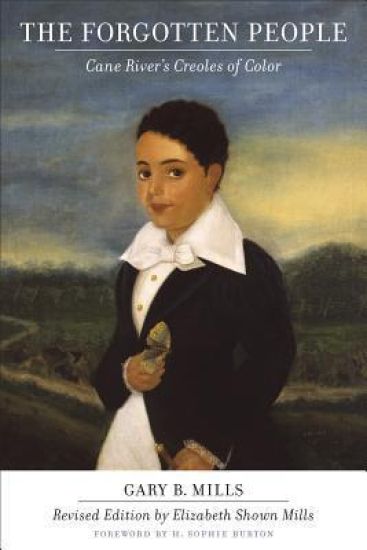
The Forgotten People

The Forgotten People

Gary B. Mills; Elizabeth Shown Mills; H. Sophie Burton

Louisiana State University Press
2013
nidottu
Out of colonial Natchitoches, in northwestern Louisiana, emerged a sophisticated and affluent community founded by a family of freed slaves. Their plantations eventually encompassed 18,000 fertile acres, which they tilled alongside hundreds of their own bondsmen. Furnishings of quality and taste graced their homes, and private tutors educated their children. Cultured, deeply religious, and highly capable, Cane River's Creoles of color enjoyed economic privileges but led politically constricted lives. Like their white neighbors, they publicly supported the Confederacy and suffered the same depredations of war and political and social uncertainties of Reconstruction. Unlike white Creoles, however, they did not recover amid cycles of Redeemer and Jim Crow politics.First published in 1977, The Forgotten People offers a socioeconomic history of this widely publicized but also highly romanticized community- a minority group that fit no stereotypes, refused all outside labels, and still struggles to explain its identity in a world mystified by Creolism. Now revised and significantly expanded, this time-honored work revisits Cane River's ""forgotten people"" and incorporates new findings and insight gleaned across thirty-five years of further research. This new edition provides a nuanced portrayal of the lives of Creole slaves and the roles allowed to freed people of color, tackling issues of race, gender, and slave holding by former slaves. The Forgotten People corrects misassumptions about the origin of key properties in the Cane River National Heritage Area and demonstrates how historians reconstruct the lives of the enslaved, the impoverished, and the disenfranchised.
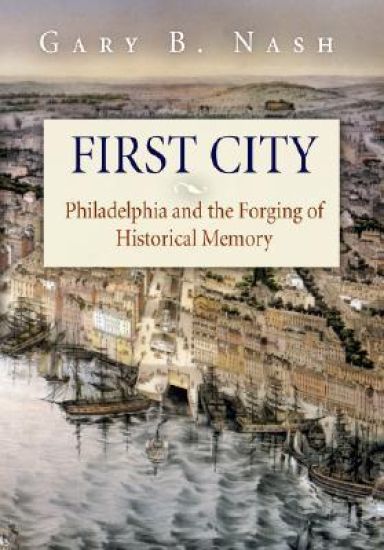
First City

First City

Gary B. Nash

University of Pennsylvania Press
2006
pokkari
With its rich foundation stories, Philadelphia may be the most important city in America's collective memory. By the middle of the eighteenth century William Penn's "greene countrie town" was, after London, the largest city in the British Empire. The two most important documents in the history of the United States, the Declaration of Independence and the Constitution, were drafted and signed in Philadelphia. The city served off and on as the official capital of the young country until 1800, and was also the site of the first American university, hospital, medical college, bank, paper mill, zoo, sugar refinery, public school, and government mint. In First City, acclaimed historian Gary B. Nash examines the complex process of memory making in this most historic of American cities. Though history is necessarily written from the evidence we have of the past, as Nash shows, rarely is that evidence preserved without intent, nor is it equally representative. Full of surprising anecdotes, First City reveals how Philadelphians-from members of elite cultural institutions, such as historical societies and museums, to relatively anonymous groups, such as women, racial and religious minorities, and laboring people-have participated in the very partisan activity of transmitting historical memory from one generation to the next.
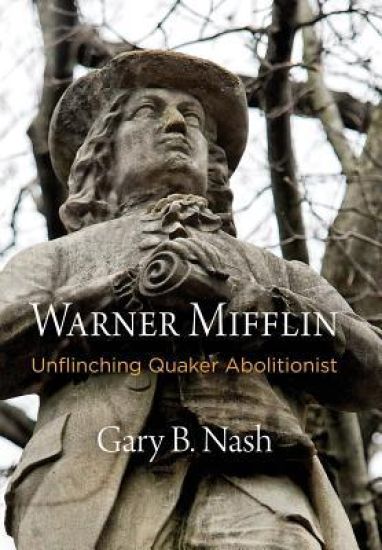
Warner Mifflin

Warner Mifflin

Gary B. Nash

University of Pennsylvania Press
2017
sidottu
Warner Mifflin-energetic, uncompromising, and reviled-was the key figure connecting the abolitionist movements before and after the American Revolution. A descendant of one of the pioneering families of William Penn's "Holy Experiment," Mifflin upheld the Quaker pacifist doctrine, carrying the peace testimony to Generals Howe and Washington across the blood-soaked Germantown battlefield and traveling several thousand miles by horse up and down the Atlantic seaboard to stiffen the spines of the beleaguered Quakers, harried and exiled for their neutrality during the war for independence. Mifflin was also a pioneer of slave reparations, championing the radical idea that after their liberation, Africans in America were entitled to cash payments and land or shared crop arrangements. Preaching "restitution," Mifflin led the way in making Kent County, Delaware, a center of reparationist doctrine. After the war, Mifflin became the premier legislative lobbyist of his generation, introducing methods of reaching state and national legislators to promote antislavery action. Detesting his repeated exercise of the right of petition and hating his argument that an all-seeing and affronted God would punish Americans for "national sins," many Southerners believed Mifflin was the most dangerous man in America-"a meddling fanatic" who stirred the embers of sectionalism after the ratification of the Constitution of 1787. Yet he inspired those who believed that the United States had betrayed its founding principles of natural and inalienable rights by allowing the cancer of slavery and the dispossession of Indian lands to continue in the 1790s. Writing in beautiful prose and marshaling fascinating evidence, Gary B. Nash constructs a convincing case that Mifflin belongs in the Quaker antislavery pantheon with William Southeby, Benjamin Lay, John Woolman, and Anthony Benezet.
Priestly Celibacy

Priestly Celibacy

Gary B. Selin; J. Francis Cardinal Stafford

The Catholic University of America Press
2016
nidottu
Pope Francis has called mandatory priestly celibacy “a gift for the Church,” but added “since it is not a dogma, the door is always open” to change. As this Church discipline continues to be debated, it is important for Catholics to delve into the theological and not merely pragmatic reasons behind its continuation. Priestly Celibacy: Theological Foundations, therefore, fills a critical gap in the current theological literature on this important aspect of ecclesial ministry and life, and also helps to contribute to the advancement of the rather underdeveloped theology of priestly celibacy.A review of contemporary literature shows that works abound on the history, sociology, psychology and spirituality of priestly celibacy. However, little has been offered in the way of a theology per se. This book will catch readers up on the theological reflection that has been done, while proposing a Eucharist-based theology of celibacy distinguishing priestly celibacy from general theologies of celibacy or virginity.Fr. Gary Selin presents a systematic theology of priestly celibacy, with a special focus given to the development of the threefold scheme of priestly celibacy, i.e. its christological, ecclesiological, and eschatological dimensions. The volume begins with a summary of the biblical foundations of clerical continence and celibacy, and then reviews the development of the discipline in the Latin Church from the patristic era to the twentieth century, while also tracing the emerging theology that underlies the practice. The focus then switches to the teaching of Vatican II, Paul VI and subsequent magisterial texts, as elaborated through the threefold dimension of celibacy. The final two chapters consists of Selin’s original contribution to the discussion, particularly in the form of various proposals for a systematic theology of priestly celibacy, each of which is organized around the Eucharist as the interpretative key. These proposals should stimulate further debate and development in this timely theological area.
Daniel Rudd

Daniel Rudd

Gary B Agee

Liturgical Press
2017
pokkari
In May of 1890, The Christian Solider, an African American newspaper, identified the Catholic journalist and activist Daniel Arthur Rudd as the “greatest negro Catholic in America.” Yet many Catholics today are unaware of Rudd's efforts to bring about positive social change during the early decades of the Jim Crow era. In Daniel Rudd: Calling a Church to Justice, Gary Agee offers a compelling look at the life and work of this visionary who found inspiration in his Catholic faith to fight for the principles of liberty and justice. Born into slavery, Rudd achieved success early on as the publisher of the American Catholic Tribune, one of the most successful black newspapers of its era, and as the founder of the National Black Catholic Congress.Even as Rudd urged his fellow black Catholics to maintain their spiritual home within the fold of the Catholic Church, he called on that same church to live up what he believed to be her cardinal teaching, "the Fatherhood of God and Brotherhood of Man." Rudd’s hopeful spirit lives on today in the important work of the National Black Catholic Congress, as it carries forward his pursuit of social justice.