Kirjojen hintavertailu. Mukana 11 699 587 kirjaa ja 12 kauppaa.

Kirjahaku

Etsi kirjoja tekijän nimen, kirjan nimen tai ISBN:n perusteella.

1000 tulosta hakusanalla Gavin D. Smith

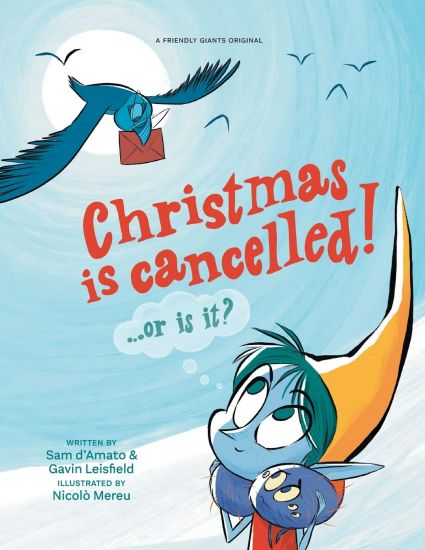
Christmas is Cancelled!

Christmas is Cancelled!

Gavin Leisfield; Sam d'Amato

Friendly Giants Limited
2020
sidottu
With a nasty bug sweeping the globe, Santa’s workshop is forced to close and all his elves placed into lockdown. Without access to the high tech toy-making machines in the workshop, there’s no way the elves can possibly make all the toys they need this Christmas, and they fall into despair. Could this be the year that the magic of Christmas is lost forever? The newest, youngest and smallest elf on record refuses to accept this thought and wants nothing more than to make Christmas magic for all the children on Santa’s list. Inspired by her own bow-tying skills, she starts making gifts from whatever she can find. But her parents, convinced that the only way to make toys today is by pushing buttons on a machine, tell her it’s pointless. The smallest elf stumbles upon an old workshop in her back garden, full of tools and perfectly matched to her size. The workshop was her Gran’s - a small elf too - and inspired, she quickly learns how to make toys out of wool, wood and other things with the help of her animal friends. Just when she thinks she’s cracked it, she learns from Santa that the only way he can make the sleigh fly is to make EVERY SINGLE PRESENT on the list. And she’s way, way off. Luckily the other small elves in the village have been watching this saga unfold. Keen to save Christmas too, they join her in making every last toy in one epic final push on Christmas Eve Eve — ready for Santa to fill his sleigh and take the toys out to the world. As the sleigh takes to the sky we realise that Mikka has done it! Saved Christmas for all - It’s astounding, the things you can do when you’re small.
Christmas is Cancelled!

Christmas is Cancelled!

Gavin Leisfield; Sam d'Amato

Friendly Giants Limited
2020
nidottu
With a nasty bug sweeping the globe, Santa’s workshop is forced to close and all his elves placed into lockdown. Without access to the high tech toy-making machines in the workshop, there’s no way the elves can possibly make all the toys they need this Christmas, and they fall into despair. Could this be the year that the magic of Christmas is lost forever? The newest, youngest and smallest elf on record refuses to accept this thought and wants nothing more than to make Christmas magic for all the children on Santa’s list. Inspired by her own bow-tying skills, she starts making gifts from whatever she can find. But her parents, convinced that the only way to make toys today is by pushing buttons on a machine, tell her it’s pointless. The smallest elf stumbles upon an old workshop in her back garden, full of tools and perfectly matched to her size. The workshop was her Gran’s - a small elf too - and inspired, she quickly learns how to make toys out of wool, wood and other things with the help of her animal friends. Just when she thinks she’s cracked it, she learns from Santa that the only way he can make the sleigh fly is to make EVERY SINGLE PRESENT on the list. And she’s way, way off. Luckily the other small elves in the village have been watching this saga unfold. Keen to save Christmas too, they join her in making every last toy in one epic final push on Christmas Eve Eve — ready for Santa to fill his sleigh and take the toys out to the world. As the sleigh takes to the sky we realise that Mikka has done it! Saved Christmas for all - It’s astounding, the things you can do when you’re small.

Vera Philosophia

Vera Philosophia

Giulio D'Onofrio; John Gavin

Brepols Publishers
2008
nidottu
This volume includes a collection of reworked articles which the author, during the last twenty years, dedicated to the origins and conditions constitutive of Christian philosophical-theological thought. From the earliest centuries of the Christian era, human reason was submitted to a particular formal conditioning, in so far as it was necessarily obliged to confront the contents of a divine revelation recognized as necessarily 'true'. The medieval Latin scholar was induced by the social and cultural peculiarities of his time to confront a model of thought which imposes a decisive subordination of natural knowledge - demonstrated to be imperfect and inconclusive - to the certainties assured by the faith. The production of this model of philosophia, sensibly different from the dominant paradigms in the classical period, rooted itself in the critical redimensioning of reason introduced into the West by Cicero. Departing from the observation of the failure of the philosophical aspirations of antiquity, the Christian intellectuals effected an operative 'overturning' of the conditions of veridical knowledge. The new wisdom was not the result of a pure interference of religion in the field of rational science; it was, however, directed by a conscious 'conversion' of the philosophers and fulfilled on two sides: on that of the faith, which requires earthly knowledge in order to defend itself from misunderstandings and heresies; and on that of reason, which allows itself to draw upon supernatural revelation for the possession of regulatory principles which guide it in the study of natural things. This book investigates the development of this approach during the course of the centuries which precede, in the West, the rediscovery of Aristotelian epistemology: from Augustine to Boethius, from John Scottus Eriugena to Anselm of Aosta. It moves to the point of describing the return of this methodological approach, at the end of the Medieval Scholastic period, in the results of the anti-Aristotelian critique carried out by the men of the Renaissance in the recovering of a model of thought which had dominated in the Patristic and Early Medieval periods.
Climate Change

Climate Change

Gavin Schmidt; Joshua Wolfe; Jeffrey D. Sachs

WW Norton Co
2009
nidottu
Going beyond the headlines, this work by leading NASA climate scientist Gavin Schmidt and master photographer Joshua Wolfe illustrates as never before the ramifications of shifting climate. Photographic spreads show retreating glaciers, sinking villages in Alaska’s tundra, and drying lakes. The text follows adventurous scientists through the ice caps at the poles to the coral reefs of the tropical seas. Marshaling data spanning centuries and continents, the book sparkles with cutting-edge research and visual records, including contributions from experts on atmospheric science, oceanography, paleoclimatology, technology, politics, and the polar regions. As Jeffrey D. Sachs writes in his powerful foreword, “Climate Change is a tour de force of public education.”
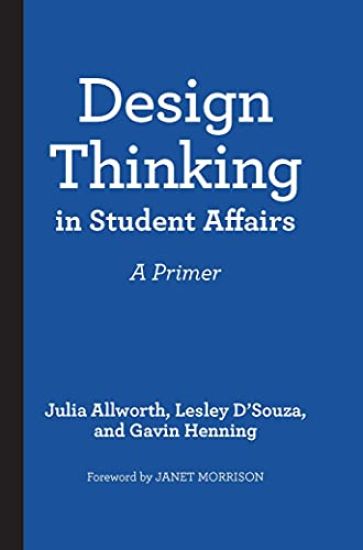
Design Thinking in Student Affairs

Design Thinking in Student Affairs

Julia Allworth; Lesley D'Souza; Gavin W. Henning

TAYLOR FRANCIS INC
2021
sidottu
Design thinking is an innovative problem-solving framework. This introduction is the first book to apply its methodology to student affairs and, in doing so, points the way to its potentially wider value to higher education as a whole.With its focus on empathy, which is the need to thoroughly understand users’ experiences, design thinking is user-centered, similar to how student affairs is student-centered. Because the focus of design thinking is to design with users, not for users, it aligns well with student affairs practice. In addition, its focus on empathy makes design thinking a more equitable approach to problem-solving than other methods because all users’ experiences—not just the experiences of majority or “average” student—need to be understood. Centering empathy in problem-solving processes can be a tool to disrupt higher education systems and practices.Design thinking is a framework to foster innovation, and, by its nature, innovation is about responding to change factors with creativity. In an organization, design thinking is inherently connected to organizational change and culture because the process is really about changing people to help them rally around a disruptive idea. Implementing design thinking on a campus may in itself be disruptive and require a change management process. The beauty of using design thinking is that it can also act as a framework to support organizational culture change.Design thinking approaches, with their focus on stakeholder needs (as opposed to systemic norms), collaborative solutions building, and structured empathy activities can offer a concrete tool to disrupt harmful systems of power and oppression. Design thinking as a process is not a magic solution to equity problems, though it can be a powerful tool to approach the development of solutions that can address inequity. Design thinking is data-driven and considers both qualitative and quantitative data as necessary to gain most complete picture of an issue and its possible solutions, whether a product, program, or service.Design thinking has numerous benefits to afford students affairs. Chapter 1 outlines a case for design thinking in student affairs. Chapter 2 discusses a brief history of design thinking, noting its germination and evolution to current practice. Chapter 3 provides a detailed description of each step of the design thinking model with pertinent examples to make the steps clearer. Chapter 4 explains the intersection of equity and design thinking while chapter 5 explores the use of design thinking for organizational change. Chapter 6 presents a new model for design thinking assessment. Chapter 7 addresses the challenges and limitations of the process. Chapter 8 concludes the book by discussing the alignment of design thinking and student affairs and outlining next steps.Design thinking is an innovative process that can change the way higher education and student affairs operates, realizing the potential it offers.
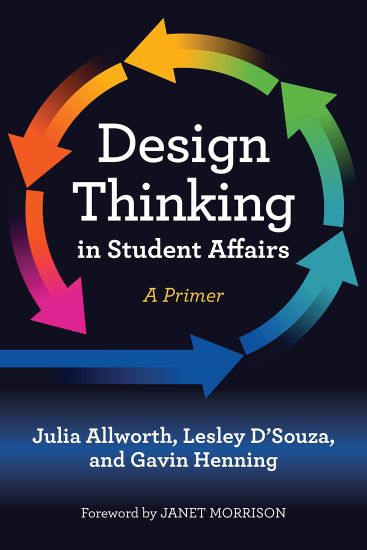
Design Thinking in Student Affairs

Design Thinking in Student Affairs

Julia Allworth; Lesley D'Souza; Gavin W. Henning

TAYLOR FRANCIS INC
2021
nidottu
Design thinking is an innovative problem-solving framework. This introduction is the first book to apply its methodology to student affairs and, in doing so, points the way to its potentially wider value to higher education as a whole.With its focus on empathy, which is the need to thoroughly understand users’ experiences, design thinking is user-centered, similar to how student affairs is student-centered. Because the focus of design thinking is to design with users, not for users, it aligns well with student affairs practice. In addition, its focus on empathy makes design thinking a more equitable approach to problem-solving than other methods because all users’ experiences—not just the experiences of majority or “average” student—need to be understood. Centering empathy in problem-solving processes can be a tool to disrupt higher education systems and practices.Design thinking is a framework to foster innovation, and, by its nature, innovation is about responding to change factors with creativity. In an organization, design thinking is inherently connected to organizational change and culture because the process is really about changing people to help them rally around a disruptive idea. Implementing design thinking on a campus may in itself be disruptive and require a change management process. The beauty of using design thinking is that it can also act as a framework to support organizational culture change.Design thinking approaches, with their focus on stakeholder needs (as opposed to systemic norms), collaborative solutions building, and structured empathy activities can offer a concrete tool to disrupt harmful systems of power and oppression. Design thinking as a process is not a magic solution to equity problems, though it can be a powerful tool to approach the development of solutions that can address inequity. Design thinking is data-driven and considers both qualitative and quantitative data as necessary to gain most complete picture of an issue and its possible solutions, whether a product, program, or service.Design thinking has numerous benefits to afford students affairs. Chapter 1 outlines a case for design thinking in student affairs. Chapter 2 discusses a brief history of design thinking, noting its germination and evolution to current practice. Chapter 3 provides a detailed description of each step of the design thinking model with pertinent examples to make the steps clearer. Chapter 4 explains the intersection of equity and design thinking while chapter 5 explores the use of design thinking for organizational change. Chapter 6 presents a new model for design thinking assessment. Chapter 7 addresses the challenges and limitations of the process. Chapter 8 concludes the book by discussing the alignment of design thinking and student affairs and outlining next steps.Design thinking is an innovative process that can change the way higher education and student affairs operates, realizing the potential it offers.
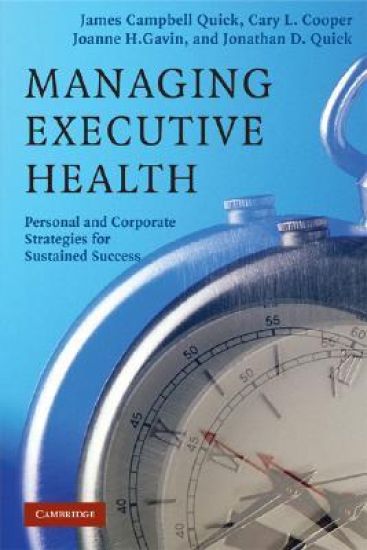
Managing Executive Health

Managing Executive Health

James Campbell Quick; Cary L. Cooper; Joanne H. Gavin; Jonathan D. Quick

Cambridge University Press
2008
pokkari
The health of managers, executives, and business leaders has a massive impact on the performance and prospects of modern organizations. If health problems are not tackled, people become less productive, less effective, and more destructive. It is clear that business leaders and human resource professionals cannot afford to ignore the impact of work-related health issues on company performance. Yet even acknowledging this fact still leaves us with a choice over how to proceed. Should we try to minimize those risks that typically lead to health problems or seek to strengthen executive health? While recognising that identifying health risks is the first step in any preventive health program, Managing Executive Health argues for a positive approach, which emphasizes physical vigour, psychological well-being, spiritual vitality, and ethical integrity. Key issues are illustrated throughout with case studies of high-profile figures from the worlds of business and politics.
Managing Executive Health

Managing Executive Health

James Campbell Quick; Cary L. Cooper; Joanne H. Gavin; Jonathan D. Quick

Cambridge University Press
2008
sidottu
The health of managers, executives, and business leaders has a massive impact on the performance and prospects of modern organizations. If health problems are not tackled, people become less productive, less effective, and more destructive. It is clear that business leaders and human resource professionals cannot afford to ignore the impact of work-related health issues on company performance. Yet even acknowledging this fact still leaves us with a choice over how to proceed. Should we try to minimize those risks that typically lead to health problems or seek to strengthen executive health? While recognising that identifying health risks is the first step in any preventive health program, Managing Executive Health argues for a positive approach, which emphasizes physical vigour, psychological well-being, spiritual vitality, and ethical integrity. Key issues are illustrated throughout with case studies of high-profile figures from the worlds of business and politics.
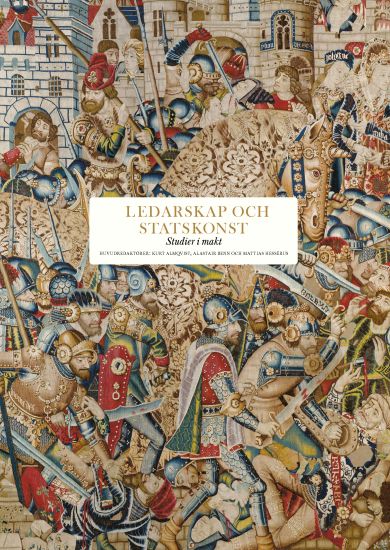
Ledarskap och statskonst : studier i makt

Ledarskap och statskonst : studier i makt

Philip Zelikow; Anna Wieslander; Lucy Ward; Edward Stringer; Nathan Shachar; Michael Scott; Kori Schake; Andreas Rödder; Iskander Rehman; Sergey Radchenko; Alina Polyakova; Gudrun Persson; Kenneth Payne; Charles Moore; Munira Mirza; Henrik Meinander; Rory Medcalf; James Marriott; Fredrik Logevall; Alexander Lee; Julian Jackson; Katja Hoyer; Oleksii Goncharenko; Francis J. Gavin; Kentaro Fujimoto; Daisy Dunn; Claire Coutinho; J.C.D. Clark; David Butterfield; Kristin Ven Bruusgaard; Elisabeth Braw; John Bew; Benedetta Berti

Bokförlaget Stolpe
2025
sidottu
Machiavellis observation om ledarskapets svåra balansgång är lika relevant i vår tid, som den en gång var i 1500-talets Florens. Kinas framväxt, Rysslands attack mot Ukraina och den växande politiska och ekonomiska närvaron i den globala södern har aktualiserat frågan om vikten av kompetent ledarskap inom politiskt styre. Denna antologi utforskar utmaningarna för ledarskap och statskonst i en allt mer komplex värld och ställer frågan huruvida vi kan skapa politiska eliter som är kapabla att på ett säkert vis vägleda väst genom de många prövningar vi står inför. Genom att se till vårt förflutna såväl som till vår samtid undersöker världsledande forskare och skribenter hur ledarskapsidéer har utvecklats genom historien för att ge oss en större förståelse för statskonsten och för vilka färdigheter och organisationer som krävs för att driva små stater, stora imperier och allt däremellan. Boken finns även i engelsk utgåva.
Another Remedy for Deception

Another Remedy for Deception

D Gavi Gaviola Feck Edd

Independently Published
2018
pokkari
Deception is a serious matter. Did you know the Bible provides the remedy for deception? The Bible describes that all people, both non-believers and believers are moved by the course of this world, a system where deception is swayed with corruption, the devil, and our own flesh. The origin of deception stems from our own sin (1 John 1:8). Pride was the original sin. We read from the beginning of time, God gave mankind freewill to choose; yet, our own vulnerabilities toward sin, the lust of the eyes, lust of the flesh, and the pride of life influenced the choice of disobedience to God. Adam and Eve set in motion the sin curse for all mankind. God Who is Holy has been hurt by our sin. God's desire is to have a relationship with mankind but sin no matter how small or how great has caused a broken relationship with God. Sin is the problem for mankind and Christ alone is the number one remedy. Did you know communion is another remedy for deception? In this book, there are 12 monthly devotional themes to prepare our hearts before participation in communion. Every devotional is seasonal and captures a reason why we remember all that Christ has done. The meditation portion is to reflect further into scripture and allow truth to integrate into our hearts. The prayer portion is essential to our lives; thus a sample prayer is designed to spur further your personal time of prayer. May God inspire you to take each truth and energize you with sound teaching. Communion has great importance to every Christian and has transformational influence to sharpen us spiritually in a world of deception. May our spiritual eyes be opened that we confess and repent of our sins before a Holy God prior to communion. May we come away with celebration, knowing Christ paid the penalty for our sins, He is risen and lives in our hearts today We anticipate His return and we remember.
Aventures d'Un Gamin de Paris Au Pays Des Lions

Aventures d'Un Gamin de Paris Au Pays Des Lions

Louis Boussenard

Hachette Livre - BNF
2018
pokkari
Aventures d'un gamin de Paris a travers l'Oceanie / par Louis BoussenardDate de l'edition originale: 1883Ce livre est la reproduction fidele d'une oeuvre publiee avant 1920 et fait partie d'une collection de livres reimprimes a la demande editee par Hachette Livre, dans le cadre d'un partenariat avec la Bibliotheque nationale de France, offrant l'opportunite d'acceder a des ouvrages anciens et souvent rares issus des fonds patrimoniaux de la BnF.Les oeuvres faisant partie de cette collection ont ete numerisees par la BnF et sont presentes sur Gallica, sa bibliotheque numerique.En entreprenant de redonner vie a ces ouvrages au travers d'une collection de livres reimprimes a la demande, nous leur donnons la possibilite de rencontrer un public elargi et participons a la transmission de connaissances et de savoirs parfois difficilement accessibles.Nous avons cherche a concilier la reproduction fidele d'un livre ancien a partir de sa version numerisee avec le souci d'un confort de lecture optimal. Nous esperons que les ouvrages de cette nouvelle collection vous apporteront entiere satisfaction.Pour plus d'informations, rendez-vous sur www.hachettebnf.fr