

Kirjahaku
Etsi kirjoja tekijän nimen, kirjan nimen tai ISBN:n perusteella.
1000 tulosta hakusanalla Geoffrey H. Block

Perfect for Little Ones and those who love them to share special times together. From the bestselling author / illustrator team of "WHY DID GOD MAKE DINOSAURS?" and "IF I HAD A MERMAID FRIEND" -- for Little Ones of all ages. Have you ever wondered why God created Little Ones "so amazing in every way?" Well now is your chance to find out why Ideal for infants to early readers, this entertaining and educational picture book, that children, parents and teachers will all enjoy, is filled with fun and imagination on every page A great Baby Shower, Birthday or anytime gift Printed in the USA.

Amtrak, America's Railroad
Geoffrey H. Doughty; Jeffrey T. Darbee; Eugene E. Harmon
Indiana University Press
2021
sidottu
Discover the story of Amtrak, America's Railroad, 50 years in the making. In 1971, in an effort to rescue essential freight railroads, the US government founded Amtrak. In the post–World War II era, aviation and highway development had become the focus of government policy in America. As rail passenger services declined in number and in quality, they were simultaneously driving many railroads toward bankruptcy. Amtrak was intended to be the solution. In Amtrak, America's Railroad: Transportation's Orphan and Its Struggle for Survival, Geoffrey H. Doughty, Jeffrey T. Darbee, and Eugene E. Harmon explore the fascinating history of this popular institution and tell a tale of a company hindered by its flawed origin and uneven quality of leadership, subjected to political gamesmanship and favoritism, and mired in a perpetual philosophical debate about whether it is a business or a public service. Featuring interviews with former Amtrak presidents, the authors examine the current problems and issues facing Amtrak and their proposed solutions. Created in the absence of a comprehensive national transportation policy, Amtrak manages to survive despite inherent flaws due to the public's persistent loyalty. Amtrak, America's Railroad is essential reading for those who hope to see another fifty years of America's railroad passenger service, whether they be patrons, commuters, legislators, regulators, and anyone interested in railroads and transportation history.
Psychology Moving East
Geoffrey H Blowers; Alison M Turtle; Phom Minh Hac; Hamida A Begum
Routledge
2019
sidottu
Psychologists from nineteen countries in Asia and Oceania report on the expansion of western psychology in the region at both the academic and the professional levels. With its own network of associations, conferences, and journals, the comminity of psychologists in the East has braved new frontiers for the discipline.
Psychology Moving East
Geoffrey H Blowers; Alison M Turtle; Phom Minh Hac; Hamida A Begum
Routledge
2021
nidottu
Psychologists from nineteen countries in Asia and Oceania report on the expansion of western psychology in the region at both the academic and the professional levels. With its own network of associations, conferences, and journals, the comminity of psychologists in the East has braved new frontiers for the discipline, yet its achievements are litt

Modern architecture has become extremely complex and its study has been made more difficult by changes in fashion and a proliferation of design modes. In this book, Geoffrey Baker develops a methodology for design analysis that reveals the underlying organisation of buildings. Part One explains the nature and role of architecture in a wide-ranging discussion extending from geometry to symbolism. Part Two demonstrates the analytical methodology by reference to cities and works by modern masters such as Aalto, Meier and Stirling. In this second revised edition, Dr Baker has added a chapter outlining the relationship between some current perceptions of science, art and philosophy, and how these impinge on architecture. The discussion compares Futurism, Constructivism, Suprematism, High Tech, Deconstruction and the attitude of the avant-garde, with the phenomenology of Bachelard and Heiddeger.
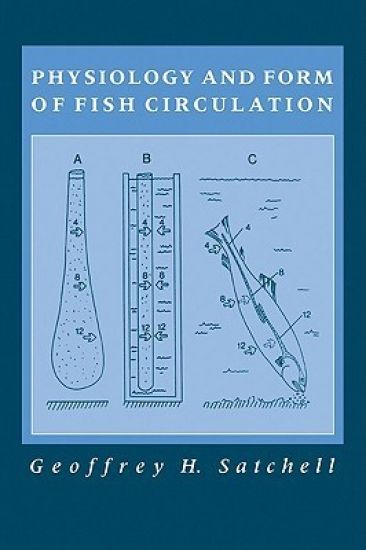
Physiology and Form of Fish Circulation
Geoffrey H. Satchell
Cambridge University Press
2008
pokkari
This book provides a clear and concise account of the physiology and form of the fish circulatory system. Emphasis is primarily placed on the function of the system although details of structure have been included. Following some revisionary ideas on haemodynamics, attention is focused on the heart as the primary pump in the fish circulatory system. The fine structure and the electrical and ionic myocytes are described and the major events of the cardiac system are outlined. This is followed by a description of the structure of the peripheral vessels and of circulation in certain special areas such as the gills, the renal portal system and the secondary blood system. Further chapters are devoted to the blood and the haemopoetic tissues and include an account of the different types of retial system that concentrate oxygen or heat in various parts of the body. This book is well illustrated and written in a style comprehensible to anyone with a basic knowledge of the biological and physical sciences. Both undergraduate and graduate students of physiology, zoology and marine science will find this an invaluable reference text.
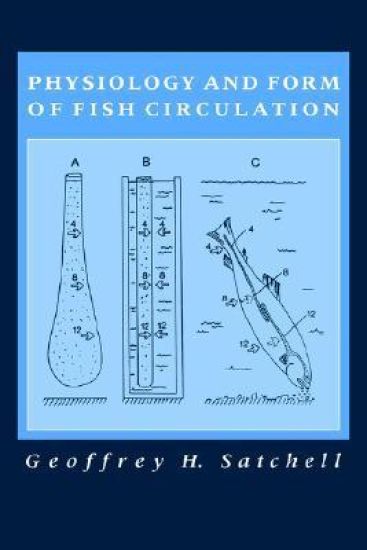
Physiology and Form of Fish Circulation
Geoffrey H. Satchell
Cambridge University Press
1991
sidottu
This book provides a clear and concise account of the physiology and form of the fish circulatory system. Emphasis is primarily placed on the function of the system although details of structure have been included. Following some revisionary ideas on haemodynamics, attention is focused on the heart as the primary pump in the fish circulatory system. The fine structure and the electrical and ionic myocytes are described and the major events of the cardiac system are outlined. This is followed by a description of the structure of the peripheral vessels and of circulation in certain special areas such as the gills, the renal portal system and the secondary blood system. Further chapters are devoted to the blood and the haemopoetic tissues and include an account of the different types of retial system that concentrate oxygen or heat in various parts of the body. This book is well illustrated and written in a style comprehensible to anyone with a basic knowledge of the biological and physical sciences. Both undergraduate and graduate students of physiology, zoology and marine science will find this an invaluable reference text.
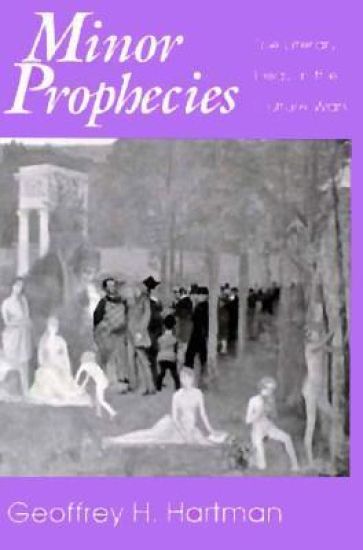
For most people literary criticism is a mystery that often seems inaccessible, written for an in-group. Even worse, a Battle of the Books has broken out between neoconservatives and neoradicals—all the more reason to steer clear of the fray. Geoffrey Hartman argues that ignoring the culture wars would be unwise, for what is at stake is the nature of the arts we prize and our obligation to remain civil and avoid the apocalyptic tone of most political prophecy.Hartman’s book is both a survey of the history of modern literary criticism and a strategic intervention. First he presents an account of the culture of criticism in the last one hundred years. He then widens the focus to provide a picture of the critical essay from 1700 to the present in order to show that a major change in style took place after 1950. Two chapters focus on F. R. Leavis and Paul de Man, central—and controversial—figures in academic criticism. Hartman attends to major developments on the continent and in Anglo-American circles that have disrupted the calm of what he calls the friendship or conversational style. On the one hand, critics and thinkers have pursued strange gods in order to enrich and sharpen their critical style. This change Hartman welcomes. On the other hand, along with a renewed interest in politics and historical speculation, a didactic and moralistic tone has again entered the scene. Hartman rejects this new moralism.The author is an eloquent defender of reading the text of criticism as carefully as the text of literature. He argues for a broader conception of critical style, one that would support the open and conversational voice of the public critic as well as the inventive and innovative practice of the technical critic. Hartman sets before us an ideal of literary criticism that can acknowledge theory yet does not shrink from a sustained, text-centered response. Minor Prophecies is a major book by one of our finest critics.
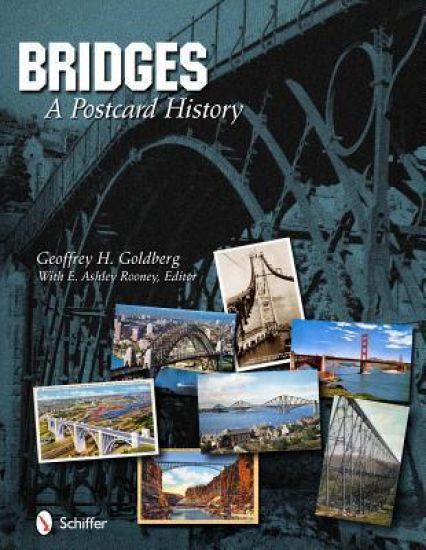
Take a tour through time and learn about the exciting engineering developments that allowed the primitive bridges of ancient man evolve to the masterworks of today. This unique treatment, showing the large variety of bridge forms, is illustrated with postcards, archival photographs, and technical drawings and diagrams. These detailed images show stone arch, suspension, movable, and many more bridges. Laymen and engineers alike are certain to come away with a better understanding of the role of bridges in our built environment from the expert explanations of bridge types, materials, and construction to amusing anecdotes associated with these structures. Landmark bridges, construction methods, the interstate system, railroad bridges, and even bridge disasters are all documented in this technical record of civil engineering challenges and feats.
"Saving the Text" cuts through Jacques Derrida's complex blend of philosophy, commentary, and elaborate wordplay to ascertain his place in the history of criticism and the significance of Glas as literary event. Distinguished critic and scholar Geoffrey Hartman explores the usefulness of Derrida's style of close reading for English and American scholarship and establishes its relevance to the division that has arisen between European and Anglo-American critical approaches. In addition, he discusses Derrida's exepesis in relation to theological commentary. Hartman's culminating "counterstatement" to Derrida is a new theory of literature, both speculative and pragmatic.
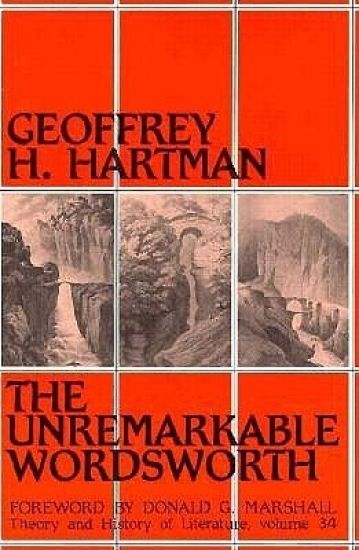
The Unremarkable Wordsworth: Volume 34
Geoffrey H. Hartman
UNIVERSITY OF MINNESOTA PRESS
1987
nidottu
The Unremarkable Wordsworth was first published in 1987. Minnesota Archive Editions uses digital technology to make long-unavailable books once again accessible, and are published unaltered from the original University of Minnesota Press editions. William Wordsworth was attacked by the critics of his time for imposing unremarkable sights and sentiments on his audience. In this book's title essay, an exemplary reading of the Westminster Bridge sonnet, Geoffrey Hartman shows how Wordsworth's "unremarkable phrases" attain their curious vigor. Drawing upon the propositions of semiological analysis-that signs are not signs unless they become perceptible, through the contrast between "marked" and "unmarked"-Hartman, in a deft and sensitive analysis, is able to play these notions of marking and the unremarkable off against each other. Wordsworth, in the end, overcomes both his critics and the science of signs: his quiet sonnet-with its muted or near-absent signs-is itself, as epitaph for an era, a faithful sign of the times. Hartman's capacity to open up a dialogue between contemporary theory and Wordsworth's poetry informs all of these essays, written since the 1964 publication of Wordsworth's Poetry, a book that marked an epoch in the study of that poet and of Romantic poetry in general. In the years since then, the nature of literary study has changed dramatically, and Hartman has been a leader in the turn to theoretical modes of interpretation. The fifteen essays in The Unremarkable Wordsworth draw upon a wide range of contemporary theoretical approaches, from psychoanalysis to structuralism, from deconstruction to phenomenology. Yet, as Donald Marshall points out in his foreword, "Wordsworth remains so much the focus of this book that 'critical method' is strangely transmuted." For Hartman, reading and thinking are inseparable; he has an uncanny power to convey in an intensified form the poet's own consciousness, not under the rubric of "intertextuality" but because he "has ears to hear." Geoffrey H. Hartman is Karl Young Professor of English and Comparative Literature at Yale University. His most recent book is Easy Pieces. Donald G. Marshall is a professor of English at the University of Iowa.
Science and the Doctrine of Creation – The Approaches of Ten Modern Theologians
Geoffrey H. Fulkerson; Joel Thomas Chopp; Alister E. McGrath
IVP Academic
2021
nidottu
Can Christians take seriously the claims of modern science without compromising their theological integrity? Can theology contribute to our understanding of the natural world without reducing the doctrine of creation to a few flashpoint issues? While there is no shortage of works that treat the intersection between science and religion, little attention has been paid to the theological reception of developments of modern science. Yet a deeper look at the history of Christian thought offers a wealth of insight from theological giants for navigating this complex terrain. Science and the Doctrine of Creation examines how influential modern theologians—from the turn of the nineteenth century through the present—have engaged the scientific developments of their times in light of the doctrine of creation. In each chapter a leading Christian thinker introduces readers to the unique contributions of a key theologian in responding to the assumptions, claims, and methods of science. Chapters include Kevin J. Vanhoozer on T. F. TorranceKatherine Sonderegger on Karl BarthCraig G. Bartholomew on Abraham KuyperChristoph Schwöbel on Wolfhart Pannenberg Edited by Geoffrey Fulkerson and Joel Chopp of the Carl F. H. Henry Center for Theological Understanding, this book grows out of the Henry Center's Creation Project, which promotes biblically faithful and scientifically engaged dialogue around the doctrine of creation. From Warfield's critical appraisal of Darwinian evolution to Pannenberg's pneumatological reflections on field theory, these studies explore how Christians can think more carefully about the issues at stake using the theological resources of their traditions.


The Architecture of James Stirling and His Partners James Gowan and Michael Wilford
Geoffrey H. Baker
Routledge
2016
nidottu
Sir James Stirling was arguably the greatest British architect of the twentieth century. This book provides the most comprehensive critical survey of Stirling's work to date, charting the development of his ideas from his formative years, through his partnership with James Gowan, on to his period in practice as sole partner; and finally, his partnership with Michael Wilford. Using archival material, extensive interviews with his partners and others who worked for him, together with analytical examination of key buildings, this detailed critical examination explains his philosophy, working method and design strategy. In doing so, it sheds new light on the atelier structure of his office and who did what on his major buildings. Geoffrey Baker is the first to analyse in depth the articulation systems used in major projects undertaken by Stirling. He confirms that the Staatsgalerie complex at Stuttgart does not demonstrate Stirling's interest in post modernism but rather an enhanced sensitivity towards context informed by his growing allegiance to the classical canon. Baker explains how this important development in his work, powerfully influenced by Karl Friedrich Schinkel, is consummated in perhaps the finest of Stirling's uncompleted works, the extension to London's National Gallery. In a discussion of his mature works, Baker explains how Stirling's work can be understood in terms of several interconnected ideas. These include surrealism, historicism, myth and metaphor, inconsistency and ambiguity, bi-lateral symmetry, the garden, rusticity and arcadia, and the archetype, seen as the repository of the collective architectural memory. As well as discussing his interests and those who influenced Stirling, the book compares his oeuvre with that of the pioneers of modern architecture, Mies van der Rohe, Frank Lloyd Wright, Alvar Aalto and Le Corbusier. This book charts a remarkable career, and offers invaluable insights not only into the masterly, timeless architecture, but also into the man himself: charismatic, irreverent, courageous, serious; sometimes rude, often stubborn, belligerent, yet gentle. He was endlessly inventive and deeply dedicated to his art, producing buildings that reflect all of the above, buildings that are magnificent and ultimately humane.