In this bold and uncompromising book, George G. M. James argues that the "Greek philosophy" in which nearly all of Western culture has its roots actually originated in ancient Egypt Drawing on careful historical research and a radical rethinking of the conventional narrative of Greek history, James asserts that our celebration of the ancient Greeks as the creators of Western civilization and philosophy is misattributed. In fact, he argues, our praise rightfully belongs to the people of Africa. Furthermore, this massive intellectual and cultural theft has helped lend credence to the damaging notion that the entire continent of Africa has contributed nothing to world civilization. James explorers documented connections between celebrated Greek philosophers and the influence of Egyptian thought, proposing other possible links between northern Africa and Greece as well. An important book for understanding the history of philosophy, culture, and race in the modern world, Stolen Legacy is not to be missed.
In this bold and uncompromising book, George G. M. James argues that the "Greek philosophy" in which nearly all of Western culture has its roots actually originated in ancient Egypt Drawing on careful historical research and a radical rethinking of the conventional narrative of Greek history, James asserts that our celebration of the ancient Greeks as the creators of Western civilization and philosophy is misattributed. In fact, he argues, our praise rightfully belongs to the people of Africa. Furthermore, this massive intellectual and cultural theft has helped lend credence to the damaging notion that the entire continent of Africa has contributed nothing to world civilization. James explorers documented connections between celebrated Greek philosophers and the influence of Egyptian thought, proposing other possible links between northern Africa and Greece as well. An important book for understanding the history of philosophy, culture, and race in the modern world, Stolen Legacy is not to be missed.
One of the greatest true stories of World War II, now in Greek, inclusive of the historic material recently discovered. Seventy years later and after 500k copies sold the amazing story of "Sandy" Thomas, 96 today, is now published in the language of the country that it took place, and shaped the hero's life and carreer. George G. Spanos, has followed the hero footsteps seven decades after his adventure and enriched the story with annotations, remarks and recognition of the people that helped Sandy Thomas. The reader is able to understand deeper the WWII time-space in Greece, and Mount Athos. This is the only true WWII adventure that includes Mount Athos and shows the courageous involvement of the Athonite monks who inspite of the Nazi threats and extortions, risked their own lives and the very existance of their monasteries to save local and allied soldiers that were trying to get back to their bases in Egypt and Syria. A great read that involves true battles, true adventures, true escapes, true romance and true spirituality, with an unexpected end. This special edition includes the rare booklet "A Visit to Mount Athos, November 1944" in Greek, which also published separately by Athos Press, Ny and George G. Spanos.
After the Gettysburg Campaign of the American Civil War in late July 1863, the Union Army of the Potomac, commanded by Major General George G. Meade, pursued the Confederate Army of Northern Virginia, commanded byGeneral Robert E. Lee, south into Central Virginia. There followed a series of maneuvers and engagements as the two commanders jockeyed for position. The Mine Run Campaign constitutes one of these episodes and was conducted during the period 20 October 1863 to 2 December 1863. Little study has been devoted to this rather obscure campaign because of its relatively inconclusive results. However, the campaign does provide a unique opportunity to analyze the actions and thought processes of an army commander at the operational level of war. Since the Mine Run Campaignwas Meade's first army level offensive operation, this paper is focused on his application of the Operational Art. To that end this study explores the factors that influence the development of the army commander's intent, the design of his campaign plan, and the execution of the campaign in combat operations
The central goal of this volume was to assemble outstanding scholars and policymakers in the field of financial markets and institutions and have them articulate significant market developments in their particular areas of expertise during the past few decades.Not just a celebratory volume, Public Policy and Financial Economics selected internationally recognized financial economists who have worked with Professor Kaufman during his years of scholarly research, and have a combined mastery of specialized financial markets themes and, very importantly, knowledge of public policies in the areas. All 15 chapters offer unique, innovative, and exciting expositions of several critical topics in financial economics.
*Includes pictures of Meade, Lee, and important people, places, and events in their lives. *Includes Bibliographies of both Meade and Lee for further reading. "The fact of the matter is that George G. Meade, unexpectedly and against all odds, thoroughly outgeneraled Robert E. Lee at Gettysburg." - Stephen Sears With the exception of George Washington, perhaps the most famous general in American history is Robert E. Lee (January 19, 1807 - October 12, 1870), despite the fact he led the Confederate Army of Northern Virginia against the Union in the Civil War. Lee is remembered today for constantly defeating the Union's Army of the Potomac in the Eastern theater from 1862-1865, considerably frustrating Lincoln and his generals. His leadership of his army led to him being deified after the war by some of his former subordinates, especially Virginians, and he came to personify the Lost Cause's ideal Southern soldier. His reputation was secured in the decades after the war as a general who brilliantly led his men to amazing victories against all odds. Ironically, one of the generals who often escapes the attention of Civil War fans who compile the lists of best generals is the man who defeated Lee to win the war's most famous battle, George G. Meade (1815-1872). In late June 1863, Meade took command of the Army of the Potomac just 3 days before the start of the battle, and he was facing Lee, who had a nearly unblemished record in the East and was less than 2 months removed from a stunning victory at Chancellorsville. Given the command situations on July 1, 1863, certainly nobody would have expected Meade to get the better of Lee as they faced off for the first time, but that's exactly what happened. Using a strong "fishhook" line on high ground that allowed him to shift soldiers along interior lines, Meade skillfully held off ferocious attacks on both of his flanks during the second day of the battle. And despite his successes and his legacy, Lee wasn't perfect. On the final day, Meade accurately predicted Lee would attack his center, and Lee complied, ordering Pickett's Charge despite the fact his principle subordinate and corps leader, General James Longstreet, advised against the charge. Feeling the need to try to strike a decisive blow, Lee went ahead with the assault, ending his army's defeat at Gettysburg with a violent climax that left half of the men who charged killed or wounded. The Commanders of Gettysburg comprehensively covers the crucial command decisions made by Meade and Lee at Gettysburg, but it also chronicles the lives and careers of both generals, from West Point to their first meeting during the Mexican-American War, their climactic clash at Gettysburg, and their service through the end of the war. Along with bibliographies and pictures of important people, places, and events in their lives, you will learn about Lee and Meade like you never have before, in no time at all.
Title: The Gold Regions of California. Being a succinct description of the geography, history, topography, and general features of California ... Edited by G. G. Foster.Publisher: British Library, Historical Print EditionsThe British Library is the national library of the United Kingdom. It is one of the world's largest research libraries holding over 150 million items in all known languages and formats: books, journals, newspapers, sound recordings, patents, maps, stamps, prints and much more. Its collections include around 14 million books, along with substantial additional collections of manuscripts and historical items dating back as far as 300 BC.The HISTORY OF COLONIAL NORTH AMERICA collection includes books from the British Library digitised by Microsoft. This collection refers to the European settlements in North America through independence, with emphasis on the history of the thirteen colonies of Britain. Attention is paid to the histories of Jamestown and the early colonial interactions with Native Americans. The contextual framework of this collection highlights 16th century English, Scottish, French, Spanish, and Dutch expansion. ++++The below data was compiled from various identification fields in the bibliographic record of this title. This data is provided as an additional tool in helping to insure edition identification: ++++ British Library Foster, George G.; 1848. 80 p.; 8 . 10410.dd.6.
Title: Glimpses of the Eastern Archipelago. Ethnographical, geographical, historical. Translated from the Dutch of F. S. A. de Clercq, C. M. Pleyte and others] by G. G. Batten the editor].Publisher: British Library, Historical Print EditionsThe British Library is the national library of the United Kingdom. It is one of the world's largest research libraries holding over 150 million items in all known languages and formats: books, journals, newspapers, sound recordings, patents, maps, stamps, prints and much more. Its collections include around 14 million books, along with substantial additional collections of manuscripts and historical items dating back as far as 300 BC.The GEOGRAPHY & TOPOGRAPHY collection includes books from the British Library digitised by Microsoft. Offering some insights into the study and mapping of the natural world, this collection includes texts on Babylon, the geographies of China, and the medieval Islamic world. Also included are regional geographies and volumes on environmental determinism, topographical analyses of England, China, ancient Jerusalem, and significant tracts of North America. ++++The below data was compiled from various identification fields in the bibliographic record of this title. This data is provided as an additional tool in helping to insure edition identification: ++++ British Library Batten, George G.; Pleyte, Cornelis Marinus; 1894. 137 p.; 8 . 10491.dd.10.
Introduction to Probability, Second Edition, discusses probability theory in a mathematically rigorous, yet accessible way. This one-semester basic probability textbook explains important concepts of probability while providing useful exercises and examples of real world applications for students to consider. This edition demonstrates the applicability of probability to many human activities with examples and illustrations. After introducing fundamental probability concepts, the book proceeds to topics including conditional probability and independence; numerical characteristics of a random variable; special distributions; joint probability density function of two random variables and related quantities; joint moment generating function, covariance and correlation coefficient of two random variables; transformation of random variables; the Weak Law of Large Numbers; the Central Limit Theorem; and statistical inference. Each section provides relevant proofs, followed by exercises and useful hints. Answers to even-numbered exercises are given and detailed answers to all exercises are available to instructors on the book companion site. This book will be of interest to upper level undergraduate students and graduate level students in statistics, mathematics, engineering, computer science, operations research, actuarial science, biological sciences, economics, physics, and some of the social sciences.
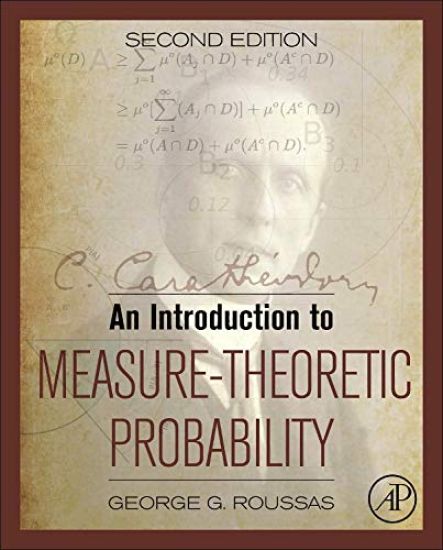
An Introduction to Measure-Theoretic Probability, Second Edition, employs a classical approach to teaching the basics of measure theoretic probability. This book provides in a concise, yet detailed way, the bulk of the probabilistic tools that a student working toward an advanced degree in statistics, probability and other related areas should be equipped with. This edition requires no prior knowledge of measure theory, covers all its topics in great detail, and includes one chapter on the basics of ergodic theory and one chapter on two cases of statistical estimation. Topics range from the basic properties of a measure to modes of convergence of a sequence of random variables and their relationships; the integral of a random variable and its basic properties; standard convergence theorems; standard moment and probability inequalities; the Hahn-Jordan Decomposition Theorem; the Lebesgue Decomposition T; conditional expectation and conditional probability; theory of characteristic functions; sequences of independent random variables; and ergodic theory. There is a considerable bend toward the way probability is actually used in statistical research, finance, and other academic and nonacademic applied pursuits. Extensive exercises and practical examples are included, and all proofs are presented in full detail. Complete and detailed solutions to all exercises are available to the instructors on the book companion site. This text will be a valuable resource for graduate students primarily in statistics, mathematics, electrical and computer engineering or other information sciences, as well as for those in mathematical economics/finance in the departments of economics.
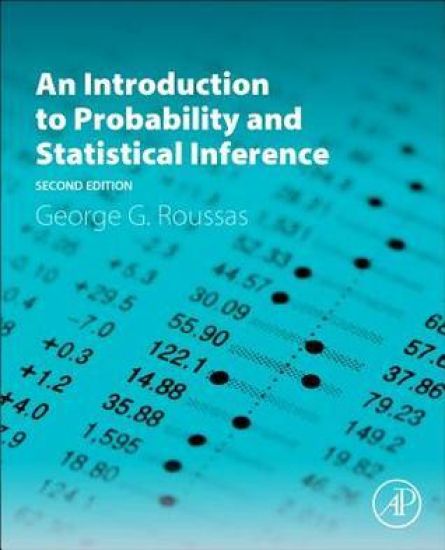
An Introduction to Probability and Statistical Inference, Second Edition, guides you through probability models and statistical methods and helps you to think critically about various concepts. Written by award-winning author George Roussas, this book introduces readers with no prior knowledge in probability or statistics to a thinking process to help them obtain the best solution to a posed question or situation. It provides a plethora of examples for each topic discussed, giving the reader more experience in applying statistical methods to different situations. This text contains an enhanced number of exercises and graphical illustrations where appropriate to motivate the reader and demonstrate the applicability of probability and statistical inference in a great variety of human activities. Reorganized material is included in the statistical portion of the book to ensure continuity and enhance understanding. Each section includes relevant proofs where appropriate, followed by exercises with useful clues to their solutions. Furthermore, there are brief answers to even-numbered exercises at the back of the book and detailed solutions to all exercises are available to instructors in an Answers Manual. This text will appeal to advanced undergraduate and graduate students, as well as researchers and practitioners in engineering, business, social sciences or agriculture.
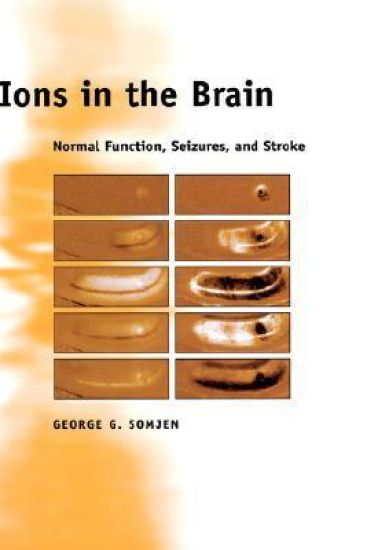
Ions, their transport across membranes, and their flow through specialized ion channels are central to the understanding of brain function, normal and pathological. The first part of this book deals with the regulation of ions in brain extra- and intracellular fluids. Regulation is effected by the blood-brain barrier, and by membrane ion pumps and other transport mechanisms of neurons and glial cells. Normally adjusted for optimal neural function, ion levels can change and alter the excitability of neurons and influence synaptic transmission in healthy and diseased brains. After an introduction to the electrophysiology of epilepsy, and a description of experimental seizure models, the second part discusses the roles of the faulty regulation of ions and of the diseases of ion channels in generating epileptic seizures. The mechanisms of action of various anticonvulsant drugs are also considered. The third part is devoted to the phenomenon of spreading depression and its likely role in human diseases. The final chapters of the book deal with the role of ions in the devastation caused by lack of oxygen and by insufficient blood flow to brain tissue, and the reasons for the exceptional vulnerability of certain classes of central neurons in hypoxia and stroke. The book will be of interest to neuroscientists, neurobiologists, neurophysiologists, neurologists, neurosurgeons, and to their students and trainees.
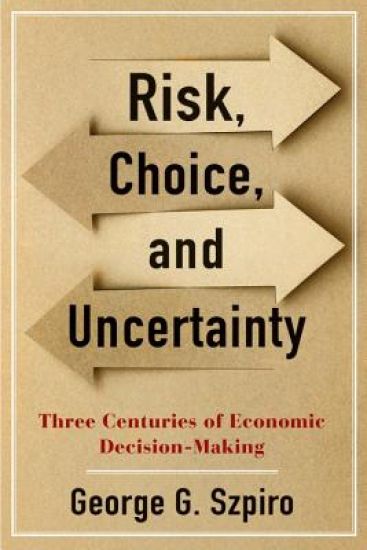
At its core, economics is about making decisions. In the history of economic thought, great intellectual prowess has been exerted toward devising exquisite theories of optimal decision making in situations of constraint, risk, and scarcity. Yet not all of our choices are purely logical, and so there is a longstanding tension between those emphasizing the rational and irrational sides of human behavior. One strand develops formal models of rational utility maximizing while the other draws on what behavioral science has shown about our tendency to act irrationally.In Risk, Choice, and Uncertainty, George G. Szpiro offers a new narrative of the three-century history of the study of decision making, tracing how crucial ideas have evolved and telling the stories of the thinkers who shaped the field. Szpiro examines economics from the early days of theories spun from anecdotal evidence to the rise of a discipline built around elegant mathematics through the past half century’s interest in describing how people actually behave. Considering the work of Locke, Bentham, Jevons, Walras, Friedman, Tversky and Kahneman, Thaler, and a range of other thinkers, he sheds light on the vast scope of discovery since Bernoulli first proposed a solution to the St. Petersburg Paradox. Presenting fundamental mathematical theories in easy-to-understand language, Risk, Choice, and Uncertainty is a revelatory history for readers seeking to grasp the grand sweep of economic thought.
Why does it always seem like the elevator is going down when you need to go up? Is it really true that 0.99999 . . . with an infinite number of 9s after the decimal point, is equal to 1? What do tea leaves and river erosion have in common, per Albert Einstein? Does seeing a bed of red flowers help prove that all ravens are black? Can we make sense of a phrase like “this statement is unprovable”?Exploring these questions and many more, George G. Szpiro guides readers through the puzzling world of paradoxes, from Socratic dialogues to the Monty Hall problem. Perplexing Paradoxes presents sixty counterintuitive conundrums drawn from diverse areas of thought—not only mathematics, statistics, logic, and philosophy but also social science, physics, politics, and religion. Szpiro offers a brisk history of each paradox, unpacks its inner workings, and considers where one might encounter it in daily life. Ultimately, he argues, paradoxes are not simple brain teasers or abstruse word games—they challenge us to hone our reasoning and become more alert to the flaws in received wisdom and common habits of thought.Lighthearted, witty, and conversational, Perplexing Paradoxes presents sophisticated material in an accessible way for all readers interested in the world’s boundless possibilities—and impossibilities.
Does the lack of evidence mean that aliens don’t exist? Why does an unproven mathematical hypothesis have profound consequences? Are humans capable of grasping the nature of divinity? Is it ethical to give a patient a placebo? Why do people persist in demonstrably false beliefs like flat earth theory? Should someone want to know when they will die? George G. Szpiro examines these questions and many others, offering an engaging and witty tour of what we can learn from ignorance. In a series of fast-paced chapters, he unravels problems ranging across science, mathematics, law, economics, politics, religion, psychology, and philosophy—some esoteric, others drawn from everyday life. Ignorance comes in many forms, Szpiro shows. Some questions are only temporarily unsolved; others are inherently answerable. Sometimes authorities keep answers from us, for good or ill. Often our assumptions and biases keep us from overcoming our ignorance, and occasionally we choose to remain ignorant—for surprisingly rational reasons. Ultimately, Szpiro argues, ignorance is not purely negative. It can motivate the pursuit of learning and wisdom—as long as we acknowledge it. Presenting sophisticated topics in an accessible way, this book shows how ignorance sheds light on the nature of knowledge.




![Glimpses of the Eastern Archipelago. Ethnographical, Geographical, Historical. Translated from the Dutch [Of F. S. A. de Clercq, C. M. Pleyte and Others] by G. G. Batten [The Editor].](/covers/9781241444181.jpg)