Kirjahaku
Etsi kirjoja tekijän nimen, kirjan nimen tai ISBN:n perusteella.
1000 tulosta hakusanalla George M Stringam
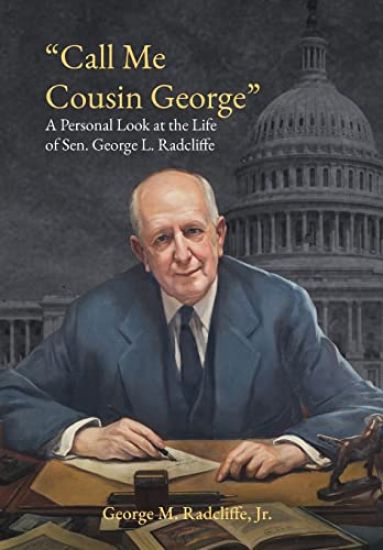
Call Me Cousin George: A Personal Look at the Life of Senator George L. Radcliffe
George M. Radcliffe
Salt Water Media, LLC
2022
sidottu
George Lovic Pierce Radcliffe (1877 - 1974) was a two-term United States Senator from Maryland, President of the Maryland Historical Society for twenty-five years, Maryland Chairman of the March of Dimes for thirty-four years, a friend to both Presidents Franklin Roosevelt and Harry Truman, a noted historian, and lifelong civic leader. This biography, written by the senator's grandson, George M. Radcliffe, Jr., contains photographs, remembrances, and essays documenting the life and times of the honorable Senator Radcliffe.
A Narrative of Some of the Lord's Dealings with George Muller Written by Himself, Fourth Part
George M Ller; George Muller
Tredition Classics
2012
pokkari
A Narrative of Some of the Lord's Dealings with George Muller Written by Himself. Second Part
George M Ller; George Muller
Tredition Classics
2012
pokkari
A Narrative of Some of the Lord's Dealings with George Muller Written by Himself, First Part
George M Ller; George Muller
Tredition Classics
2012
pokkari
The Poetical Works Of George Meredith
George Meredith; George M. (CON) Trevelyan
Kessinger Pub
2007
pokkari
The Handrail: An Aid to Recovery from Alcohol And/Or Narcotics Addiction
George M
Handrail Publishing Company
2007
nidottu
Kompetenzbasierter Lehrplan und seine Auswirkung auf Lernergebnisse
George M
Verlag Unser Wissen
2023
pokkari
Die Umsetzung des kompetenzbasierten Curriculums im Kontext dieses Lehrbuchs handelt von der Umsetzung des CBC in Grundschulen in Kenia und hat f nf Kapitel: Die Einf hrung in den Hintergrund, die eine kurze Geschichte der kompetenzbasierten Curriculum-Implementierung gibt; Kapitel zwei ist ber die berpr fung der verwandten Literatur in Bezug auf die kompetenzbasierte Curriculum-Implementierung; Kapitel drei ist ber die Forschungsmethodik, die verwendet wurde, um Daten zu sammeln und zu analysieren; Kapitel ist ber die Pr sentation der Ergebnisse, Interpretation und Diskussion und schlie lich; Kapitel f nf ist ber die Zusammenfassung, Schlussfolgerungen und Empfehlungen.
Programme d'études basé sur les compétences et son effet sur les résultats d'apprentissage
George M
Editions Notre Savoir
2023
pokkari
La mise en oeuvre du curriculum bas sur les comp tences dans le contexte de ce manuel porte sur la mise en oeuvre du curriculum bas sur les comp tences dans les coles primaires du Kenya: L'introduction au contexte qui donne un bref historique de la mise en oeuvre du curriculum bas sur les comp tences; le chapitre deux est consacr l'examen de la litt rature relative la mise en oeuvre du curriculum bas sur les comp tences; le chapitre trois est consacr la m thodologie de recherche utilis e pour collecter et analyser les donn es; le chapitre est consacr la pr sentation des r sultats, l'interpr tation et la discussion et enfin, le chapitre cinq est consacr au r sum , aux conclusions et aux recommandations.
Curriculum basato sulle competenze e il suo effetto sui risultati dell'apprendimento
George M
Edizioni Sapienza
2023
pokkari
L'implementazione del curricolo basato sulle competenze nel contesto di questo libro di testo riguarda l'implementazione del CBC nelle scuole primarie in Kenya: L'introduzione al contesto che fornisce una breve storia dell'implementazione del curricolo basato sulle competenze; il capitolo due riguarda la revisione della letteratura correlata per quanto riguarda l'implementazione del curricolo basato sulle competenze; il capitolo tre riguarda la metodologia di ricerca utilizzata per raccogliere e analizzare i dati; il capitolo la presentazione dei risultati, l'interpretazione e la discussione e, infine, il capitolo cinque riguarda la sintesi, le conclusioni e le raccomandazioni.
Currículo Baseado em Competências e seu Efeito nos Resultados de Aprendizagem
George M
Edicoes Nosso Conhecimento
2023
pokkari
A implementa o do curr culo baseado em compet ncias no contexto deste livro de texto sobre a implementa o do CBC nas escolas prim rias do Qu nia: O cap tulo dois trata da revis o da literatura relacionada com a implementa o do curr culo baseado em compet ncias; o cap tulo tr s trata da metodologia de investiga o utilizada para recolher e analisar dados; o cap tulo quatro trata da apresenta o dos resultados, da interpreta o e da discuss o e, finalmente, o cap tulo cinco trata do resumo, das conclus es e das recomenda es.
The Soul of the American University Revisited
George M. Marsden
Oxford University Press Inc
2021
sidottu
The Soul of the American University is a classic and much discussed account of the changing roles of Christianity in shaping American higher education, presented here in a newly revised edition to offer insights for a modern era. As late as the World War II era, it was not unusual even for state schools to offer chapel services or for leading universities to refer to themselves as “Christian” institutions. From the 1630s through the 1950s, when Protestantism provided an informal religious establishment, colleges were expected to offer religious and moral guidance. Following reactions in the 1960s against the WASP establishment and concerns for diversity, this specifically religious heritage quickly disappeared and various secular viewpoints predominated. In this updated edition of a landmark volume, George Marsden explores the history of the changing roles of Protestantism in relation to other cultural and intellectual factors shaping American higher education. Far from a lament for a lost golden age, Marsden offers a penetrating analysis of the changing ways in which Protestantism intersected with collegiate life, intellectual inquiry, and broader cultural developments. He tells the stories of many of the nation's pace-setting universities at defining moments in their histories. By the late nineteenth-century when modern universities emerged, debates over Darwinism and higher criticism of the Bible were reshaping conceptions of Protestantism; in the twentieth century important concerns regarding diversity and inclusion were leading toward ever-broader conceptions of Christianity; then followed attacks on the traditional WASP establishment which brought dramatic disestablishment of earlier religious privilege. By the late twentieth century, exclusive secular viewpoints had become the gold standard in higher education, while our current era is arguably “post-secular”. The Soul of the American University Revisited deftly examines American higher education as it exists in the twenty-first century.
A comparative history of race relations in the U.S. and South Africa seeks to explain the different paths each nation followed
The Outrageous Idea of Christian Scholarship
George M. Marsden
Oxford University Press Inc
1998
nidottu
At the end of his 1994 book, The Soul of the American University, George Marsden advanced a modest proposal for an enhanced role for religious faith in today's scholarship. This "unscientific postscript" helped spark a heated debate that spilled out of the pages of academic journals and The Chronicle of Higher Education into mainstream media such as The New York Times, and marked Marsden as one of the leading participants in the debates concerning religion and public life. Marsden now gives his proposal a fuller treatment in The Outrageous Idea of Christian Scholarship, a thoughtful and thought-provoking book on the relationship of religious faith and intellectual scholarship. More than a response to Marsden's critics, The Outrageous Idea of Christian Scholarship takes the next step towards demonstrating what the ancient relationship of faith and learning might mean for the academy today. Marsden argues forcefully that mainstream American higher education needs to be more open to explicit expressions of faith and to accept what faith means in an intellectual context. While other defining elements of a scholar's identity, such as race or gender, are routinely taken into consideration and welcomed as providing new perspectives, Marsden points out, the perspective of the believing Christian is dismissed as irrelevant or, worse, antithetical to the scholarly enterprise. Marsden begins by examining why Christian perspectives are not welcome in the academy. He rebuts the various arguments commonly given for excluding religious viewpoints, such as the argument that faith is insufficiently empirical for scholarly pursuits (although the idea of complete scientific objectivity is consider naive in most fields today), the fear that traditional Christianity will reassert its historical role as oppressor of divergent views, and the received dogma of the separation of church and state, which stretches far beyond the actual law in the popular imagination. Marsden insists that scholars have both a religious and an intellectual obligation not to leave their deeply held religious beliefs at the gate of the academy. Such beliefs, he contends, can make a significant difference in scholarship, in campus life, and in countless other ways. Perhaps most importantly, Christian scholars have both the responsibility and the intellectual ammunition to argue against some of the prevailing ideologies held uncritically by many in the academy, such as naturalistic reductionism or unthinking moral relativism. Contemporary university culture is hollow at its core, Marsden writes. Not only does it lack a spiritual center, but it is without any real alternative. He argues that a religiously diverse culture will be an intellectually richer one, and it is time that scholars and institutions who take the intellectual dimensions of their faith seriously become active participants in the highest level of academic discourse. Whether the reader agrees or disagrees with this conclusion, Marsden's thoughtful, well-argued book is necessary reading for all sides of the debate on religion's role in education and culture.
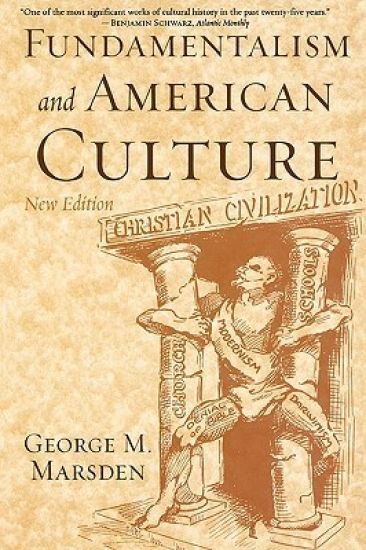
Many American's today are taking note of the surprisingly strong political force that is the religious right. Controversial decisions by the government are met with hundreds of lobbyists, millions of dollars of advertising spending, and a powerful grassroots response. How has the fundamentalist movement managed to resist the pressures of the scientific community and the draw of modern popular culture to hold on to their ultra-conservative Christian views? Understanding the movement's history is key to answering this question. Fundamentalism and American Culture has long been considered a classic in religious history, and to this day remains unsurpassed. Now available in a new edition, this highly regarded analysis takes us through the full history of the origin and direction of one of America's most influential religious movements. For Marsden, fundamentalists are not just religious conservatives; they are conservatives who are willing to take a stand and to fight. In Marsden's words (borrowed by Jerry Falwell), "a fundamentalist is an evangelical who is angry about something." In the late nineteenth century American Protestantism was gradually dividing between liberals who were accepting new scientific and higher critical views that contradicted the Bible and defenders of the more traditional evangelicalism. By the 1920s a full-fledged "fundamentalist" movement had developed in protest against theological changes in the churches and changing mores in the culture. Building on networks of evangelists, Bible conferences, Bible institutes, and missions agencies, fundamentalists coalesced into a major protest movement that proved to have remarkable staying power. For this new edition, a major new chapter compares fundamentalism since the 1970s to the fundamentalism of the 1920s, looking particularly at the extraordinary growth in political emphasis and power of the more recent movement. Never has it been more important to understand the history of fundamentalism in our rapidly polarizing nation. Marsen's carefully researched and engrossing work remains the best way to do just that.
Many Americans today are taking note of the surprisingly strong political force that is the religious right. Controversial decisions by the government are met with hundreds of lobbyists, millions of dollars of advertising spending, and a powerful grassroots response. How has the fundamentalist movement managed to resist the pressures of the scientific community and the draw of modern popular culture to hold on to their ultra-conservative Christian views? Understanding the movement's history is key to answering this question. Fundamentalism and American Culture has long been considered a classic in religious history, and to this day remains unsurpassed. Now available in a new edition, this highly regarded analysis takes us through the full history of the origin and direction of one of America's most influential religious movements. For Marsden, fundamentalists are not just religious conservatives; they are conservatives who are willing to take a stand and to fight. In Marsden's words (borrowed by Jerry Falwell), "a fundamentalist is an evangelical who is angry about something." In the late nineteenth century American Protestantism was gradually dividing between liberals who were accepting new scientific and higher critical views that contradicted the Bible and defenders of the more traditional evangelicalism. By the 1920s a full-fledged "fundamentalist" movement had developed in protest against theological changes in the churches and changing mores in the culture. Building on networks of evangelists, Bible conferences, Bible institutes, and missions agencies, fundamentalists coalesced into a major protest movement that proved to have remarkable staying power. For this new edition, a major new chapter compares fundamentalism since the 1970s to the fundamentalism of the 1920s, looking particularly at the extraordinary growth in political emphasis and power of the more recent movement. Never has it been more important to understand the history of fundamentalism in our rapidly polarizing nation. Marsden's carefully researched and engrossing work remains the best way to do just that.
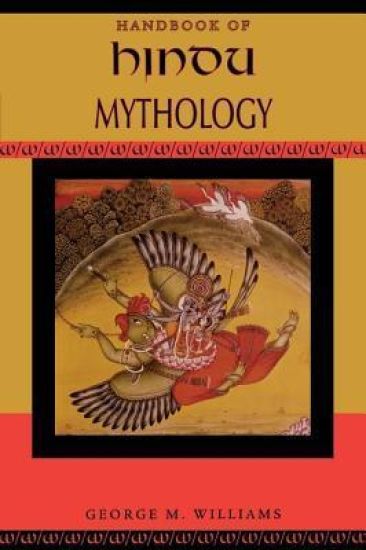
Unlike many other ancient mythologies, Hinduism thrives in the modern world. One billion followers and countless others have been captivated by its symbolic representations of love, karma, and reincarnation. Handbook of Hindu Mythology offers an informative introduction to this dauntingly complex mythology of multifaceted deities, lengthy heroic tales, and arcane philosophies-all with a 3,000-year history of reinterpretations and adaptations. Williams offers a number of pathways by which to approach Hinduism's ever-changing gods and goddesses (e.g., Brahmâ, Vishnu, Siva), spiritual verses (such as the vedas), secular epics (including the Râmâyana and the Mahâbhârata), myths within myths, devotional and esoteric traditions, psychic and yogic disciplines, and magical practices. With this handbook, readers can explore the history of Hindu mythology, follow a detailed timeline of key episodes and historical events, and look up specific elements of historical or contemporary Hinduism in a beautifully illustrated reference work. It is the ideal introduction to the origins of Hinduism, the culture that shaped it from antiquity to the present, and the age-old stories, ideas, and traditions that speak to the human condition as eloquently today as ever. Including annotated bibliographies, a glossary of cultural and mythological terms, and numerous illustrations, here is a gold mine of information on Hindu mythology.
Fundamentalism and American Culture has long been considered a classic in religious history, and to this day remains unsurpassed. Now available in a new edition, this highly regarded analysis takes us through the full history of the origin and direction of one of America's most influential religious movements. In the twenty-first century, militantly conservative white evangelicals have become more prominent than ever in American life. Marsden's volume, which now takes the history through the end of the Trump administration, remains the essential starting point for understanding the degree to which that militancy has been shaped by the fundamentalist heritage of the twentieth century. For Marsden, fundamentalists are, in the broadest sense, conservative evangelicals who are willing to take a stand and to fight. Yet their militancy needs to be understood in the light of some specific aspects of their heritage. In the late nineteenth-century, American Protestantism was gradually dividing between liberals who were accepting new scientific and higher critical views that contradicted the Bible and defenders of the more traditional evangelicalism. Often the “traditionalists” were also innovators in affirming apocalyptic prophesies of the imminent destruction of modern civilization and the return of Christ. By the 1920s, a full-fledged "fundamentalist" movement had developed in protest against theological changes in the churches, the teaching of biological evolution in schools, and changing mores in the culture. Fundamentalists often were conflicted by impulses to separate from condemned modern culture or to take back America as a Christian nation. Even with such tensions, fundamentalists built networks of evangelists, Bible conferences, Bible institutes, and mission agencies. These coalesced into major religious movements that proved to have remarkable staying power. Beginning in the 1970s, fundamentalist impulses led to increasing overt political mobilization and the rise of the religious right. In the twenty-first century, militant fundamentalist zeal to preserve Biblicist doctrinal and behavioral purity in churches remained strong, but often was overshadowed by more widely popular impulses of Christian nationalism and political partisanship.