Kirjojen hintavertailu. Mukana 12 391 238 kirjaa ja 12 kauppaa.

Kirjahaku

Etsi kirjoja tekijän nimen, kirjan nimen tai ISBN:n perusteella.

1000 tulosta hakusanalla Georges Tholin

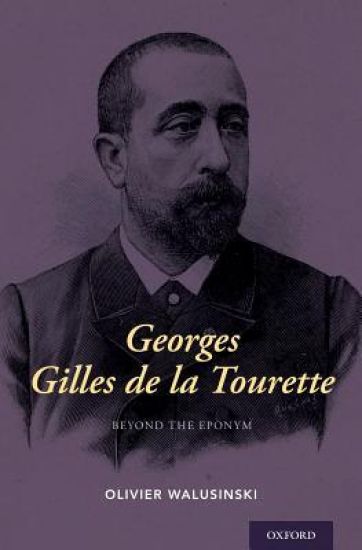
Georges Gilles de la Tourette

Georges Gilles de la Tourette

Olivier Walusinski

Oxford University Press Inc
2019
sidottu
The 19th Century brought many medical advances and discoveries in neurology, with the famed Parisian La Salpêtrière hospital at its center. Medical giants such as Jean-Martin Charcot, Joseph Babinski, and even for a short time Sigmund Freud, walked these halls, so it is a wonder that, an equal among these men, very little exists in the literature on Georges Gilles de la Tourette. This biography is the first comprehensive volume to delve into the life, scholarship, writing, and hobbies of the famed doctor. In Part One, we learn Georges' family history, follow his schooling and mentorship under Charcot, travel to the Worlds Fair of 1900, evade an attempted assassination, all before succumbing to death by syphilis. Part Two provides an in-depth analysis of his neurological and psychiatric works, notably the epynomous neurological disorder that will forever remain "Tourette's Syndrome." Part Three looks at the lighter side of Georges, inspecting his favorite past-times as poet, historian, and art critic. Part Four brings an extensive bibliography of Georges' complete body of work. Author Olivier Walusinski pulls together unpublished family archives, Georges' correspondence with the Parisian journalist Georges Montorgueil, journal articles, and police archives to shed an original light on the famed doctor's life and lasting legacy. These archives have never before been studied or made available to the public, making this one of the first and most comprehensive biographies available and a must-have for any medical library.
Georges Florovsky and the Russian Religious Renaissance

Georges Florovsky and the Russian Religious Renaissance

Paul L. Gavrilyuk

Oxford University Press
2013
sidottu
Georges Florovsky is the mastermind of a 'return to the Church Fathers' in twentieth-century Orthodox theology. His theological vision-the neopatristic synthesis-became the main paradigm of Orthodox theology and the golden standard of Eastern Orthodox identity in the West. Focusing on Florovsky's European period (1920-1948), this study analyses how Florovsky's evolving interpretation of Russian religious thought, particularly Vladimir Solovyov and Sergius Bulgakov, informed his approach to patristic sources. Paul Gavrilyuk offers a new reading of Florovsky's neopatristic theology, by closely considering its ontological, epistemological and ecclesiological foundations. It is common to contrast Florovsky's neopatristic theology with the 'modernist' religious philosophies of Pavel Florensky, Sergius Bulgakov, and other representatives of the Russian Religious Renaissance. Gavrilyuk argues that the standard narrative of twentieth-century Orthodox theology, based on this polarization, must be reconsidered. The author demonstrates Florovsky's critical appropriation of the main themes of the Russian Religious Renaissance, including theological antinomies, the meaning of history, and the nature of personhood. The distinctive features of Florovsky's neopatristic theology--Christological focus, 'ecclesial experience', personalism, and 'Christian Hellenism'--are best understood against the background of the main problematic of the Renaissance. Specifically, it is shown that Bulgakov's sophiology provided a polemical subtext for Florovsky's theology of creation. It is argued that the use of the patristic norm in application to modern Russian theology represents Florovsky's theological signature. Drawing on unpublished archival material and correspondence, this study sheds new light on such aspects of Florovsky's career as his family background, his participation in the Eurasian movement, his dissertation on Alexander Herzen, his lectures on Vladimir Solovyov, and his involvement in Bulgakov's Brotherhood of St Sophia.
Georges Florovsky and the Russian Religious Renaissance

Georges Florovsky and the Russian Religious Renaissance

Paul L. Gavrilyuk

Oxford University Press
2015
nidottu
Georges Florovsky is the mastermind of a 'return to the Church Fathers' in twentieth-century Orthodox theology. His theological vision-the neopatristic synthesis-became the main paradigm of Orthodox theology and the golden standard of Eastern Orthodox identity in the West. Focusing on Florovsky's European period (1920-1948), this study analyses how Florovsky's evolving interpretation of Russian religious thought, particularly Vladimir Solovyov and Sergius Bulgakov, informed his approach to patristic sources. Paul Gavrilyuk offers a new reading of Florovsky's neopatristic theology, by closely considering its ontological, epistemological and ecclesiological foundations. It is common to contrast Florovsky's neopatristic theology with the 'modernist' religious philosophies of Pavel Florensky, Sergius Bulgakov, and other representatives of the Russian Religious Renaissance. Gavrilyuk argues that the standard narrative of twentieth-century Orthodox theology, based on this polarization, must be reconsidered. The author demonstrates Florovsky's critical appropriation of the main themes of the Russian Religious Renaissance, including theological antinomies, the meaning of history, and the nature of personhood. The distinctive features of Florovsky's neopatristic theology Christological focus, 'ecclesial experience', personalism, and 'Christian Hellenism' are best understood against the background of the main problematic of the Renaissance. Specifically, it is shown that Bulgakov's sophiology provided a polemical subtext for Florovsky's theology of creation. It is argued that the use of the patristic norm in application to modern Russian theology represents Florovsky's theological signature. Drawing on unpublished archival material and correspondence, this study sheds new light on such aspects of Florovsky's career as his family background, his participation in the Eurasian movement, his dissertation on Alexander Herzen, his lectures on Vladimir Solovyov, and his involvement in Bulgakov's Brotherhood of St Sophia.
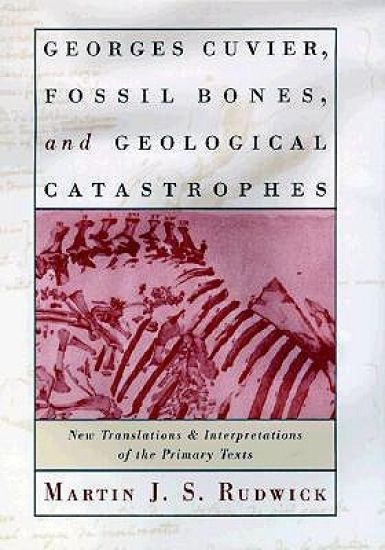
Georges Cuvier, Fossil Bones, and Geological Catastrophes

Georges Cuvier, Fossil Bones, and Geological Catastrophes

Martin J. S. Rudwick

University of Chicago Press
1997
sidottu
Until quite recently, French zoologist Georges Cuvier (1769-1832) opposed the biological theory of evolution, and championed the geological theory of catastrophism; but his careful research on fossils helped form and bring credibility to geology and palaeontology, and recent research has proved that his ideas on the importance of mass extinctions and catastrophes were well ahead of their time. In this volume, Martin Rudwick provides the first modern translation of Cuvier's essential writings on fossils and catastrophes, together with two previously unpublished pieces. Rudwick links these translated texts together with his own narrative and interpretive commentary, placing Cuvier's work in its biographical, scientific, and social context. A major feature of this book is a translation of Cuvier's best-known work, the "Preliminary Discourse" (1812). Frequently reprinted and translated, this essay became a key document in 19th-century debates about evolutionary theory, and is still used as source material by many English-speaking historians.
Georges Cuvier, Fossil Bones, and Geological Catastrophes

Georges Cuvier, Fossil Bones, and Geological Catastrophes

Martin J. S. Rudwick

University of Chicago Press
1998
nidottu
Until quite recently, French zoologist Georges Cuvier (1769-1832) opposed the biological theory of evolution, and championed the geological theory of catastrophism; but his research on fossils helped form and bring credibility to geology and palaeontology, and recent research has proved that his ideas on the importance of mass extinctions and catastrophes were well ahead of their time. In this volume, Martin Rudwick provides a modern translation of Cuvier's essential writings on fossils and catastrophes, together with two previously unpublished pieces. Rudwick links these translated texts together with his own narrative and interpretive commentary, placing Cuvier's work in its biographical, scientific, and social context. A major feature of this book is a translation of Cuvier's best-known work, the "Preliminary Discourse" (1812). Frequently reprinted and translated, this essay became a key document in 19th-century debates about evolutionary theory, and can still be used as source material by many English-speaking historians.
Georges Braque

Georges Braque

Russell T. Clement

Greenwood Press
1994
sidottu
The first comprehensive research guide and bibliography to the large literature surrounding the life and work of one of the 20th century's greatest artists, this volume includes information on more than 1,100 books and articles as well as a chronology, biographical sketch, and list of exhibitions. The secondary bibliography is arranged by topic and includes citations on the artist's life and career, his relationships with contemporary artists (notably Picasso), his influence on subsequent artists, his work in diverse artistic media as well as his oeuvre in general, iconography, and more. While concentrating on printed materials, this guide also includes selected manuscripts and audio-visual materials.Following a biographical sketch and chronology, the primary bibliography lists articles, essays, letters, interviews, manuscripts, and sketchbooks of Braque. The main part of the secondary bibliography lists monographs, catalogues, dissertations, theses, periodical articles, films, and selected newspaper articles. Substantial book reviews and exhibition reviews are also cited. Arranged by topic, this bibliography includes citations on Braque's career and development as an artist, his relationships with contemporary artists, a section on Braque/Picasso, his influence on other artists, his work in various media including paintings, drawings, prints, illustrated books, papiers decoupes, sculpture, jewelry, theatre designs, and other commissions. Georges Braque first came to world attention as Picasso's friend during the formative years of Cubism. Long overshadowed by his more famous contemporary, in the quarter-century after his death Braque is beginning to be evaluated accurately. Major retrospective exhibitions over the past decade, accompanied by a considerable body of new criticism and scholarship, have brought Braque into the spotlight.
Georges Bank

Georges Bank

Guy C. Mcleod

CRC Press
2019
sidottu
Georges Bank, off the coast of New England, has for years been known as one of the most productive of the world's fisheries. Now, recent exploratory surveys indicate it may hold still other resources–oil and natural gas–in sufficient abundance to justify their development. Suddenly, decisions must be made about whether it is possible to manage two
Georges Bank

Georges Bank

Guy C. Mcleod

TAYLOR FRANCIS LTD
2022
nidottu
Georges Bank, off the coast of New England, has for years been known as one of the most productive of the world's fisheries. Now, recent exploratory surveys indicate it may hold still other resources–oil and natural gas–in sufficient abundance to justify their development. Suddenly, decisions must be made about whether it is possible to manage two
Georges Bataille

Georges Bataille

William Pawlett

Routledge
2019
nidottu
In this comprehensive and engaging study Georges Bataille’s central ideas – the sacred, community and eroticism – are explored in detail. Bataille’s project to understand social bonds and energies at their most fundamental level and to re-energise society by challenging individualism is argued to be of continuing relevance to sociological thought. Bataille’s infamous Collège de Sociologie is placed in the intellectual context of Durkheimian and Maussian sociology. Social effervescence, gift exchange, and the dual, ambivalent and volatile nature of the sacred emerge as the central threads of Bataille’s thought, ideas which challenge both capitalist hegemony and the reductive notion of society as exclusively normative and repressive. The study concludes by applying Bataille’s ideas to contemporary issues including de-secularisation and the rise of religious fundamentalism, the vicarious experience of transgressive violence, and finally, to consumerism and the violence of globalisation. The study seeks to reposition Bataille as a key figure in sociological theory.
Georges Bataille

Georges Bataille

Michael Richardson

Routledge
1994
sidottu
George Bataille (1867-1962) is widely recognized as one of the most important thinkers of the twentieth century. This is the first book in English to examine Bataille's work as a whole. It offers an accessible introduction to a complex and often ambiguous thinker.
Georges Bataille

Georges Bataille

Michael Richardson

Routledge
1994
nidottu
George Bataille (1867-1962) is widely recognized as one of the most important thinkers of the twentieth century. This is the first book in English to examine Bataille's work as a whole. It offers an accessible introduction to a complex and often ambiguous thinker.
Georges Bataille

Georges Bataille

William Pawlett

Routledge
2015
sidottu
In this comprehensive and engaging study Georges Bataille’s central ideas – the sacred, community and eroticism – are explored in detail. Bataille’s project to understand social bonds and energies at their most fundamental level and to re-energise society by challenging individualism is argued to be of continuing relevance to sociological thought. Bataille’s infamous Collège de Sociologie is placed in the intellectual context of Durkheimian and Maussian sociology. Social effervescence, gift exchange, and the dual, ambivalent and volatile nature of the sacred emerge as the central threads of Bataille’s thought, ideas which challenge both capitalist hegemony and the reductive notion of society as exclusively normative and repressive. The study concludes by applying Bataille’s ideas to contemporary issues including de-secularisation and the rise of religious fundamentalism, the vicarious experience of transgressive violence, and finally, to consumerism and the violence of globalisation. The study seeks to reposition Bataille as a key figure in sociological theory.
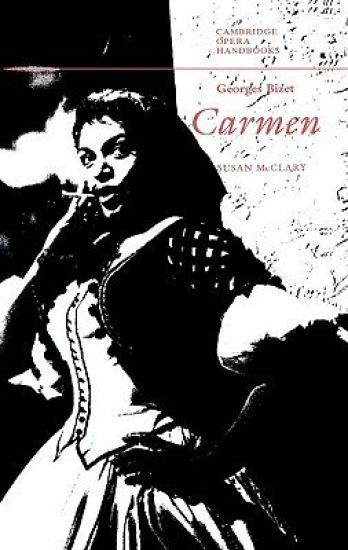
Georges Bizet: Carmen

Georges Bizet: Carmen

McClary Susan

Cambridge University Press
1992
pokkari
Bizet’s Carmen is probably the best known opera of the standard repertoire, yet its very familiarity often prevents us from approaching it with the seriousness it deserves. This handbook explores the opera in a number of contexts, bringing to the surface the controversies over gender, race, class and musical propriety that greeted its premiere and that have been rekindled by the recent spate of film versions. Beginning with a study of the Mérimée story by Peter Robinson and an examination of the social tensions in nineteenth-century France that inform both that story and the opera, the book traces the latter through its genesis and reception. The central core of the book presents a close reading of the opera that offers new interpretive possibilities. The handbook concludes with discussions of four films based on the opera: Carmen Jones and the versions of Carmen by Carlos Saura, Peter Brook, and Francesco Rosi. The volume contains a bibliography, music examples, and a synopsis.
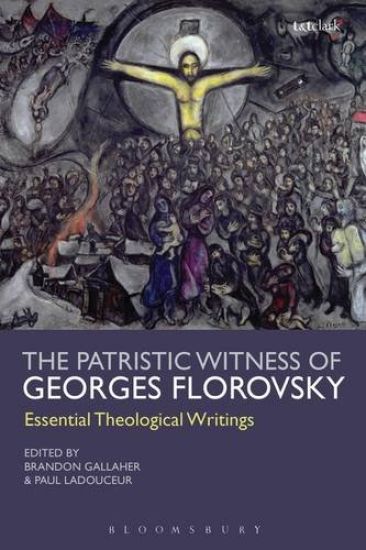
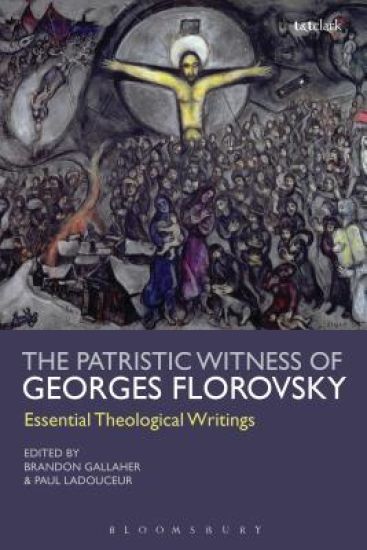
The Patristic Witness of Georges Florovsky

The Patristic Witness of Georges Florovsky

Georges Florovsky

Continuum International Publishing Group Ltd.
2016
pokkari
This book is a collection of major articles and texts by Georges Florovsky (1893-1979), an important twentieth-century theologian, historian, ecumenist and patristic scholar. It includes representative and widely influential but now largely inaccessible writings, some newly translated, with explanatory and bibliographical notes, covering all periods of his career and divided into four major thematic sections: 1) Creation and Incarnation; 2) The Nature of Theology; 3) Ecclesiology and Ecumenism; 4) Scripture, Worship and Eschatology.A foreword by Metropolitan Kallistos Ware presents both personal accounts of contacts with Georges Florovsky and key elements of Florovsky's theological vision, in the context of the continuing relevance of his work. The Introduction by Brandon Gallaher and Paul Ladouceur gives a theological and historical overview of Florovsky's work, relating it to trends in both modern Roman Catholic and Protestant theology and outlining his importance to contemporary ecumenism, patristics and Orthodox thought and life. The book includes explanatory notes, translation of patristic citations and an index.
The Patristic Witness of Georges Florovsky

The Patristic Witness of Georges Florovsky

Georges Florovsky

Continuum International Publishing Group Ltd.
2019
sidottu
Georges Florovsky (1893-1979) was one of the most prominent Orthodox theologians and ecumenists of the twentieth century. His call for a return to patristic writings as a source of modern theological reflection had a powerful impact not only on Orthodox theology in the second half of the twentieth century, but on Christian theology in general. Florovsky was also a major Orthodox voice in the ecumenical movement for four decades and he is one of the founders of the World Council of Churches. This book is a collection of major theological writings by George Florovsky. It includes representative and widely influential but now largely inaccessible texts, many newly translated for this book, divided into four thematic sections: Creation, Incarnation and Redemption, The Nature of Theology, Ecclesiology and Ecumenism, and Scripture, Worship and Eschatology. A foreword by Metropolitan Kallistos Ware presents the theological vision of Georges Florovsky and discusses the continuing relevance of his work both for Orthodox theology and for modern theology in general. The introduction by the Editors provides a theological and historical overview of Florovsky theology in teh context of his biography. The book includes explanatory notes, translation of patrisitc citations and an index.