Cervical whiplash injuries continue to be a common problem throughout the industrialized world. Despite recent scientific developments, unhelpful treatment of whiplash injuries such as prolonged immobilization, passive modalities, and unnecessary surgery exist. Many patients with chronic pain are labelled as having "psychological problems." Overtreatment and excessive use of diagnostic imaging are common. Relatively recent developments in this field, backed by extensive study, have initiated an evolution in the treatment of whiplash injury. Dr. Malanga is a well-known expert in the field of physical medicine and rehabilitation, particularly in spinal medicine and orthopedics. The entire book focuses only on whiplash, providing an extremely in-depth treatment. Relatively recent developments in this field, backed by extensive study, have initiated an evolution in the treatment of whiplash injury. Thus, there is a need for a comprehensive presentation of the changed thinking. Includes coverage of the Quebec Whiplash Study.
Whether you're new to the business or you've been a server for years, The Art of Hosting will give you the tools you need to walk, talk and act like a seasoned pro. Filled with insider tips and info, this book will show you in clear, concise and easy-to-understand terms how to be an outstanding server in even the finest restaurants-and get the biggest tips! Includes sections on Table Set-up, Taking Guest Orders, Serving Drinks and Wine, Increasing Your Tips and more.
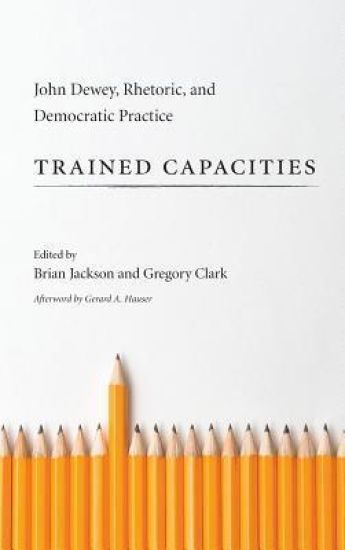
The essays in this collection, written by sixteen scholars in rhetoric and communications studies, demonstrate American philosopher John Dewey's wide-ranging influence on rhetoric in an intellectual tradition that addresses the national culture's fundamental conflicts between self and society, freedom and responsibility, and individual advancement and the common good. Editors Brian Jackson and Gregory Clark propose that this influence is at work both in theoretical foundations, such as science, pragmatism, and religion, and in Dewey's debates with other public intellectuals such as Jane Addams, Walter Lippmann, James Baldwin, and W. E. B. Du Bois.Jackson and Clark seek to establish Dewey as an essential source for those engaged in teaching others how to compose timely, appropriate, useful, and eloquent responses to the diverse and often-contentious rhetorical situations that develop in a democratic culture. They contend that there is more at stake than instruction in traditional modes of public discourse because democratic culture encompasses a variety of situations, private or public, civic or professional, where people must cooperate in the work of advancing a common project. What prepares people to intervene constructively in such situations is instruction in those rhetorical practices of democratic interaction that is implicit throughout Dewey's work.Dewey's writing provides a rich framework on which a distinctly American tradition of a democratic rhetorical practice can be built--a tradition that combines the most useful concepts of classical rhetoric with those of modern progressive civic engagement. Jackson and Clark believe Dewey's practice takes rhetoric beyond the traditional emphasis on political democracy to provide connections to rich veins of American thought such as individualism, liberalism, progressive education, collectivism, pragmatism, and postindustrial science and communication. They frame Dewey's voluminous work as constituting a modern expression of continuing education for the ""trained capacities"" required to participate in democratic culture. For Dewey human potential is best realized in the free flow of artful communication among the individuals who together constitute society.The book concludes with an afterword by Gerard A. Hauser, College Professor of Distinction in the Department of Communication at the University of Colorado Boulder, USA.
Prisoners of Conscience continues the work begun by Gerard A. Hauser in Vernacular Voices: The Rhetoric of Publics and Public Spheres, winner of the National Communication Association's Hochmuth Nichols Award. In his new book, Hauser examines the discourse of political prisoners, specifically the discourse of prisoners of conscience, as a form of rhetoric in which the vernacular is the main source of available appeals and the foundation for political agency. Hauser explores how modes of resistance employed by these prisoners constitute what he deems a ""thick moral vernacular"" rhetoric of human rights. Hauser's work considers in part how these prisoners convert universal commitments to human dignity, agency, and voice into the moral vernacular of the society and culture to which their rhetoric is addressed. Hauser grounds his study through a series of case studies, each centred on a different rhetorical mechanism brought to bear in the act of resistance. Through a transnational rhetorical analysis of resistance within political prisons, Hauser brings to bear his skills as a rhetorical theorist and critic to illuminate the rhetorical power of resistance as tied to core questions in contemporary humanistic scholarship and public concern. 2013 Rhetoric Society of America Book Award
A foundational text of twenty-first-century rhetorical studies, Vernacular Voices addresses the role of citizen voices in steering a democracy through an examination of the rhetoric of publics. Gerard A. Hauser maintains that the interaction between everyday and official discourse discloses how active members of a complex society discover and clarify their shared interests and engage in exchanges that shape their opinions on issues of common interest.In the two decades since Vernacular Voices was first published, much has changed: in the aftermath of the 9/11 terrorist attacks, US presidents have increasingly taken unilateral power to act; the internet and new media have blossomed; and globalization has raised challenges to the autonomy of nation states. In a new preface, Hauser shows how, in an era of shared, global crises, we understand publics, how public spheres form and function, and the possibilities for vernacular expressions of public opinion lie at the core of lived democracy.A foreword is provided by Phaedra C. Pezzullo, associate professor of communication at the University of Colorado Boulder.
Hidden inside his shy and retiring mindis a lifetime of words come alive.Just the right wordssaid just the right waygives you a little glimpsea new rayto brighten how you look at the every day.This book is full of humor and romance, fantasy and fun, heartbreak and hope, and a longing for home.You can read a melody behind those words.Open this bookif you want it to be heard.
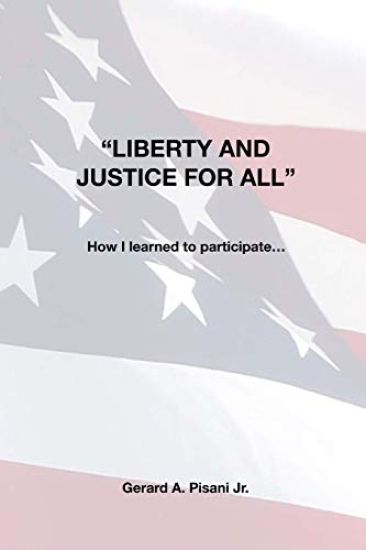
"Liberty and Justice for All" is a capstone idea in documents of the United States of America and in many other countries and people around the world. The origin of liberty and justice for all is found in both Faith and Science, in the Bible and other scriptures, and in many forms of literature like poetry, songs, writings. This booklet attempts to describe the framework from which justice may come in a variety of familiar places like popular music, research in universities, and in religions. Our human history bears many ideas and conflicts around the theme of Justice, especially in the evolution of religions. How it may become the experience for all peoples throughout our world is sought in the conclusions our understanding of God, the universal story displayed through science and in our recognition that our world is "one" planet for all specimens and species. It concludes with a suggestion of a "Covenantal Faith" that is growing today: "There is no way to conceive of LIFE Living Into Future Expression] without these three words: LIBERTY, JUSTICE, and for ALL "
This book offers a step-by-step introduction to an integrated theory of physical and biological evolution, from the early universe to the world we know today. To this end, the well-known laws of variation and selection are supplemented by a third law. This law describes the increase in complexity based on the transitions from quarks to hadrons, to atoms, to molecules, to bacteria, to eukaryotic cells, and so on. These insights revolutionize existing theoretical frameworks for analyzing organization in nature, accelerating developments in natural philosophy. In this way, the author develops a basic framework for thinking about evolution, which can be applied to current debates in various research fields. For example, the new approach finally helps to find the systems-based definitions of organism and life that have been sought for so long. By extrapolating the framework one can even hypothesize about future evolution and our place as humans in it. An exciting read for both philosophers and scientists.
Conceived as a series of more or less autonomous essays, the present book critically exposes the initial developments of continuum thermo-mechanics in a post Newtonian period extending from the creative works of the Bernoullis to the First World war, i.e., roughly during first the “Age of reason” and next the “Birth of the modern world”. The emphasis is rightly placed on the original contributions from the “Continental” scientists (the Bernoulli family, Euler, d’Alembert, Lagrange, Cauchy, Piola, Duhamel, Neumann, Clebsch, Kirchhoff, Helmholtz, Saint-Venant, Boussinesq, the Cosserat brothers, Caratheodory) in competition with their British peers (Green, Kelvin, Stokes, Maxwell, Rayleigh, Love,..). It underlines the main breakthroughs as well as the secondary ones. It highlights the role of scientists who left essential prints in this history of scientific ideas. The book shows how the formidable developments that blossomed in the twentieth century (and perused in a previous book of the author in the same Springer Series: “Continuum Mechanics through the Twentieth Century”, Springer 2013) found rich compost in the constructive foundational achievements of the eighteenth and nineteenth centuries. The pre-WWI situation is well summarized by a thorough analysis of treatises (Appell, Hellinger) published at that time. English translations by the author of most critical texts in French or German are given to the benefit of the readers.
Mixing scientific, historic and socio-economic vision, this unique book complements two previously published volumes on the history of continuum mechanics from this distinguished author. In this volume, Gérard A. Maugin looks at the period from the renaissance to the twentieth century and he includes an appraisal of the ever enduring competition between molecular and continuum modelling views. Chapters trace early works in hydraulics and fluid mechanics not covered in the other volumes and the author investigates experimental approaches, essentially before the introduction of a true concept of stress tensor. The treatment of such topics as the viscoelasticity of solids and plasticity, fracture theory, and the role of geometry as a cornerstone of the field, are all explored. Readers will find a kind of socio-historical appraisal of the seminal contributions by our direct masters in the second half of the twentieth century. The analysis of the teaching and research texts by Duhem, Poincaré and Hilbert on continuum mechanics is key: these provide the most valuable documentary basis on which a revival of continuum mechanics and its formalization were offered in the late twentieth century. Altogether, the three volumes offer a generous conspectus of the developments of continuum mechanics between the sixteenth century and the dawn of the twenty-first century. Mechanical engineers, applied mathematicians and physicists alike will all be interested in this work which appeals to all curious scientists for whom continuum mechanics as a vividly evolving science still has its own mysteries.
Conceived as a series of more or less autonomous essays, the present book critically exposes the initial developments of continuum thermo-mechanics in a post Newtonian period extending from the creative works of the Bernoullis to the First World war, i.e., roughly during first the “Age of reason” and next the “Birth of the modern world”. The emphasis is rightly placed on the original contributions from the “Continental” scientists (the Bernoulli family, Euler, d’Alembert, Lagrange, Cauchy, Piola, Duhamel, Neumann, Clebsch, Kirchhoff, Helmholtz, Saint-Venant, Boussinesq, the Cosserat brothers, Caratheodory) in competition with their British peers (Green, Kelvin, Stokes, Maxwell, Rayleigh, Love,..). It underlines the main breakthroughs as well as the secondary ones. It highlights the role of scientists who left essential prints in this history of scientific ideas. The book shows how the formidable developments that blossomed in the twentieth century (and perused in a previous book of the author in the same Springer Series: “Continuum Mechanics through the Twentieth Century”, Springer 2013) found rich compost in the constructive foundational achievements of the eighteenth and nineteenth centuries. The pre-WWI situation is well summarized by a thorough analysis of treatises (Appell, Hellinger) published at that time. English translations by the author of most critical texts in French or German are given to the benefit of the readers.
Mixing scientific, historic and socio-economic vision, this unique book complements two previously published volumes on the history of continuum mechanics from this distinguished author. In this volume, Gérard A. Maugin looks at the period from the renaissance to the twentieth century and he includes an appraisal of the ever enduring competition between molecular and continuum modelling views. Chapters trace early works in hydraulics and fluid mechanics not covered in the other volumes and the author investigates experimental approaches, essentially before the introduction of a true concept of stress tensor. The treatment of such topics as the viscoelasticity of solids and plasticity, fracture theory, and the role of geometry as a cornerstone of the field, are all explored. Readers will find a kind of socio-historical appraisal of the seminal contributions by our direct masters in the second half of the twentieth century. The analysis of the teaching and research texts by Duhem, Poincaré and Hilbert on continuum mechanics is key: these provide the most valuable documentary basis on which a revival of continuum mechanics and its formalization were offered in the late twentieth century. Altogether, the three volumes offer a generous conspectus of the developments of continuum mechanics between the sixteenth century and the dawn of the twenty-first century. Mechanical engineers, applied mathematicians and physicists alike will all be interested in this work which appeals to all curious scientists for whom continuum mechanics as a vividly evolving science still has its own mysteries.
In this book interrelated factor demand models are surveyed. New methods are developed and are analysed empirically using Dutch and U.K. time series data. New methods are discussed for obtaining closed form solutions of linear ratinal expectations models, providing deeper insights into the identification of structural parameters of underlying theoretical models; recently developed time series techniques are applied in order to estimate structural parameters and test for model specification, stationarity and stability through time; new models are developed in which the rather stringent and questionable restrictions of symmetry generally imposed upon stochastic adjustment models of labour demand are relaxed, the models are analysed empirically using time series data of Dutch and U.K. manufacturing production and nonproduction workers.