Kirjojen hintavertailu. Mukana 11 244 527 kirjaa ja 12 kauppaa.

Kirjahaku

Etsi kirjoja tekijän nimen, kirjan nimen tai ISBN:n perusteella.

1000 tulosta hakusanalla Gilberto Gil

Vi presento il Metodo Ruffini - Introduzione al rivoluzionario trattamento dermatologico
A tre anni esatti dalla pubblicazione di 'Curarsi con la candeggina?', ecco ?il? libro sul Metodo Ruffini, un biglietto da visita per chi si approccia per la prima volta al rivoluzionario trattamento dermatologico o comunque per chi vuole saperne di pi?. Oltre a una selezione di testimonianze scritte e fotografiche, ad arricchire il volume troviamo alcuni preziosi contributi di medici, ricercatori e altri specialisti. Dall?odontoiatra Jacopo Cioni, che spiega gli usi dell?ipoclorito di sodio in odontoiatria, al chimico Gianni Fochi, che ripercorre la storia dei composti del cloro in campo medico; dalla naturopata Patrizia Marini, che ci dice come il Metodo possa abbattere le spese sanitarie e affrontare hpv e batteri killer, al professore Sergio Ferro, che illustra come la molecola incriminata di non essere altro che candeggina sia in realt? prodotta anche dal nostro stesso sistema immunitario contro gli agenti patogeni, argomento poi approfondito anche dal tecnologo alimentare Liborio Livio Quinto.
The Sanitation of Brazil

The Sanitation of Brazil

Gilberto Hochman

University of Illinois Press
2016
sidottu
Celebrated as a major work since its original publication, The Sanitation of Brazil traces how rural health and sanitation policies influenced the formation of Brazil's national public health system. Gilberto Hochman's pioneering study examines the ideological, social and political forces that approached questions of health and government action. The era from 1910 to 1930 offered unique opportunities for public health reform, and Hochman examines its successes and failures. He looks at how health became a state concern, tying the emergence of public health policies to a nationalistic movement and to a convergence of the elites' social consciousness with their political and material interests. Politicians weighed the costs and benefits of state-run public health versus the burdens imposed by disease. Physicians and intellectuals, meanwhile, swayed them with warnings that endemic disease and official neglect might affect everyone--rich and poor, rural and urban, interior and coastal--if left unchecked. The book shows how disease and health were and are associated with nation-state building in Brazil.
The Sanitation of Brazil

The Sanitation of Brazil

Gilberto Hochman

University of Illinois Press
2016
nidottu
Celebrated as a major work since its original publication, The Sanitation of Brazil traces how rural health and sanitation policies influenced the formation of Brazil's national public health system. Gilberto Hochman's pioneering study examines the ideological, social and political forces that approached questions of health and government action. The era from 1910 to 1930 offered unique opportunities for public health reform, and Hochman examines its successes and failures. He looks at how health became a state concern, tying the emergence of public health policies to a nationalistic movement and to a convergence of the elites' social consciousness with their political and material interests. Politicians weighed the costs and benefits of state-run public health versus the burdens imposed by disease. Physicians and intellectuals, meanwhile, swayed them with warnings that endemic disease and official neglect might affect everyone--rich and poor, rural and urban, interior and coastal--if left unchecked. The book shows how disease and health were and are associated with nation-state building in Brazil.
Global Sustainability

Global Sustainability

Gilberto C. Gallopín; Paul D. Raskin

Routledge
2002
sidottu
Unprecedented levels of wealth, technology and institutional capacity can forge a just, peaceful and ecologically resilient future. However, the authors argue, social polarization, geo-political conflict and environmental degradation are threatening the long-term well-being of humanity and the planet. Global Sustainability explores the alternative futures that could emerge from the resolution of these antagonisms. Based on extensive international and interdisciplinary research, the book identifies the perils of market-driven scenarios and considers the possibility of the failure of conventional approaches. It also, however, presents a vision of the possibility of a 'Great Transition' in which revised human values and development goals bring a new stage of civilization. It will be essential reading for all scholars and professionals interested in the future of the environment, international affairs, and sustainable development.
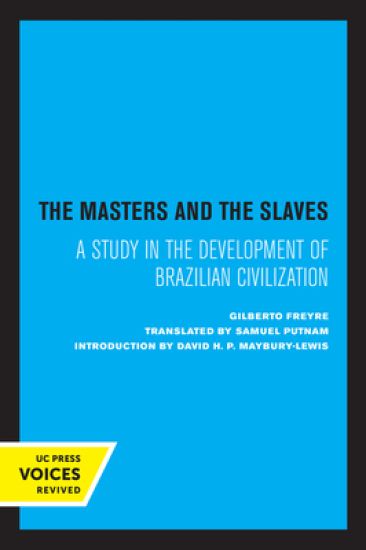
The Masters and the Slaves

The Masters and the Slaves

Gilberto Freyre

University of California Press
2022
pokkari
This title is part of UC Press's Voices Revived program, which commemorates University of California Press’s mission to seek out and cultivate the brightest minds and give them voice, reach, and impact. Drawing on a backlist dating to 1893, Voices Revived makes high-quality, peer-reviewed scholarship accessible once again using print-on-demand technology. This title was originally published in 1986.
The Masters and the Slaves

The Masters and the Slaves

Gilberto Freyre

University of California Press
2022
sidottu
This title is part of UC Press's Voices Revived program, which commemorates University of California Press’s mission to seek out and cultivate the brightest minds and give them voice, reach, and impact. Drawing on a backlist dating to 1893, Voices Revived makes high-quality, peer-reviewed scholarship accessible once again using print-on-demand technology. This title was originally published in 1986.
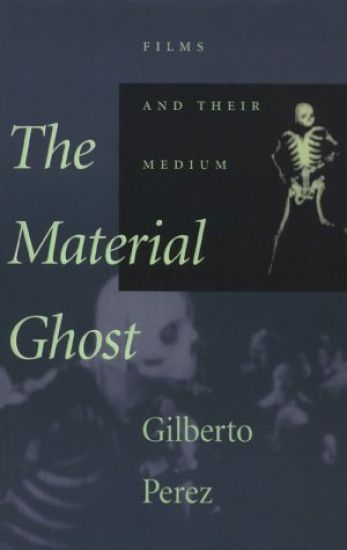
The Material Ghost

The Material Ghost

Gilberto Perez

Johns Hopkins University Press
2001
pokkari
In a recent international survey conducted by the online film journal Screening the Past, which invited film critics and scholars around the world to nominate the most important contributions to the field in the past decade, The Material Ghost tied for first place with Jean-Luc Godard's Histoire(s) du Cinema. Gilberto Perez draws on his lifelong love of the movies as well as his work as a film scholar to write a lively, wide-ranging, penetrating study of films and filmmakers and the nature of the art form.
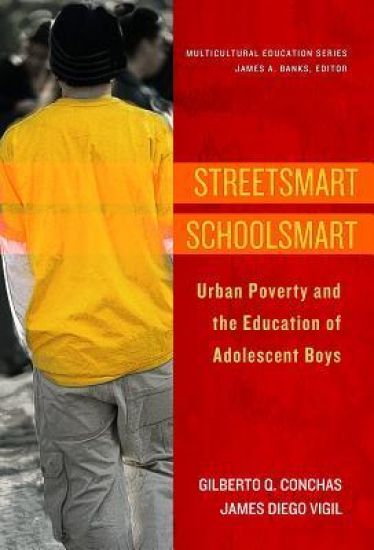
Streetsmart Schoolsmart

Streetsmart Schoolsmart

Gilberto Q. Conchas; James Diego Vigil

Teachers' College Press
2012
nidottu
In Streetsmart Schoolsmart, two respected scholars present original research on youth gangs and school success to explain why some boys become disengaged and join gangs while others do not. Chapters vividly describe how urban boys from different ethnic backgrounds (Asian, African American, and Latino) approach schooling and identify the sociocultural factors that affect their choices. The authors concentrate on three areas: (1) the role of marginalised communities in the formation of urban gang youth, (2) the role of community-based organisations in reengaging urban youth, and (3) the role of schools in creating opportunities for urban boys to succeed despite disparities in their economic and social circumstances. Streetsmart Schoolsmart points the way toward important changes that can break the cycle of poverty in American neighbourhoods and society. It is essential reading for educators and all professionals working with urban youth, and anyone concerned with the success of young boys.
Streetsmart Schoolsmart

Streetsmart Schoolsmart

Gilberto Q. Conchas; James Diego Vigil

Teachers' College Press
2012
sidottu
In Streetsmart Schoolsmart, two respected scholars present original research on youth gangs and school success to explain why some boys become disengaged and join gangs while others do not. Chapters vividly describe how urban boys from different ethnic backgrounds (Asian, African American, and Latino) approach schooling and identify the sociocultural factors that affect their choices. The authors concentrate on three areas: (1) the role of marginalised communities in the formation of urban gang youth, (2) the role of community-based organisations in reengaging urban youth, and (3) the role of schools in creating opportunities for urban boys to succeed despite disparities in their economic and social circumstances. Streetsmart Schoolsmart points the way toward important changes that can break the cycle of poverty in American neighbourhoods and society. It is essential reading for educators and all professionals working with urban youth, and anyone concerned with the success of young boys.
The Color of Success 2.0

The Color of Success 2.0

Gilberto Q. Conchas; Cynthia Feliciano

TEACHERS' COLLEGE PRESS
2024
nidottu
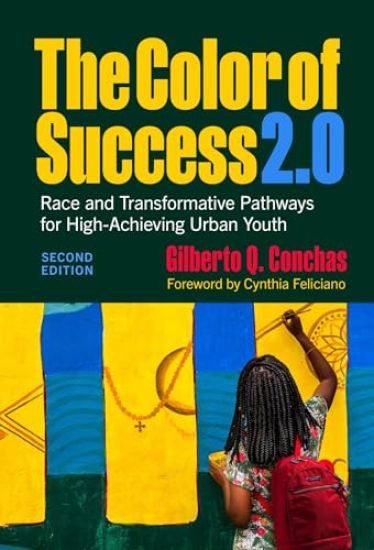
The first edition of The Color of Success was a groundbreaking, asset-based exploration of the educational trajectories of high-achieving, low-income students within urban schools. The author brings his now seminal book up to date with insights based on existing and new research, current policies, and innovative pedagogical approaches. Conchas utilizes a critical lens to examine the intersectional identities of racially minoritized students, the role of existing power hierarchies within schools, and offers specific structural approaches that create educational opportunity. The Color of Success 2.0 amplifies student voice; explores school, family, and community partnerships; promotes culturally relevant pedagogy and teacher preparation; includes a new chapter on Black male optimism after the historic election of President Barack Obama; and offers a thought-provoking additional chapter on the role of educational leaders in promoting successful school pathways; plus, a thoroughly revised quantitative chapter on social capital. With a sense of urgency, readers will gain vital insights for understanding what is needed to create, promote, and expand equitable school environments and transformative pathways for racially minoritized urban youth. Book Features:Takes a rare look at Black, Latinx, and Vietnamese urban school success stories, instead of those depicting failure.Includes narratives and perspectives of students' daily struggles, affirmations, and successes in their quest to navigate school and beyond.Uses mixed-methods research to respond to the challenges of a new post-pandemic political reality of racial unrest and an unequal social landscape.Examines the role of educational leaders' responsibility as change agents to provide equitable and dynamic pathways for success.
The Color of Success 2.0

The Color of Success 2.0

Gilberto Q. Conchas; Cynthia Feliciano

TEACHERS' COLLEGE PRESS
2024
sidottu
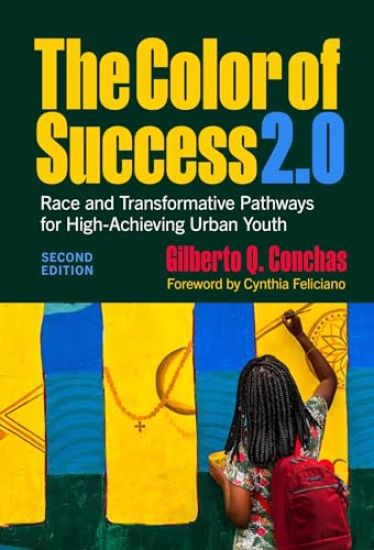
The first edition of The Color of Success was a groundbreaking, asset-based exploration of the educational trajectories of high-achieving, low-income students within urban schools. The author brings his now seminal book up to date with insights based on existing and new research, current policies, and innovative pedagogical approaches. Conchas utilizes a critical lens to examine the intersectional identities of racially minoritized students, the role of existing power hierarchies within schools, and offers specific structural approaches that create educational opportunity. The Color of Success 2.0 amplifies student voice; explores school, family, and community partnerships; promotes culturally relevant pedagogy and teacher preparation; includes a new chapter on Black male optimism after the historic election of President Barack Obama; and offers a thought-provoking additional chapter on the role of educational leaders in promoting successful school pathways; plus, a thoroughly revised quantitative chapter on social capital. With a sense of urgency, readers will gain vital insights for understanding what is needed to create, promote, and expand equitable school environments and transformative pathways for racially minoritized urban youth. Book Features:Takes a rare look at Black, Latinx, and Vietnamese urban school success stories, instead of those depicting failure.Includes narratives and perspectives of students' daily struggles, affirmations, and successes in their quest to navigate school and beyond.Uses mixed-methods research to respond to the challenges of a new post-pandemic political reality of racial unrest and an unequal social landscape.Examines the role of educational leaders' responsibility as change agents to provide equitable and dynamic pathways for success.
The Eloquent Screen

The Eloquent Screen

Gilberto Perez; James Harvey

University of Minnesota Press
2019
sidottu
A lifetime of cinematic writing culminates in this breathtaking statement on film’s unique ability to move usCinema is commonly hailed as “the universal language,” but how does it communicate so effortlessly across cultural and linguistic borders? In The Eloquent Screen, influential film critic Gilberto Perez makes a capstone statement on the powerful ways in which film acts on our minds and senses.Drawing on a lifetime’s worth of viewing and re-viewing, Perez invokes a dizzying array of masters past and present-including Chaplin, Ford, Kiarostami, Eisenstein, Malick, Mizoguchi, Haneke, Hitchcock, and Godard-to explore the transaction between filmmaker and audience. He begins by explaining how film fits into the rhetorical tradition of persuasion and argumentation. Next, Perez explores how film embodies the central tropes of rhetoric––metaphor, metonymy, allegory, and synecdoche––and concludes with a thrilling account of cinema’s spectacular capacity to create relationships of identification with its audiences. Although there have been several attempts to develop a poetics of film, there has been no sustained attempt to set forth a rhetoric of film-one that bridges aesthetics and audience. Grasping that challenge, The Eloquent Screen shows how cinema, as the consummate contemporary art form, establishes a thoroughly modern rhetoric in which different points of view are brought into clear focus.
The Eloquent Screen

The Eloquent Screen

Gilberto Perez; James Harvey

University of Minnesota Press
2019
nidottu
A lifetime of cinematic writing culminates in this breathtaking statement on film’s unique ability to move usCinema is commonly hailed as “the universal language,” but how does it communicate so effortlessly across cultural and linguistic borders? In The Eloquent Screen, influential film critic Gilberto Perez makes a capstone statement on the powerful ways in which film acts on our minds and senses.Drawing on a lifetime’s worth of viewing and re-viewing, Perez invokes a dizzying array of masters past and present-including Chaplin, Ford, Kiarostami, Eisenstein, Malick, Mizoguchi, Haneke, Hitchcock, and Godard-to explore the transaction between filmmaker and audience. He begins by explaining how film fits into the rhetorical tradition of persuasion and argumentation. Next, Perez explores how film embodies the central tropes of rhetoric––metaphor, metonymy, allegory, and synecdoche––and concludes with a thrilling account of cinema’s spectacular capacity to create relationships of identification with its audiences. Although there have been several attempts to develop a poetics of film, there has been no sustained attempt to set forth a rhetoric of film-one that bridges aesthetics and audience. Grasping that challenge, The Eloquent Screen shows how cinema, as the consummate contemporary art form, establishes a thoroughly modern rhetoric in which different points of view are brought into clear focus.
Barrio Libre

Barrio Libre

Gilberto Rosas

Duke University Press
2012
sidottu
The city of Nogales straddles the border running between Arizona and Sonora, Mexico. On the Mexican side, marginalized youths calling themselves Barrio Libre (Free 'Hood) employ violence, theft, and bribery to survive, often preying on undocumented migrants who navigate the city's sewer system to cross the US-Mexico border. In this book, Gilberto Rosas draws on his in-depth ethnographic research among the members of Barrio Libre to understand why they have embraced criminality and how neoliberalism and security policies on both sides of the border have affected the youths' descent into Barrio Libre. Rosas argues that although these youths participate in the victimization of others, they should not be demonized. They are complexly and adversely situated. The effects of NAFTA have forced many of them, as well as other Mexicans, to migrate to Nogales. Moving fluidly with the youths through the spaces that they inhabit and control, he shows how the militarization of the border actually destabilized the region and led Barrio Libre to turn to increasingly violent activities, including drug trafficking. By focusing on these youths and their delinquency, Rosas demonstrates how capitalism and criminality shape perceptions and experiences of race, sovereignty, and resistance along the US-Mexico border.
Barrio Libre

Barrio Libre

Gilberto Rosas

Duke University Press
2012
pokkari
The city of Nogales straddles the border running between Arizona and Sonora, Mexico. On the Mexican side, marginalized youths calling themselves Barrio Libre (Free 'Hood) employ violence, theft, and bribery to survive, often preying on undocumented migrants who navigate the city's sewer system to cross the US-Mexico border. In this book, Gilberto Rosas draws on his in-depth ethnographic research among the members of Barrio Libre to understand why they have embraced criminality and how neoliberalism and security policies on both sides of the border have affected the youths' descent into Barrio Libre. Rosas argues that although these youths participate in the victimization of others, they should not be demonized. They are complexly and adversely situated. The effects of NAFTA have forced many of them, as well as other Mexicans, to migrate to Nogales. Moving fluidly with the youths through the spaces that they inhabit and control, he shows how the militarization of the border actually destabilized the region and led Barrio Libre to turn to increasingly violent activities, including drug trafficking. By focusing on these youths and their delinquency, Rosas demonstrates how capitalism and criminality shape perceptions and experiences of race, sovereignty, and resistance along the US-Mexico border.
Nbbc, Isaiah 40-66: A Commentary in the Wesleyan Tradition

Nbbc, Isaiah 40-66: A Commentary in the Wesleyan Tradition

Gilberto Lozano

Beacon Hill Press of Kansas City
2020
nidottu
Chapters 40-66 of Isaiah are meaningful in both Judaism and Christianity. The return of Judeans from Babylon, the suffering servant, and the revitalization of Jerusalem are among the images of these chapters. The author of this New Beacon Bible Commentary--Gilberto Lozano--deftly explores the theology associated with these images, while discussing other important features, such as the striking poetry, the cultural milieu, and the historical setting. Expertly handling the elements of this prophetic literature, Dr. Lozano has produced a well-crafted commentary and an outstanding addition to the NBBC series. The New Beacon Bible Commentary is an engaging, indispensable reference tool to aid individuals in every walk of life in the study and meditation of God's Word. Written from the Wesleyan theological perspective, it offers insight and perceptive scholarship to help you unlock the deeper truths of Scripture and garner an awareness of the history, culture, and context attributed to each book of study. Readable, relevant, and academically thorough, it offers scholars, pastors, and laity a new standard for understanding and interpreting the Bible in the 21st century.EACH VOLUME FEATURES: Completely New Scholarship from notable experts in the Wesleyan tradition Convenient Introductory Material for each book of the Bible including information on authorship, date, history, audience, sociological/cultural issues, purpose, literary features, theological themes, hermeneutical issues, and more Clear Verse-by-Verse Explanations, which offer a contemporary, Wesleyan-based understanding derived from the passage's original language
Borderlands Town in Transition

Borderlands Town in Transition

Gilberto M. Hinojosa

Texas A M University Press
2000
nidottu
Wave upon wave of newcomers has penetrated the semiarid plains of the U.S.-Mexican borderlands. Among the settlers and sojourners along the Rio Grande in the mid-eighteenth century were the founders of Laredo, who came seeking survival and permanence in that chaparral country. Established in 1755 as an outpost of New Spain, Laredo, like other borderlands towns, has periodically been buffeted by powerful outside forces that upset the stable society and family unity characteristic of the early villa. Unlike some other border communities, though, it has maintained a prominent Mexican-American political and economic elite. Applying quantitative techniques of demographic analysis and interweaving their results with more traditional narrative, Gilberto Miguel Hinojosa tells the story of a borderlands town and its people. He shows how larger events such as war, economic depression, and changes of sovereignty affected family structure, racial and ethnic divisions, social-class relations, age composition of the population, property ownership, literacy, and other aspects of the daily lives of the townspeople. His conclusions suggest that life in these communities was far from the static, uneventful existence it was once believed to be.