The 18th century was a wealth of knowledge, exploration and rapidly growing technology and expanding record-keeping made possible by advances in the printing press. In its determination to preserve the century of revolution, Gale initiated a revolution of its own: digitization of epic proportions to preserve these invaluable works in the largest archive of its kind. Now for the first time these high-quality digital copies of original 18th century manuscripts are available in print, making them highly accessible to libraries, undergraduate students, and independent scholars.The eighteenth-century fascination with Greek and Roman antiquity followed the systematic excavation of the ruins at Pompeii and Herculaneum in southern Italy; and after 1750 a neoclassical style dominated all artistic fields. The titles here trace developments in mostly English-language works on painting, sculpture, architecture, music, theater, and other disciplines. Instructional works on musical instruments, catalogs of art objects, comic operas, and more are also included. ++++The below data was compiled from various identification fields in the bibliographic record of this title. This data is provided as an additional tool in helping to insure edition identification: ++++Library of CongressT213998Parallel English and French texts. Vol. 1 dated 1783, vol. 2 dated 1782. London]: Published and sold by the proprietor, John Boydell, 1782-1783. 2v., plates; 2
This collectible edition of "The Art of War by Sun Tzu" presents these timeless instructions regarding military strategy and managing conflict in two complete versions, with over 260 pages of content.A modern introduction, tracing the origins of "The Art of War" and its historical and cultural importance, firmly grounds the reader in the context with which the oldest book on military strategy has survived the ages, as well as contemporary examples of its continued use.The first section of this collectible edition contains "The Art of War" in English, without notes or commentary. This allows the reader to understand the teachings of Sun Tzu, without the distraction of footnotes or excessive comments.The second section contains the complete annotated translation by Lionel Giles, restored by Sian Kim, along with Giles' translation notes, definitive critical commentary, and supplemental information from a broad range of sources. Written during the Victorian era, Giles' 1910 "Introduction" has also been included, containing the legend of "Sun Tzu and The Army of Concubines".Although written in the 6th century BC, the teachings of Sun Tzu are still found today in the martial arts, legal doctrine, military schools, management seminars and pervasively throughout popular culture.
Sudoku est un puzzle qui exerce votre cerveau en obtenant vous a penser logiquement. Comment placerez-vous les nombres dans les cases ? Quels numeros vous placera dans quelle case ? Le point du jeu est ne pas de repeter tout le numero, ce qui signifie que votre niveau de maitrise numero doit etre forte. Il peut devenir difficile parfois, mais dans l'ensemble, le jeu est assez gratifiant. Recuperer une copie maintenant.
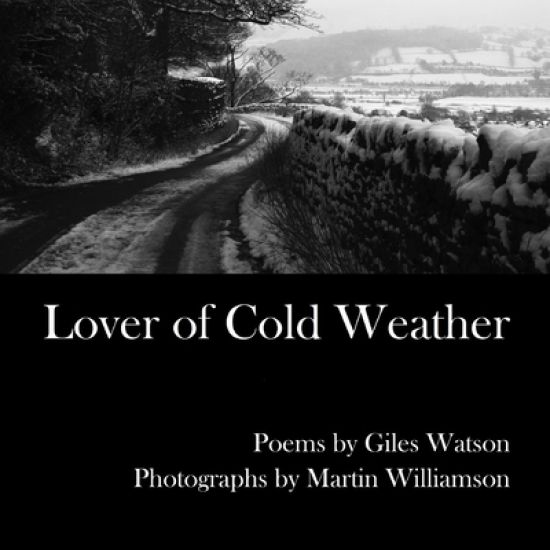
In this companion volume to their earlier collaboration, 'Recollections', Giles Watson's poems and Martin Williamson's photographs combine to evoke the changing moods of the seasons of a British year from one winter to another.
A cross between a business book and a storybook, How Coca-Cola Took Over the World is a collection of 101 accessible, enjoyable and informative tales of some of the world's greatest brands, including Tiffany's, Mercedes, Apple, Pinterest, Chanel No. 5, Corona, Brewdog, Spanx, LG, KFC, WWF, Guinness World Records and Coca-Cola. The stories are arranged into sections covering brand origins, brand naming and identity, marketing strategy, communication, innovation and repositioning and renovation. For each story, the author has drawn a moral - a marketing principle that can be applied to many brand and marketing challenges facing businesses today. When pulled together as they are by the author in the final chapter, they provide the reader with a compelling and inspirational toolbox.
Written by two of the best US researchers in the field, this text investigates issues of astrobiological relevance in the context of cold aqueous planetary geochemistry. At the core of the technical chapters is the Frezchem model, initially developed over many years by one of the authors to quantify aqueous electrolyte properties and chemical thermodynamics at subzero temperatures. Frezchem is of huge relevance to scientists in a number of fields, including biogeochemists.
Written by two of the best US researchers in the field, this text investigates issues of astrobiological relevance in the context of cold aqueous planetary geochemistry. At the core of the technical chapters is the FREZCHEM model, initially developed over many years by one of the authors to quantify aqueous electrolyte properties and chemical thermodynamics at subzero temperatures. FREZCHEM is of huge relevance to scientists in a number of fields, including biogeochemists.
** WINNER OF THE 2022 WILBUR SMITH ADVENTURE WRITING PRIZE **THE TIMES' THRILLER OF THE MONTH'A heart-pounding survival thriller set in the starkly beautiful far north of Norway. Gripping and adrenalin-fuelled, yet also written with a tenderness that warms even the most chilling of chases.' LUCY CLARKE, author of The CastawaysErik Amdahl and his spirited daughter, Sofia, have embarked on a long-promised cross-country ski trip deep into Norway's arctic circle. For Erik, it's the chance to bond properly with his remaining daughter following a tragic accident. For Sofia, it's the proof she needs that her father does care.Then, far from home in this snowbound wilderness, with night falling and the mercury plummeting, an accident sends them in search of help - and shelter. Nearby is the home of a couple - members of Norway's indigenous Sami people - who they've met before, and who welcome them in. Erik is relieved.He believes the worst is over. He thinks that Sofia is now safe. He could not be more wrong.Because he and Sofia are not the old couple's only visitors that night - and soon he and his daughter will be running for their lives . . .And beneath the swirling light show of the Northern Lights, a desperate fight ensues - of man against man, of man against nature - a fight for survival that plays out across the snow and ice.A story of endurance and of the desperate, instinctive will to survive, of a father's love for his child, of knowing when to let go - and of a daughter's determination to prove herself worthy of that love, Where Blood Runs Cold is a pulse-racing thriller from a master storyteller.'A terrific winter chiller . . . utterly gripping.' AMY McCULLOCH, author of Breathless
A gripping history of the polar continent, from the great discoveries of the nineteenth century to modern scientific breakthroughsAntarctica, the ice kingdom hosting the South Pole, looms large in the human imagination. The secrets of this vast frozen desert have long tempted explorers, but its brutal climate and glacial shores notoriously resist human intrusion. Land of Wondrous Cold tells a gripping story of the pioneering nineteenth-century voyages, when British, French, and American commanders raced to penetrate Antarctica’s glacial rim for unknown lands beyond. These intrepid Victorian explorers—James Ross, Dumont D’Urville, and Charles Wilkes—laid the foundation for our current understanding of Terra Australis Incognita.Today, the white continent poses new challenges, as scientists race to uncover Earth’s climate history, which is recorded in the south polar ice and ocean floor, and to monitor the increasing instability of the Antarctic ice cap, which threatens to inundate coastal cities worldwide. Interweaving the breakthrough research of the modern Ocean Drilling Program with the dramatic discovery tales of its Victorian forerunners, Gillen D’Arcy Wood describes Antarctica’s role in a planetary drama of plate tectonics, climate change, and species evolution stretching back more than thirty million years. An original, multifaceted portrait of the polar continent emerges, illuminating our profound connection to Antarctica in its past, present, and future incarnations.A deep-time history of monumental scale, Land of Wondrous Cold brings the remotest of worlds within close reach—an Antarctica vital to both planetary history and human fortunes.
This collection contains titles from Striders Phonics Readers, a series of high-low phonically decodable books for readers aged 7+ with a reading age of 4 to 6. The age-appropriate themes and content will hook the most reluctant and struggling readers. Titles in this collection: Bat; Bok the Bug; In the Net; Run!; The Big Pit; Up and Off!; Pink!; The Big Six Get Jobs; Top Tips: Be Fit and Well. Collection 1 contains the 10 titles from Sets 2-4. 6 non-fiction titles 4 fiction titles. SERIES INFORMATION Striders Phonics Readers are a collection of 32 high-low phonically decodable books for readers aged 7+ with a reading age of 4 to 6. These expertly levelled consolidation readers are perfect for sending home to support classroom teaching, and are exactly matched to Little Wandle Rapid Catch-up with focus sounds following the same progression, and each set of books revising the sounds found in previous sets. The series of phonically decodable readers includes diverse and inclusive artwork and photography and includes features such as chapters and recurring characters (fiction) and contents and headings (non-fiction) to be more consistent with what their friends and peers are reading. Each book also contains 'how to use the book' notes to help an adult support the child's reading along with a character page for fiction titles to orient the reader or a contents page for non-fiction titles. The fiction books are split into four mini-series with reoccurring characters while the non-fiction are stand-alone titles with a summary page at the end to encourage discussion. Focus sounds found in each Scholastic Set: Phase 2 Set 1: s a t p i n m d (used as revision sounds only) Phase 2 Set 2: g o c k ck e u r h b f l Phase 2 Set 3: ff ll ss j v w x y z zz Phase 2 Set 4: qu ch sh th ng nk Phase 3 Set 5: ai ee igh oa oo Phase 3 Set 6: ar or ur ow oi ear air er Phase 4 Set 7: Adjacent consonants with short vowels Phase 4 Set 8: Adjacent consonants with Phase 3 long vowels Phase 5 Set 9: ay (play), ou (cloud), oy (boy), ea (each), ir (bird), ie (pie), ue (blue), u (unicorn) Phase 5 Set 10: o (go), i (tiger), a (paper), e (he), a-e (snake), i-e (time), o-e (home), u-e (cute), e-e (these), ew (new), ie (shield), aw (claw) Phase 5 Set 11: y (funny), ea (head), wh (wheel), oe (toe), ou (shoulder), y (fly), ow (snow), g (giant), ph (phone), le (apple), al (metal), c (ice), ve (give), o-e (some), o (mother), ou (young), se (cheese), se (mouse), ce (fence), ey (donkey), ui (fruit), ou (soup) Phase 5 Set 12: or (word), u (full), oul (could), are (share), ear (bear), ere (there), au (author), aur (dinosaur), oor (floor), al (walk), tch (match), ture (adventure), al (half), a (father), a (water), a (want), ear (learn), wr (wrist), st (whistle), sc (science), ch (school), ch (chef), ze (freeze), schwa at the end of words (actor) Phase 5 Set 13: eigh (eight), aigh (straight), ey (grey), ea (break), gn (gnaw), kn (knee), mb (thumb), ere (here), eer (deer), su (treasure), si (vision), dge (bridge), ge (large), y (crystal), ti (potion), ssi (mission), si (mansion), ci (delicious), augh (daughter), our (pour), oar (oar), ore (more)
This collection contains titles from Striders Phonics Readers, a series of high-low phonically decodable books for readers aged 7+ with a reading age of 4 to 6. The age-appropriate themes and content will hook the most reluctant and struggling readers. Titles in this collection: Animals Seeking Food; Bok in the Moonlight; To the Top; Go-karting; A Near Miss; Urban Art; Big Facts; The Carved Rock Garden; What is For Lunch?; Boston; Ships in the Deep; The Big Six Get Artistic. Collection 2 contains the 12 titles from Sets 5-8. 8 non-fiction titles 4 fiction titles. SERIES INFORMATION Striders Phonics Readers are a collection of 32 high-low phonically decodable books for readers aged 7+ with a reading age of 4 to 6. These expertly levelled consolidation readers are perfect for sending home to support classroom teaching, and are exactly matched to Little Wandle Rapid Catch-up with focus sounds following the same progression, and each set of books revising the sounds found in previous sets. The series of phonically decodable readers includes diverse and inclusive artwork and photography and includes features such as chapters and recurring characters (fiction) and contents and headings (non-fiction) to be more consistent with what their friends and peers are reading. Each book also contains 'how to use the book' notes to help an adult support the child's reading along with a character page for fiction titles to orient the reader or a contents page for non-fiction titles. The fiction books are split into four mini-series with reoccurring characters while the non-fiction are stand-alone titles with a summary page at the end to encourage discussion. Focus sounds found in each Scholastic Set: Phase 2 Set 1: s a t p i n m d (used as revision sounds only) Phase 2 Set 2: g o c k ck e u r h b f l Phase 2 Set 3: ff ll ss j v w x y z zz Phase 2 Set 4: qu ch sh th ng nk Phase 3 Set 5: ai ee igh oa oo Phase 3 Set 6: ar or ur ow oi ear air er Phase 4 Set 7: Adjacent consonants with short vowels Phase 4 Set 8: Adjacent consonants with Phase 3 long vowels Phase 5 Set 9: ay (play), ou (cloud), oy (boy), ea (each), ir (bird), ie (pie), ue (blue), u (unicorn) Phase 5 Set 10: o (go), i (tiger), a (paper), e (he), a-e (snake), i-e (time), o-e (home), u-e (cute), e-e (these), ew (new), ie (shield), aw (claw) Phase 5 Set 11: y (funny), ea (head), wh (wheel), oe (toe), ou (shoulder), y (fly), ow (snow), g (giant), ph (phone), le (apple), al (metal), c (ice), ve (give), o-e (some), o (mother), ou (young), se (cheese), se (mouse), ce (fence), ey (donkey), ui (fruit), ou (soup) Phase 5 Set 12: or (word), u (full), oul (could), are (share), ear (bear), ere (there), au (author), aur (dinosaur), oor (floor), al (walk), tch (match), ture (adventure), al (half), a (father), a (water), a (want), ear (learn), wr (wrist), st (whistle), sc (science), ch (school), ch (chef), ze (freeze), schwa at the end of words (actor) Phase 5 Set 13: eigh (eight), aigh (straight), ey (grey), ea (break), gn (gnaw), kn (knee), mb (thumb), ere (here), eer (deer), su (treasure), si (vision), dge (bridge), ge (large), y (crystal), ti (potion), ssi (mission), si (mansion), ci (delicious), augh (daughter), our (pour), oar (oar), ore (more)
This collection contains titles from Striders Phonics Readers, a series of high-low phonically decodable books for readers aged 7+ with a reading age of 4 to 6. The age-appropriate themes and content will hook the most reluctant and struggling readers. Titles in this starter pack: Amazing Caves; Stampede!; Amazing Animals; Ice Rescue; The Big Six Get an Email; The Science of Dreaming; 48 Hours in Sydney; The Great Bok Gathering; Bok's Splendid Display; Up in the Peaks Collection 3 contains the 10 titles from Sets 9-13 5 non-fiction titles 5 fiction titles SERIES INFORMATION Striders Phonics Readers are a collection of 32 high-low phonically decodable books for readers aged 7+ with a reading age of 4 to 6. These expertly levelled consolidation readers are perfect for sending home to support classroom teaching, and are exactly matched to Little Wandle Rapid Catch-up with focus sounds following the same progression, and each set of books revising the sounds found in previous sets. The series of phonically decodable readers includes diverse and inclusive artwork and photography and includes features such as chapters and recurring characters (fiction) and contents and headings (non-fiction) to be more consistent with what their friends and peers are reading. Each book also contains 'how to use the book' notes to help an adult support the child's reading along with a character page for fiction titles to orient the reader or a contents page for non-fiction titles. The fiction books are split into four mini-series with reoccurring characters while the non-fiction are stand-alone titles with a summary page at the end to encourage discussion. Focus sounds found in each Scholastic Set: Phase 2 Set 1: s a t p i n m d (used as revision sounds only) Phase 2 Set 2: g o c k ck e u r h b f l Phase 2 Set 3: ff ll ss j v w x y z zz Phase 2 Set 4: qu ch sh th ng nk Phase 3 Set 5: ai ee igh oa oo Phase 3 Set 6: ar or ur ow oi ear air er Phase 4 Set 7: Adjacent consonants with short vowels Phase 4 Set 8: Adjacent consonants with Phase 3 long vowels Phase 5 Set 9: ay (play), ou (cloud), oy (boy), ea (each), ir (bird), ie (pie), ue (blue), u (unicorn) Phase 5 Set 10: o (go), i (tiger), a (paper), e (he), a-e (snake), i-e (time), o-e (home), u-e (cute), e-e (these), ew (new), ie (shield), aw (claw) Phase 5 Set 11: y (funny), ea (head), wh (wheel), oe (toe), ou (shoulder), y (fly), ow (snow), g (giant), ph (phone), le (apple), al (metal), c (ice), ve (give), o-e (some), o (mother), ou (young), se (cheese), se (mouse), ce (fence), ey (donkey), ui (fruit), ou (soup) Phase 5 Set 12: or (word), u (full), oul (could), are (share), ear (bear), ere (there), au (author), aur (dinosaur), oor (floor), al (walk), tch (match), ture (adventure), al (half), a (father), a (water), a (want), ear (learn), wr (wrist), st (whistle), sc (science), ch (school), ch (chef), ze (freeze), schwa at the end of words (actor) Phase 5 Set 13: eigh (eight), aigh (straight), ey (grey), ea (break), gn (gnaw), kn (knee), mb (thumb), ere (here), eer (deer), su (treasure), si (vision), dge (bridge), ge (large), y (crystal), ti (potion), ssi (mission), si (mansion), ci (delicious), augh (daughter), our (pour), oar (oar), ore (more)
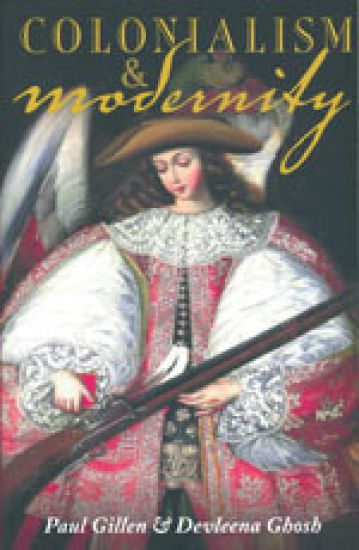
Few books tell such a broad global history using an interdisciplinary approach that blends historical and cultural scholarship. The authors are based at UTS - faculty of Humanities and Social Studies. For five centuries, colonialism and modernity have profoundly shaped the cultures of the world. This book traces these interacting long-term historical processes, and the parallel history of anti-colonial movements and ideas. It outlines the rise to global dominance of Europe since the 16th century, and the attendant modernity that shaped and defined this rise. Gillen and Ghosh show how colonialism and modernity dramatically changed the lives of the colonised peoples, the invading settlers who established overseas colonies, those who remained in Europe, and the diasporas created by invasions, slavery, indentured labour and voluntary migration.