Kirjojen hintavertailu. Mukana 11 244 527 kirjaa ja 12 kauppaa.

Kirjahaku

Etsi kirjoja tekijän nimen, kirjan nimen tai ISBN:n perusteella.

1000 tulosta hakusanalla Gilles Pinte

Gilles Deleuze, Postcolonial Theory, and the Philosophy of Limit
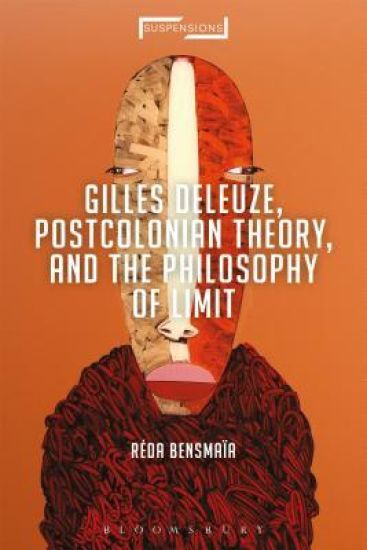
Does a philosopher have an ‘identity’? What kind of ‘identity’ is mobilized when the work of a philosopher becomes a major reference for certain schools of thought, as in the case of Gilles Deleuze and postcolonial theory? Have the promoters of a generalized Deleuzeanism taken care their usage of his specialized work does him justice? Few exponents of postcolonial and subaltern theories now dispute the influence that Deleuze’s work exerted on the intellectuals and theorists who developed those theories. However, this book contends that postcolonial and subaltern theorists have engaged with Deleuzean thought in ways that have perhaps produced a long series of misunderstandings – for which Deleuze himself is not responsible. By engaging with recent innovations in North African culture and by examining the dissemination of Deleuze’s identities across a broad range of postcolonial theory, Réda Bensmaïa shows that the ‘encounter’ between Deleuze and the postcolonial movement can only be understood through the idea of a ‘transcendental’ field, in which Deleuze and his postcolonial followers find themselves captured.
Gilles Deleuze, Postcolonial Theory, and the Philosophy of Limit
Does a philosopher have an ‘identity’? What kind of ‘identity’ is mobilized when the work of a philosopher becomes a major reference for certain schools of thought, as in the case of Gilles Deleuze and postcolonial theory? Have the promoters of a generalized Deleuzeanism taken care their usage of his specialized work does him justice? Few exponents of postcolonial and subaltern theories now dispute the influence that Deleuze’s work exerted on the intellectuals and theorists who developed those theories. However, this book contends that postcolonial and subaltern theorists have engaged with Deleuzean thought in ways that have perhaps produced a long series of misunderstandings – for which Deleuze himself is not responsible. By engaging with recent innovations in North African culture and by examining the dissemination of Deleuze’s identities across a broad range of postcolonial theory, Réda Bensmaïa shows that the ‘encounter’ between Deleuze and the postcolonial movement can only be understood through the idea of a ‘transcendental’ field, in which Deleuze and his postcolonial followers find themselves captured.
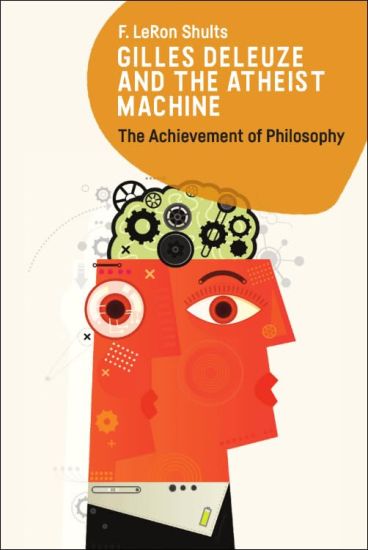
Gilles Deleuze and the Atheist Machine

Gilles Deleuze and the Atheist Machine

F. LeRon Shults

EDINBURGH UNIVERSITY PRESS
2024
sidottu
In What is Philosophy?, Deleuze argued that atheism is not a drama but 'the philosopher's serenity and philosophy's achievement.' LeRon Shults illustrates the uses and effects of an 'atheist machine' throughout Deleuze's work, demonstrating its central role in his philosophical achievements in metaphysics, epistemology and ethics.Shults also brings Deleuze's philosophy into dialogue with recent advances in computational social simulation, specifically multi-agent artificial intelligence modelling. Framing his argument in the context of empirical findings and theoretical developments in the scientific study of religion, he points toward the potentially creative role of atheist assemblages in addressing societal challenges associated with the Anthropocene.
Gilles Deleuze and the Atheist Machine

Gilles Deleuze and the Atheist Machine

F. LeRon Shults

EDINBURGH UNIVERSITY PRESS
2025
nidottu
In What is Philosophy?, Deleuze argued that atheism is not a drama but 'the philosopher's serenity and philosophy's achievement.'LeRon Shults illustrates the uses and effects of an 'atheist machine' throughout Deleuze's work, demonstrating its central role in his philosophical achievements in metaphysics, epistemology and ethics.Shults also brings Deleuze's philosophy into dialogue with recent advances in computational social simulation, specifically multi-agent artificial intelligence modelling. Framing his argument in the context of empirical findings and theoretical developments in the scientific study of religion, he points toward the potentially creative role of atheist assemblages in addressing societal challenges associated with the Anthropocene.
Gilles Deleuze

Gilles Deleuze

Paola Marrati

Johns Hopkins University Press
2012
pokkari
In recent years, the recognition of Gilles Deleuze as one of the major philosophers of the twentieth century has heightened attention to his brilliant and complex writings on film. What is the place of Cinema 1 and Cinema 2 in the corpus of his philosophy? How and why does Deleuze consider cinema as a singular object of philosophical attention, a specific mode of thought? How does his philosophy of film combine and further his approaches to time, movement, and perception, and how does it produce an escape from subjectivity and a plunge into the immanence of images? How does it recode and utilize Henri Bergson's thought and Andre Bazin's film theory? What does it tell us about perceiving a world in images-indeed about our relation to the world? These are the central questions addressed in Paola Marrati's powerful and clear elucidation of Deleuze's philosophy of film. Humanities, film studies, and social science scholars will find this book a valuable contribution to the philosophical literature on cinema and its pertinence in contemporary life.
Gilles Deleuze

Gilles Deleuze

Continuum Publishing Corporation
2011
nidottu
Gilles Deleuze: The Intensive Reduction brings together eighteen essays written by an internationally acclaimed team of scholars to provide a comprehensive overview of the work of Gilles Deleuze, one of the most important and influential European thinkers of the twentieth century. Each essay addresses a central issue in Deleuze's philosophy (and that of his regular co-author, Felix Guattari) that remains to this day controversial and unsettled. Since Deleuze's death in 1994, the technical aspects of his philosophy have been largely neglected. These essays address that gap in the existing scholarship by focusing on his contribution to philosophy. Each contributor advances the discussion of a contested point in the philosophy of Deleuze to shed new light on as yet poorly-understood problems and to stimulate new and vigorous exchanges regarding his relationship to philosophy, schizoanlysis, his aesthetic, ethical and political thought. Together, the essays in this volume make an invaluable contribution to our understanding of Deleuze's philosophy.
Gilles Deleuze's Empiricism and Subjectivity

Gilles Deleuze's Empiricism and Subjectivity

Jon Roffe

Edinburgh University Press
2016
sidottu
Jon Roffe shows how Empiricism and Subjectivity is the precursor for some of Deleuze's most well-known philosophical innovations. For those already familiar with Deleuze, he emphasises its novelty within his corpus. And, for all readers, he shows how it outlines Deleuze's powerful and striking theory of subjectivity, and of philosophy itself.Empiricism and Subjectivity is Gilles Deleuze's first book, and yet it is infrequently read and poorly understood. In fact, it constitutes a unique project in its own right, deserving of the same close study that is now widely given to other, more well-known works.
Gilles Deleuze's Empiricism and Subjectivity

Gilles Deleuze's Empiricism and Subjectivity

Jon Roffe

Edinburgh University Press
2016
nidottu
Jon Roffe shows how Empiricism and Subjectivity is the precursor for some of Deleuze's most well-known philosophical innovations. For those already familiar with Deleuze, he emphasises its novelty within his corpus. And, for all readers, he shows how it outlines Deleuze's powerful and striking theory of subjectivity, and of philosophy itself.Empiricism and Subjectivity is Gilles Deleuze's first book, and yet it is infrequently read and poorly understood. In fact, it constitutes a unique project in its own right, deserving of the same close study that is now widely given to other, more well-known works.
Gilles Deleuze's Transcendental Empiricism

Gilles Deleuze's Transcendental Empiricism

Marc Rlli

Edinburgh University Press
2016
sidottu
Deleuze's readings of Hume, Spinoza, Bergson and Nietzsche respond to philosophical critiques of classical and modern empiricism. However, Deleuze's arguments against those critiques--by Kant, Hegel, Husserl and Heidegger--consolidate the philosophy of immanence that can be called 'transcendental empiricism'. Marc Rolli offers us a detailed examination of Gilles Deleuze's philosophy of transcendental empiricism. He demonstrates that Deleuze takes up and radicalises the empiricist school of thought developing a systematic alternative to the mainstreams of modern continental philosophy."
Gilles Deleuze's Transcendental Empiricism

Gilles Deleuze's Transcendental Empiricism

Marc Rolli

Edinburgh University Press
2018
nidottu
Reconstructs Deleuze's philosophy as transcendental empiricism: two philosophies previously seen as contradictory Deleuze's readings of Hume, Spinoza, Bergson and Nietzsche respond to philosophical critiques of classical and modern empiricism. However, Deleuze's arguments against those critiques by Kant, Hegel, Husserl and Heidegger consolidate the philosophy of immanence that can be called 'transcendental empiricism'.Marc Rolli offers us a detailed examination of Gilles Deleuze's philosophy of transcendental empiricism. He demonstrates that Deleuze takes up and radicalises the empiricist school of thought developing a systematic alternative to the mainstreams of modern continental philosophy.
Gilles Deleuze's Luminous Philosophy

Gilles Deleuze's Luminous Philosophy

Hanjo Berressem

Edinburgh University Press
2019
sidottu
'The plane of immanence is entirely made up of Light', Deleuze writes in Cinema 1: The Movement-Image. Engaging the whole body of Deleuze's work, including less rehearsed texts such as The Actual and the Virtual, Lucretius and the Simulacrum and his lectures on Spinoza, Hanjo Berressem traces the 'line of light' that runs through Deleuze's thought. The focus on the philosophical luminism that suffuses Deleuze's work delivers a novel reading of Deleuzian philosophy from the perspective of the complementarity of the photon. Berressem reveals a wealth of surprising and brilliant insights for anyone with an interest in Deleuze and in the implications of Deleuze's philosophical photonics for historiography, literary studies, painting and film.
Gilles Deleuze's Luminous Philosophy

Gilles Deleuze's Luminous Philosophy

Hanjo Berressem

Edinburgh University Press
2021
nidottu
'The plane of immanence is entirely made up of Light', Deleuze writes in Cinema 1: The Movement-Image. Engaging the whole body of Deleuze's work, including less rehearsed texts such as The Actual and the Virtual, Lucretius and the Simulacrum and his lectures on Spinoza, Hanjo Berressem traces the 'line of light' that runs through Deleuze's thought. The focus on the philosophical luminism that suffuses Deleuze's work delivers a novel reading of Deleuzian philosophy from the perspective of the complementarity of the photon. Berressem reveals a wealth of surprising and brilliant insights for anyone with an interest in Deleuze and in the implications of Deleuze's philosophical photonics for historiography, literary studies, painting and film.
Gilles Deleuze and Metaphysics

Gilles Deleuze and Metaphysics

Arnauld Villani

Lexington Books
2017
nidottu
Deleuze remains indifferent to the ambient pathos related to the end of metaphysics and compares the undertakings of destruction, overcoming and deconstruction of metaphysics with the gestures of murderers. He considers himself “a pure metaphysician,” which is rather unique in the contemporary philosophical landscape. What are we to make of this and similar claims? What do they mean in light of the effort made during the last several centuries to overcome, overturn, destroy, or deconstruct metaphysics? If we consider Deleuze’s work more closely, might find him engaging in the kind of thinking that is commonly referred to as metaphysical? And if Deleuze is indeed a metaphysician, does this undercut the many insightful contributions of the twentieth century philosophers who dedicate their thought to bringing down Western metaphysical tradition? Or does it suggest that there is a sense of metaphysics that should nevertheless be preserved? These and similar questions are addressed in this volume by a series of international scholars. The goal of the book is to critically engage an aspect of Deleuze’s thought that, for the most part, has been neglected, and to understand better his “immanent metaphysics.” It also seeks to explore the consequences of such an engagement.
Gilles de Cesbres

Gilles de Cesbres

Delly

Createspace Independent Publishing Platform
2016
nidottu
Delly est le nom de plume conjoint d'un fr re et d'une soeur, Jeanne-Marie Petitjean de La Rosi re, n e Avignon en 1875, et Fr d ric Petitjean de La Rosi re, n Vannes en 1876, auteurs de romans d'amour populaires. Les romans de Delly, peu connus des lecteurs actuels, furent extr mement populaires entre 1910 et 1950, et compt rent parmi les plus grands succ s de l' dition mondiale cette poque.
Gilles & Jeanne ou le sentiment alchimique: Prix Xavier Grall de l'Essai
Jeanne d'Arc et Gilles de Rais, d'autres que moi en ont largement d battu. Mais de ces deux compagnons d'armes qui s'illustr rent la fin de la Guerre de Cent ans, seule Jeanne fut r habilit e. Il ne fait pourtant aucun doute que sans Gilles aux c t s de Jeanne, apr s la d faite d'Azincourt, Charles VII n'aurait pas r ussi reprendre Paris ni les territoires du royaume occup s par l'Anglais. Par cet essai historique r compens par le Prix Xavier Grall, j'ai souhait livrer une approche chevaleresque de la relation hors normes de deux tres unis par les m mes id aux: Dieu, le roi et la terre de France. Une fa on po tique de r habiliter le Baron de Retz sous son jour le plus noble. Cet essai est n de la quintessence de mes lectures sur un sujet qui me passionne et de rencontres avec deux minents d fenseurs de Gilles de Rais: Jean-Pierre Bayard et Jean-Yves Go au-Brissonni re.
Gilles Deleuze

Gilles Deleuze

Frida Beckman

Reaktion Books
2017
nidottu
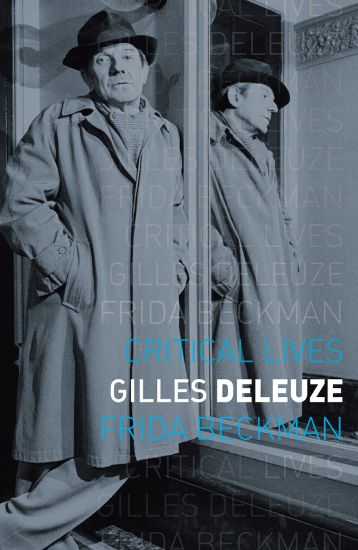
Gilles Deleuze, the person and philosopher, was both singular and multifaceted. Frida Beckman traces Deleuze’s remarkable intellectual journey, mapping the encounters from which his life and work emerged. She considers how his life and philosophical developments resonate with historical, political and philosophical events, from the Second World War to the student uprisings in the 1960s, the opening of the experimental University of Paris VIII and the Israeli–Palestinian conflict. Although less of a public figure than many of his contemporaries, Deleuze’s life and philosophy are bound up with his numerous friendships, collaborations and disputes with several of the period’s most influential thinkers, as well as his connections with writers, artists and film scholars.Beckman considers the events, moods and intensities that were generated by this multiplicity of encounters throughout his life. The book follows Deleuze from the salons to which he was invited as a young student through his popularity as a young teacher to the development of the rich phases of his philosophical work. While resisting the idea of ‘Deleuzians’, the book also reviews a post-Deleuzian legacy and the influence of this extraordinary thinker on contemporary philosophy.