Kirjojen hintavertailu. Mukana 11 699 587 kirjaa ja 12 kauppaa.

Kirjahaku

Etsi kirjoja tekijän nimen, kirjan nimen tai ISBN:n perusteella.

1000 tulosta hakusanalla Godard

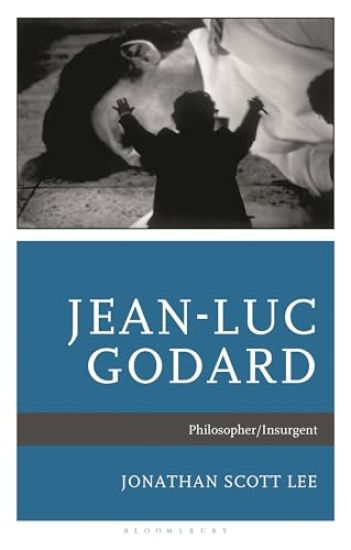
Jean-Luc Godard: Philosopher/Insurgent

Jean-Luc Godard: Philosopher/Insurgent

Jonathan Scott Lee

BLOOMSBURY ACADEMIC
2025
sidottu
In this book, Jonathan Scott Lee argues that Jean-Luc Godard is best seen as a philosopher who uses cinema and video as his media to develop provocative interventions into contemporary political situations and dilemmas, both explicitly and aesthetically. Building on Godard's claim that "cinema is made of forms that think," this book explores the ways in which particular films lead their viewers into a "subjunctive" space of interpretation, where philosophical thinking engages fundamental questions about an art of living. Moving through his filmography chronologically, each of the three essay-chapters of the book considers Godard through the lens of a different thinker - in the 1960s, the Diogenes of Sinope; in the late 1960s and early 1970s, the psychoanalyst Jacques Lacan; and in the final decades, the historian and philosopher Andr Malraux. Ultimately, by offering a distinct trajectory through Godard's work between 1960 and 2018, Lee demonstrates how these various modes of cinematic and video intervention might be seen to effect real change in the world. Rather than attempting to write a 'definitive' study of Godard or establish a new canon from his extensive oeuvre, Lee identifies a particular selection of his work to reveal innovative ways of understanding his lifelong engagement with film and video.
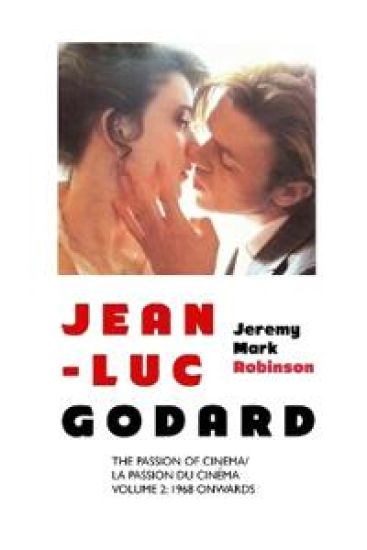
Jean-Luc Godard

Jean-Luc Godard

Jeremy Mark Robinson

CRESCENT MOON PUBLISHING
2008
sidottu
JEAN-LUC GODARD There's no one else quite like Jean-Luc Godard. You could take a few frames from one of his films and know they were by the maestro and nobody else. Where the flood of movies globally now runs into many thousands, Godard's works stand out as original, acerbic, romantic, ironic, humorous and explorative. EXTRACT FROM CHAPTER 2: "GODARD BIOGRAPHY" With Bout du Souffle, Godard produced one of the first, great French New Wave movies, starring Jean-Paul Belmondo and Jean Seberg, and written by, among others, Fran ois Truffaut. Bout du Souffle, with its cool Parisian milieu, its filmic and film noir allusions, handheld camera, direct sound, startling editing and stylish, self-conscious performances from Belmondo and Seberg, established Godard as one of the major voices of postwar cinema, a reputation which Godard built on in subsequent early films such as Le Petit Soldat (1960), Une Femme Est Une Femme (1961), Vivre Sa Vie (1962), Le M pris (1963), Bande Part (1964), and Une Femme Mari e (1964). In these films of the early to mid-1960s, Godard established a radical, polemical series of films as film-essays which confronted issues such as late consumer capitalism, prostitution, labour, politics, ideology, gender, marriage, music, popular culture, Hollywood and not forgetting cinema itself. In the mid-1960s, Godard's films became increasingly political - the sci-fi film Alphaville (1965), Pierrot le Fou (1965), Made in U.S.A (1966), Masculine/ F minin (1966), 2 ou 3 Choses Que Je Sais (1966) - until, by 1967-68, the Marxist and Maoist influences permeated Godard's films: Weekend (1967), La Chinoise (1967), La Gai Savoir (1968), and One Plus One (Sympathy For the Devil, 1968). His concern was 'not to make political films, but to make films politically' (my emphasis). In the 1970s, Godard moved into video and television territory, and worked with Anne-Marie Mi ville on many projects: Ici Et Ailleurs (1974), Num ro Deux (1975), Comment a Va (1976), Six Fois Deux/ Sur Et Sous La Communication (1976), and France/ Tour/ D tour/ Deux/ Enfants (1977-78). In the late 1970s, Godard made a 'return' to feature filmmaking, with the 'sublime trilogy', Sauve Qui Peut (a.k.a. Every Man For Himself and Slow Motion, 1979), Passion (1982), and Pr nom: Carmen (1983). Easily his most controversial film, Je Vous Salue Marie (Hail Mary), appeared in 1985; it was followed by D tective (1985), made to help finance the completion of Hail Mary, King Lear (1987), which starred Peter Sellars, Burgess Meredith, Molly Ringwald, Norman Mailer and Woody Allen, Nouvelle Vague (1990), H las Pour Moi (1993), For Ever Mozart (1997), loge de l'Amour (In Praise of Love, 2000) and Notre Musique (2005). Fully illustrated. Bibliography and notes.
Jean-Luc Godard

Jean-Luc Godard

Jeremy Mark Robinson

CRESCENT MOON PUBLISHING
2024
pokkari
JEAN-LUC GODARD: THE PASSION OF CINEMAVOLUME 1: TO 1968By Jeremy Mark RobinsonThere's no one else quite like Jean-Luc Godard, one of the most significant and inspiring filmmakers of recent times. Where the flood of movies globally now runs into many thousands, Godard's works stand out as original, acerbic, romantic, ironic, controversial, humorous and explorative. This book considers all of Godard's works in cinema, from his early short films and the important success and cultural impact of Breathless through the remarkable series of movies of the 1960s to the latest feature films. The book is split into two volumes: Jean-Luc Godard: The Passion of Cinema/ La Passion deuCinema: Volume 1: To 1968Jean-Luc Godard: The Passion of Cinema/ La Passion du Cinema: Volume 2: From 1968Volume 1 includes a biography of Godard; an exploration of aspects of his cinema; and chapters on movies such as Breathless, Vivre Sa Vie, Contempt, A Band Apart, Pierrot le Fou, Alphaville, One Plus One, Weekend, Two or Three Things I Know About Her, La Chinoise, A Married Woman and Masculine/ Feminine. EXTRACT FROM CHAPTER 2: "GODARD BIOGRAPHY"With Bout du Souffle, Godard produced one of the first, great French New Wave movies, starring Jean-Paul Belmondo and Jean Seberg, and written by, among others, Fran ois Truffaut. Bout du Souffle, with its cool Parisian milieu, its filmic and film noir allusions, handheld camera, direct sound, startling editing and self-conscious performances from Belmondo and Seberg, established Godard as one of the major voices of postwar cinema, a reputation which Godard built on in subsequent early films such as Le Petit Soldat (1960), Une Femme Est Une Femme (1961), Vivre Sa Vie (1962), Le M pris (1963), Bande Part (1964), and Une Femme Mari e (1964).In these films of the early to mid-1960s, Godard developed a radical, polemical series of films as film-essays which confronted issues such as late consumer capitalism, prostitution, labour, politics, ideology, gender, marriage, music, popular culture, Hollywood and not forgetting cinema itself.Fully illustrated. Bibliography, filmography, Godardisms and notes.
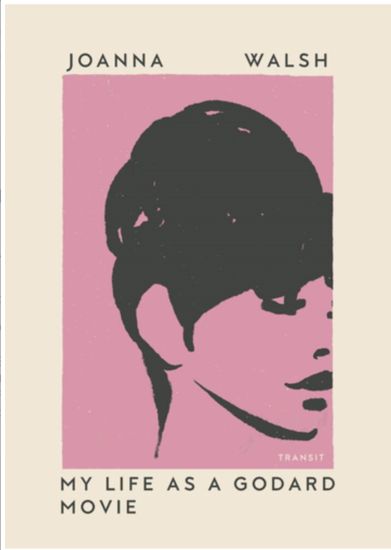
My Life as a Godard Movie
A book-length essay on beauty and revolution as seen through the work of Jean-Luc Godard. As Joanna Walsh watches the films of Jean-Luc Godard, she considers beauty and desire in life and art. "There's a resistance, in Godard's women," writes Walsh, "that is at the heart of his work (and theirs)." She is captivated by the Paris of his films and the often porous border between the city presented on screen and the one she inhabited herself. With cool precision, and in language that shines with aphoristic wit, Walsh has crafted an exquisitely intimate portrait of the way attention to works of art becomes attention to changes in ourselves. Taut and gem-like, My Life as a Godard Movie is a probing meditation by one of our most observant writers. My Life as a Godard Movie is part of the Undelivered Lectures series from Transit Books.
Le Capitaine Godard, Sa Vie Et Ses Oeuvres

Le Capitaine Godard, Sa Vie Et Ses Oeuvres

Amable-Félix Couturier de Vienne

Hachette Livre - BNF
2013
pokkari
Le capitaine Godard, sa vie et ses oeuvres; par A. F. Couturier de Vienne, ...Date de l'edition originale: 1866Sujet de l'ouvrage: GodardCe livre est la reproduction fidele d'une oeuvre publiee avant 1920 et fait partie d'une collection de livres reimprimes a la demande editee par Hachette Livre, dans le cadre d'un partenariat avec la Bibliotheque nationale de France, offrant l'opportunite d'acceder a des ouvrages anciens et souvent rares issus des fonds patrimoniaux de la BnF.Les oeuvres faisant partie de cette collection ont ete numerisees par la BnF et sont presentes sur Gallica, sa bibliotheque numerique.En entreprenant de redonner vie a ces ouvrages au travers d'une collection de livres reimprimes a la demande, nous leur donnons la possibilite de rencontrer un public elargi et participons a la transmission de connaissances et de savoirs parfois difficilement accessibles.Nous avons cherche a concilier la reproduction fidele d'un livre ancien a partir de sa version numerisee avec le souci d'un confort de lecture optimal. Nous esperons que les ouvrages de cette nouvelle collection vous apporteront entiere satisfaction.Pour plus d'informations, rendez-vous sur www.hachettebnf.fr
Le Docteur Ernest Godard: Adieux, Éloges, Mission Scientifique
Le docteur Ernest Godard: adieux, eloges, mission scientifiqueDate de l'edition originale: 1865Sujet de l'ouvrage: Godard, ErnestCe livre est la reproduction fidele d'une oeuvre publiee avant 1920 et fait partie d'une collection de livres reimprimes a la demande editee par Hachette Livre, dans le cadre d'un partenariat avec la Bibliotheque nationale de France, offrant l'opportunite d'acceder a des ouvrages anciens et souvent rares issus des fonds patrimoniaux de la BnF.Les oeuvres faisant partie de cette collection ont ete numerisees par la BnF et sont presentes sur Gallica, sa bibliotheque numerique.En entreprenant de redonner vie a ces ouvrages au travers d'une collection de livres reimprimes a la demande, nous leur donnons la possibilite de rencontrer un public elargi et participons a la transmission de connaissances et de savoirs parfois difficilement accessibles.Nous avons cherche a concilier la reproduction fidele d'un livre ancien a partir de sa version numerisee avec le souci d'un confort de lecture optimal. Nous esperons que les ouvrages de cette nouvelle collection vous apporteront entiere satisfaction.Pour plus d'informations, rendez-vous sur www.hachettebnf.fr"
L'Abbé Léon Godard

L'Abbé Léon Godard

Carnandet

Hachette Livre - BNF
2014
pokkari
L'Abbe Leon Godard: chanoine honoraire d'Alger, professeur au Grand seminaire de Langres: portrait et biographie / par J. Carnandet, ...Date de l'edition originale: 1863Sujet de l'ouvrage: Godard, Leon (1825-1863)Ce livre est la reproduction fidele d'une oeuvre publiee avant 1920 et fait partie d'une collection de livres reimprimes a la demande editee par Hachette Livre, dans le cadre d'un partenariat avec la Bibliotheque nationale de France, offrant l'opportunite d'acceder a des ouvrages anciens et souvent rares issus des fonds patrimoniaux de la BnF.Les oeuvres faisant partie de cette collection ont ete numerisees par la BnF et sont presentes sur Gallica, sa bibliotheque numerique.En entreprenant de redonner vie a ces ouvrages au travers d'une collection de livres reimprimes a la demande, nous leur donnons la possibilite de rencontrer un public elargi et participons a la transmission de connaissances et de savoirs parfois difficilement accessibles.Nous avons cherche a concilier la reproduction fidele d'un livre ancien a partir de sa version numerisee avec le souci d'un confort de lecture optimal. Nous esperons que les ouvrages de cette nouvelle collection vous apporteront entiere satisfaction.Pour plus d'informations, rendez-vous sur www.hachettebnf.fr"
Jean-Luc Godard’s Political Filmmaking

Jean-Luc Godard’s Political Filmmaking

Irmgard Emmelhainz

Springer International Publishing AG
2019
sidottu
This book offers an examination of the political dimensions of a number of Jean-Luc Godard’s films from the 1960s to the present. The author seeks to dispel the myth that Godard’s work abandoned political questions after the 1970s and was limited to merely formal ones. The book includes a discussion of militant filmmaking and Godard’s little-known films from the Dziga Vertov Group period, which were made in collaboration with Jean-Pierre Gorin. The chapters present a thorough account of Godard’s investigations on the issue of aesthetic-political representation, including his controversial juxtaposition of the Shoah and the Nakba. Emmelhainz argues that the French director’s oeuvre highlights contradictions between aesthetics and politics in a quest for a dialectical image. By positing all of Godard’s work as experiments in dialectical materialist filmmaking, from Le Petit soldat (1963) to Adieu au langage (2014), the author brings attention to Godard’s ongoing inquiry on the role filmmakers can have in progressive political engagement.