

Kirjahaku
Etsi kirjoja tekijän nimen, kirjan nimen tai ISBN:n perusteella.
1000 tulosta hakusanalla Gordon H. Ed Cole


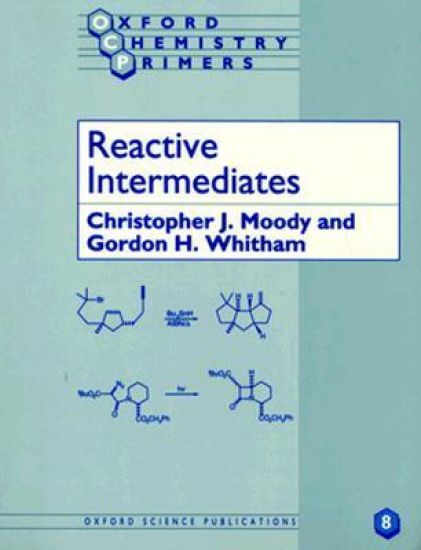
Neutral reactive intermediates play a key role in synthetic chemistry. Intended for undergraduates, this primer concentrates on this role; the important reactions of these electron-deficient species are laid out clearly, with carefully chosen examples illustrating their use in organic synthesis.

Drawing on detailed data from their 16-year study of red-winged blackbirds in the marshes of Washington's Columbia National Wildlife Refuge, Les Beletsky and Gordon Orians analyze the information redwings use to make breeding-season decisions and the consequences these decisions have for lifetime reproductive success. Male and female redwings make different, and often independent, decisions - males focus on territory acquisition and maintenance, while females must choose when and where to nest and how much energy to invest in reproduction. Accordingly the authors have taken the approach within this text of studying the two sexes seperately. Using analyses of observational data combined with field experiments and game-theoretical models, the authors provide insights into the complex patterns of reproductive decision-making and breeding behaviour in redwings.
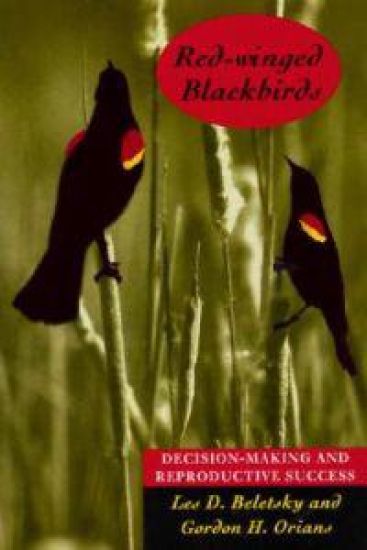
Drawing on detailed data from their 16-year study of red-winged blackbirds in the marshes of Washington's Columbia National Wildlife Refuge, Les Beletsky and Gordon Orians analyze the information redwings use to make breeding-season decisions and the consequences these decisions have for lifetime reproductive success. Male and female redwings make different, and often independent, decisions - males focus on territory acquisition and maintenance, while females must choose when and where to nest and how much energy to invest in reproduction. Accordingly the authors have taken the approach within this text of studying the two sexes seperately. Using analyses of observational data combined with field experiments and game-theoretical models, the authors provide insights into the complex patterns of reproductive decision-making and breeding behaviour in redwings.

Conservation and the Genetics of Populations
Fred W. Allendorf; Gordon H. Luikart; Sally N. Aitken
John Wiley Sons Inc
2012
nidottu
Loss of biodiversity is among the greatest problems facing the world today. Conservation and the Genetics of Populations gives a comprehensive overview of the essential background, concepts, and tools needed to understand how genetic information can be used to conserve species threatened with extinction, and to manage species of ecological or commercial importance. New molecular techniques, statistical methods, and computer programs, genetic principles, and methods are becoming increasingly useful in the conservation of biological diversity. Using a balance of data and theory, coupled with basic and applied research examples, this book examines genetic and phenotypic variation in natural populations, the principles and mechanisms of evolutionary change, the interpretation of genetic data from natural populations, and how these can be applied to conservation. The book includes examples from plants, animals, and microbes in wild and captive populations. This second edition contains new chapters on Climate Change and Exploited Populations as well as new sections on genomics, genetic monitoring, emerging diseases, metagenomics, and more. One-third of the references in this edition were published after the first edition. Each of the 22 chapters and the statistical appendix have a Guest Box written by an expert in that particular topic (including James Crow, Louis Bernatchez, Loren Rieseberg, Rick Shine, and Lisette Waits). This book is essential for advanced undergraduate and graduate students of conservation genetics, natural resource management, and conservation biology, as well as professional conservation biologists working for wildlife and habitat management agencies. Additional resources for this book can be found at: www.wiley.com/go/allendorf/populations.



Handbook on Material and Energy Balance Calculations in Material Processing
Arthur E. Morris; Gordon H. Geiger; H. Alan Fine
John Wiley Sons Inc
2011
sidottu
Lately, there has been a renewed push to minimize the waste of materials and energy that accompany the production and processing of various materials. This third edition of this reference emphasizes the fundamental principles of the conservation of mass and energy, and their consequences as they relate to materials and energy. New to this edition are numerous worked examples, illustrating conventional and novel problem-solving techniques in applications such as semiconductor processing, environmental engineering, the production and processing of advanced and exotic materials for aerospace, electronic, and structural applications.
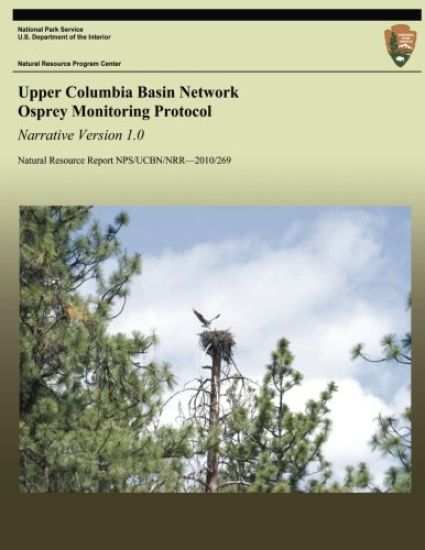
Upper Columbia Basin Network Osprey Monitoring Protocol: Narrative Version 1.0
Thomas J. Rodhouse; Gordon H. Dicus; Paulina F. Tobar-Starkey
Createspace Independent Publishing Platform
2013
nidottu

Upper Columbia Basin Network Osprey Monitoring Protocol: Standard Operating Procedures, Version 1.0
Thomas J. Rodhouse; Gordon H. Dicus; Paulina F. Tobar-Starkey
Createspace Independent Publishing Platform
2013
nidottu

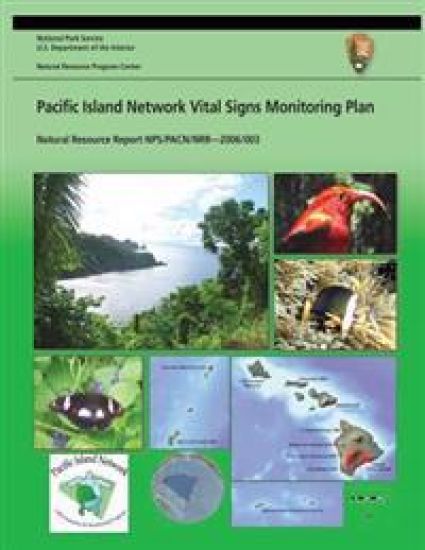
Pacific Island Network Vital Signs Monitoring Plan
Fritz L. Klasner; Sonia H. Stephens; Gordon H. Dicus
Createspace Independent Publishing Platform
2013
nidottu
Empresa de Reciclaje de neumáticos fuera de uso en Valledupar-Colombia
Jairo Enrique Polo Martinez; Karen Isabel Zuluaga B; Yimy Gordon H
Editorial Academica Espanola
2014
pokkari
Earth System Science
Michael Jacobson; Robert J. Charlson; Henning Rodhe; Gordon H. Orians
Academic Press Inc
2000
nidottu
Over the last decade, the study of cycles as a model for the earth's changing climate has become a new science. Earth Systems Science is the basis for understanding all aspects of anthropogenic global change, such as chemically forced global climate change. The work is aimed at those students interested in the emerging scientific discipline.Earth Systems Science is an integrated discipline that has been rapidly developing over the last two decades. New information is included in this updated edition so that the text remains relevant. This volume contains five new chapters, but of special importance is the inclusion of an expanded set of student exercises.The two senior authors are leading scientists in their fields and have been awarded numerous prizes for their research efforts.

The Making of the Northwest Forest Plan
K. Norman Johnson; Jerry F. Franklin; Gordon H. Reeves
Oregon State University
2023
nidottu
Tree sitters. Logger protests. Dying timber towns. An iconic species on the brink. The Timber Wars consumed the Pacific Northwest in the late 1980s and early1990s and led political leaders to ask scientists for a solution. The Northwest Forest Plan was the result. For most of the twentieth century, the central theme of federal forest management in the Pacific Northwest had been logging old-growth forests to provide a sustained yield of timber. During the 1970s and 1980s, however, a series of studies by young scientists highlighted the destructive impact of that logging on northern spotted owls, salmon, and the old-growth ecosystem itself. Combining this new science with newly minted environmental laws like the Endangered Species Act, environmental activists obtained court injunctions to stop old-growth logging on federal land, setting off a titanic struggle in the Pacific Northwest to find a way to accommodate conservation imperatives as well as the logging that provided employment for tens of thousands of people. That effort involved years of controversy and debate, federal courts, five science assessments, Congress, and eventually the president of the United States. It led to creation of the Northwest Forest Plan, which sharply and abruptly shifted the primary goal of federal forestry toward conserving the species and ecosystems of old-growth forests. Scientists went from spectators to planners and guides, employing their latest scientific findings and expertise to create a forest plan for 20 million acres that would satisfy the courts. The largest upheaval in federal forest management in history had occurred, along with a precipitous decline in timber harvest, and there was no going back. In this book, three of the scientists who helped craft that change tell the story as they know it: the causes, development, adoption, and implementation of the Northwest Forest Plan. The book also incorporates personal reflections from the authors, short commentaries and histories from key figures— including spotted owl expert Eric Forsman—and experiences from managers who implemented the Plan as best they could. Legal expert Susan Jane M. Brown helped interpret court cases and Debora Johnson turned spatial data into maps. The final chapters cover the Plan’s ongoing significance and recommendations for conserving forest and aquatic ecosystems in an era of megafires and climate change.

Advanced Histopathology
Gordon W.H. Stamp; Colin L. Berry; N.A. Wright
Springer-Verlag Berlin and Heidelberg GmbH Co. K
1990
nidottu
It is easy to be confident that an appropriate body of advice is available to candidates about the content of an examination once you have passed it. Prospectively, the Primary and Final Examinations of the Royal College of Pathologists will appear to most to involve the assimilation of what seems at the time an inexhaustible volume of data, and the recent change in the College examination system has not diminished this concern for the majority of candidates. The guidelines for training for the new Part I examination state that this is the "major hurdle of the MRCPath" and it is clear that it will determine whether candidates are suitable for training which will permit them to practise independently as consultants after Part II. These general aims and objectives do not answer questions such as "How much do I need to know about glomerulonephritis?" or "Where do I stop with the lymphomas?" This text attempts to resolve the difficulty of knowing what standard to aim at, using College questions as its starting point. It concentrates on the essential basis of any single answer; many candidates for the new three-year examination will know more about individual topics than is stated here. However, it is the breadth of information required which is a feature of College examinations and this text should help with this problem.
The Transatlantic Allies and the Changing Middle East
Philip H Gordon
Oxford University Press Inc
1998
nidottu
Since the mid-1990s, US and European attitudes, strategies and policies towards the Middle East have diverged. In the Middle East peace process, Europeans have grown frustrated with the lack of progress and with Washington's near-monopoly on diplomatic action, and have begun to demand a greater role. On Iraq, the US insists on strong military and economic containment of Saddam Hussein, while some Europeans have started to press for a more rapid reintegration of Iraq into the international community and are reluctant to use or threaten force. The issue of how to deal with Iran has been most divisive of all, with the US and Europe deeply divided over whether they should contain, or engage, Tehran. Transatlantic tensions over the Middle East are damaging for three main reasons. They reduce the effectiveness of allied policies; undermine NATO's cohesion when its future is no longer guaranteed by a common threat; and threaten to spill over into the economic domain. This paper examines the reasons for these potentially damaging differences, assesses the prospects for improving transatlantic cooperation in the region and suggests approaches that may help to bring this about.Its main policy conclusions are: On the Arab-Israeli conflict, as long as the peace process is moving forward, or has reasonable prospects of doing so, the US is probably right that Europe's formal involvement in direct peace talks would not be helpful, particularly if such a role aimed to promote policies different from those of the US. If the peace process stalls completely, however, it will be difficult for Washington to justify opposing a more active European role. On Iraq, the US-led policy of containment is correct, and economic sanctions should remain in place until Baghdad complies fully with UN Security Council disarmament resolutions. However, in exchange for Europe's agreement to contribute to Iraq's military containment, the US, like Europe, should abide by the letter and spirit of these resolutions, even if this means agreeing to lift restrictions on oil exports if Iraq complies in full. Failing to do so could undermine global support for the integrity of the UN system, ultimately leaving the US, and perhaps the UK, isolated in maintaining a policy that might not be sustainable in the long term.On Iran, a transatlantic compromise would need to include an agreement by the US not to impose sanctions against European companies doing business with Iran, as long as Europe offered unstinting support in combating terrorism and helping to contain the development of weapons of mass destruction. The US should also seek agreement with the European Union on which Iranian actions would justify sanctions or other punitive measures. The paper concludes by examining institutional changes that might help to promote transatlantic cooperation on the Middle East.