Notion Press proudly brings to you timeless classics from ancient texts to popular modern classics. This carefully chosen collection of books is a celebration of literature, our tribute to the pioneers, the legends and the giants of the literary world.Apart from being the voice of indie writers, we also want to introduce every reader to read all kinds of literature.In this series, you will find a wide range of books--from popular classics like the works of Shakespeare and Charlotte Bront to rare gems by the likes of Edith Wharton and James Fenimore Cooper.
Love and the Ironmonger by F. J. Randall has been regarded as significant work throughout human history, and in order to ensure that this work is never lost, we have taken steps to ensure its preservation by republishing this book in a contemporary format for both current and future generations. This entire book has been retyped, redesigned, and reformatted. Since these books are not made from scanned copies, the text is readable and clear.
Lettres persanes, tome I, un livre classique, a t consid r comme important tout au long de l'histoire de l'humanit , et pour que cet ouvrage ne soit jamais oubli , chez Alpha Editions, nous avons fait des efforts pour sa pr servation en r ditant ce livre dans un format moderne pour les g n rations pr sentes et futures. Tout ce livre a t reformat , retap et con u. Ces livres ne sont pas constitu s de copies num ris es de leur oeuvre originale et le texte est donc clair et lisible.
A smart, off-kilter artist's book documenting and expounding upon the artist duo's latest film project, The Birds This book takes Common Birds (2019), an experimental adaptation of Aristophanes' play The Birds, as its jumping-off point. The Paris-based artist duo behind the film, Graeme Thomson and Silvia Maglioni, probe unusual topics related to endangerment and metamorphosis, such as zombie languages and hauntologies of extinction.
Margaret Oliphant Wilson Oliphant (n e Margaret Oliphant Wilson) (4 April 1828 - 25 June 1897), was a Scottish novelist and historical writer, who usually wrote as Mrs. Oliphant. Her fictional works encompass "domestic realism, the historical novel and tales of the supernatural". *Life* The daughter of Francis W. Wilson (c.1788-1858), a clerk, and his wife, Margaret Oliphant (c.1789-1854), she was born at Wallyford, near Musselburgh, East Lothian, and spent her childhood at Lasswade (near Dalkeith), Glasgow and Liverpool. As a girl, she constantly experimented with writing. In 1849 she had her first novel published: Passages in the Life of Mrs. Margaret Maitland. This dealt with the Scottish Free Church movement, with which Mr. and Mrs. Wilson both sympathised, and met with some success. It was followed by Caleb Field in 1851, the year in which she met the publisher William Blackwood in Edinburgh and was invited to contribute to the famous Blackwood's Magazine. The connection was to last for her whole lifetime, during which she contributed well over 100 articles, including a critique of the character of Arthur Dimmesdale in Nathaniel Hawthorne's The Scarlet Letter. In May 1852, she married her cousin, Frank Wilson Oliphant, at Birkenhead, and settled at Harrington Square in London. An artist working mainly in stained glass, her husband had delicate health, and three of their six children died in infancy, while the father himself developed alarming symptoms of tuberculosis, then known as consumption. For the sake of his health they moved in January 1859 to Florence, and then to Rome, where Frank Oliphant died. His wife, left almost entirely without resources, returned to England and took up the burden of supporting her three remaining children by her own literary activity.She had now become a popular writer, and worked with amazing industry to sustain her position. Unfortunately, her home life was full of sorrow and disappointment. In January 1864 her only remaining daughter Maggie died in Rome, and was buried in her father's grave. Her brother, who had emigrated to Canada, was shortly afterwards involved in financial ruin, and Mrs. Oliphant offered a home to him and his children, and added their support to her already heavy responsibilities.In 1866 she settled at Windsor to be near her sons who were being educated at Eton. That year, her second cousin, Annie Louisa Walker, came to live with her as a companion-housekeeper. 3] This was her home for the rest of her life, and for more than thirty years she pursued a varied literary career with courage scarcely broken by a series of the gravest troubles. The ambitions she cherished for her sons were unfulfilled. Cyril Francis, the elder, died in 1890, leaving a Life of Alfred de Musset, incorporated in his mother's Foreign Classics for English Readers, The younger, Francis (whom she called "Cecco"), collaborated with her in the Victorian Age of English Literature and won a position at the British Museum, but was rejected by Sir Andrew Clark, a famous physician. Cecco died in 1894. With the last of her children lost to her, she had but little further interest in life. Her health steadily declined, and she died at Wimbledon, London, on 25 June 1897.In the 1880s she was the literary mentor of the Irish novelist Emily Lawless. During this time Oliphant wrote several works of supernatural fiction, including the long ghost story A Beleaguered City (1880) and several short tales, including "The Open Door" and "Old Lady Mary".
Margaret Oliphant Wilson Oliphant (n e Margaret Oliphant Wilson) (4 April 1828 - 25 June 1897), was a Scottish novelist and historical writer, who usually wrote as Mrs. Oliphant. Her fictional works encompass "domestic realism, the historical novel and tales of the supernatural". *Life* The daughter of Francis W. Wilson (c.1788-1858), a clerk, and his wife, Margaret Oliphant (c.1789-1854), she was born at Wallyford, near Musselburgh, East Lothian, and spent her childhood at Lasswade (near Dalkeith), Glasgow and Liverpool. As a girl, she constantly experimented with writing. In 1849 she had her first novel published: Passages in the Life of Mrs. Margaret Maitland. This dealt with the Scottish Free Church movement, with which Mr. and Mrs. Wilson both sympathised, and met with some success. It was followed by Caleb Field in 1851, the year in which she met the publisher William Blackwood in Edinburgh and was invited to contribute to the famous Blackwood's Magazine. The connection was to last for her whole lifetime, during which she contributed well over 100 articles, including a critique of the character of Arthur Dimmesdale in Nathaniel Hawthorne's The Scarlet Letter. In May 1852, she married her cousin, Frank Wilson Oliphant, at Birkenhead, and settled at Harrington Square in London. An artist working mainly in stained glass, her husband had delicate health, and three of their six children died in infancy, while the father himself developed alarming symptoms of tuberculosis, then known as consumption. For the sake of his health they moved in January 1859 to Florence, and then to Rome, where Frank Oliphant died. His wife, left almost entirely without resources, returned to England and took up the burden of supporting her three remaining children by her own literary activity.She had now become a popular writer, and worked with amazing industry to sustain her position. Unfortunately, her home life was full of sorrow and disappointment. In January 1864 her only remaining daughter Maggie died in Rome, and was buried in her father's grave. Her brother, who had emigrated to Canada, was shortly afterwards involved in financial ruin, and Mrs. Oliphant offered a home to him and his children, and added their support to her already heavy responsibilities.In 1866 she settled at Windsor to be near her sons who were being educated at Eton. That year, her second cousin, Annie Louisa Walker, came to live with her as a companion-housekeeper. 3] This was her home for the rest of her life, and for more than thirty years she pursued a varied literary career with courage scarcely broken by a series of the gravest troubles. The ambitions she cherished for her sons were unfulfilled. Cyril Francis, the elder, died in 1890, leaving a Life of Alfred de Musset, incorporated in his mother's Foreign Classics for English Readers, The younger, Francis (whom she called "Cecco"), collaborated with her in the Victorian Age of English Literature and won a position at the British Museum, but was rejected by Sir Andrew Clark, a famous physician. Cecco died in 1894. With the last of her children lost to her, she had but little further interest in life. Her health steadily declined, and she died at Wimbledon, London, on 25 June 1897.In the 1880s she was the literary mentor of the Irish novelist Emily Lawless. During this time Oliphant wrote several works of supernatural fiction, including the long ghost story A Beleaguered City (1880) and several short tales, including "The Open Door" and "Old Lady Mary".
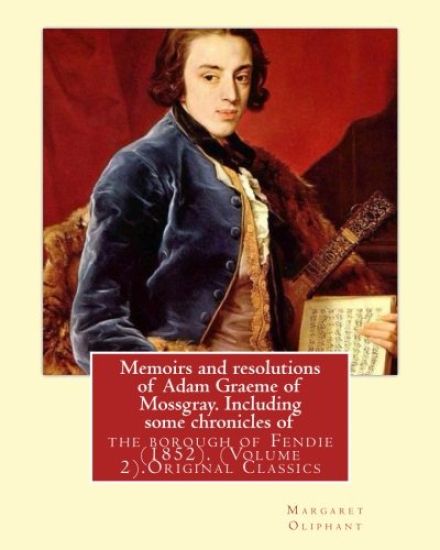
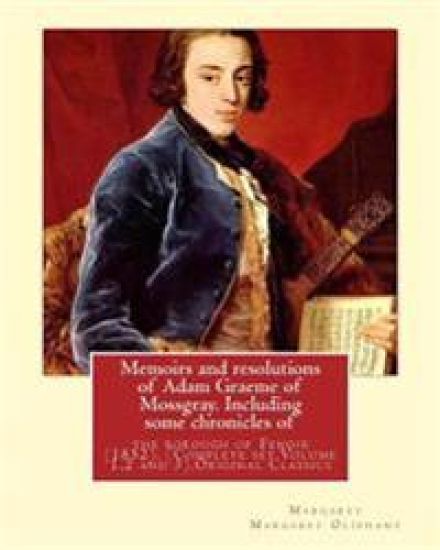
Memoirs and resolutions of Adam Graeme of Mossgray. Including some chronicles of the borough of Fendie (1852). By: Margaret Oliphant, (Complete set Volume 1,2 and 3).Original Classics Margaret Oliphant Wilson Oliphant (n e Margaret Oliphant Wilson) (4 April 1828 - 25 June 1897), was a Scottish novelist and historical writer, who usually wrote as Mrs. Oliphant. Her fictional works encompass "domestic realism, the historical novel and tales of the supernatural". *Life* The daughter of Francis W. Wilson (c.1788-1858), a clerk, and his wife, Margaret Oliphant (c.1789-1854), she was born at Wallyford, near Musselburgh, East Lothian, and spent her childhood at Lasswade (near Dalkeith), Glasgow and Liverpool. As a girl, she constantly experimented with writing. In 1849 she had her first novel published: Passages in the Life of Mrs. Margaret Maitland. This dealt with the Scottish Free Church movement, with which Mr. and Mrs. Wilson both sympathised, and met with some success. It was followed by Caleb Field in 1851, the year in which she met the publisher William Blackwood in Edinburgh and was invited to contribute to the famous Blackwood's Magazine. The connection was to last for her whole lifetime, during which she contributed well over 100 articles, including a critique of the character of Arthur Dimmesdale in Nathaniel Hawthorne's The Scarlet Letter. In May 1852, she married her cousin, Frank Wilson Oliphant, at Birkenhead, and settled at Harrington Square in London. An artist working mainly in stained glass, her husband had delicate health, and three of their six children died in infancy, while the father himself developed alarming symptoms of tuberculosis, then known as consumption. For the sake of his health they moved in January 1859 to Florence, and then to Rome, where Frank Oliphant died. His wife, left almost entirely without resources, returned to England and took up the burden of supporting her three remaining children by her own literary activity.She had now become a popular writer, and worked with amazing industry to sustain her position. Unfortunately, her home life was full of sorrow and disappointment. In January 1864 her only remaining daughter Maggie died in Rome, and was buried in her father's grave. Her brother, who had emigrated to Canada, was shortly afterwards involved in financial ruin, and Mrs. Oliphant offered a home to him and his children, and added their support to her already heavy responsibilities.In 1866 she settled at Windsor to be near her sons who were being educated at Eton. That year, her second cousin, Annie Louisa Walker, came to live with her as a companion-housekeeper. 3] This was her home for the rest of her life, and for more than thirty years she pursued a varied literary career with courage scarcely broken by a series of the gravest troubles. The ambitions she cherished for her sons were unfulfilled. Cyril Francis, the elder, died in 1890, leaving a Life of Alfred de Musset, incorporated in his mother's Foreign Classics for English Readers, The younger, Francis (whom she called "Cecco"), collaborated with her in the Victorian Age of English Literature and won a position at the British Museum, but was rejected by Sir Andrew Clark, a famous physician. Cecco died in 1894. With the last of her children lost to her, she had but little further interest in life. Her health steadily declined, and she died at Wimbledon, London, on 25 June 1897.In the 1880s she was the literary mentor of the Irish novelist Emily Lawless. During this time Oliphant wrote several works of supernatural fiction, including the long ghost story A Beleaguered City (1880) and several short tales, including "The Open Door" and "Old Lady Mary".
Do you want to pray with power... and see results? Readers of Activating God's Power by Michelle Leslie will learn what to pray and to confidently claim answers to prayer. This personalized book is a guide to praying according to God's Word You will discover hundreds of Scripture-based prayers for all of life's situations: from finding your identity in Christ, to awakening God's favor in your life, to overcoming the trials of life with spiritual warfare. When we meditate on the word and speak it, we are activating God's power. God's word brings life and creates a spiritual mindset that changes us and the world around us (Romans 12:2). As you put these mighty, scriptural prayers to work in your own life and in the lives of those around you, you will see God moving and activating his Word. You no longer need to feel helpless in the face of difficult or painful circumstances. You no longer need to miss God's blessings for you and your loved ones. You can pray with power Nothing is more powerful than God. With Activating God's Power we are praying God's Word to overcome and bring us the freedom only found in Christ. Activating God's Power is a must-read for anyone who wants to pray with strength and purpose. The faith produced from this book will lead to results, not just for ourselves but for the lives around us.
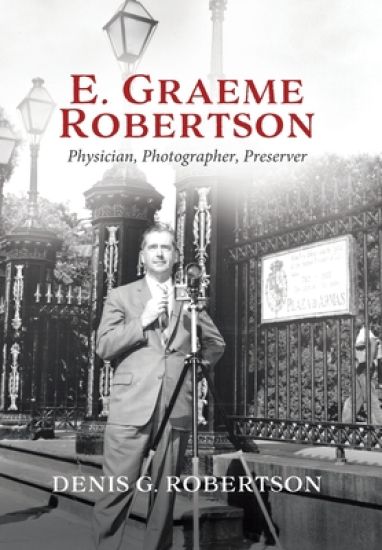
An upbringing in an industrial suburb of Melbourne would have been unlikely to lead to the productive life of Graeme Robertson. After graduating in medicine from Melbourne University and residency at the Melbourne Hospital, he completed his postgraduate training at Queen Square in London, the world's leading hospital in neurology. After returning to Melbourne and the Melbourne Hospital (later Royal Melbourne Hospital), he gained international recognition for his work in the specialty. Not being content with this, he used his spare time to photograph and study the use of decorative cast iron in architecture with the hope of encouraging its preservation, because much was being lost due to the efforts of property developers. Several books on the use of cast iron, including a world survey, also led to him being known in many countries. Intent on preserving the best of the past, he persuaded the National Trust to restore a sailing ship, the Polly Woodside, which was being used as a coal hulk. He led the process of restoration, overcoming many obstacles, including finding sufficient funds, rebuilding the ship from the hull up and finding a site for public display. Graeme Robertson was a quiet and modest man who worked hard to achieve many successes.
An upbringing in an industrial suburb of Melbourne would have been unlikely to lead to the productive life of Graeme Robertson. After graduating in medicine from Melbourne University and residency at the Melbourne Hospital, he completed his postgraduate training at Queen Square in London, the world's leading hospital in neurology. After returning to Melbourne and the Melbourne Hospital (later Royal Melbourne Hospital), he gained international recognition for his work in the specialty. Not being content with this, he used his spare time to photograph and study the use of decorative cast iron in architecture with the hope of encouraging its preservation, because much was being lost due to the efforts of property developers. Several books on the use of cast iron, including a world survey, also led to him being known in many countries. Intent on preserving the best of the past, he persuaded the National Trust to restore a sailing ship, the Polly Woodside, which was being used as a coal hulk. He led the process of restoration, overcoming many obstacles, including finding sufficient funds, rebuilding the ship from the hull up and finding a site for public display. Graeme Robertson was a quiet and modest man who worked hard to achieve many successes.
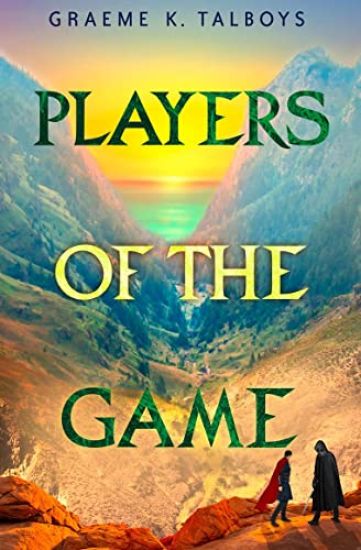
A breathtaking tale of adventure, survival and loyalty. When the thief Jeniche finds her prison cell collapsing around her, she knows it is not going to be a good day. Certainly, the last thing she wanted once she escaped was to become involved with a group of monks and nuns being hunted by the Occassan soldiers who have invaded the city. Nor did she want to help the group flee by being their guide through the desert and mountains. Unfortunately, Jeniche’s skills are their only hope of making it out alive. But the soldiers are not the only danger waiting for them in the mountains.
Jeniche of Antar’s old life has a nasty habit of catching up with her. Jeniche has been a thief, a fugitive and an enemy of the law. After her clash with deadly Occassan soldiers, the remote northern land of Ynysvron seemed like a good place to lie low. Yet just when she feels ready to call this land home, her unique skills are called upon once again. Jeniche has impressed the warriors of Ynysvron, and they want her to join their dangerous quest for lost treasure. But when an old friend joins their group, Jeniche realises that the quest is far more than it seems. Her new home is under threat of invasion, and the treasure she must seek might be their only hope of survival.
The third instalment in the Shadow of the Storm series. Jeniche and Alltud have been on an adventure for nearly three years. Now, the time has come for them to go home. But as they leave their hostel in the dead of the night, these plans are thwarted. The Qasireu of Alboran awaits the two travellers with a quest: they must move an item of great value, whose identity is to remain unknown. Carrying this item across the dusty moutains, they make a chance encounter: a woman from her past, who seems to know a great deal about the amulet around Jeniche’s neck and the power it possesses. Yet, the amulet isn’t the only secret the travellers carry with them. For little do they know, the item they are moving could pose a threat to the entire world.
Exam Board: SQALevel: Advanced HigherSubject: MathsFirst Teaching: 2014, First Exam: 2015 Masses of practice questions for every topic on the curriculum.
A high NRG, whip-smart look at the state of modern Britain through the eyes of a disparate band of rave rebels, from the author of acclaimed, best-selling debut The Young Team and one of Granta's Best of Young British Novelists. William Patterson - better known as DJ Turbo - is living a soulless existence after his glory days as resident spinner at a local Coatbridge ice rink, The Time Capsule, have been snatched from him. As a far-right UK regime sweeps to power, 'The New Greatest Britishest Party' cracks down on youth, culture, drugs and - the final straw - electronica. Incensed by a blanket ban of their beloved tunes, Turbo and his comrades launch a rave revolt - resurrecting the illegal warehouse parties of the past in this new darker, monolithic Greatest Britain, as a powerful act of resistance. But, as the political situation escalates and secret police surveil every corner of society, Turbo and his troops fly ever closer to the sun in the dangerous world of the anti-rave abolitionist paramilitary. Mixing classic hardcore anthems, nu-gen euphoria enthusiasts and psychotropic chemical courtships, they will fight the war for the rave. Deciding who to trust... and who may betray the cause is everything. The future of the whole nation is on the line... can Turbo be the hero not just of rave, but of Scotland? Hilarious, tragic and incredibly clever all at once, this unique, narcotic trip of a novel is a modern, meta, mayhem-filled cultural coup d'etat and cult-classic in the making, written in an inimitable and energetic voice, from one of the most electrifying young writers in Britain today.