

Kirjahaku
Etsi kirjoja tekijän nimen, kirjan nimen tai ISBN:n perusteella.
1000 tulosta hakusanalla Grass Timothy

A headless corpse tossed in a dumpster unites a small-town cop and a formidable retired lady spy to track a killer in a wealthy New England neighborhood.A decapitated body burned to a crisp might be found in any dumpster in any city in America, but not in the aristocratic Gold Coast community of Westport, Connecticut. Local cop Tony DeFranco dutifully collects evidence, knowing that the State Police will take over the case. But when the state investigator tries to cover up the murder, DeFranco starts a rogue investigation.DeFranco forms an alliance with retired CIA case officer Dasha Petrov, whose elderly, ladylike appearance masks a lifetime's experience with violence and deception. As the body count mounts, DeFranco relies on Dasha's insights and skills acquired over decades of global troubleshooting to stop a killer operating at the pinnacle of American power.A glimpse at the sordid underside of position and wealth, The Sea Glass Murders is an action mystery with an immersive, fast-paced plot and unforgettable characters.

Find out the truth about our bodies and learn exactly what makes us human in this fascinating nonfiction reader! Featuring detailed, vibrant images, diagrams, and charts that familiarize readers with digestion, the circulatory system, and bacteria in conjunction with biological and anatomical vocabulary, readers will learn all about gross anatomy, some of the amazing things our bodies can do, and how it performs day-to-day activities--from digesting to pumping blood.

Investment Secrets from PIMCO's Bill Gross
Timothy Middleton; Peter L. Bernstein
John Wiley Sons Inc
2006
nidottu
Praise For Investment Secrets From PIMCO's Bill Gross "No investor is held in higher regard by his peers than Bill Gross. His understanding of the markets and his insights on how to profit from them are unparalleled. Now, Tim Middleton takes you into Gross's world for an insider's view on how the world of finance really works. If this book were a bond, it would be AAA rated with a double-digit yield." -DON PHILLIPS, Managing Director, Morningstar, Inc. "The secret to investment success is discipline. In bonds, nobody has displayed better discipline than Bill Gross. And nobody has done a better job of explaining Gross's methods, and instructing private investors how they can exploit his approach, than Tim Middleton." -JON MARKMAN, Columnist, CNBC on MSN Money "Warren Buffett, John Neff, Bill Miller, Peter Lynch-the stock market has always had dominant personalities whose long-term success becomes legend. In the bond market, that dominant personality is Gross." -FORTUNE "Bill Gross is the Emeril Lagasse of bond managers." -FORBES "If you want to get a stock mutual fund manager steamed, ask why his fund can't beat bond guru Bill Gross." -USA TODAY

Renaissance and Baroque Silver, Mounted Porcelain and Ruby Glass from the Zilkha Collection
Timothy Schroder
Paul Holberton Publishing
2012
sidottu
Silver, porcelain and ruby glass seem unlikely bedfellows, yet the objects in the Zilkha Collection are all united by the medium of silver or luxury metalwork. The objects were also made, for the most part, over about a century and a half. All of them tell a fascinating story of the particular circumstances that produced them: a maker, a workshop, a patron. They also tell the wider story of the society that made them necessary or desirable; the science that made them possible; and of their survival down the centuries.
Rhetoric as Philosophy
Ernesto Grassi; Timothy W. Crusius
Southern Illinois University Press
2000
nidottu
Originally published in English in 1980, Rhetoric as Philosophy has been out of print for some time. The reviews of that English edition attest to the importance of Ernesto Grassi's work. By going back to the Italian humanist tradition and aspects of earlier Greek and Latin thought, Ernesto Grassi develops a conception of rhetoric as the basis of philosophy. Grassi explores the sense in which the first principles of rational thought come from the metaphorical power of the word. He finds the basis for his conception in the last great thinker of the Italian humanist tradition, Giambattista Vico (1668-1744). He concentrates on Vico's understanding of imagination and the sense of human ingenuity contained in metaphor. For Grassi, rhetorical activity is the essence and inner life of thought when connected to the metaphorical power of the word.
In the Face of Death
Fabian F Grassl; Timothy J Wengert; Wolfram Thielicke
Pickwick Publications
2019
pokkari
"My theological work was always only a superstructure placed upon the experiences and sufferings of my life . . ." --Helmut ThielickeThielicke's story is one of extraordinary circumstances. Especially as a young man, living through Germany's darkest hour, he was time and again put on the brink of death by fatal sickness, Nazi oppression, and war. These experiences left an indelible mark on his worldview.In this thoroughly researched study, Fabian F. Grassl takes a fresh and original look at Thielicke's turbulent life through the specific lens of suffering and death. He paints an intimate portrait of a boundary rider whose theology uniquely developed in the face of death.As a result, new light is cast on one of the outstanding theologians, ethicists, and preachers of the twentieth century. The reader is invited to explore a world of thought decidedly shaped by the "eschatological existence" of an intriguing personality; a flawed human being like the rest of us yet endowed with a fascinating theological prowess, taking his stand amongst Germany's major historical upheavals of the last centenary.

In the Face of Death
Fabian F Grassl; Timothy J Wengert; Wolfram Thielicke
Pickwick Publications
2019
sidottu
""My theological work was always only a superstructure placed upon the experiences and sufferings of my life . . ."" --Helmut Thielicke Thielicke's story is one of extraordinary circumstances. Especially as a young man, living through Germany's darkest hour, he was time and again put on the brink of death by fatal sickness, Nazi oppression, and war. These experiences left an indelible mark on his worldview. In this thoroughly researched study, Fabian F. Grassl takes a fresh and original look at Thielicke's turbulent life through the specific lens of suffering and death. He paints an intimate portrait of a boundary rider whose theology uniquely developed in the face of death. As a result, new light is cast on one of the outstanding theologians, ethicists, and preachers of the twentieth century. The reader is invited to explore a world of thought decidedly shaped by the ""eschatological existence"" of an intriguing personality; a flawed human being like the rest of us yet endowed with a fascinating theological prowess, taking his stand amongst Germany's major historical upheavals of the last centenary. ""In this exhaustively researched and carefully developed study Fabian Grassl uncovers the experiential roots of Helmut Thielicke's theology. In particular, Thielicke's experience of life-threatening illness as a young man and his constant encounters with death during the years of Nazi rule left an indelible mark on the shape of both his theology and his preaching. Grassl examines these influences in detail, offering an appreciative but also critical assessment of a theology marked deeply by the experience of suffering and death. Both those who have a particular interest in Thielicke's work and those who want to think about the strengths and weaknesses of a theology shaped so strongly by experience will profit from Grassl's excellent work."" --Gilbert C. Meilaender, Senior Research Professor at Valparaiso University and the Paul Ramsey Fellow at the Notre Dame Center for Ethics and Culture ""In the middle decades of the last century Helmut Thielicke was likely the most quoted German-Lutheran theologian in North-American Protestant churches, more so than Bonhoeffer or any of the other 'big names.' Translations of Thielicke's best-selling sermons and other writings were regular fare for many American clergy and laity, while his academic work in systematic theology and ethics were routinely studied by U.S. seminarians and graduate students. Dr. Grassl here unveils in a masterful way those life experiences of Thielicke that had a profound impact on his thinking, preaching, and pastoral care. Dr. Grassl not only provides insights into Thielicke's biography--frequently on the basis of previously unexplored archival material--but he also helps the reader to understand more clearly the principal themes in Thielicke's complex theology. This is now the best introduction in English to this important theologian's life and work."" --Matthew L. Becker, Professor of Theology, Valparaiso University ""Theologian, ethicist, and preacher Helmut Thielicke lived in death's shadow from an illness in his youth that nearly claimed his life to his experiences ministering to those who lost loved ones in World War II. Thielicke's theology, especially his eschatology, bears the indelible imprint of his own biography. Grassl carefully examines both Thielicke's life and his theology in the context of his times. His research is rich with illuminating insights for those who seek to understand one of the most significant theologians of the last century."" --John T. Pless, Assistant Professor of Pastoral Ministry and Missions; Director of Field Education, Concordia Theological Seminary ""After a period of relative neglect, Helmut Thielicke and his theological legacy are receiving renewed attention. With its well-researched and closely argued account of the formative interaction between Thielicke's personal life and the central themes of this theology, Grassl's

Mindful Sport Performance Enhancement
Keith A. Kaufman; Carol R. Glass; Timothy R. Pineau
American Psychological Association
2017
sidottu
This comprehensive resource on the history, theory, and practice of mindfulness in sport offers a fresh, exciting approach to performance enhancement for athletes and coaches at all levels, from amateur to professional. All athletes and coaches know that peak performance requires more than just physical exertion. There is a psychological component as well, which can be expressed in attributes such as awareness, focus, emotion regulation, and motivation. For many years, systematic mental training was ignored in athletics. Thankfully, this is starting to change. Rooted in the traditions of mindfulness-based stress reduction and mindfulness-based cognitive therapy, Kaufman, Glass, and Pineau present mindful sport performance enhancement (MSPE), an empirically supported, six-session program that can be adapted for athletes or even performers in other high-pressure domains. Each MSPE session includes educational, experiential, and discussion components, as well as recommendations for home practice. There is special emphasis on incorporating mindfulness into workouts, practices, and competitions, as well as everyday life. The book includes handy scripts for mindfulness teachers, athletes, and coaches, and handouts summarizing each session that are also available for download from the APA website.
Mindful Sport Performance Enhancement
Keith A. Kaufman; Carol R. Glass; Timothy R. Pineau
American Psychological Association
2017
pokkari
This comprehensive resource on the history, theory, and practice of mindfulness in sport offers a fresh, exciting approach to performance enhancement for athletes and coaches at all levels, from amateur to professional. All athletes and coaches know that peak performance requires more than just physical exertion. There is a psychological component as well, which can be expressed in attributes such as awareness, focus, emotion regulation, and motivation. For many years, systematic mental training was ignored in athletics. Thankfully, this is starting to change. Rooted in the traditions of mindfulness-based stress reduction and mindfulness-based cognitive therapy, Kaufman, Glass, and Pineau present mindful sport performance enhancement (MSPE), an empirically supported, six-session program that can be adapted for athletes or even performers in other high-pressure domains. Each MSPE session includes educational, experiential, and discussion components, as well as recommendations for home practice. There is special emphasis on incorporating mindfulness into workouts, practices, and competitions, as well as everyday life. The book includes handy scripts for mindfulness teachers, athletes, and coaches, and handouts summarizing each session that are also available for download from the APA website.

Part autobiography, part philosophical rumination, this evocative conservation odyssey explores the deep affinities between humans and our original habitat: grasslands. In a richly drawn, anecdotally driven narrative, Joe C. Truett, a grasslands ecologist who writes with a flair for language, traces the evolutionary, historical, and cultural forces that have reshaped North American rangelands over the past two centuries. He introduces an intriguing cast of characters - wildlife and grasslands biologists, archaeologists, ranchers, and petroleum geologists - to illuminate a wide range of related topics: our love affair with turf and how it manifests in lawns and sports, the ecological and economic dimensions of ranching, the glory of cowboy culture, grasslands and restoration ecology, and more. His book ultimately provides the background against which we can envision a new paradigm for restoring rangeland ecosystems-and a new paradigm for envisioning a more sustainable future.
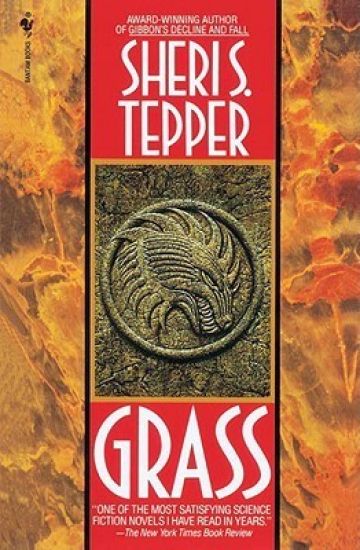
"One of the most satisfying science fiction novels I have read in years."--The New York Times Book Review Here is a novel as original as the breathtaking, unspoiled world for which it is named, a place where all appears to be in idyllic balance. Generations ago, humans fled to the cosmic anomaly known as Grass. Over time, they evolved a new and intricate society. But before humanity arrived, another species had already claimed Grass for its own. It, too, had developed a culture. . . . Now, a deadly plague is spreading across the stars. No world save Grass has been left untouched. Marjorie Westriding Yrarier has been sent from Earth to discover the secret of the planet's immunity. Amid the alien social structure and strange life-forms of Grass, Lady Westriding unravels the planet's mysteries to find a truth so shattering it could mean the end of life itself.

What could be more innocuous than grass? Or more idyllic than a world covered with a wind-whipped ocean of verdant plains? But the planet Grass conceals horrifying secrets within its endless pastures. And as an incurable plague attacks all inhabited planets but this one, the prairie-like Grass begins to reveal these secrets - and nothing will ever be the same again ...Considered to be among one of Sheri S. Tepper's best works, Grass was nominated for both the Hugo and Locus awards. It explores ideas of colonisation, class and sits as part of a rich culture of feminist SF. In 2015, Tepper received the World Fantasy Award for Life Achievement.'A splendid achievement, one of the most satisfying science fiction novels I have read in years' - New York Times'One of science fiction's premier world-builders' - The Encyclopedia of Science Fiction'Tepper delves into the nature of truth and religion . . . in her compelling story' - Publishers WeeklyWelcome to The Best Of The Masterworks: a selection of the finest in science fiction

I have no idea what started me on this book. But I'm glad I did and hope you will be too.It's true that I'd been walking on grass and seeing it and touching it just about every day of my life. But I had just never thought about it - about how it is everywhere, grows back whatever you do, delights us - even in a way holds our beautiful planet together, a foundation for nature and art and humanity.Once started I couldn't stop. Grass, that humble weed, is amazing.Even it's evolution is fascinating - not 'simple' at all as I'd thought - and covers hundreds of different species, including (could you have guessed?) bamboo and sugarcane, and we couldn't live or feed ourselves without it. And then there is all the art and symbolism and poetry around grass in the imagination of our thoughts.Where could it have come from, this miraculous part of earthly life? We may never learn the answer to that mystery, but at least we can track some of its adventures.This volume aims to give some kind of introduction to the many many dimensions of this miraculous weed of ours. For this reason, none of the accounts can go very deep and many aspects remain to be uncovered (it left to you, if you so wish, to winkle out further information from the many sources listed at the end and elsewhere).Despite its introductory nature however I hope that you enjoy reading this story as much as we have both enjoyed discovering it.

Grass is a powerful anti-war graphic novel, offering up firsthand the life story of a Korean girl named Okseon Lee who was forced into sexual slavery for the Japanese Imperial Army during the second World War a disputed chapter in 20th century Asian history. Beginning in Lee s childhood, Grass shows the leadup to World War II from a child s vulnerable perspective, detailing how one person experienced the Japanese occupation and the widespread suffering it entailed for ordinary Korean folk. Keum Suk Gendry-Kim emphasizes Lee s strength in overcoming the many forms of adversity she experienced. Grass is painted in a black ink that flows with lavish details of the beautiful fields and farmland of Korea and uses heavy brushwork on the somber interiors of Lee s memories. Cartoonist Gendry-Kim s interviews with Lee become an integral part of Grass, forming the heart and architecture of this powerful non-fiction graphic novel and offering a holistic view of how Lee s wartime suffering changed her. Grass is a landmark graphic novel that makes personal the desperate cost of war and the importance of peace.

A classic work of science fiction from a master storyteller

Time is running out. Retired university professor R.I. Penny has always had a knack for finding trouble, and when an old friend is killed - the suspects leaving behind little more than the graffitied word ‘grass’ - he can’t help but get involved in the investigation. But the gates of hell don’t stay closed for long, and as Penny digs deeper into Codger’s mysterious death, sinister goings on come to light. With local thugs, far-right politicians, and even the police on his tail, will Penny survive long enough to uncover the truth?

Grass and its organisation into lawns is a particularly English obsession.
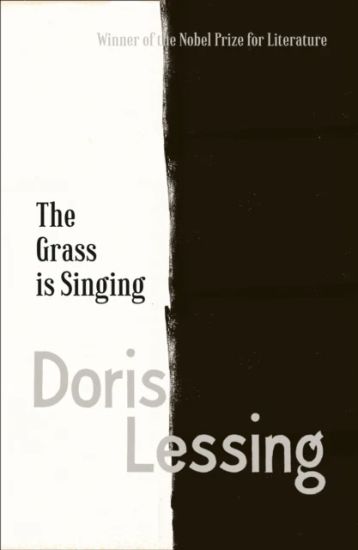
The Nobel Prize-winner Doris Lessingâ??s first novel is a taut and tragic portrayal of a crumbling marriage, set in South Africa during the years of Arpartheid.