Kirjojen hintavertailu. Mukana 11 699 587 kirjaa ja 12 kauppaa.

Kirjahaku

Etsi kirjoja tekijän nimen, kirjan nimen tai ISBN:n perusteella.

1000 tulosta hakusanalla Gregory Scott Sparrow

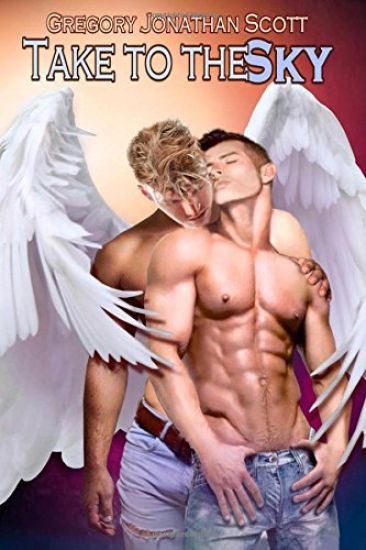
Take To The Sky

Take To The Sky

Gregory Jonathan Scott

Gregory Jonathan Scott LLC
2014
nidottu
An angelic romance that's Powerful, Suspenseful, Sexy, Uniquely Erotic, and Romantic.In a secret Michigan Laboratory, an experiment developed a superior creation that was anticipated but not expected. He was the ultimate conception, a core life-being merged with avian. He was born with a gift, a rare one; the ability to fly.His wings instinctively brought out the urge in him to fly, and Kellan's need to be free became his obsession. When the dark, swirling clouds loomed one night, Kellan abandoned the place he had called home, taking to the sky in searchof his freedom and to seal his heart that seemed incomplete.Because Kellan's secret was too great for anyone outside the institute to know about, TC unleashed genetically altered Maniacs to bring him back.Through independence, his amazing reality brought riveting adventures to a man he found and couldn't seem to live without. They get tangled with hair-raising suspense that adds heart-pounding tension to every attempt they make at living their unique affair. They faced uncertainty sohectic that staying together was the least of their challenges, and it caused many of their bouts with passion to spiral in and out of chaos. Along their frenzied path to survive, hidden secrets surface about Kellan, prompting each move they make in order to truly set him free. Could Kellan's one true love and passion to fly be the death of him? It's a magnificently inventive adventure of menace, romance, and extreme erotic pleasures.
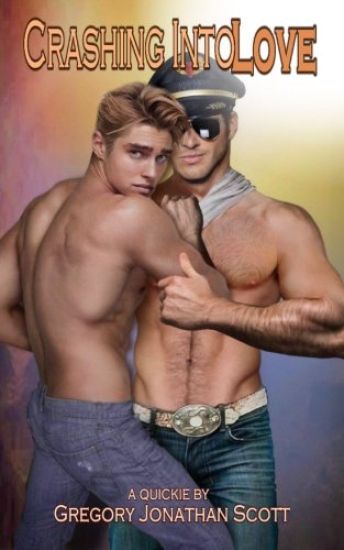
Crashing Into Love

Crashing Into Love

Gregory Jonathan Scott

Gregory Jonathan Scott LLC
2015
nidottu
Sean, a single California Interior designer sets his sights on going home after a short business trip on the island of Kauai. On his way back to the States, Sean's world literally spirals out of control when the flight he's on takes a course he hadn't expected and into the masculine arms of Kale, a drop dead handsome pilot with attitude, spontaneous charm, and a hint of recklessness.While stuck on a deserted island off the coast of Maui, they discover there are situations worse than the one they're in. Initially all they have in common are their aversions for each other and their eagerness to survive. When they realize all they have is each other, Sean and Kale set their differences aside, learn to cope with their seemingly tragic situation and find common ground. After a string of mishaps and clashing personalities, their time together proves far from foolproof when they surprisingly get swept into a whirlwind romance. The early stages of their engagement involve increasingly desperate measures to conceal their growing affection for each other and by the time Kale confesses his desires, Sean is obsessed. With hormones on both sides roiling and reality setting in, their need to explore each other grows. Can Kale hide his interest in the man he finds ideal until Sean is ready? Or will Sean's hysterical dramatic disposition send him packing? Crashing into Love is a romantic comedy about a quirky courtship, clashing personalities, love, and a developing relationship that turns profound - but not necessarily in that order Kale and Sean are pitch-perfect in this comical romance of unintentional companionship.
Encouraged by Sparks

Encouraged by Sparks

Gregory Jonathan Scott

Gregory Jonathan Scott LLC
2015
nidottu
After his home falls under fire, Skye's way of life turns completely around. He instantly forms a bond with Tanner, the firefighter who brings emotions out of him that have been suppressed too long. Against his better judgment, Tanner invites Skye in, finds his beauty and charm irresistible, leaving himself hopelessly committed to more than giving Skye a temporary place to stay. As Skye finds himself increasingly drawn to Tanner, the connection he has with him turns into a journey of self-discovery. Through trifling phobias that have overshadowed him, Skye begins to wonder if his reservations of starting a relationship will tear them apart.Tanner stirs desires in Skye and the heat between them can't be ignored. Will Skye's sheltered past weigh heavily on him and put a meaningful future with Tanner at risk? Will the sparks they have live on or go out because of it?
Into The Headwinds: The sequel to Take To The Sky

Into The Headwinds: The sequel to Take To The Sky

Gregory Jonathan Scott

Gregory Jonathan Scott, LLC
2016
nidottu
After fleeing the TC Genetic Manipulation Lab, Kellan never expected to meet a man like Neil, who accepted him as he was, and quickly fell in love with him.In an effort to live a life as normal as possible, Neil and Kellan put their trust in an informant within the government who insists they vacate the secluded lighthouse in Traverse City, Michigan and head west to a GM Lab in Arizona. On their flight across the country, they surrender to the yearnings of the heart, to the passion that burns like a hungry fire, and their romance spirals in and out of chaos while caught up in the anarchy of being on the run.Perils they weren't expecting get in the way, bringing uncertainty to riveting levels with almost every move they make. Kellan knows danger surrounds them-the same threat that once hunted him and still haunts his mind. Could Kellan and Neil's strengthening bond be their saving grace from the malevolent forces that are trailing them?Soon after their arrival at AZ GM Laboratory, Kellan submits to a deal between him and the government, one that seems to promise him peace of mind and the life with Neil he longs for. In exchange, he must first adhere to the task laid out for him, even though doubts of trusting those guiding him is reason to suspect there's more at stake than what he's being told.Take a fast flying journey with a magnificent angel and his newfound love, Neil, in this sequel to the best-selling novel, Take To The Sky.
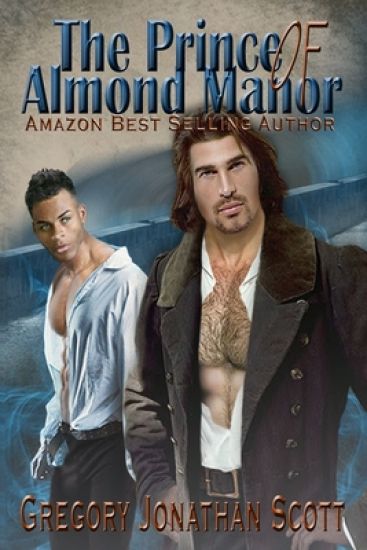
The Prince of Almond Manor

The Prince of Almond Manor

Gregory Jonathan Scott

Gregory Jonathan Scott, LLC
2019
nidottu
A genuine romance-a companionship misunderstood-one of earnest affection that could be torn apart by those around them.Can a relationship between two men from opposite sides of the social order overcome the odds and survive at a time of an old-style declaration of living? In mid eighteen hundred, the largest almond plantation south of the Mason Dixon line was home to Deklan Royal, however, deep down, it didn't feel like a home. He sensed a part of him was missing, an emotional desire he'd been keeping hidden since a very young age-that was, until he'd come across Oakland, a reserved servant of the Royal Manor and the one man who could change everything for him. With no warning, a single magical event had set the plantation affair into motion, brought on by a mysterious gentleman who summoned a fairy-tale twist not even Oakland understood. Enduring parental clashing and blurring promises, Deklan and Oakland find themselves developing a relationship that could result in scorn and even exile. Caught in the center of eminent pressures, Deklan faces discouraging predicaments with his foreboding father, those of which expose a surprising overview of who Oakland is. With family principles putting up walls between them, the two heart-bound men cling to threads of hope, battling obstacles that matter most-their love for one another and a life of happiness into their very own ever after. Find out if Deklan risks his wealthy family ties for the chance at love with the man he knows to be the other half of his own soul. If surrounding conflicts outweigh their love and desire, both Deklan and Oakland face revulsion at its strongest. The Prince of Almond Manor is an interracial historical romance between two men. Erotically written with extreme situations of desire not suitable for readers under the age of eighteen.
Shakedown

Shakedown

Gregory Jonathan Scott

Gregory Jonathan Scott, LLC
2020
pokkari
The unexpected happens between me and Nykolson, maybe considered twisted beyond comprehension, perhaps unbelievable in a way-coming up against encounters that obstruct our hopes of a timeless and everlasting relationship.I consider myself a vibrant man who's been challenged by a sex driven brain that reaches top speed nearly every minute of every day. I wouldn't peg myself as a total satyromaniac, but my self-defeat goes into action whenever I come across any dark skinned man whose body is built like a rock-hard brownstone.Without any notice, like a sneaky slap to my pale white face, a striking black man enters my life and is able to flush all other men out of my mind. The moment Nykolson Kannon steps into my office, I'm hooked on him-the one I want to take care of like a daddy would and should.However... trials get in the way, spinning my desires to be with Nykolson into a game of cat and mouse. While acting on my impulses to be with the handsome black man, many stumbling blocks and vindictive meddlers interfere.Will conflicts from nearly every angle overshadow the chance at love with the man I know to be the other half of my own heart?I'm a believer that concrete love renews faith in fate-in the ability for true lovers to find each other no matter what, no matter where.This erotic gay romance will be a testament of love that'll grip the human heart and press for good over malevolence.Bestselling author, Gregory Jonathan Scott will have you on the edge of your seat, repeating, OHMIGAWD what just happened in this heart-felt and ambitiously written erotic romance. Shakedown is an interracial romance between two men, erotically written with extreme situations of desire not suitable for readers under the age of eighteen.
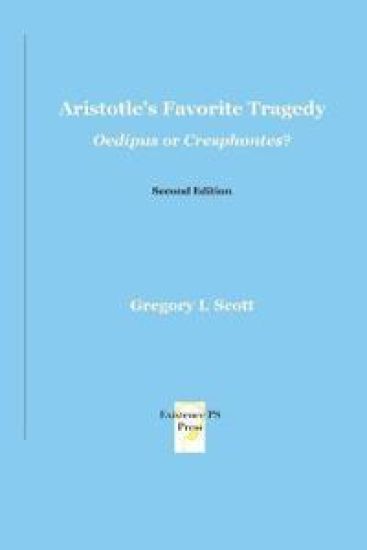
Aristotle's Favorite Tragedy

Aristotle's Favorite Tragedy

Gregory L Scott

Existenceps
2018
sidottu
The Poetics is considered to be the foundation of Western dramatic and literary theory, and readers generally interpret Aristotle on the basis of Chapter 13 to claim that Oedipus, with its pity, fear and horrible ending, is the finest type of tragedy. Some specialists, however, discuss Aristotle also stating in Chapter 14 that the happily-ending plays like Cresphontes and Iphigenia (in Tauris) are the finest, with the type of plays that involve an agent killing or committing great suffering to a family member, and only recognizing the family connection afterwards, being second-best. This passage obviously creates a dilemma, because the second-best type must include Oedipus. No commentator has ever been able to resolve the dilemma to the satisfaction of the profession, and as a result Oedipus maintains its stature. Indeed, the specialist Elizabeth Belfiore recently published ("The Elements of Tragedy," in A Companion to Aristotle, ed. Georgios Anagnostopoulos, 2009) a defense of the view that Oedipus is the best play for Aristotle in spite of the explicit ranking of Chapter 14.Gregory Scott here demonstrates instead that Aristotle actually means what he says in Chapter 14: Tragoidos, originally "goat-song" or the like, and typically translated misleadingly as "tragedy," really involves for him serious drama primarily about good people, and Aristotle says three times in the book that it can end in misfortune or in fortune. Scott, building on his ground-breaking work from 2003, "Purging the Poetics" (Oxford Studies in Ancient Philosophy) that is reprinted in his Aristotle on Dramatic Musical Composition: The Real Role of Literature, Catharsis, Music and Dance in the POETICS (2016), also resolves the dilemma between Chapters 13 and 14 once and for all, showing that the latter half of Chapter 14 is about tragoidos in general while the earlier text is only about one or two (or a mixture) of the subclasses of tragoidos as given in Chapter 18 and rarely discussed by commentators: "tragedy" of suffering, complex "tragedy," "tragedy" of character, and simple/spectacular "tragedy." The chapters are arbitrary divisions from the Renaissance and the texts must have both come from different original treatises of Aristotle and been assembled badly after his death, or the texts were part of a much larger work, now lost, in which the rest of the theory and the transitions from one topic to another were delineated.In addition to resolving the perennial dilemma and shining a better light on Aristotle's notion of "tragedy," Scott also explains why the best type of play like Cresphontes is better than the second-best one, when they both have recognition and reversal, the conditions for the best kind of plot for Aristotle. With all of this in place, we can easily detect another dilemma that rarely gets discussed in the ranking of the four types of "tragedy" in Chapter 14: The third best type, which is not problematic in this context, involves an agent who knows someone is a family member and who kills the member anyway; we can easily deduce Medea is an example. However, all known commentators seem to accept that Aristotle speaks of Sophocles' horribly-ending Antigone when he exemplifies the worst of the four types. Yet the reason Aristotle gives for the last-place finish is that Antigone is both apathes, "without suffering," and miaron, "shocking" or "revolting." Scott explains in detail not only that Aristotle must be speaking of Euripides' version of Antigone, which ends happily, but why its last-place ranking results.
Aristotle's Favorite Tragedy

Aristotle's Favorite Tragedy

Gregory L Scott

Existenceps
2018
pokkari
The Poetics is considered to be the foundation of Western dramatic and literary theory, and readers generally interpret Aristotle on the basis of Chapter 13 to claim that Oedipus, with its pity, fear and horrible ending, is the finest type of tragedy. Some specialists, however, discuss Aristotle also stating in Chapter 14 that the happily-ending plays like Cresphontes and Iphigenia (in Tauris) are the finest. The type of plays that involve an agent killing or committing great suffering to a family member, and only recognizing the family connection afterwards, are second-best. This passage obviously creates a dilemma, because the second-best type must include Oedipus. No commentator has ever been able to resolve the dilemma to the satisfaction of the profession, and as a result Oedipus maintains its stature. Indeed, the specialist Elizabeth Belfiore recently published ("The Elements of Tragedy," in A Companion to Aristotle, ed. Georgios Anagnostopoulos, 2009) a defense of the view that Oedipus is the best play for Aristotle in spite of the explicit ranking of Chapter 14.Gregory Scott here demonstrates instead that Aristotle actually means what he says in Chapter 14: Tragoidos, originally "goat-song" or the like, and typically translated misleadingly as "tragedy," really involves for him serious drama primarily about good people, and Aristotle says three times in the book that it can end in misfortune or in fortune. Scott, building on his ground-breaking work from 2003, "Purging the Poetics" (Oxford Studies in Ancient Philosophy), also resolves the dilemma between Chapters 13 and 14 arguably once and for all, showing that the latter half of Chapter 14 is about tragoidos in general while the earlier text is only about one or two (or a mixture) of the subclasses of tragoidos as given in Chapter 18 and rarely discussed by commentators: "tragedy" of suffering, complex "tragedy," "tragedy" of character, and simple/spectacular "tragedy." Our chapters are arbitrary divisions from the Renaissance and the texts must have come from different original treatises of Aristotle and have been assembled badly after his death, or the texts were part of a much larger work, now lost, in which the rest of the theory and the transitions from one topic to another were delineated.In addition to resolving the perennial dilemma and shining a better light on Aristotle's notion of "tragedy," Scott also explains why the best type of play like Cresphontes is better than the second-best one, when they both have recognition and reversal, the conditions for the best kind of plot for Aristotle. With all of this in place, we can easily detect another dilemma that rarely gets acknowledged, much less discussed, in the ranking of the four types of "tragedy" in Chapter 14: The third best type, which is not problematic in this context, involves an agent who knows someone is a family member and who kills the member anyway; we can easily deduce Medea is an example. However, all known commentators seem to accept that Aristotle speaks of Sophocles' horribly-ending Antigone when he exemplifies the worst of the four types. Yet the reason Aristotle gives for the last-place finish is that Antigone is both apathes, "without suffering," and miaron, "shocking" or "revolting." Scott explains in detail not only that Aristotle must be speaking of Euripides' version of Antigone, which ends happily, but why it is miaron and why it deserves its last-place ranking.
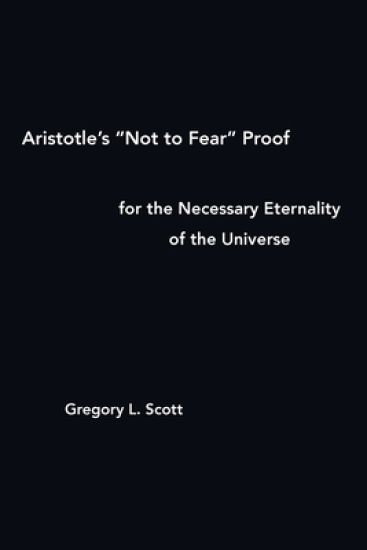
Aristotle's "Not to Fear" Proof for the Necessary Eternality of the Universe
Aristotle's Unmoved Mover of Metaphysics Lambda, often called God, still convinces some non-believers to become theists, despite its paradoxical nature. One recent case is the British philosopher, Antony Flew, co-author of There is a God: How the World's Most Notorious Atheist Changed His Mind (2007). As Pure Actuality, the Mover has no potentiality, matter or physicality of any sort whatsoever and exists forever, with no potential therefore of not existing. It somehow guarantees the eternal existence of the contingent universe that could disappear but, because of the Mover, does not. Moreover, It thinks of itself thinking, always, like a hyper-intellectual Narcissus.With derision, Cicero rejected the doctrine; Franz Brentano (1838-1917), a teacher of Sigmund Freud and Edmund Husserl, called it "prattle without all sense and reason"; and Werner Jaeger (1888-1961), a renowned specialist of Aristotle, asserted that the Greek from Stagira in Northern Greece renounced the doctrine as he matured, became more empirical, and gained distance from his Athenian mentor Plato. However, none of these thinkers provided the reasons for the Stagirite for how the universe necessarily lasts forever. Scott does.All classicists know that Aristotle accepted the infinite past. Revising and extending the ground-breaking scholarship of Jaakko Hintikka and Sarah Broadie, this book demonstrates that Aristotle also held indubitably the Principle of Plenitude--"for infinite things, what may be, will be"--and that he even held it in modified form for finite things: "In infinite time, any (sort of genuine) possibility is actualized." Since every (sort of) real possibility has already been fulfilled in infinite (past) time and since the universe still exists, Aristotle concludes in Metaphysics Theta 8 that there is no fear that the heavens will ever stop moving. For additional reasons based on a profound understanding of necessity and possibility that no scholar until now has seen in this precise context, and with no recourse to the Unmoved Mover, he asserts that this eternal motion is necessary.Because the universe is not contingent, Aristotle can, and does, drop the doctrine of Pure Actuality, all of which solves another perennial problem in ancient Greek philosophy: The Peripatetics in Aristotle's Lyceum and the other, later schools of philosophy like the Stoics never argued against the Unmoved Mover, even though they contested any important doctrine they found implausible. Scott's interpretation finally explains this. These Greek thinkers knew that the mature Aristotle accepted the inherent necessity of the eternal universe, and they all embraced that doctrine, too, in spite of variations in details.
Aristotle's "Not to Fear" Proof for the Necessary Eternality of the Universe
Aristotle's Unmoved Mover of Metaphysics Lambda, often called God, still convinces some non-believers to become theists, despite its paradoxical nature. One recent case is the British philosopher, Antony Flew, co-author of There is a God: How the World's Most Notorious Atheist Changed His Mind (2007). As Pure Actuality, the Mover has no potentiality, matter or physicality of any sort whatsoever and exists forever, with no potential therefore of not existing. It somehow guarantees the eternal existence of the contingent universe that could disappear but, because of the Mover, does not. Moreover, It thinks of itself thinking, always, like a hyper-intellectual Narcissus.With derision, Cicero rejected the doctrine; Franz Brentano (1838-1917), a teacher of Sigmund Freud and Edmund Husserl, called it "prattle without all sense and reason"; and Werner Jaeger (1888-1961), a renowned specialist of Aristotle, asserted that the philosopher from Stagira in Northern Greece renounced the doctrine as he matured, became more empirical, and gained distance from his Athenian mentor Plato. However, none of these thinkers provided the reasons for the Stagirite for how the universe necessarily lasts forever. Scott does.All classicists know that Aristotle accepted the infinite past. Revising and extending the ground-breaking scholarship of Jaakko Hintikka and Sarah Broadie, this book demonstrates that Aristotle also held indubitably the Principle of Plenitude--"for infinite things, what may be, will be"--and that he even held it in modified form for finite things: "In infinite time, any (sort of genuine) possibility is actualized." Since every (sort of) real possibility has already been fulfilled in infinite (past) time and since the universe still exists, Aristotle concludes in Metaphysics Theta 8 that there is no fear that the heavens will ever stop moving. For additional reasons based on a profound understanding of necessity and possibility that no scholar until now has seen in this precise context, and with no recourse to the Unmoved Mover, he asserts that this eternal motion is necessary.Because the universe is not contingent, Aristotle can, and does, drop the doctrine of Pure Actuality, all of which solves another perennial problem in ancient Greek philosophy: The Peripatetics in Aristotle's Lyceum and the other, later schools of philosophy like the Stoics never argued against the Unmoved Mover, even though they contested any important doctrine they found implausible. Scott's interpretation finally explains this. These Greek thinkers knew that the mature Aristotle accepted the inherent necessity of the eternal universe, and they all embraced that doctrine, too, in spite of variations in details.
The Collective

The Collective

Gregory Allen Scott

Archway Publishing
2025
pokkari
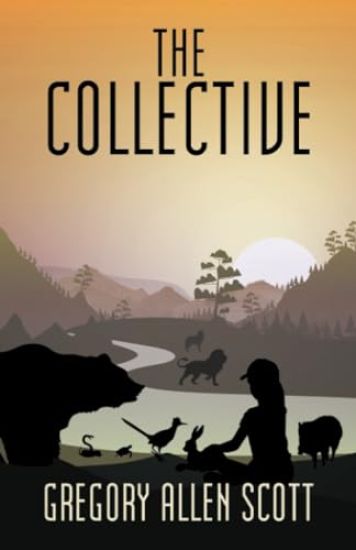
The Collective is a fiction piece that explores the overarching effects of negativity and positivity in the world on both an individual and worldwide level. The book explores racism, power-motivated people, religion, misogyny and the critical importance for all human beings to question the value of positive and negative thinking in their personal lives.
The Collective

The Collective

Gregory Allen Scott

Archway Publishing
2025
sidottu
The Collective is a fiction piece that explores the overarching effects of negativity and positivity in the world on both an individual and worldwide level. The book explores racism, power-motivated people, religion, misogyny and the critical importance for all human beings to question the value of positive and negative thinking in their personal lives.
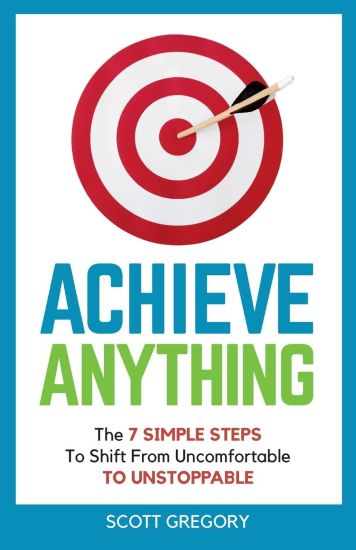
Achieve Anything

Achieve Anything

Scott Gregory

GROSVENOR HOUSE PUBLISHING LTD
2022
nidottu
Achieve Anything is a life-changing book that helps you see how you can master your mindset, take action now and develop the critical habits that will help you deliver mind blowing results with anything you dare to achieve. This essential how-to guide is for all of you ready-to-roll'ers and tired-triers of the world who would love a fast and simple solution to start achieving more, from your regular day-to-day to-do's to your wildest dreams! Achieve Anything is here to help you do just that. It will show you how to achieve more and enjoy it. It is: * Easy to read, * Easy to understand, and * Simple to implement. That trio makes it easier to get the results you want! If you follow the 7 simple steps in this book, you will pursue only those goals which matter to you, achieve them sooner and enjoy the process more. You will learn about the knowing-doing gap, the expectation versus reality gap, the 7-Day Success Cycle and the MTO goal-setting method and how they, amongst others, will help you build strong habits to achieve your dreams. If you have struggled to achieve everything you want, this is the time for you. This book will help you get comfortable, build your confidence and start to achieve anything you desire. Read this book, put in the effort and watch your life change!
Achieve Anything

Achieve Anything

Scott Gregory

GROSVENOR HOUSE PUBLISHING LTD
2022
sidottu
Achieve Anything is a life-changing book that helps you see how you can master your mindset, take action now and develop the critical habits that will help you deliver mind blowing results with anything you dare to achieve. This essential how-to guide is for all of you ready-to-roll'ers and tired-triers of the world who would love a fast and simple solution to start achieving more, from your regular day-to-day to-do’s to your wildest dreams! Achieve Anything is here to help you do just that. It will show you how to achieve more and enjoy it. It is: • Easy to read, • Easy to understand, and • Simple to implement. That trio makes it easier to get the results you want! If you follow the 7 simple steps in this book, you will pursue only those goals which matter to you, achieve them sooner and enjoy the process more. You will learn about the knowing-doing gap, the expectation versus reality gap, the 7-Day Success Cycle and the MTO goal-setting method and how they, amongst others, will help you build strong habits to achieve your dreams. If you have struggled to achieve everything you want, this is the time for you. This book will help you get comfortable, build your confidence and start to achieve anything you desire. Read this book, put in the effort and watch your life change!