Kirjojen hintavertailu. Mukana 12 419 876 kirjaa ja 12 kauppaa.

Kirjahaku

Etsi kirjoja tekijän nimen, kirjan nimen tai ISBN:n perusteella.

1000 tulosta hakusanalla Guido Biagi

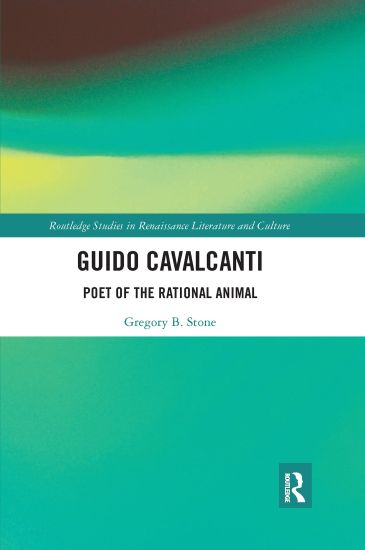
Guido Cavalcanti

Guido Cavalcanti

Gregory B. Stone

Routledge
2020
sidottu
Guido Cavalcanti, Dante’s intellectual mentor, is widely considered among the greatest Italian lyric poets; his famous and notoriously difficult philosophical canzone Donna me prega is often characterized as the most studied lyric poem in Italian literature. This book situates Cavalcanti’s poetry in the context of the Arabic Aristotelian rationalism that entered the Latin West in the 12th century—a tradition marked by questions concerning whether humans can ever transcend their animality. Cavalcanti’s poetry is a focal point where one can view, circa 1300 AD, Arabo-Islamic philosophy in the process of being assimilated and naturalized in Western Europe, eventually leading to values (associated with the Renaissance and the Enlightenment) that we now call modern and secular—in particular, to a notion of human reason as bound up with imagination and with ethical praxis rather than as a means for the attainment of knowledge concerning God and the cosmos. The book features a radically unprecedented interpretation of Donna me prega, starkly opposed to all previous accounts: far from treating love as a threat to reason that would best be eliminated, the canzone praises loving as the essential operation of rational human flourishing. This study of Cavalcanti serves as a prelude to the formulation of a new paradigm for understanding Dante’s Comedy.
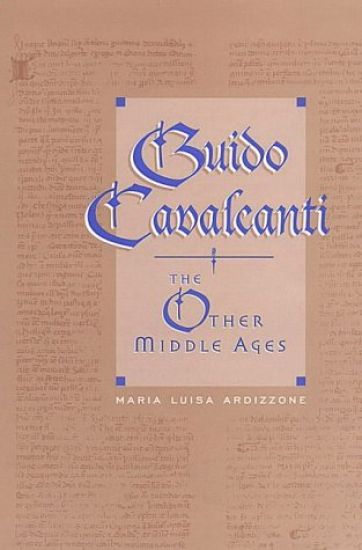
Guido Cavalcanti

Guido Cavalcanti

Maria Luisa Ardizzone

University of Toronto Press
2002
sidottu
Guido Cavalcanti (d. 1300) is one of the greatest Italian poets of all time. His legacy consists of some fifty poems, of which his canzone on the nature of love, Donna me prega (A lady asks me) is the most famously difficult and complex. The poem is important not only because it sheds light on fundamental intellectual debates during the time of Dante, but also because of its influence on generations of poets and philosophers. In this study, Maria Luisa Ardizzone sets Donna me prega in an entirely new light - first, by examining its role in Cavalcanti's poetic practice, and second, by placing it in the context of ancient and medieval science and philosophy. The book deals with issues that are part of the intellectual history of Europe in the thirteenth century. Cavalcanti's work is interpreted by reconstructing the debate of ideas in which it partecipates, and the new model of poetry devised by Cavalcanti is one of the subjects of this book. For Cavalcanti, as for Dante, Aristotle was a master. But unlike Dante, who followed a more orthodox interpretation of Aristotle's text, Cavalcanti preferred the Aristotelianism which derived from the Arabic commentator Averroes, whose approach was responsible for introducing a radical rereading of Aristotle incompatible with basic tenets of the Christian faith. In this alternative view, human desires and difficulties were resolved not through theology but through biology, natural philosophy, and medicine. While other scholars have noted Cavalcanti's Averroism, Ardizzone is the first to analyse it in light of sciences such as optics or logic, focusing on new issues of intellectual debate of Cavalcanti's time, as, for instance, the medieval theory of matter.
Guido Cavalcanti

Guido Cavalcanti

Gregory B. Stone

TAYLOR FRANCIS LTD
2021
nidottu
Guido Cavalcanti, Dante’s intellectual mentor, is widely considered among the greatest Italian lyric poets; his famous and notoriously difficult philosophical canzone Donna me prega is often characterized as the most studied lyric poem in Italian literature. This book situates Cavalcanti’s poetry in the context of the Arabic Aristotelian rationalism that entered the Latin West in the 12th century—a tradition marked by questions concerning whether humans can ever transcend their animality. Cavalcanti’s poetry is a focal point where one can view, circa 1300 AD, Arabo-Islamic philosophy in the process of being assimilated and naturalized in Western Europe, eventually leading to values (associated with the Renaissance and the Enlightenment) that we now call modern and secular—in particular, to a notion of human reason as bound up with imagination and with ethical praxis rather than as a means for the attainment of knowledge concerning God and the cosmos. The book features a radically unprecedented interpretation of Donna me prega, starkly opposed to all previous accounts: far from treating love as a threat to reason that would best be eliminated, the canzone praises loving as the essential operation of rational human flourishing. This study of Cavalcanti serves as a prelude to the formulation of a new paradigm for understanding Dante’s Comedy.