Kirjojen hintavertailu. Mukana 12 518 463 kirjaa ja 12 kauppaa.

Kirjahaku

Etsi kirjoja tekijän nimen, kirjan nimen tai ISBN:n perusteella.

1000 tulosta hakusanalla Gustave Brunet

Progrès de la Navigation Commerciale d'Angleterre: Situation de la Marine Française
Progres de la navigation commerciale d'Angleterre: situation de la marine francaise / par P.-G. Brunet]Date de l'edition originale: 1846Appartient a l'ensemble documentaire: Aquit1Ce livre est la reproduction fidele d'une oeuvre publiee avant 1920 et fait partie d'une collection de livres reimprimes a la demande editee par Hachette Livre, dans le cadre d'un partenariat avec la Bibliotheque nationale de France, offrant l'opportunite d'acceder a des ouvrages anciens et souvent rares issus des fonds patrimoniaux de la BnF.Les oeuvres faisant partie de cette collection ont ete numerisees par la BnF et sont presentes sur Gallica, sa bibliotheque numerique.En entreprenant de redonner vie a ces ouvrages au travers d'une collection de livres reimprimes a la demande, nous leur donnons la possibilite de rencontrer un public elargi et participons a la transmission de connaissances et de savoirs parfois difficilement accessibles.Nous avons cherche a concilier la reproduction fidele d'un livre ancien a partir de sa version numerisee avec le souci d'un confort de lecture optimal. Nous esperons que les ouvrages de cette nouvelle collection vous apporteront entiere satisfaction.Pour plus d'informations, rendez-vous sur www.hachettebnf.fr
Frédégonde et Brunehaut; a Tragedy in Five Acts. Edited With Notes, Genealogical, and Chronological Tables, a Critical Introd. and a Biographical Notice
This work has been selected by scholars as being culturally important, and is part of the knowledge base of civilization as we know it. This work was reproduced from the original artifact, and remains as true to the original work as possible. Therefore, you will see the original copyright references, library stamps (as most of these works have been housed in our most important libraries around the world), and other notations in the work.This work is in the public domain in the United States of America, and possibly other nations. Within the United States, you may freely copy and distribute this work, as no entity (individual or corporate) has a copyright on the body of the work.As a reproduction of a historical artifact, this work may contain missing or blurred pages, poor pictures, errant marks, etc. Scholars believe, and we concur, that this work is important enough to be preserved, reproduced, and made generally available to the public. We appreciate your support of the preservation process, and thank you for being an important part of keeping this knowledge alive and relevant.
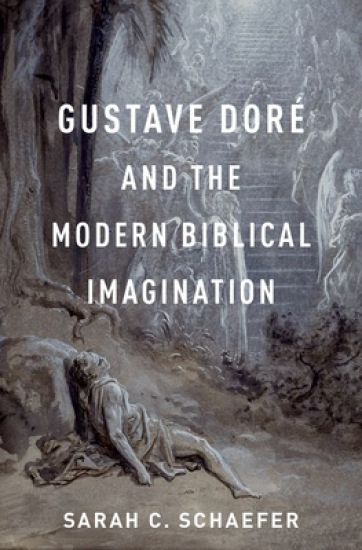
Gustave Doré and the Modern Biblical Imagination

Gustave Doré and the Modern Biblical Imagination

Sarah C. Schaefer

Oxford University Press Inc
2021
sidottu
Gustave Doré and the Modern Biblical Imagination explores the role of biblical imagery in modernity through the lens of Gustave Doré (1832-83), whose work is among the most reproduced and adapted scriptural imagery in the history of Judeo-Christianity. First published in France in late 1865, Doré's Bible illustrations received widespread critical acclaim among both religious and lay audiences, and the next several decades saw unprecedented dissemination of the images on an international scale. In 1868, the Doré Gallery opened in London, featuring monumental religious paintings that drew 2.5 million visitors over the course of a quarter-century; when the gallery's holdings travelled to the United States in 1892, exhibitions at venues like the Art Institute of Chicago drew record crowds. The United States saw the most creative appropriations of Doré's images among a plethora of media, from prayer cards and magic lantern slides to massive stained-glass windows and the spectacular epic films of Cecile B. DeMille. This book repositions biblical imagery at the center of modernity, an era that has often been defined through a process of secularization, and argues that Doré's biblical imagery negotiated the challenges of visualizing the Bible for modern audiences in both sacred and secular contexts. A set of texts whose veracity and authority were under unprecedented scrutiny in this period, the Bible was at the center of a range of historical, theological, and cultural debates. Gustave Doré is at the nexus of these narratives, as his work established the most pervasive visual language for biblical imagery in the past two and a half centuries, and constitutes the means by which the Bible has persistently been translated visually.
Letters of Gustave Courbet

Letters of Gustave Courbet

Gustave Courbet

University of Chicago Press
1992
sidottu
The French Realist painter Gustave Courbet (1819-77), a pivotal figure in the emergence of modern painting, remains an artist whose interests, attitudes, and friendships are little understood. A voluminous correspondent, Courbet himself, through his letters, offers a tantalizing avenue toward a keener assessment of his character and accomplishments. In her critical edition of over six hundred of the artist's letters, Petra ten-Doesschate Chu presents just such a look at the inner life of the artist; her unparalleled feat of gathering together all of Courbet's known letters, many heretofore unpublished and untranslated, is sure to change our evaluation of Courbet's creativity and of his place in nineteenth-century French life. Beginning when Courbet left his provincial home at eighteen and ending eight days before his death in exile in Switzerland, this correspondence enables readers to follow the artist's development from youth to mature artist of international repute. Addressed to correspondents such as the poet Charles Baudelaire, the painter Claude Monet, the writers Champfleury, Victor Hugo, and Théeophile Gautier, the political theorist Pierre-Joseph Proudhon, and the politician Jules Simon, the letters offer numerous insights into Courbet's life and art as well as the cultural and political activity of his day. In fascinating detail, they present the artist's relation to the contemporary media, his deliberate choice of subject matter for Salon paintings, his preoccupation with photography, and his participation in the Commune. Besides collecting, translating, and annotating the letters, Chu provides an introduction, a chronology, biographies of persons appearing frequently in the letters, and a list of paintings and sculptures mentioned in the letters. Her work is an essential resource of immediate use to historians of art and culture, political and social historians, and readers of biography. Petra ten-Doesschate Chu is professor and head of the Department of Art and Music at Seton Hall University.
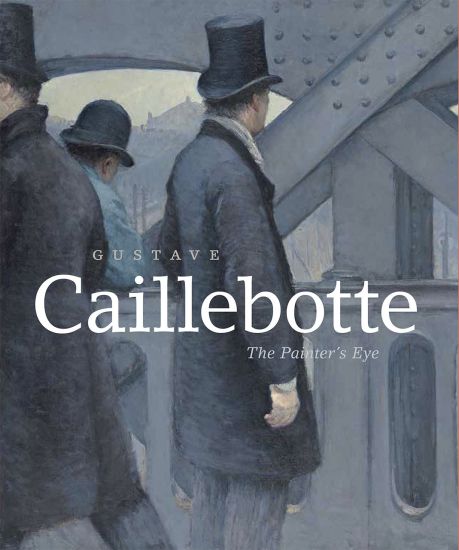
Gustave Caillebotte

Gustave Caillebotte

Mary Morton; George Shackelford

University of Chicago Press
2015
sidottu
Though largely out of the public eye for more than a century, Gustave Caillebotte (1848 - 94) has come to be recognized as one of the most dynamic and original artists of the impressionist movement in Paris. His paintings are favorites of museum-goers, and recent restoration of his work has revealed more color, texture, and detail than was visible before while heightening interest in all of Caillebotte's artwork. This lush companion volume to the National Gallery of Art's major new exhibition, coorganized with the Kimbell Art Museum, explores the power and technical brilliance of his oeuvre. The book features fifty of Caillebotte's strongest paintings, including post-conservation images of Paris Street, Rainy Day, along with The Floorscrapers and Pont de l'Europe, all of which date from a particularly fertile period between 1875 and 1882. The artist was criticized at the time for being too realistic and not impressionistic enough, but he was a pioneer in adopting the angled perspective of a modern camera to compose his scenes. Caillebotte's skill and originality are evident even in the book's reproductions, and essays offer critical insights into his inspiration and subjects. This sumptuously illustrated publication makes clear why Caillebotte is among the most intriguing artists of nineteenth-century France, and it deepens our understanding of the history of impressionism.