Este es un libro muy ambicioso, en el sentido de que pretende motivar y hacer que el lector descubra en si mismo las fortalezas que le daran la llave para lograr y desarrollar su maximo potencial de exito. El exito absoluto le espera a todo aquel que siga con total disciplina los pasos descritos en este libro. Con exito absoluto nos referimos a alcanzar el exito en su vida personal, financiera, profesional, nos referimos al exito y el desarrollo del individuo en su aspecto mas general. El lector encontrara los mas diversos consejos para convertirse en una persona de exito superlativo, a modo de consejos hacia su hijo el autor nos deja las claves para convertirse en la persona que usted siempre quiso ser, y descubrir de esta manera como la fortuna llega como consecuencia de la persona en la que se habran convertido.
La frontera entre M xico y Estados se extiende a lo largo de poco m s de doscientos a os de historia y dos mil millas de terreno, equivalentes a 3,180 kil metros. Esta l nea creada por el hombre, protagonista de una complicada historia, se ha fortalecido y solidificado con el paso de los a os. Sus significados tambi n han cambiado. En un principio era una idea, el fin aproximado e inh spito de un vasto imperio espa ol y el inicio de la "tierra de nadie". Despu s fue un trazo en un papel, una raya porosa, sin barreras f sicas, que en tiempos de paz se convirti en sitio de intercambio y cooperaci n, y en pocas de conflicto en terreno de choque no s lo de dos pueblos distintos, sino del Norte y el Sur de la geopol tica internacional. Hace dos siglos la frontera de Estados Unidos y M xico estaba formada por vastos desiertos y regiones peligrosas donde nadie quer a vivir, una l nea vagamente definida y poco vigilada. Hoy, en la segunda d cada del siglo XXI, a pesar de estar situada en uno de los h bitats m s inclementes, es la m s transitada del mundo; un pa s en s mismo considerando el volumen de operaciones econ micas que se llevan a cabo en sus proximidades, sin mencionar que se trata de una de las regiones m s vigiladas del planeta, incluso una zona de "guerra de baja intensidad", como la han denominado algunos expertos. Habr a que considerar, tan s lo para comparar, la frontera entre B lgica y Holanda, donde el cruce puede realizarse simplemente yendo de un caf a otro, sin que nadie se d cuenta cu ndo se ha cambiado de pa s. O la de Polonia y Ucrania, cuya frontera abierta est formada por hermosas planicies verdes decoradas con figuras labradas en la tierra. C mo pas la de M xico y EE.UU. -en relativamente poco tiempo- de un desierto a una franja superpoblada, violenta, din mica, boyante, culturalmente din mica, por donde pasa toda clase de mercanc as, legales e ilegales, en ambas direcciones? Curiosamente, hubo un tiempo en que los dos pa ses ni siquiera eran vecinos. Francia estaba entre ambos, en posesi n del extenso terreno de la Louisiana, donde Napole n esperaba restablecer un imperio franc s en el continente. En esa poca M xico ten a el oficial pero artificioso nombre de Nueva Espa a -aunque ya desde el siglo XVI los atlas nombraban el territorio como "Am rica Mexicana"- y Estados Unidos era un pa s aproximadamente del tama o del actual Reino Unido e Irlanda combinados. Las convulsiones en Europa pronto pusieron lado a lado a los dos pa ses m s notables del continente, los que m s dieron de qu hablar en todo el siglo XIX. Pero as como los ciudadanos normales de ambos pa ses han descubierto a lo largo de la historia buenas oportunidades en la vecindad, tambi n los grupos criminales de ambos lados han explotado este potencial, ofreciendo y demandando bienes en un intercambio perverso que hace da o a las dos naciones. Esto es en parte lo que ha llevado a la radicalizaci n de las posturas, llegando a sugerirse, en 2015, la construcci n de un nuevo muro como el de Berl n, pero inmensamente mayor, separando ya no al Este y al Oeste, sino al Norte y al Sur. La historia de la frontera entre Estados Unidos y M xico est todav a escribi ndose. sta es, hasta 2017, la pel cula de esta frontera nica; no la m s grande del mundo (la de Canad es mayor), ni la que separa a los m s ricos de los m s pobres (lejos est de la situaci n entre Sud frica y Suazilandia, por ejemplo), pero s la m s peculiar porque ha sabido unir con eficacia lo que parec a imposible conciliar.
La frontera entre M xico y Estados se extiende a lo largo de poco m s de doscientos a os de historia y dos mil millas de terreno, equivalentes a 3,180 kil metros. Esta l nea creada por el hombre, protagonista de una complicada historia, se ha fortalecido y solidificado con el paso de los a os. Sus significados tambi n han cambiado. En un principio era una idea, el fin aproximado e inh spito de un vasto imperio espa ol y el inicio de la "tierra de nadie". Despu s fue un trazo en un papel, una raya porosa, sin barreras f sicas, que en tiempos de paz se convirti en sitio de intercambio y cooperaci n, y en pocas de conflicto en terreno de choque no s lo de dos pueblos distintos, sino del Norte y el Sur de la geopol tica internacional. Hace dos siglos la frontera de Estados Unidos y M xico estaba formada por vastos desiertos y regiones peligrosas donde nadie quer a vivir, una l nea vagamente definida y poco vigilada. Hoy, en la segunda d cada del siglo XXI, a pesar de estar situada en uno de los h bitats m s inclementes, es la m s transitada del mundo; un pa s en s mismo considerando el volumen de operaciones econ micas que se llevan a cabo en sus proximidades, sin mencionar que se trata de una de las regiones m s vigiladas del planeta, incluso una zona de "guerra de baja intensidad", como la han denominado algunos expertos. Habr a que considerar, tan s lo para comparar, la frontera entre B lgica y Holanda, donde el cruce puede realizarse simplemente yendo de un caf a otro, sin que nadie se d cuenta cu ndo se ha cambiado de pa s. O la de Polonia y Ucrania, cuya frontera abierta est formada por hermosas planicies verdes decoradas con figuras labradas en la tierra. C mo pas la de M xico y EE.UU. -en relativamente poco tiempo- de un desierto a una franja superpoblada, violenta, din mica, boyante, culturalmente din mica, por donde pasa toda clase de mercanc as, legales e ilegales, en ambas direcciones? Curiosamente, hubo un tiempo en que los dos pa ses ni siquiera eran vecinos. Francia estaba entre ambos, en posesi n del extenso terreno de la Louisiana, donde Napole n esperaba restablecer un imperio franc s en el continente. En esa poca M xico ten a el oficial pero artificioso nombre de Nueva Espa a -aunque ya desde el siglo XVI los atlas nombraban el territorio como "Am rica Mexicana"- y Estados Unidos era un pa s aproximadamente del tama o del actual Reino Unido e Irlanda combinados. Las convulsiones en Europa pronto pusieron lado a lado a los dos pa ses m s notables del continente, los que m s dieron de qu hablar en todo el siglo XIX. Pero as como los ciudadanos normales de ambos pa ses han descubierto a lo largo de la historia buenas oportunidades en la vecindad, tambi n los grupos criminales de ambos lados han explotado este potencial, ofreciendo y demandando bienes en un intercambio perverso que hace da o a las dos naciones. Esto es en parte lo que ha llevado a la radicalizaci n de las posturas, llegando a sugerirse, en 2015, la construcci n de un nuevo muro como el de Berl n, pero inmensamente mayor, separando ya no al Este y al Oeste, sino al Norte y al Sur. La historia de la frontera entre Estados Unidos y M xico est todav a escribi ndose. sta es, hasta 2017, la pel cula de esta frontera nica; no la m s grande del mundo (la de Canad es mayor), ni la que separa a los m s ricos de los m s pobres (lejos est de la situaci n entre Sud frica y Suazilandia, por ejemplo), pero s la m s peculiar porque ha sabido unir con eficacia lo que parec a imposible conciliar.
*Includes pictures*Includes online resources and a bibliography for further reading "While nation-states have always desired boundaries, the significance and shape of those borders have changed over time." - Rachel St. JohnThe history of the border between Mexico and the United States extends alongside 200 years and 2,000 miles - the tortuous epic of a man-made line that has not only hardened and become more solid over time, but has changed meanings too. In the beginning, it was an idea - the approximate and inhospitable edge of the vast Spanish Empire and the beginning of no man's land. Then, it was a line on paper - a porous boundary with no physical barriers. In times of peace, it was a place of trade and cooperation; in times of conflict, it was the point where two different peoples clashed, as well as the meeting of the North and South of international geopolitics.Two centuries ago, the border was formed by vast deserts and dangerous regions in which nobody wanted to live - a vaguely defined and surveyed boundary. Today, in the second decade of the 21st century, despite being located in one of the most inclement habitats in the world, it is also the world's busiest. It functions like a country in itself considering the volume of economic operations carried out across the line, not to mention being one of the most monitored regions of the planet. Some experts have even called it a low-warfare zone. Consider, for comparison's sake, the border between Belgium and the Netherlands, where crossing means going from one pub to another, and it is hardly realized when one leaves one nation or the other. Or consider the open limits of Poland and Ukraine, which consists of beautiful green pastures decorated with all kinds of art.How did the border of Mexico and the United States transition from a wilderness to an overpopulated, violent, dynamic, buoyant, culturally dynamic land in such a relatively short time, where a plethora of legal and illegal goods cross in both directions? Curiously, there was a time when the two countries were not even neighbors. France was between them, possessing the vast land of the Louisiana territory, where Napoleon wanted to establish a French empire in the Americas. At that time, Mexico had the official but artificial name of "New Spain" - misleading, since atlases from the 16th century had already named it "America Mexicana"- and the United States was approximately the size of the present-day United Kingdom and Ireland combined. The disturbances in Europe soon put the two most conspicuous countries of the continent side by side, and these two North American nations garnered the world's attention in the 19th century.Certainly not everything has been bad in the relationship between the two nations. In fact, the border has developed its own traditions, history, and personality into one not entirely Mexican or entirely American. Timothy Brown, a scholar of the frontier and globalization, correctly points out that "to most Mexicans, their northern states, with half their nation's land but only one-fifth its people, seem too American, a bit alien, vaguely un-Mexican," and likewise, "to many Americans, their own Southwest sometimes seems similarly alien and terribly Hispanic." Thus, on numerous occasions, both countries have found along the line a way of helping each other for mutual benefit. By promoting the colonization of the far north from the late 19th to the early 20th century, President Porfirio D az helped the southern United States develop a thriving agricultural economy sustained by a Mexican labor force.The United States-Mexico Border: The Controversial History and Legacy of the Boundary between America and Mexico looks at the crucial boundary. Along with pictures of important people, places, and events, you will learn about the border like never before.
*Includes pictures*Includes online resources and a bibliography for further reading "While nation-states have always desired boundaries, the significance and shape of those borders have changed over time." - Rachel St. JohnThe history of the border between Mexico and the United States extends alongside 200 years and 2,000 miles - the tortuous epic of a man-made line that has not only hardened and become more solid over time, but has changed meanings too. In the beginning, it was an idea - the approximate and inhospitable edge of the vast Spanish Empire and the beginning of no man's land. Then, it was a line on paper - a porous boundary with no physical barriers. In times of peace, it was a place of trade and cooperation; in times of conflict, it was the point where two different peoples clashed, as well as the meeting of the North and South of international geopolitics.Two centuries ago, the border was formed by vast deserts and dangerous regions in which nobody wanted to live - a vaguely defined and surveyed boundary. Today, in the second decade of the 21st century, despite being located in one of the most inclement habitats in the world, it is also the world's busiest. It functions like a country in itself considering the volume of economic operations carried out across the line, not to mention being one of the most monitored regions of the planet. Some experts have even called it a low-warfare zone. Consider, for comparison's sake, the border between Belgium and the Netherlands, where crossing means going from one pub to another, and it is hardly realized when one leaves one nation or the other. Or consider the open limits of Poland and Ukraine, which consists of beautiful green pastures decorated with all kinds of art.How did the border of Mexico and the United States transition from a wilderness to an overpopulated, violent, dynamic, buoyant, culturally dynamic land in such a relatively short time, where a plethora of legal and illegal goods cross in both directions? Curiously, there was a time when the two countries were not even neighbors. France was between them, possessing the vast land of the Louisiana territory, where Napoleon wanted to establish a French empire in the Americas. At that time, Mexico had the official but artificial name of "New Spain" - misleading, since atlases from the 16th century had already named it "America Mexicana"- and the United States was approximately the size of the present-day United Kingdom and Ireland combined. The disturbances in Europe soon put the two most conspicuous countries of the continent side by side, and these two North American nations garnered the world's attention in the 19th century.Certainly not everything has been bad in the relationship between the two nations. In fact, the border has developed its own traditions, history, and personality into one not entirely Mexican or entirely American. Timothy Brown, a scholar of the frontier and globalization, correctly points out that "to most Mexicans, their northern states, with half their nation's land but only one-fifth its people, seem too American, a bit alien, vaguely un-Mexican," and likewise, "to many Americans, their own Southwest sometimes seems similarly alien and terribly Hispanic." Thus, on numerous occasions, both countries have found along the line a way of helping each other for mutual benefit. By promoting the colonization of the far north from the late 19th to the early 20th century, President Porfirio D az helped the southern United States develop a thriving agricultural economy sustained by a Mexican labor force.The United States-Mexico Border: The Controversial History and Legacy of the Boundary between America and Mexico looks at the crucial boundary. Along with pictures of important people, places, and events, you will learn about the border like never before.
The expert papers contained in this volume compare and contrast different corporate law systems as regards governance of publicly held corporations. The aim of the book is to assess how differences in economic systems affect the corporate law system and how the corporate law system in turn affects the economy. This work offers a comprehensive survey of important corporate law systems and a detailed analysis of the legal significance of corporate governance mechanisms and their impact on the corporate law system. The topics covered include shareholders' rights, role of the annual general meeting, structure of the board of directors, rights of disclosure, role of auditors, voting systems, fiduciary duties and methods of enforcement. The authors focus on the issues of accountability and the relation between the various actors within a corporation. The legal analysis takes full account of economic reality and detailed economic data support the legal arguments presented. This book is the result of a project sponsored by Ceradi-Luiss Guido Carli, Rome, and by the Brooklyn Law School Center for the Study of International Business Law.
*Includes pictures *Includes accounts describing the image and the theories surrounding its origins *Includes online resources and a bibliography for further reading No other artwork in the world is comparable to the Virgin of Guadalupe. What makes this painting unique -located in the Basilica of Guadalupe, north of Mexico City- is not precisely its artistic quality, as is the case with the Mona Lisa by Leonardo or The Kiss by Gustav Klimt, nor its place in the evolution of painting. It clearly does not constitute a landmark in art history, and the most visited painting in the world is certainly not the summit or the harbinger of a new aesthetic movement, like Dali s melting watches or Van Gogh s Starry Night. In fact, for some, the execution of the image is coarse and all its elements fit well known techniques. For others, it s merely a copy of a sculpture of the Virgin found in Spain. What distinguishes the Virgin of Guadalupe of Mexico is her universality: unlike any work of art in the world, it can be recognized by any local; it s certainly the most ubiquitous symbol in her country. It would be difficult to find a Mexican who cannot name her. Likewise, it would be complicated to find one who hasn t been at least once in his or her life before the image at the Basilica, either reluctantly or filled with devotion. The other thing that makes the Virgin of Guadalupe incomparable is her power to unite her nation, something that has been widely demonstrated throughout history. At different moments, and raised by different hands, the Virgin of Guadalupe (never the original painting) has led the troops that changed the history of the territory now known as Mexico. Not even a few hours had passed after the start of the War of Independence when the rebel army was already carrying the image of Guadalupe; in the twentieth century the image was present at the indigenous rebellion in Chiapas in 1994 and also materialized during the Mexican "perestroika" of 2000, which ended the single-party regime that had lasted for seven decades. Going further back, during Mexico s Conquest, Hern n Cort s carried an image of the Virgin that, to the disinterested observer, is obviously the prototype of the Mexican Madonna. For some, Guadalupe is the work of a talented Indian painter, and this work was retouched and embellished by others in later centuries. The majority of scholars note how the image "appeared" at a very convenient time in Mexico s history, when evangelization functioned as the ideological arm of the material conquest of the Aztec empire. There are even reasons to wonder whether the image currently on display in Mexico City is the same as in the 17th century since it is known from testimonies of the time that Mary had a crown on her head. That means if it s the same, at the very least it s been retouched, doctored and tampered with again. Conversely, for the believers, the image was miraculously stamped on the tilma or cloak of a man named Juan Diego. Among the latter are most of the 17 million persons who visit the original every year in Mexico City, which makes it the most visited painting in the country, and certainly the world. By comparison, the Mona Lisa at the Louvre in Paris receives six million visitors per year. What nobody questions -believers, skeptics or atheists- is that the Virgin of Guadalupe has been the most important symbol, religious or not, in Mexico s history, a kind of non-official flag. Her influence has spread even to the Mexican diaspora, where it has become a sign of identity, pride and resistance among undocumented immigrants in the United States. For Mexicans, it s not necessary to be religious to believe in the power of the Virgin of Guadalupe as a unifying symbol and embodiment of national identity. The Virgin of Guadalupe: The History and Legacy of One of the Catholic Church's Most Venerated Images looks at the history of the image.
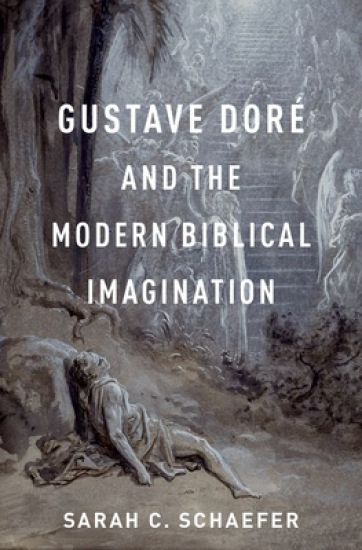
Gustave Doré and the Modern Biblical Imagination explores the role of biblical imagery in modernity through the lens of Gustave Doré (1832-83), whose work is among the most reproduced and adapted scriptural imagery in the history of Judeo-Christianity. First published in France in late 1865, Doré's Bible illustrations received widespread critical acclaim among both religious and lay audiences, and the next several decades saw unprecedented dissemination of the images on an international scale. In 1868, the Doré Gallery opened in London, featuring monumental religious paintings that drew 2.5 million visitors over the course of a quarter-century; when the gallery's holdings travelled to the United States in 1892, exhibitions at venues like the Art Institute of Chicago drew record crowds. The United States saw the most creative appropriations of Doré's images among a plethora of media, from prayer cards and magic lantern slides to massive stained-glass windows and the spectacular epic films of Cecile B. DeMille. This book repositions biblical imagery at the center of modernity, an era that has often been defined through a process of secularization, and argues that Doré's biblical imagery negotiated the challenges of visualizing the Bible for modern audiences in both sacred and secular contexts. A set of texts whose veracity and authority were under unprecedented scrutiny in this period, the Bible was at the center of a range of historical, theological, and cultural debates. Gustave Doré is at the nexus of these narratives, as his work established the most pervasive visual language for biblical imagery in the past two and a half centuries, and constitutes the means by which the Bible has persistently been translated visually.
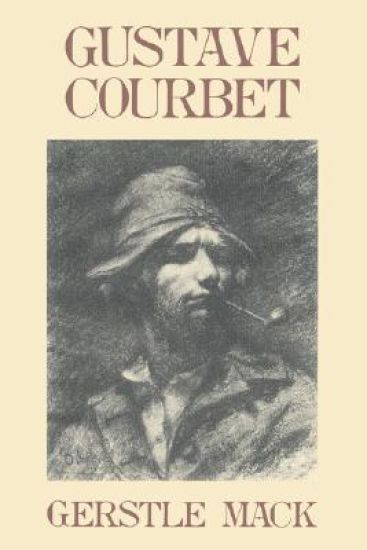
The French Realist painter Gustave Courbet (1819-77), a pivotal figure in the emergence of modern painting, remains an artist whose interests, attitudes, and friendships are little understood. A voluminous correspondent, Courbet himself, through his letters, offers a tantalizing avenue toward a keener assessment of his character and accomplishments. In her critical edition of over six hundred of the artist's letters, Petra ten-Doesschate Chu presents just such a look at the inner life of the artist; her unparalleled feat of gathering together all of Courbet's known letters, many heretofore unpublished and untranslated, is sure to change our evaluation of Courbet's creativity and of his place in nineteenth-century French life. Beginning when Courbet left his provincial home at eighteen and ending eight days before his death in exile in Switzerland, this correspondence enables readers to follow the artist's development from youth to mature artist of international repute. Addressed to correspondents such as the poet Charles Baudelaire, the painter Claude Monet, the writers Champfleury, Victor Hugo, and Théeophile Gautier, the political theorist Pierre-Joseph Proudhon, and the politician Jules Simon, the letters offer numerous insights into Courbet's life and art as well as the cultural and political activity of his day. In fascinating detail, they present the artist's relation to the contemporary media, his deliberate choice of subject matter for Salon paintings, his preoccupation with photography, and his participation in the Commune. Besides collecting, translating, and annotating the letters, Chu provides an introduction, a chronology, biographies of persons appearing frequently in the letters, and a list of paintings and sculptures mentioned in the letters. Her work is an essential resource of immediate use to historians of art and culture, political and social historians, and readers of biography. Petra ten-Doesschate Chu is professor and head of the Department of Art and Music at Seton Hall University.
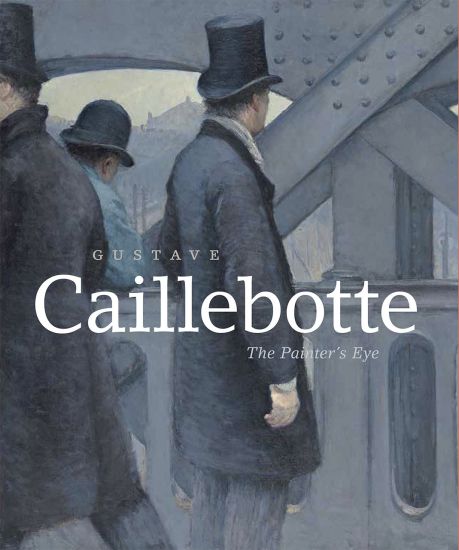
Though largely out of the public eye for more than a century, Gustave Caillebotte (1848 - 94) has come to be recognized as one of the most dynamic and original artists of the impressionist movement in Paris. His paintings are favorites of museum-goers, and recent restoration of his work has revealed more color, texture, and detail than was visible before while heightening interest in all of Caillebotte's artwork. This lush companion volume to the National Gallery of Art's major new exhibition, coorganized with the Kimbell Art Museum, explores the power and technical brilliance of his oeuvre. The book features fifty of Caillebotte's strongest paintings, including post-conservation images of Paris Street, Rainy Day, along with The Floorscrapers and Pont de l'Europe, all of which date from a particularly fertile period between 1875 and 1882. The artist was criticized at the time for being too realistic and not impressionistic enough, but he was a pioneer in adopting the angled perspective of a modern camera to compose his scenes. Caillebotte's skill and originality are evident even in the book's reproductions, and essays offer critical insights into his inspiration and subjects. This sumptuously illustrated publication makes clear why Caillebotte is among the most intriguing artists of nineteenth-century France, and it deepens our understanding of the history of impressionism.
No biographer could ask for a more colourful or difficult subject than the painter and revolutionary Gustave Courbet. One of the fathers of Realism, a style he created with his huge canvases of his birthplace in Ornans ( After Dinner at Ornans, 1949 Funeral at Ornans, 1850, and The Stonebreakers, 1850), Courbet chose his subjects from ordinary life and portrayed them with the same monumental dignity as the great men of history. A man with big appetites for life, women, and politics, he frequently found himself at odds with French authorities, especially during the period of the Commune when he and his friends pulled down the Vendome Column. Impressionism and Modernism would be unthinkable without his fierce opposition to the academies of art. This biography by one of the most reliable students of French art paints a large and fascinating canvas, which Courbet dominates but never overwhelms.
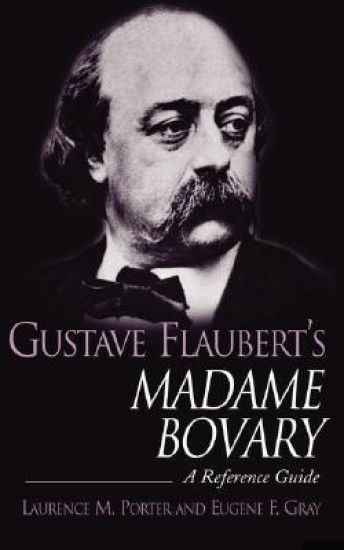
Examines Flaubert's Madame Bovary by providing an understanding of the author's life and experiences and offering a plot summary, major themes, characters, and details of other reviews.
Gustave Flaubert wrote to his mistress, Louise Colet: "An author in his book must be like God in the universe, present everywhere and visible nowhere." In his books, Flaubert sought to observe that principle; but in his many impassioned letters he allowed his feelings to overflow, revealing himself in all of his human complexity. Sensuous, witty, exalted, ironic, grave, analytical, the letters illustrate the artist's life--and they trumpet his artistic opinions--in an outpouring of uninhibited eloquence. An acknowledged master of translation, Francis Steegmuller has given us by far the most generous and varied selection of Flaubert's letters in English. He presents these with an engrossing narrative that places them in the context of the writer's life and times. We follow Flaubert through his unhappy years at law school, through his tumultuous affair with Louise Colet; we share his days and nights amid the temples and brothels of Egypt, then on to Palestine, Turkey, Greece, and Rome. And the letters chronicle one of the central events in literary history--the conception and composition of what has been called the first modern novel, Madame Bovary. Steegmuller's selection concludes with Flaubert's standing trial for immoral writing, Madame Bovary's immediate popular success, and Baudelaire's celebration of its psychological and literary power. Throughout this exposition in Flaubert's own words of his views on life, literature, and the passions, readers of his novels will be powerfully reminded of the fertility of his genius, and delighted by his poetic enthusiasm. "Let us sing to Apollo as in ancient days," he wrote to Louise Colet, "and breathe deeply of the fresh cold air of Parnassus; let us strum our guitars and clash our cymbals and whirl like dervishes in the eternal hubbub of forms and ideas " Flaubert's letters are documents of life and art; lovers of literature and of the literary adventure can rejoice in this edition.
Having been acquitted of the charge of "outrage of public morals and religion" brought against him upon the publication Madame Bovary, Gustave Flaubert found himself, in 1857, a celebrity and one of the most admired literary men of his day. Francis Steegmuller's volume of Flaubert's letters from the years culminating in that triumph was hailed by the New York Times as "brilliantly edited and annotated...a splendid, intimate account of the development of a writer who changed the nature of the novel." It went on to garner widespread critical acclaim and to win an American Book Award for Translation. Now, in the second volume, we see Flaubert in the years of his fame--the years in which he wrote Salammb , L' ducation sentimentale, The Temptation of Saint Anthony, Three Tales, and the unfinished Bouvard and Pecuchet. In writing the novels, Flaubert followed his precept, "An author in his book must be like God in the universe, present everywhere and visible nowhere," but in these letters of his maturity he gives full scope to his feelings and expresses forceful opinions on matters public and private. We see Flaubert traveling to Tunisia to document the exotic Salammb , then calling on his own memories and those of his friends to bring to life the Revolution of 1848 and the loves of his hero Frederic Moreau in the pages of L' ducation sentimentale, which many today consider his greatest novel. Flaubert is taken up by the Second Empire Court of Napoleon III and Eugenie, and becomes a lifelong friend of Princess Mathilde Bonaparte. But the most powerful feminine presence in this volume is the warm, sympathetic George Sand, with whom he maintains a fascinating correspondence for more than ten years. This dialogue on life, letters, and politics between the "two troubadours," as they called themselves, reveals both of them at their idiosyncratic best. The deaths of Flaubert's mother, of his closest friend and mentor, Louis Bouilhet, and of Th ophile Gautier, Sainte-Beuve, and other intimates, and Flaubert's financial ruin at the hands of his beloved niece Caroline and her rapacious husband, make a somber story of the post war years. Despite these and other losses, Flaubert's last years are brightened by the affection of Guy de Maupassant, Zola, and other younger writers. Together with Francis Steegmuller's masterly connecting narrative and essential annotation, these letters, most of which appear here in English for the first time, constitute an intimate and engrossing new biography of the great master of the modern novel.