The conflict, personal rivalry and contrast in personality, generalship and command, between the two iconic commanders in the Thirty Years War, King Gustavus Adolphus of Sweden for the Protestant powers, and Albrecht von Wallenstein, Duke of Friedland. More than just commanders at the tactical level they were statesmen, military organisers and strategists on a continental scale. Both commanders represented the 17th-century military revolution in action'. The writing is vivid, graphic and detailed, without overloading, and readers can feel involved' in the action, from strategic planning to battlefield tactics, and even the melee. Both generals are titanic figures come, and their respective deaths - Gustavus heroically in battle and Wallenstein, murdered with the Emperor's compliance - were dramatic highpoints in the long war. This is no hagiography, and the author analyses the contrasting reputations of two of the greatest military figures in modern history and analyses mistakes as well their triumphs. Both commanders' understanding of the role of the modern state and finance as vital factors in the military revolution and modern warfare. A major contrast was Gustavus's constant search for the tactical and strategic initiative compared to Wallenstein's caution and patience and development of counter-punch defensive tactics. Exceptional for the period, a young warrior like an Alexander', Gustavus excelled in inspired battlefield leadership even at huge risk. Despite his death at Lutzen in 1632, he and his steadfast chancellor Oxenstierna, had decisively defeated the Emperor's attempt to subjugate the Empire and introduce the Catholic counter-reformation. Gustavus contributed hugely to the ending of Habsburg supremacy while advancing new concepts in modern war. His death ushered in his acolytes including generals Baner, Saxe-Weimar and Torstensson. Gustavus or Wallenstein, the greater of the two? The reader must judge but Napoleon included Gustavus in his list of ten greats with Julius Caesar, Hannibal Barca, and Alexander the Great.
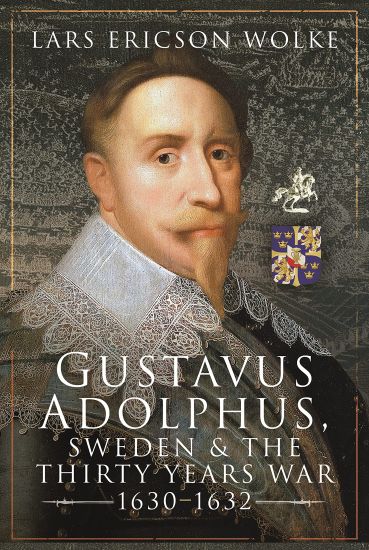
The book described the conflict, personal rivalry and contrast in personality, generalship and command, between the two iconic commanders in the Thirty Years War, King Gustavus Adolphus of Sweden for the Protestant powers, and Albrecht von Wallenstein, Duke of Friedland. More than just commanders at the tactical level they were statesmen, military organisers and strategists on a continental scale. Both commanders represented the 17th-century ‘military revolution in action’. The writing is vivid, graphic and detailed, without overloading, and readers can feel ‘involved’ in the action, from strategic planning to battlefield tactics, and even the melee. Both generals are titanic figures, and their respective deaths - Gustavus heroically in battle and Wallenstein, murdered with the Emperor’s compliance – were dramatic highpoints in the long war. This is no hagiography, and the author analyses the contrasting reputations of two of the greatest military figures in modern history and analyses mistakes as well their triumphs. Both commanders’ understanding of the role of the modern state and finance as vital factors in the military revolution and modern warfare. A major contrast was Gustavus’s constant search for the tactical and strategic initiative compared to Wallenstein’s caution and patience and development of counter-punch defensive tactics. Exceptional for the period, a young warrior like an ‘Alexander’, Gustavus excelled in inspired battlefield leadership even at huge risk. Despite his death at Lutzen in 1632, he and his steadfast chancellor Oxenstierna, decisively defeated the Emperor’s attempt to subjugate the Empire and introduce the Catholic counter-reformation. Gustavus contributed hugely to the ending of Habsburg supremacy while advancing new concepts in modern war. His death ushered in his acolytes including generals Baner, Saxe-Weimar and Torstensson. Gustavus or Wallenstein, the greater of the two? The reader must judge but Napoleon included Gustavus in his list of ten greats with Julius Caesar, Hannibal Barca, and Alexander the Great.
As one of the foremost military commanders of the early seventeenth century Gustavus Adophus, king of Sweden, played a vital role in defending the Protestant cause during the Thirty Years War. In the space of two years -between 1630 and 1632 -he turned the course of the war, winning a decisive victory at the Battle of Breitenfeld and conquering large parts of Germany. Yet in English remarkably little has been written about him and no full account of his extraordinary career has been published in recent times. That is why Lars Ericson Wolke's perceptive and scholarly study is of such value. The book sets Gustavus in the context of Swedish and European dynastic politics and religious conflict in the early seventeenth century, and describes in detail Swedish military organization and Gustavus's reforms. His intervention in the Thirty Years War is covered in graphic detail -the decision to intervene, his alliance with France, his campaigns across the breadth of Germany and his generalship at the two major battles he fought there. His exceptional skill as a battlefield commander transformed the fortunes of the Protestant side in the conflict, and he had established himself as a major European figure before his death on the battlefield. Lars Ericson Wolke, one of the leading experts on the military history of the Baltic and the Thirty Years War, offers a fascinating insight into Gustavus the man and the soldier.
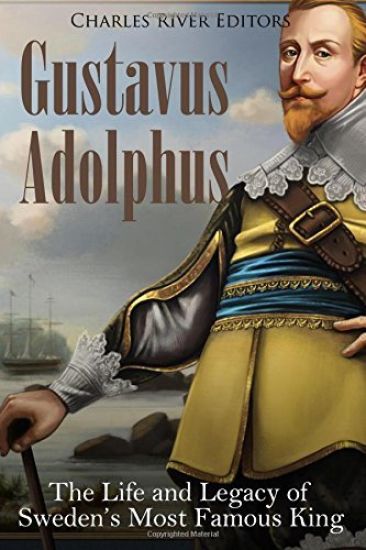
*Includes pictures*Includes contemporary accounts*Includes online resources and a bibliography for further reading"I had carefully learned to understand, about that experience which I could have upon things of rule, how fortune is failing or great, subject to such rule in common, so that otherwise I would have had scant reason to desire such a rule, had I not found myself obliged to it through God's bidding and nature. Now it was of my acquaintance, that inasmuch as God had let me be born a prince, such as I then am born, then my good and my destruction were knotted into one with the common good; for every reason then, it was now my promise that I should take great pains about their well-being and good governance and management, and thereabout bear close concern." - Gustavus Adolphus "Read over and over again the campaigns of Alexander, Hannibal, Caesar, Gustavus, Turenne, Eugene, and Frederic," reads an excerpt from one of Napoleon's memoirs. "This is the only way to become a great general and master the secrets of the art of war." The "Gustavus" in question is none other than King Gustav II Adolf, widely remembered by the Latinized version of his name, Gustavus Adolphus. Some hailed him as the "Lion of the North," others called him the "Golden King," and a few knew him by the affectionate nickname "Hook-nose." Today, Swedish, Finland, and Estonian citizens alike continue to celebrate Gustavus Adolphus Day on the 6th of November each year, topping off the flag day with special cakes garnished with chocolates that featured his likeness. But who exactly was Gustavus Adolphus the Great, and why does Sweden continue to hold him in such prominence today? Gustavus Adolphus: The Life and Legacy of Sweden's Most Famous King explores the early life of the Swedish king, his ascension to power, and his greatest achievements, as well as the revolutionary military tactics he used to shape modern warfare.
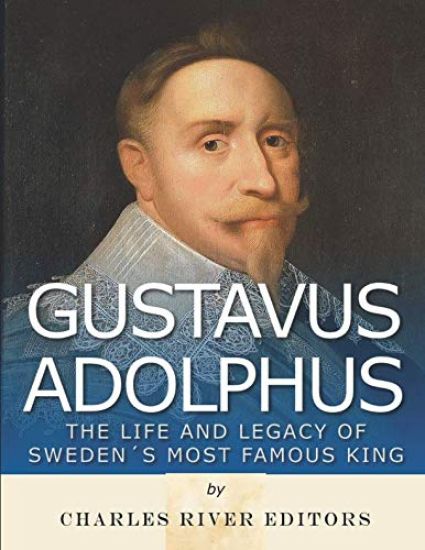
*Includes pictures*Includes contemporary accounts*Includes online resources and a bibliography for further reading"I had carefully learned to understand, about that experience which I could have upon things of rule, how fortune is failing or great, subject to such rule in common, so that otherwise I would have had scant reason to desire such a rule, had I not found myself obliged to it through God's bidding and nature. Now it was of my acquaintance, that inasmuch as God had let me be born a prince, such as I then am born, then my good and my destruction were knotted into one with the common good; for every reason then, it was now my promise that I should take great pains about their well-being and good governance and management, and thereabout bear close concern." - Gustavus Adolphus "Read over and over again the campaigns of Alexander, Hannibal, Caesar, Gustavus, Turenne, Eugene, and Frederic," reads an excerpt from one of Napoleon's memoirs. "This is the only way to become a great general and master the secrets of the art of war." The "Gustavus" in question is none other than King Gustav II Adolf, widely remembered by the Latinized version of his name, Gustavus Adolphus. Some hailed him as the "Lion of the North," others called him the "Golden King," and a few knew him by the affectionate nickname "Hook-nose." Today, Swedish, Finland, and Estonian citizens alike continue to celebrate Gustavus Adolphus Day on the 6th of November each year, topping off the flag day with special cakes garnished with chocolates that featured his likeness. But who exactly was Gustavus Adolphus the Great, and why does Sweden continue to hold him in such prominence today? Gustavus Adolphus: The Life and Legacy of Sweden's Most Famous King explores the early life of the Swedish king, his ascension to power, and his greatest achievements, as well as the revolutionary military tactics he used to shape modern warfare.
It is well known that Flaubert harboured an obsessive hatred of the bourgeois and his mentality which erupts constantly and explosively in his correspondence, informs large parts of the works set in his own time, Madame Bovary, L'Education sentimentale, Un Coeur simple and Bouvard et Pecuchet and even overflows into Salammbo and his theatrical experiments. Since most of his thought and writing is so visibly and vitally affected by this obsession, it seems valuable to investigate its origins, its development and its significance for his art. That is the aim of this study which begins with a look at representations of the bourgeois in French literature before Flaubert and goes on to examine in detail what proves to be a more complex phenomenon than might at first sight appear.