
Kirjahaku
Etsi kirjoja tekijän nimen, kirjan nimen tai ISBN:n perusteella.
1000 tulosta hakusanalla HENRY F. CHORLEY



Macmillan's Geographical Series. an Elementary Geography of India, Burma, and Ceylon
Henry F Blanford
Trieste Publishing
2018
nidottu

Week-Day Religious Education; A Survey and Discussion of Activities and Problems
Henry F Cope
Trieste Publishing
2018
nidottu
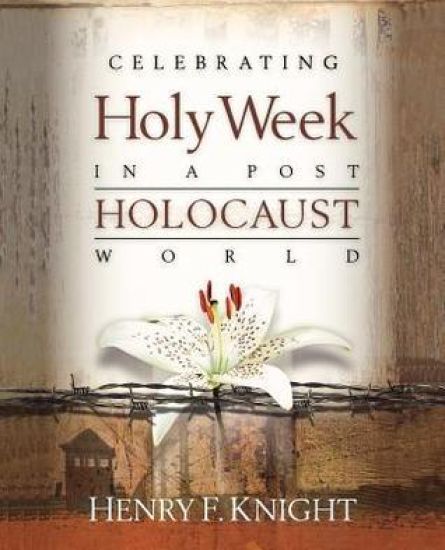
Celebrating Holy Week in a Post-Holocaust World
Henry F. Knight
Westminster/John Knox Press,U.S.
2004
nidottu
An ongoing issue for clergy as well as Christians in general is how to approach New Testament narratives about the crucifixion of Jesus in relation to Jews, Judaism, and the horrific events of the Holocaust. The events of Holy Week pose particular challenges for clergy and congregations. In this book Henry Knight helps us deal with Holy Week texts in light of our post-Holocaust world and provides practical examples of prayers, liturgies, and resource material to help pastors prepare for and lead worship and teach during this important time in the life of a congregation.

This Time Get It Right: Good-Bye Obamacare: Health Savings Accounts Open the Door to Universal Coverage and Lower Costs
Henry F. Field
Henry F. Field
2017
nidottu

This title examines the roles and new opportunities arising from the increasing participation of non-governmental organizations (NGOs) in peace-making, peacekeeping and peace-building processes, both formal and informal, state-sponsored and unofficial. Drawing on both academic experts and activists, this study brings together contributions from those who have observed how NGOs have sought to reflect civil society concerns, provide humanitarian relief, monitor compliance with international norms and treaty requirements, and disseminate information of concern to advocacy networks. A critical appraisal of the opportunities and constraints of NGOs is provided alongside the examination of the NGOs role in the "new agendas" for peace.

This title examines the roles and new opportunities arising from the increasing participation of non-governmental organizations (NGOs) in peace-making, peacekeeping and peace-building processes, both formal and informal, state-sponsored and unofficial. Drawing on both academic experts and activists, this study brings together contributions from those who have observed how NGOs have sought to reflect civil society concerns, provide humanitarian relief, monitor compliance with international norms and treaty requirements, and disseminate information of concern to advocacy networks. A critical appraisal of the opportunities and constraints of NGOs is provided alongside the examination of the NGOs role in the "new agendas" for peace.
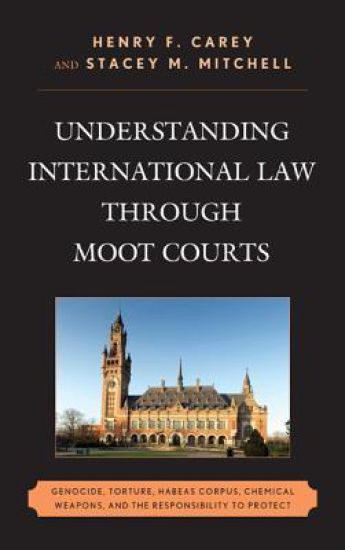
Understanding International Law through Moot Courts
Henry F. Carey; Stacey M. Mitchell
Lexington Books
2014
sidottu
Understanding International Law through Moot Courts: Genocide, Torture, Habeas Corpus, Chemical Weapons, and the Responsibility to Protect consists of five sets of opposing legal briefs and judge’s decisions for five moot court cases held before the International Court of Justice and the International Criminal Court. Each moot court brief included in the book addresses contemporary controversies in international affairs; issues ranging from the application of the newly emerging Responsibility to Protect (R2P) doctrine, to the torture of detainees, to the derogation from international due process protections. These moot court briefs and case judgments help students formulate legal arguments that will be applicable to other similar cases. They also provide students with excellent sources of international and domestic law, as well as greater comprehension of topics ranging from jurisdictional disputes to matters of evidence. Chapter 1 of the book provides an overview of the book as well as instructions regarding the construction of a moot court. Chapter two, by George Andreopoulos discusses the interrelationship between human rights and international criminal law. Chapters 3 through 7 are the cases. The introduction to each chapter (and subsequently each case) lays out the facts of the case in question, discusses (where applicable) issues associated with the material and contextual elements of the crimes(s) in question, provides additional topics for classroom discussion, and also places the issues of contention between the parties within the broader context of foreign affairs and international relations. After each set of briefs and legal judgments is an appendix which includes an example moot court, as well as an appendix that includes a set of alterable facts that students and faculty could adopt to change the general legal argument of the particular case.
In The Most Intriguing Story Ever Told, F. Henry Firsching tells the story of how we got here, based on a variety of scientific disciplines. Answering age-old questions with realistic answers, Firsching begins with the formation of the universe and follows through time how the Earth developed, how life began and progressed, and discusses the development of modern man and our current civilization.
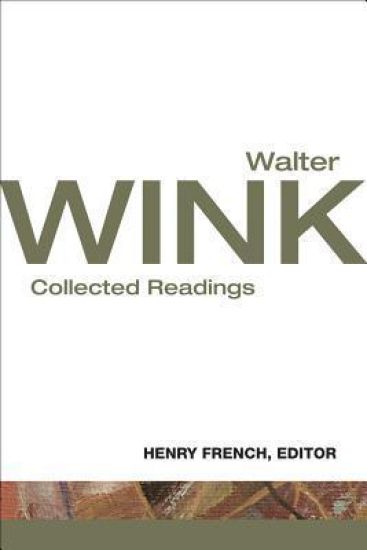
Walter Wink's writing has been described as brilliant, provocative, passionate, and innovative. His skills in critical scholarship were matched by an engaging and honest style that make his work a must read for twenty-first century theologians and all who seek deeper understanding at the intersection of Bible, theology, social ethics, and more.