Hadrian The Seventh is a satirical novel by Frederick Corvo, originally published in 1904. The story follows George Arthur Rose, an unsuccessful writer and former Anglican priest who unexpectedly becomes Pope Hadrian VII. The novel explores themes of power, religion, and individualism, as Hadrian VII seeks to reform the Catholic Church and create a more egalitarian society. Through his witty and irreverent prose, Corvo satirizes the hypocrisy and corruption of the Church, while also offering a critique of modern society and its values. The novel is a biting commentary on the state of European politics and culture at the turn of the 20th century, and remains a classic of English literature.This is a new release of the original 1925 edition.This scarce antiquarian book is a facsimile reprint of the old original and may contain some imperfections such as library marks and notations. Because we believe this work is culturally important, we have made it available as part of our commitment for protecting, preserving, and promoting the world's literature in affordable, high quality, modern editions, that are true to their original work.
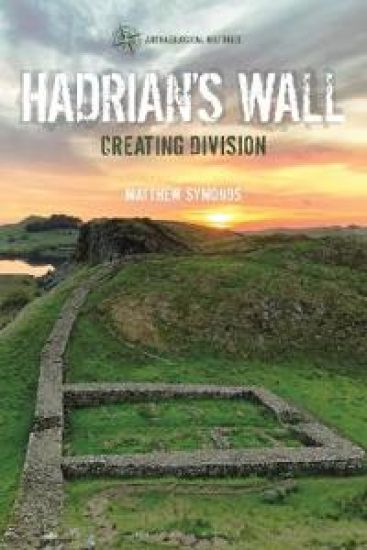
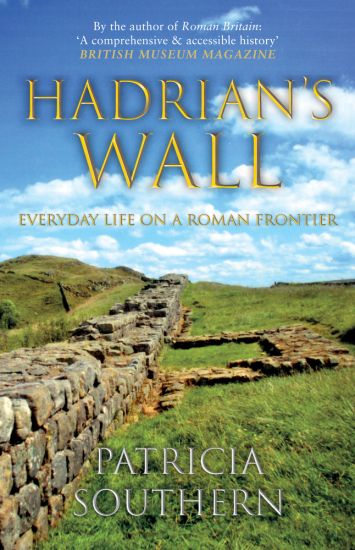
Over its venerable history, Hadrian’s Wall has had an undeniable influence in shaping the British landscape, both literally and figuratively. Once thought to be a soft border, recent research has implicated it in the collapse of a farming civilisation centuries in the making, and in fuelling an insurgency characterised by violent upheaval. Examining the everyday impact of the Wall over the three centuries it was in operation, Matthew Symonds sheds new light on its underexplored human story by discussing how the evidence speaks of a hard border scything through a previously open landscape and bringing dramatic change in its wake. The Roman soldiers posted to Hadrian’s Wall were overwhelmingly recruits from the empire’s occupied territories, and for them the frontier could be a place of fear and magic where supernatural protection was invoked during spells of guard duty. Since antiquity, the Wall has been exploited by powers craving the legitimacy that came with being accepted as the heirs of Rome: it helped forge notions of English and Scottish nationhood, and even provided a model of selfless cultural collaboration when the British Empire needed reassurance. It has also inspired creatives for centuries, appearing in a more or less recognisable guise in works ranging from Rudyard Kipling’s Puck of Pook’s Hill to George R. R. Martin’s A Game of Thrones. Combining an archaeological analysis of the monument itself and an examination of its rich legacy and contemporary relevance, this volume presents a reliable, modern perspective on the Wall.
Over its venerable history, Hadrian’s Wall has had an undeniable influence in shaping the British landscape, both literally and figuratively. Once thought to be a soft border, recent research has implicated it in the collapse of a farming civilisation centuries in the making, and in fuelling an insurgency characterised by violent upheaval. Examining the everyday impact of the Wall over the three centuries it was in operation, Matthew Symonds sheds new light on its underexplored human story by discussing how the evidence speaks of a hard border scything through a previously open landscape and bringing dramatic change in its wake. The Roman soldiers posted to Hadrian’s Wall were overwhelmingly recruits from the empire’s occupied territories, and for them the frontier could be a place of fear and magic where supernatural protection was invoked during spells of guard duty. Since antiquity, the Wall has been exploited by powers craving the legitimacy that came with being accepted as the heirs of Rome: it helped forge notions of English and Scottish nationhood, and even provided a model of selfless cultural collaboration when the British Empire needed reassurance. It has also inspired creatives for centuries, appearing in a more or less recognisable guise in works ranging from Rudyard Kipling’s Puck of Pook’s Hill to George R. R. Martin’s A Game of Thrones. Combining an archaeological analysis of the monument itself and an examination of its rich legacy and contemporary relevance, this volume presents a reliable, modern perspective on the Wall.
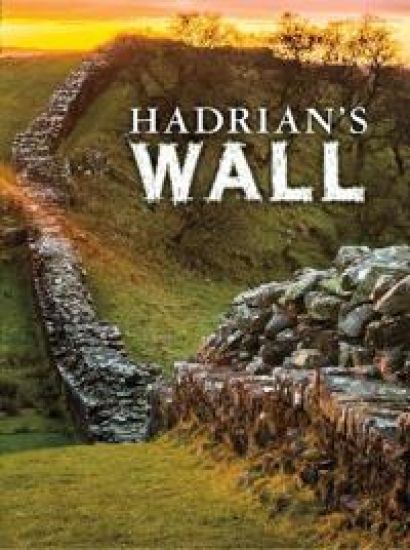
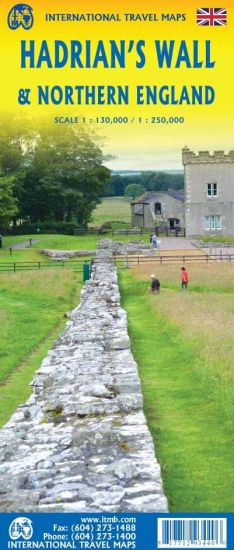
Hadrian’s Wall is a major World Heritage site, set in stunning countryside in Cumbria and Northumberland, where the Wall and its forts are the most visited Roman remains in Britain. It runs through the narrow gap across the Pennines between the Solway Estuary in the west to the appropriately named Wallsend on the River Tyne in the east. For much of its length it is still visible, especially in the central sector where it runs along the north-facing cliff known as Whin Sill. Building started around AD 122 after the Emperor Hadrian visited the north of Britain and inspected sites in person to mark out the line of his new frontier. Hundreds of Roman legionaries from Chester, Caerleon and York marched north to quarry the stone and build the Wall, which took several years to complete. This book tells the story of how the Wall was built and manned by Roman soldiers, what life was like on the frontier and what happened to it when the Romans left.
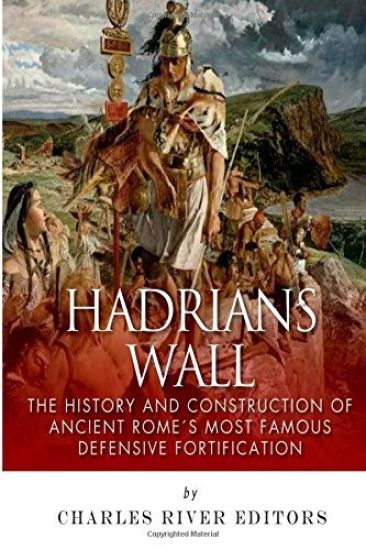
Who was Emperor Hadrian? Why did he build a massive wall across northern England? Why were the Romans in Britain and how did they get there? This book tells you all you need to know about Hadrian's Wall - why and how it was built, who lived there and much more. Find out what life was like for the soldiers living there, and also for the native Britons, in the diary-style sections.
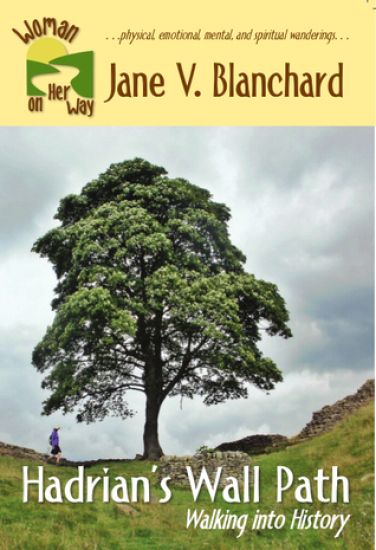
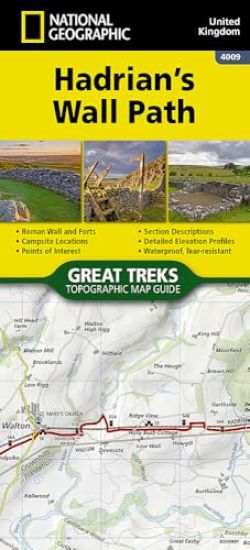
This is the paperback with black and white photos. For the paperback with full-color photos, see ISBN-10: 1507886780 or ISBN-13:978-1507886786.Wouldn't you love to go on an adventure and find that it was more than what you expected? That's what happened to Jane V. Blanchard when she walked the Hadrian's Wall Path, and what she wants to share with you in the this book. Join her as she walks eighty-four miles across northern England, explore the sites and legends associated with this historical wall, and see if you too can journey back with her to the time of the Romans, the Brigantes (powerful Celtic British tribes) and the Picts (ferocious Celtic Scottish tribes).Whether you enjoy trekking or armchair-adventures, Hadrian's Wall Path: Walking into History is an exciting journey. This book from the "Woman on Her Way" series takes you along the ancient Roman frontier between England and Scotland. Explore this World Heritage Site with more than 130 photos and illustrations that display the majesty of ancient Roman engineering and the beauty of the Cumbrian and Northumberlain landscapes. Learn what Roman life was like more than 2000 years ago. Enjoy walking along this imposing monument with Jane V. Blanchard as she describes in a heartfelt way, the terrain, the culture, the challenges, and her personal growth and changes.- Discover Hadrian's Wall, what it encompasses, then and now.- Learn about Roman life and what it was like living on Rome's most northern frontier.- Visualize the beauty of northern England through Jane's vivid descriptions, photographs, and illustrations.- Find out about the current English culture and lore.- Understand why so many people visit sites along the Hadrian's Wall Path.Hadrian's Wall Path: Walking into History is a finalist for the prestigious 2015 President's Award from the Florida Authors & Publisher's Association."Hadrian's Wall Path: Walking into History is a riveting, well-written chronicle of a hiking adventure across the English countryside. More importantly, it is what Jane Blanchard herself learns, that 'History becomes interesting, and it is coming alive.' Fortunately, she does this for the reader as well. I found the details to be illuminating and thought-provoking, yet simple and to the point. Some highlights of the adventure: Once Brewed, Twice Brewed; Nine Nicks of Thirlwall, King Arthur, "Bogle", mizzle and all. Highly recommended ." Maryann Burchell, South Bay Publishing LLCHadrian's Wall Path is the second book in the "Woman on Her Way" series. These books describe Jane V. Blanchard's adventures on ancient European routes or primitive wilderness trails. Travel with her as she explores new horizons and venture with her into this world's premier historic, scenic, or cultural itineraries.
When an astronaut on HADRIAN’S WALL is murdered, pill-popping detective Simon Moore is dispatched to investigate the ship’s crew... including his own ex-wife. But if Simon's not careful, what he finds could make the interstellar Cold War go red hot. From the creative team behind the critically-acclaimed series C.O.W.L. comes a gripping, locked room murder mystery where the secrets of everyone involved are as dark as the space that surrounds them.“A love letter to Blade Runner, Outland and Aliens.”—IGN“A visual epic unlike anything in recent memory.”—COMICS BEAT“Compelling... Evocative.”--AV CLUB"Gorgeous." -- NERDIST Collects the entire 8 issue series.
From an award-winning historian of ancient Rome, a definitive history of Hadrian's Wall Stretching eighty miles from coast to coast across northern England, Hadrian's Wall is the largest Roman artifact known today. It is commonly viewed as a defiant barrier, the end of the empire, a place where civilization stopped and barbarism began. In fact, the massive structure remains shrouded in mystery. Was the wall intended to keep out the Picts, who inhabited the North? Or was it merely a symbol of Roman power and wealth? What was life like for soldiers stationed along its expanse? How was the extraordinary structure built -- with what technology, skills, and materials? In Hadrian's Wall, Adrian Goldsworthy embarks on a historical and archaeological investigation, sifting fact from legend while simultaneously situating the wall in the wider scene of Roman Britain. The result is a concise and enthralling history of a great architectural marvel of the ancient world.
Albert Flynn DeSilver is a poet and prose writer, speaker, and workshop leader. He received a BFA from the University of Colorado and an MFA from the San Francisco Art Institute. Albert served as Marin County California's very first Poet Laureate from 2008-2010. He is the author of several books of poems including Letters to Early Street, and his work has appeared in more than 100 literary journals worldwide. Albert is also the author of the memoir Beamish Boy, which was named a "Best Book of 2012" by Kirkus Reviews. His latest nonfiction book, Writing as a Path to Awakening: A Year to Becoming an Excellent Writer and Living an Awakened Life-based on his popular writing workshops by the same name-was published by Sounds True in 2017. Albert is also a teacher and speaker having presented with U.S poet laureate Kay Ryan, bestselling authors Cheryl Strayed, Elizabeth Gilbert, Maxine Hong Kingston and many others. He teaches writing at literary conferences nationally. More information about his work can be found at www.albertflynndesilver.com.
Lucius is a young Centurion in the time of Hadrian, serving at Trimontium, modern-day Melrose in southern Scotland. Trista is a Roman patrician girl, living in Gaul. She is orphaned and becomes a vagrant when her parents are killed by traitors plotting to overthrow the emperor. Following the death of his wife, Lucius becomes an imperial agent, operating beyond the borders of the Empire as a trader, seeking signs of invasion. He meets Trista who is under threat of assassination. The story follows their flight across Gaul, pursued by evil forces, to the German forests in a race to avert invasion and the death of the emperor.