Kirjojen hintavertailu. Mukana 12 459 402 kirjaa ja 12 kauppaa.

Kirjahaku

Etsi kirjoja tekijän nimen, kirjan nimen tai ISBN:n perusteella.

1000 tulosta hakusanalla Hamza Walker

Al Qaida is Back: Hamza Bin Laden

Al Qaida is Back: Hamza Bin Laden

Brad Power

Createspace Independent Publishing Platform
2017
nidottu
With the end of the war with Russia in sight, Osama and the men around him began to dream of a global Jihad to spread the message of God and to bring the world under Islamic rule. Osama's mentor, Abdullah Azzam, a leading Palestinian Sunni Islamic scholar and theologian, was the first to recognize the necessity for an organized foundation from which believers could launch their struggle for a perfect Islamic world.
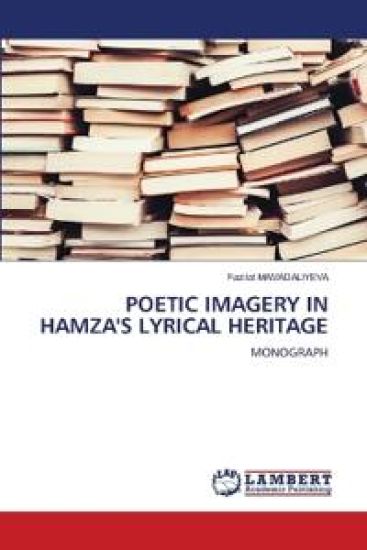
Poetic Imagery in Hamza's Lyrical Heritage

Poetic Imagery in Hamza's Lyrical Heritage

Fazilat Mamadaliyeva

Lap Lambert Academic Publishing
2024
pokkari
In this monograph, the literary flow of the end of the 19th century and the beginning of the 20th century, the unique artistic aesthetic features of Hamza's work are analyzed based on scientific sources. In the lyrical heritage of the poet, the ideological and artistic features of the poetic image and poetry, the development of the poetic image, the formal and stylistic uniqueness of the image, poetic skill and artistic style were studied. The individual image skill of the poet's work is highlighted.
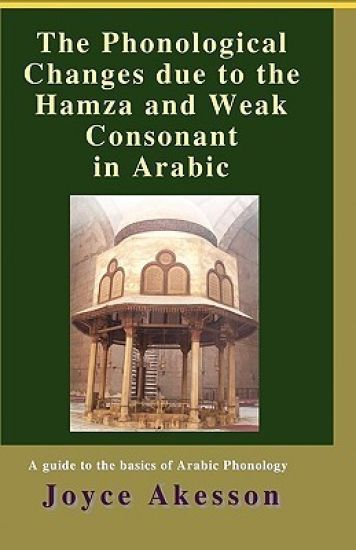
The Phonological Changes Due to the Hamza and Weak Consonant in Arabic
Product Description This work offers a comprehensive overview of the phonological changes due to the hamza and to the weak consonant. For this purpose it focuses specifically on the complexities of many words pertaining to the classes of the hamzated and weak verbs. In many of these cases, the hamza or weak consonant can be alleviated or retained. Other phonological particularities can also affect the words' structures. The extensive data, the techniques of the phonological analysis and the references to the different works from the 8th century until our days, offer a thorough and accessible study of both these linguistic phenomena for both the students and researchers of Arabic. About the Author Joyce Akesson has studied the Semitic languages at Lund's University, Sweden, and has previously been a lecturer there during many years. Beside the present book, she is the author of "A Study of the Assimilation and Substitution in Arabic" (Pallas Athena 2010), "The Essentials of the Class of the Strong Verb in Arabic" (Pallas Athena 2010), "The Complexity of the Irregular Verbal Nominal Forms & the Phonological Changes in Arabic" (Pallas Athena Distribution 2009), "Arabic Morphology and Phonology: Based on the Marah Al-Arwah by Ahmad B. Ali B. Masud" (Studies in Semitic Languages and Linguistics), Brill Academic Publishers (July 2001) and "Ahmad B. 'Ali B. Mas'ud on Arabic Morphology Marah Al-Arwah: Part 1:The Strong Verb" (Studia Orientalia Ludensia, Vol 4), Brill Academic Pub (October 1990). She has also published several articles about Arabic linguistics in two Journals, the Journal of Arabic Linguistics (the ZAL or Zeitschrift für Arabische Linguistik) Wiesbaden, and the previous Acta Orientalia, Denmark. She has also written a lemma about sarf "morphology/phonology in the Encyclopaedia of Arabic Language and Linguistics, vol. 4. Leiden: Brill, 20.
What's my name? HAMZA

What's my name? HAMZA

Tiina Walsh

Createspace Independent Publishing Platform
2017
nidottu
A personalised storybook for boys called HAMZA. The story is based on the letters of the child's own name. All books are different from one another. The boy wakes up but can't remember his name. Magic Mouse knows how to solve the problem. They go on a wonderful adventure in the Magic Bus Translated and adapted by the author from the top-selling Finnish language children's namebook series "Tytt /Poika, joka unohti nimens ". The beautiful hand-drawn pictures will delight both the young and the young-at-heart Looking for a namebook "What's my name?" but couldn't find a book for the name you are looking for? Please don't hesitate to contact me with your name request -Tiina Walsh Author fb.me/whatsmynamestorybooks for more details about the storybooks
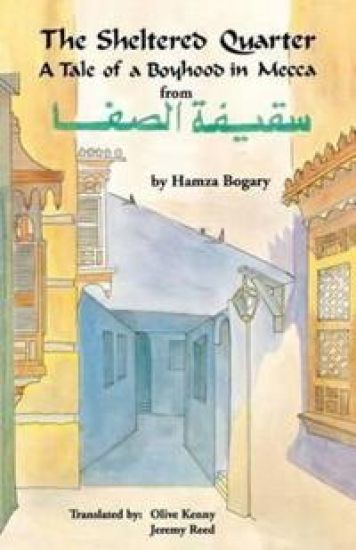
The Sheltered Quarter

The Sheltered Quarter

Hamza Bogary

University of Texas Press
1991
pokkari
Hamza Bogary describes a bygone way of life that has now irreversibly disappeared. He speaks of life in Mecca before the advent of oil. Only partly autobiographical, the memoir is nevertheless rich in remembered detail based on Bogary's early observations of life in Mecca. He has transformed his knowledge into art through his sense of humor, empathy, and remarkable understanding of human nature. This work not only entertains; it also informs its readers about the Arabia of the first half of the twentieth century in a graphic and fascinating way. The narrator, young Muhaisin, deals with various aspects of Arabian culture, including education, pilgrimages, styles of clothing, slavery, public executions, the status of women, and religion. Muhaisin is frank in his language and vivid in his humor. The reader quickly comes to love the charming and mischievous boy in this universal tale.
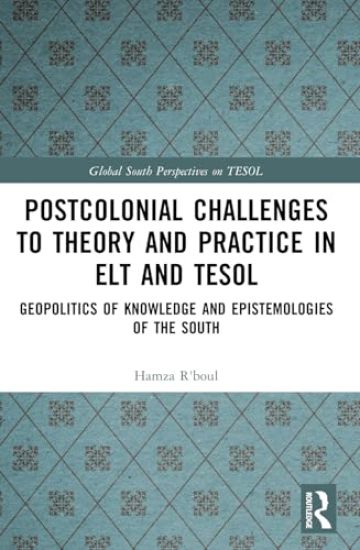
Postcolonial Challenges to Theory and Practice in ELT and TESOL
Drawing on the underrepresentation of the Global South in global knowledge production with a focus on the existing inequalities, the book highlights the importance of postcolonial narratives within Global Southern epistemologies in English language teaching (ELT) and Teaching English to Speakers of Other Languages (TESOL).Chapters consider the epistemological landscapes of these fields, their dedication to English teaching and English-related topics, and the intersection of the coloniality of language and the supremacy of English worldwide. The book explores the type of discussion that is needed to advance a more nuanced understanding of sociopolitical circumstances and how they shape our academic practices and theorizations of ELT and TESOL. In doing so, chapters examine the current geopolitics of knowledge that are found in journal publishing, citing how it favours the Global North, and further exploring ways of decolonizing language practices, teaching approaches and research cultures. Calling for greater visibility and recognition of Southern ways of knowing within ELT and TESOL practice and research, the book will be an essential reading for scholars, researchers and students of TESOL, ELT, Applied Linguistics and multilingualism.
Postcolonial Challenges to Theory and Practice in ELT and TESOL
Drawing on the underrepresentation of the Global South in global knowledge production with a focus on the existing inequalities, the book highlights the importance of postcolonial narratives within Global Southern epistemologies in English language teaching (ELT) and Teaching English to Speakers of Other Languages (TESOL).Chapters consider the epistemological landscapes of these fields, their dedication to English teaching and English-related topics, and the intersection of the coloniality of language and the supremacy of English worldwide. The book explores the type of discussion that is needed to advance a more nuanced understanding of sociopolitical circumstances and how they shape our academic practices and theorizations of ELT and TESOL. In doing so, chapters examine the current geopolitics of knowledge that are found in journal publishing, citing how it favours the Global North, and further exploring ways of decolonizing language practices, teaching approaches and research cultures. Calling for greater visibility and recognition of Southern ways of knowing within ELT and TESOL practice and research, the book will be an essential reading for scholars, researchers and students of TESOL, ELT, Applied Linguistics and multilingualism.
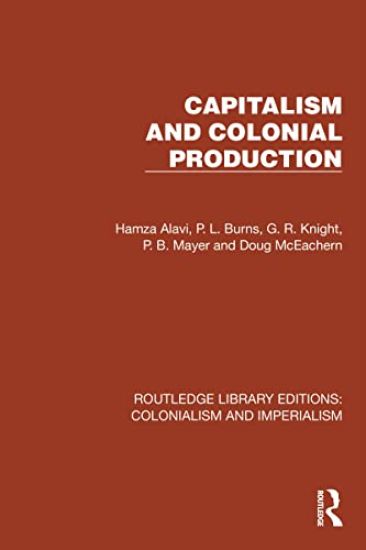
Capitalism and Colonial Production

Capitalism and Colonial Production

Hamza Alavi; P.L. Burns; G.R. Knight; P.B. Mayer; Doug McEachern

TAYLOR FRANCIS LTD
2023
sidottu
Capitalism and Colonial Production (1982) examines the ways in which capitalism has transformed the societies it came to dominate, and the link between colonialism and capitalism. These essays confront the complex of issues, using as material the various countries in Asia. They advance the debate by reconsidering the problems involved by identifying pre-colonial modes of production and by analysing the precise details of the changes wrought by colonial domination. They argue that capitalism does not in these countries co-exist side-by-side with feudalism, but that colonialism has created distinctive forms of capitalism depending for their character on pre-colonial modes of production.
Capitalism and Colonial Production

Capitalism and Colonial Production

Hamza Alavi; P.L. Burns; G.R. Knight; P.B. Mayer; Doug McEachern

TAYLOR FRANCIS LTD
2024
nidottu
Capitalism and Colonial Production (1982) examines the ways in which capitalism has transformed the societies it came to dominate, and the link between colonialism and capitalism. These essays confront the complex of issues, using as material the various countries in Asia. They advance the debate by reconsidering the problems involved by identifying pre-colonial modes of production and by analysing the precise details of the changes wrought by colonial domination. They argue that capitalism does not in these countries co-exist side-by-side with feudalism, but that colonialism has created distinctive forms of capitalism depending for their character on pre-colonial modes of production.
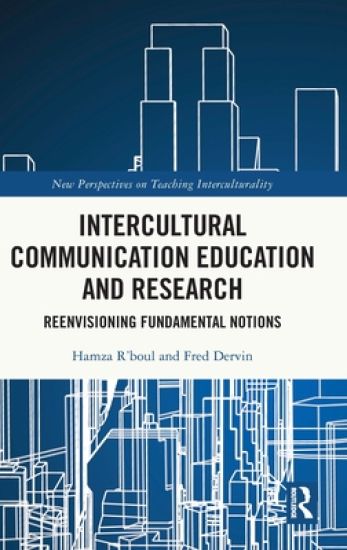
Intercultural Communication Education and Research

Intercultural Communication Education and Research

Hamza R'boul; Fred Dervin

TAYLOR FRANCIS LTD
2023
sidottu
Seeking to uncover underlying epistemic invisibilities in generating intercultural communication education and research knowledge and to open up space for envisaging interculturality alternatively, this book reexamines and problematizes the assumptions and ontologies in the conceptual systems of interculturality.In enunciating and critiquing what has been largely endorsed, normalized and taken for granted, this volume brings to the fore different, changing and situated understandings of intercultural ontologies and epistemologies in terms of premises, workings and objectives, unveiling the entangled factors and contexts that have delimited and circumscribed the realm. The authors believe that the field would benefit from some cognitive and sensory dissonance while reengaging effectively with notions to move forward. In particular, they endeavour to de-monumentalize and disrupt the very conceptual tenets that may have rendered interculturality myopic, repetitive, monolithic and aseptic in expanding the epistemic concerns of the “intercultural”, especially in the English language.This book will be an essential read for scholars and students of the sociology of education, educational philosophy and intercultural education and also for all readers interested in the broad field of interculturality.
Intercultural Communication Education and Research

Intercultural Communication Education and Research

Hamza R'boul; Fred Dervin

TAYLOR FRANCIS LTD
2024
nidottu
Seeking to uncover underlying epistemic invisibilities in generating intercultural communication education and research knowledge and to open up space for envisaging interculturality alternatively, this book reexamines and problematizes the assumptions and ontologies in the conceptual systems of interculturality.In enunciating and critiquing what has been largely endorsed, normalized and taken for granted, this volume brings to the fore different, changing and situated understandings of intercultural ontologies and epistemologies in terms of premises, workings and objectives, unveiling the entangled factors and contexts that have delimited and circumscribed the realm. The authors believe that the field would benefit from some cognitive and sensory dissonance while reengaging effectively with notions to move forward. In particular, they endeavour to de-monumentalize and disrupt the very conceptual tenets that may have rendered interculturality myopic, repetitive, monolithic and aseptic in expanding the epistemic concerns of the “intercultural”, especially in the English language.This book will be an essential read for scholars and students of the sociology of education, educational philosophy and intercultural education and also for all readers interested in the broad field of interculturality.
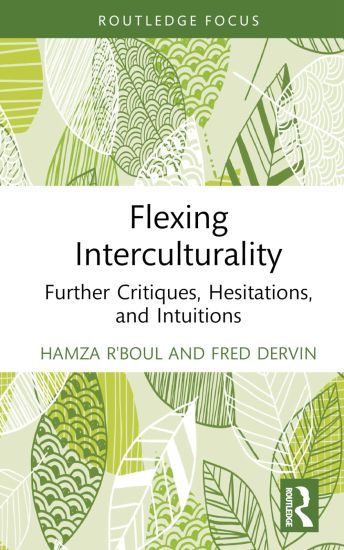
Flexing Interculturality

Flexing Interculturality

Hamza R'boul; Fred Dervin

TAYLOR FRANCIS LTD
2023
sidottu
This book continues the two scholars’ endeavours for opening up more spaces for alternative perspectives, analyses and praxis in interculturality. The main text features fragments that bear relevance to a wide range of topics including education, politics, personal experiences, social realities, hierarchies, self-critique, language and locus of enunciation. The book takes a step forward by using fragments as an alternative way of doing research and writing scholarship. The premise here is that fragments are human and they reflect our fleeting, inconsistent and unsystematic production of knowledge that today’s scholarship has presented to be linear, structured and aligned. The authors draw on fragments to make their points as forcefully as possible by constructing sentences that destabilize themselves and readers to consider other paths and perspectives. That is, writing otherwise may propel thinking otherwise since the very bases, upon which we push our insights to mould through and by, are shaken and ultimately transcended. The chapters include questions with (temporary) answers as an attempt to induce readers to think for themselves and to move beyond what this book has to offer. This book will be a great read to scholars and students in the field of interculturality, education and sociology. The authors hope that this book will be seen as a genuine example of de-linking from mainstream writing and thinking conventions about interculturality in communication and education without compromising epistemic depth and nuance.
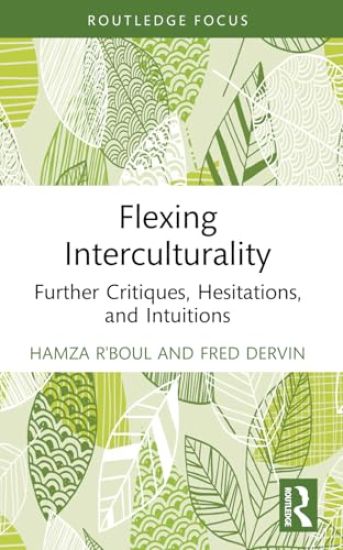
Flexing Interculturality

Flexing Interculturality

Hamza R'boul; Fred Dervin

TAYLOR FRANCIS LTD
2024
nidottu
This book continues the two scholars’ endeavours for opening up more spaces for alternative perspectives, analyses and praxis in interculturality. The main text features fragments that bear relevance to a wide range of topics including education, politics, personal experiences, social realities, hierarchies, self-critique, language and locus of enunciation. The book takes a step forward by using fragments as an alternative way of doing research and writing scholarship. The premise here is that fragments are human and they reflect our fleeting, inconsistent and unsystematic production of knowledge that today’s scholarship has presented to be linear, structured and aligned. The authors draw on fragments to make their points as forcefully as possible by constructing sentences that destabilize themselves and readers to consider other paths and perspectives. That is, writing otherwise may propel thinking otherwise since the very bases, upon which we push our insights to mould through and by, are shaken and ultimately transcended. The chapters include questions with (temporary) answers as an attempt to induce readers to think for themselves and to move beyond what this book has to offer. This book will be a great read to scholars and students in the field of interculturality, education and sociology. The authors hope that this book will be seen as a genuine example of de-linking from mainstream writing and thinking conventions about interculturality in communication and education without compromising epistemic depth and nuance.