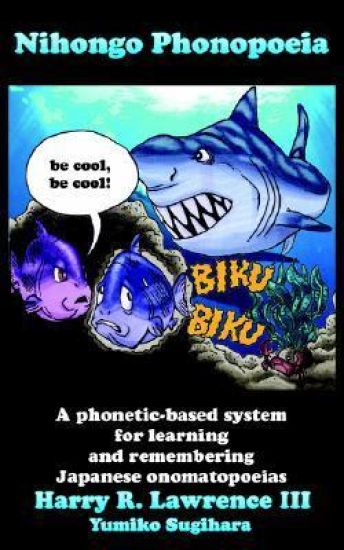
"Nihongo Phonopoeia" is an entertaining guide to learning, remembering, and using Japanese onomatopoeias. Hilarious illustrations coupled with a phonetic- based memorization system entertain you while allowing you to quickly and easily commit the onomatopoeias to memory. Included are expanded notes and over 150 practical sample sentences to assist you with building usage skills. Nihongo Phonopoeia is the fastest, simplest, and most entertaining way to learn Japanese onomatopoeias.
In the spirit of What They Don't Teach You at Harvard Business School and Swim With the Sharks, Dodging Bullets, Shooting Back, takes the reader on to the corporate battlefield, at both the corporate and individual level. Although it may not always appear obvious, there is always someone taking a shot at your company, your job, and your entire career. The "shooters" as defined in the book all take on different characterizations depending on their targets and the task at hand. Dodging Bullets, Shooting Back helps the reader to identify corporate shooters, learn how to dodge bullets when being fired upon, describes how to shoot back, and ultimately explains how never to have to dodge a bullet.The book takes a sometimes lighthearted, sometimes serious approach to addressing some very critical and challenging issues in the workplace, and provides the reader with the necessary tools for taking on these challenges. The value proposition in this book advances the readers ability to save time, reduce risk, improve personal or corporate earnings and save moneyDodging Bullets, Shooting Back - Value Proposition: Although they might not initially realize it the book has a significant value proposition which will result in at least four key benefits for those who fully comprehend its message. It will save time, as the book demonstrates how to navigate expediently through the various battles which arise in corporations and in business. Learning how to reduce risk is a key element of the book because an informed corporate warrior is at a far lower risk of confronting the shooters we describe versus an ill-informed or na ve individual. Once someone knows how to navigate their way through the corporate battlefield they will improve their personal earnings as their personal advancement becomes unencumbered by lesser battles in which they need not participate. In the event they find that they are in a battle, they will learn how to squeeze the maximum dollars from the situation. Lastly the will save money based on time saved and by knowing when and how to engage as well as with whom to engage.Dodging Bullets, Shooting Back - Takeaways: -There is always someone taking shots at you in the business world whether individually or corporately. The book addresses both the shooters and the targets and illustrates how each side is in the right at times. It also explains that sometimes it is necessary to have people taking shots and how to go about engaging those people.-The book identifies the characteristics of the various shooters, which makes the reader better prepared because they're better informed, whether they are being shot at or seeking to introduce a shooter on behalf of their business.-Both the individual and the corporation are educated relative to the techniques for dodging bullets individually and corporately. -Knowing when to shoot back is critical information to have on the corporate battlefield and the book describes the various methods for doing that. More importantly the book addresses when and if one should shoot back, and who to aim at when they do.
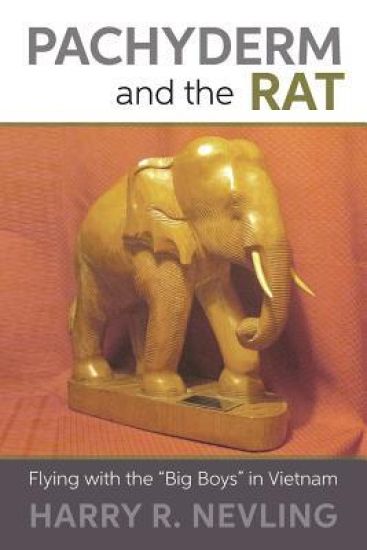
Pachyderm and the Rat is the exciting tale of what it was like flying with the "Big Boys" in Vietnam. Many people are familiar with different tales of flying with the Huey, the most common helicopter of the "Helicopter War". The Chinook was roughly four times the size of the Huey and had over four times the lifting capacity. It was a workhorse and flew virtually every type of mission there. This included combat assaults, artillery raids, LZ construction, insertions and extractions, medical evacuation, reconnaissance, napalm and CS drops, and of course resupply. It tells of the heroics in the air and the insanity on the ground. One of the major differences in flying the Chinook is that you were normally alone. No 'wing man', no other helicopters in the flight. If something went wrong you were on your own unless you could radio for assistance. Even then it may take a half hour or more for help to arrive. A very long time in a combat situation. The Chinook was an incredibly complex aircraft. Two engines, five transmissions, two rotor systems, three hydraulic systems, and huge amount of moving parts. All looking for something to go wrong. There were a crew of five men, Aircraft Commander (AC) or First Pilot, Pilot, Flight Engineer, Crew Engineer, and Gunner. The AC was responsible for these five men and their lives plus the multi-million dollar aircraft. A lot of responsibility for some very young men. Most took their responsibilities very seriously while recognizing they were the lifeline for the men on the ground. There was very little they would not do to support those troops. That support could get very interesting. Harry, the Rat, and his buddies flew in all kinds of weather, through mountains and flat lands, through enemy activity, through whatever it took to get the support to the ground forces that they required. At times this could become a major challenge. The author served six and a half years in the US Army, four of them as a helicopter pilot. This included a tour in Vietnam flying the Chinook helicopter. Following his active duty he had a very successful career in health care human resources. Following a 28 year hiatus he now resides back in his hometown of Rochester, Minnesota. He remains in contact with many of the pilots and crewmembers he flew with in Vietnam.
Winner of the 2022 Textbook & Academic Authors Association's The McGuffey Longevity Award Aging: Concepts and Controversies is structured to encourage a style of teaching and learning that goes beyond conveying facts and methods. This innovative text focuses on controversies and questions rather than on assimilating facts or creating a single "correct" view about aging or older people. Drawing on their extensive expertise, authors Harry R. Moody and Jennifer R. Sasser first provide an overview of aging in three domains: aging over the life course, health care, and socioeconomic trends. Each section then includes data and conceptual frameworks, helping students to make sense of the controversies and understand their origin, engage in critical thinking, and develop their own views. The Tenth Edition of this hallmark textbook includes amplified discussions focused on differences, diversity, structural inequalities, and inclusion, as well as contemporary issues, including climate change and immigration. Included with this title: The password-protected Instructor Resource Site (formally known as SAGE Edge) offers access to all text-specific resources, including a test bank and editable, chapter-specific PowerPoint® slides.
The restaurants found in this guide are the most positively reviewed and recommended by locals and travelers. Afghan, Asian Fusion, Filipino, French, Greek, Halal, Hawaiian, Himalayan, Indian, Italian, Japanese, Korean, Latin American, Mediterranean, Mexican, Middle Eastern, Pakistani, Peruvian, Ramen, Salvadoran, Tex-Mex, Thai, Vietnamese and many more options to visit and enjoy your stay.
The places found in this guidebook are the most positively reviewed and recommended by locals and travelers. 1,180 places listed and organized in four groups. "TOP 200 SHOPS" (68 Store Categories), "TOP 500 RESTAURANTS" (90 Cuisine Types), "TOP 200 BARS" Irish Bars, Tapas Bars, Latin Bars, Cocktail Bars, Wine Bars, Pubs. "TOP 280 NIGHTLIFE SPOTS" Music Venues, Performing Arts, Karaoke, Comedy Clubs, House Music, Rock & Roll, Jazz & Blues and many more options to visit, relax and enjoy your stay.
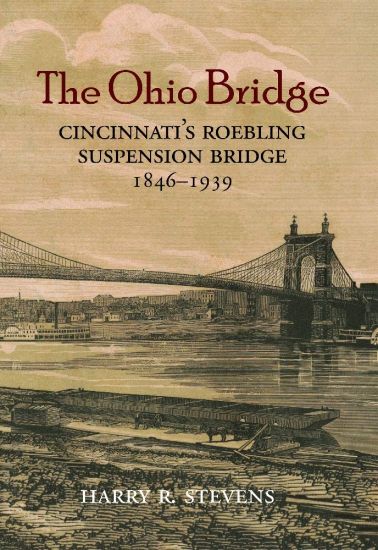
When Cincinnati's Roebling Suspension Bridge, connecting the Queen City to Covington, Kentucky, opened in 1866 it was the longest suspension bridge in the world at just over 1000 feet. The need for such a bridge stretched back decades and its genesis was the incorporation of the Covington and Cincinnati Bridge Company in 1846. While the bridge's commercial usefulness was quickly outpaced by railroad bridges, it remains today the iconic symbol of Cincinnati, a testament to the city's nineteenth century optimism and prominence. "The Ohio Bridge," originally published in 1939, details the early history of the bridge from mere idea to completion and up to 1939, including its corporate history, the impact of the Civil War, its engineering and construction, and the Roebling Firm.