Kirjahaku
Etsi kirjoja tekijän nimen, kirjan nimen tai ISBN:n perusteella.
1000 tulosta hakusanalla Hart
Hart, T: Elemente Der Geometrie Auf Der Geraden Linie (1866)
T. E. Hart
KESSINGER PUBLISHING, LLC
2010
nidottu
Hart, C: Robert Morris, The Financier Of The American Revolu
Charles Henry Hart
KESSINGER PUBLISHING, LLC
2010
sidottu
The Letters of Hart Crane, 1916-1932 is a collection of personal letters written by the American poet Hart Crane. The book covers a period of sixteen years, starting from Crane's early years as a struggling writer in New York City to his eventual rise to fame as one of the most important poets of the 20th century.The letters provide a unique insight into the life and mind of Crane, revealing his struggles with depression, alcoholism, and his sexuality, as well as his deep love of poetry and literature. They also offer a glimpse into the literary and artistic scene of the time, with Crane corresponding with luminaries such as T.S. Eliot, Ezra Pound, and William Carlos Williams.The book is edited by Brom Weber, a leading expert on Crane's life and work, and includes a detailed introduction and annotations that provide context and background information on the people and events mentioned in the letters. The Letters of Hart Crane, 1916-1932 is an essential read for anyone interested in the life and work of this important American poet.This scarce antiquarian book is a facsimile reprint of the old original and may contain some imperfections such as library marks and notations. Because we believe this work is culturally important, we have made it available as part of our commitment for protecting, preserving, and promoting the world's literature in affordable, high quality, modern editions, that are true to their original work.
Hart Crane: An Introduction and Interpretation
Samuel John Hazo; John Mahoney
Literary Licensing, LLC
2012
sidottu
Hart Crane: An Introduction and Interpretation is a book written by Samuel John Hazo that delves into the life and work of American poet Hart Crane. The book serves as an introduction to Crane's life, examining his upbringing, education, and personal relationships, as well as his literary influences and artistic vision. Hazo also provides an in-depth analysis of Crane's poetry, exploring the themes, motifs, and literary techniques present in his work. The book includes a detailed examination of Crane's most famous poems, including ""The Bridge"" and ""Voyages."" Throughout the book, Hazo contextualizes Crane's work within the literary and cultural movements of the early 20th century, including modernism and the Harlem Renaissance. He also explores the personal struggles and tragedies that influenced Crane's writing, including his struggles with alcoholism and his eventual suicide at the age of 32. Overall, Hart Crane: An Introduction and Interpretation offers readers a comprehensive and insightful look into the life and work of one of America's most influential poets.American Authors And Critics Series, No. 7.This scarce antiquarian book is a facsimile reprint of the old original and may contain some imperfections such as library marks and notations. Because we believe this work is culturally important, we have made it available as part of our commitment for protecting, preserving, and promoting the world's literature in affordable, high quality, modern editions, that are true to their original work.
Hart Crane: An Introduction and Interpretation
Samuel John Hazo; John Mahoney
Literary Licensing, LLC
2012
nidottu
Hart on Responsibility
Palgrave Macmillan
2014
nidottu
A collection of essays discussing Herbert Hart's writings on responsibility. The essays focus upon Hart's work on causation in the law and on the justification of punishment. Specific topics discussed include senses of 'responsibility', voluntariness, Mill's harm principle, mens rea, excuses, the Hart-Wootton debate, and negligence.
Hart Crane's Queer Modernist Aesthetic argues that the aspects of experience which modernists sought to interrogate – time, space, and material things – were challenged further by Crane's queer poetics. Reading Crane alongside contemporary queer theory shows how he creates an alternative form of modernism.
This study examines Hart Crane's canonical ambitions in The Bridge and argues for a new species of epic, 'the modernist epic,' which also includes Pound's The Cantos, Eliot's The Waste Land, and Williams's Paterson. It offers a close reading of The Bridge as a hybrid of lyric and epic modes. Crane's sublime and history converge in a complex synthesis of form and ideas. The study reconceives Crane's achievement by locating him in an intertextual system of production while also recognizing his poetic making of self. Yet in this work Crane assumes a greater political presence than much commentary has entertained.
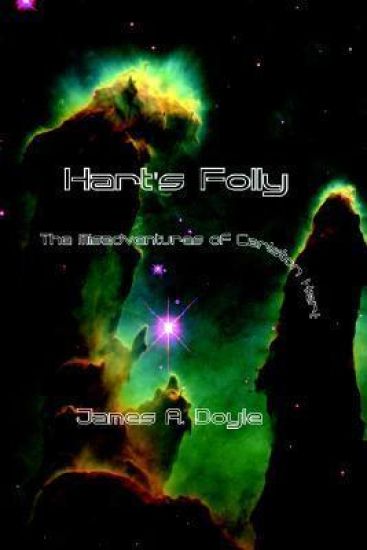
With ingenuity and a little luck Carlston Hart survives a nuclear holocaust that consumes the Earth. However, his beloved wife Rayka is not so fortunate. Carlston has a copy of Rayka's memories and personality, and he will do anything to bring her back. Nevertheless, the tools and technology he needs no longer exists on a ravaged Earth. His only hope is to try to find his friends that may have escaped to the stars long ago. In his often comic adventures across a bizarre, surrealistic new world Carlston discovers both allies and enemies, and his odd talents as a hi-tech, Jack-of-all trades often proves to be his only salvation from a world turned against its original creators. With the technology he seeks close at hand, Carlston eventually realizes that finding these resources has been the least of his worries, and that his troubles are just beginning. Free for download. Also please visit www.Hartsfolly.com
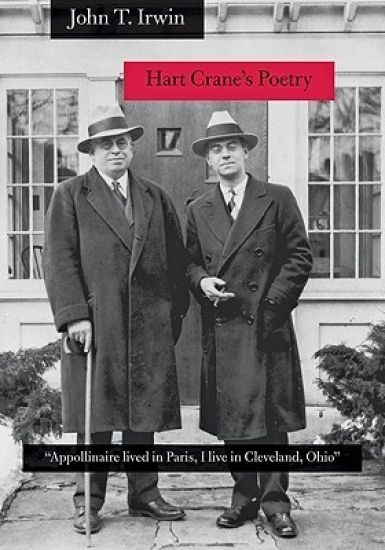
In one of his letters Hart Crane wrote, "Appollinaire lived in Paris, I live in Cleveland, Ohio," comparing-misspelling and all-the great French poet's cosmopolitan roots to his own more modest ones in the midwestern United States. Rebelling against the notion that his work should relate to some European school of thought, Crane defiantly asserts his freedom to be himself, a true American writer. John T. Irwin, long a passionate and brilliant critic of Crane, gives readers the first major interpretation of the poet's work in decades. Irwin aims to show that Hart Crane's epic The Bridge is the best twentieth-century long poem in English. Irwin convincingly argues that, compared to other long poems of the century, The Bridge is the richest and most wide-ranging in its mythic and historical resonances, the most inventive in its combination of literary and visual structures, the most subtle and compelling in its psychological underpinnings. Irwin brings a wealth of new and varied scholarship to bear on his critical reading of the work-from art history to biography to classical literature to philosophy-revealing The Bridge to be the near-perfect synthesis of American myth and history that Crane intended. Irwin contends that the most successful entryway to Crane's notoriously difficult shorter poems is through a close reading of The Bridge. Having admirably accomplished this, Irwin analyzes Crane's poems in White Buildings and his last poem, "The Broken Tower," through the larger context of his epic, showing how Crane, in the best of these, worked out the structures and images that were fully developed in The Bridge. Thoughtful, deliberate, and extraordinarily learned, this is the most complete and careful reading of Crane's poetry available. Hart Crane may have lived in Cleveland, Ohio, but, as Irwin masterfully shows, his poems stand among the greatest written in the English language.
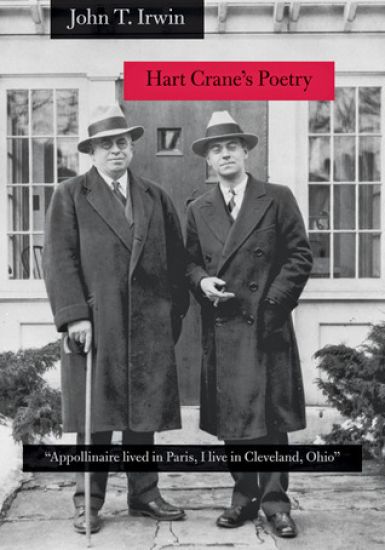
In one of his letters Hart Crane wrote, "Appollinaire lived in Paris, I live in Cleveland, Ohio," comparing - misspelling and all - the great French poet's cosmopolitan roots to his own more modest ones in the midwestern United States. Rebelling against the notion that his work should relate to some European school of thought, Crane defiantly asserted his freedom to be himself, a true American writer. John T. Irwin, long a passionate and brilliant critic of Crane, gives readers the first major interpretation of the poet's work in decades. Irwin aims to show that Hart Crane's epic The Bridge is the best twentieth-century long poem in English. Irwin convincingly argues that, compared to other long poems of the century, The Bridge is the richest and most wide-ranging in its mythic and historical resonances, the most inventive in its combination of literary and visual structures, the most subtle and compelling in its psychological underpinnings. Irwin brings a wealth of new and varied scholarship to bear on his critical reading of the work - from art history to biography to classical literature to philosophy - revealing The Bridge to be the near-perfect synthesis of American myth and history that Crane intended. Irwin contends that the most successful entryway to Crane's notoriously difficult shorter poems is through a close reading of The Bridge. Having admirably accomplished this, Irwin analyzes Crane's poems in White Buildings and his last poem, "The Broken Tower," through the larger context of his epic, showing how Crane, in the best of these, worked out the structures and images that were fully developed in The Bridge. Thoughtful, deliberate, and extraordinarily learned, this is the most complete and careful reading of Crane's poetry available. Hart Crane may have lived in Cleveland, Ohio, but, as Irwin masterfully shows, his poems stand among the greatest written in the English language.