Kirjojen hintavertailu. Mukana 12 390 323 kirjaa ja 12 kauppaa.

Kirjahaku

Etsi kirjoja tekijän nimen, kirjan nimen tai ISBN:n perusteella.

1000 tulosta hakusanalla Hartmut Grote

"Erfahrungsoffene Lebensschule" statt "langweiliger Unterrichtsanstalt". Zu Hartmut von Hentigs Versuch, die Schule "neu zu denken"
Studienarbeit aus dem Jahr 1996 im Fachbereich P dagogik - Allgemeine Didaktik, Erziehungsziele, Methoden, Note: 1,0, Westf lische Wilhelms-Universit t M nster (Institut f r Erziehungswissenschaft), Veranstaltung: Hauptseminar "Allgemeine Didaktik und p dagogische Ausbildung, Sprache: Deutsch, Abstract: Peter Struck mahnt eine "Wiederentdeckung der Lehre von den sinnvollen Gr en in der P dagogik" an. Von einem "enormen Reformstau" spricht Rainer Winkel. Klaus Hurrelmann warnt, viele Sch ler betrachteten ihre Schulzeit als "verlorene Lebenszeit". Eine Umfrage von 1990/91 ergab, dass gerade einmal ein Drittel der westdeutschen Jugendlichen gerne in die Schule gehen bzw. gingen. Die seit Mitte der sechziger Jahre laufende Bildungsreform in der BRD scheint steckengeblieben zu sein. Die Diskussion dar ber ist so alt wie die Reform selbst und wird nicht leichter dadurch, dass Lautst rke und Publizit t einer u erung oft im Gegensatz zu ihrer Differenziertheit und ihrem Gehalt stehen. In der ffentlichkeit dominiert ein Gemisch von Halbbildung und Weltanschauung. Zu den gleichwohl zahlreichen Stimmen, die differenziertere Thesen f r eine fortgesetzte oder auch neue Reform entwickelt haben, geh rt der Bielefelder P dagoge Hartmut von Hentig, dessen Schulprojekte gro e Aufmerksamkeit erregt haben. 1994 wandte sich von Hentig mit neuen Anregungen an die Fachwelt. Un berlegte Ver nderungen in der Schule hielt er f r Kurieren an Symptomen. N tig sei, die Schule "neu zu denken". Die folgende Arbeit skizziert von Hentigs Ansatz, erg nzt ihn um ltere berlegungen und stellt ihm u erungen einiger seiner Fachkollegen gegen ber. Daneben beleuchtet sie kurz die Frage, inwieweit sich einige der Reformans tze praktisch verwirklichen lassen. Da ich im Verlauf einer einw chigen Hospitation an meinem alten Gymnasium noch einmal verschiedene Arten von Unterricht miterlebt habe - darunter
Zur Demokratisierung Indiens und Abgleich mit dem Theorie-Ansatz von Dr. Hartmut Elsenhans
Studienarbeit aus dem Jahr 2009 im Fachbereich Politik - Internationale Politik - Region: S dasien, Note: 1,3, Universit t Leipzig, Sprache: Deutsch, Abstract: Diese Hausarbeit soll den Demokratisierungsprozess Indiens seit seiner Unabh ngigkeit veranschaulichen. Es sollen Hemmnisse, wie auch Besonderheiten aufgezeigt und problematisiert werden. Dazu soll zuerst und kurz die geschichtliche Entwicklung Indiens seit der Unabh ngigkeit nachgezeichnet werden, um besondere Ereignisse hervor zu heben und sp ter auf vereinzelte F lle eingehen zu k nnen. Dieser kurze Abschnitt erhebt bewusst keinen Anspruch auf Vollst ndigkeit, um den Rahmen einer Hausarbeit nicht zu sprengen. Anschlie end soll der entwicklungstheoretische Ansatz von Dr. Hartmut Elsenhans beschrieben werden, um so eine theoretische Grundlage f r weitere Betrachtungen zu schaffen. Hierbei wird insbesondere auf die in seiner Theorie zentralen Begriffe Marginalit t, Rente und Staatsklasse eingegangen. Au erdem sollen Ma nahmen beschrieben werden, die Elsenhans f r die berwindung von Marginalit t, Renten konomie und Staatsklasse vorsieht. Weiterhin soll auf m gliche Probleme bei der Umsetzung dieser Ma nahmen eingegangen werden. Schlie lich soll die Elsenhanssche Theorie auf die wirtschaftlichen und politischen Entwicklungen Indiens angewendet werden. Dabei wird eine zeitliche Trennlinie am Beginn der wirtschaftlichen Liberalisierung Indiens gesetzt, um Ver nderungen noch besser deutlich machen zu k nnen. Auch hierbei k nnen nur bestimmte zentrale Vorkommnisse und Probleme angesprochen werden.
A History of International Political Theory

A History of International Political Theory

Hartmut Behr

Palgrave Macmillan
2009
sidottu
Contemporary theory of international politics faces a twofold problem: the critical engagement with legacies of national power politics in connection to 20th Century International Relations and the regeneration of notions of humanity. This book contributes to this engagement by a genealogy of thoughts on war, peace, and ethics.
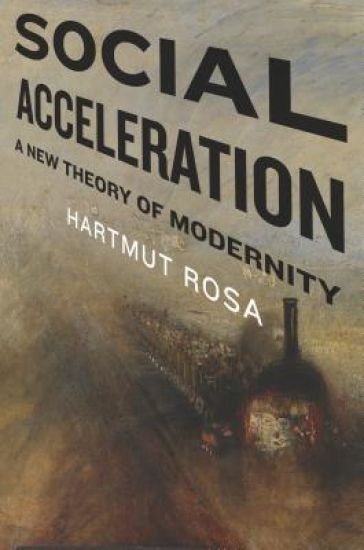
Social Acceleration

Social Acceleration

Hartmut Rosa

Columbia University Press
2013
sidottu
Hartmut Rosa advances an account of the temporal structure of society from the perspective of critical theory. He identifies three categories of change in the tempo of modern social life: technological acceleration, evident in transportation, communication, and production; the acceleration of social change, reflected in cultural knowledge, social institutions, and personal relationships; and acceleration in the pace of life, which happens despite the expectation that technological change should increase an individual's free time. According to Rosa, both the structural and cultural aspects of our institutions and practices are marked by the "shrinking of the present," a decreasing time period during which expectations based on past experience reliably match the future. When this phenomenon combines with technological acceleration and the increasing pace of life, time seems to flow ever faster, making our relationships to each other and the world fluid and problematic. It is as if we are standing on "slipping slopes," a steep social terrain that is itself in motion and in turn demands faster lives and technology. As Rosa deftly shows, this self-reinforcing feedback loop fundamentally determines the character of modern life.
Social Acceleration

Social Acceleration

Hartmut Rosa

Columbia University Press
2015
pokkari
Hartmut Rosa advances an account of the temporal structure of society from the perspective of critical theory. He identifies three categories of change in the tempo of modern social life: technological acceleration, evident in transportation, communication, and production; the acceleration of social change, reflected in cultural knowledge, social institutions, and personal relationships; and acceleration in the pace of life, which happens despite the expectation that technological change should increase an individual's free time. According to Rosa, both the structural and cultural aspects of our institutions and practices are marked by the "shrinking of the present," a decreasing time period during which expectations based on past experience reliably match the future. When this phenomenon combines with technological acceleration and the increasing pace of life, time seems to flow ever faster, making our relationships to each other and the world fluid and problematic. It is as if we are standing on "slipping slopes," a steep social terrain that is itself in motion and in turn demands faster lives and technology. As Rosa deftly shows, this self-reinforcing feedback loop fundamentally determines the character of modern life.
Positive Nihilism

Positive Nihilism

Hartmut Lange

MIT Press
2017
pokkari
A German writer's aphoristic, poetic, and difficult reflections on Heidegger's Being and Time.There is a beyond of reason and unreason. It is the human psyche.-Positive NihilismLike many German intellectuals, Hartmut Lange has long grappled with Heidegger. Positive Nihilism is the result of a lifetime of reading Being and Time and offers a series of reflections that are aphoristic, poetic, and (appropriately, considering his object of study) difficult. Lange begins with an abyss ("There is an abyss of the finite. It is temporality") and proceeds almost immediately to extremity: "The twentieth century was governed by psychopaths. They collapsed the boundaries of moral reason and refuted Kant's analysis of consciousness." He reflects further: "But who shall punish whom? One man's virtue is another man's crime. Thus Hitler could feel unwaveringly, as he wiped out entire populations, the starry sky above him and the moral law within him, as stipulated by Kant." He considers the concept of civilization ("misleading"; "how should one oppose the remedies of civilization to the egomania, the murderous appetites of such outright psychopaths as Stalin or Pol Pot?"), the act of thinking (a fata morgana), the psyche, and Heidegger's Dasein.Positive Nihilism can be considered a pocket companion to Being and Time. "Heidegger's understanding of Being is nihilistic," Lange writes, and then explains his assertion. He draws on Kant, Nietzsche, Kierkegaard, and Shakespeare's Othello for supporting arguments and illustrations. "Everyone is possessed of the courage to have angst about death. The question is whether this courage necessarily secures those vital advantages Heidegger alleges"-that "self-understanding [is] the mental anticipation of death." Lange wrestles with Heidegger's position, calling on Tolstoy, Georg Trakl, Herman Bang, and Heinrich von Kleist to argue against it.
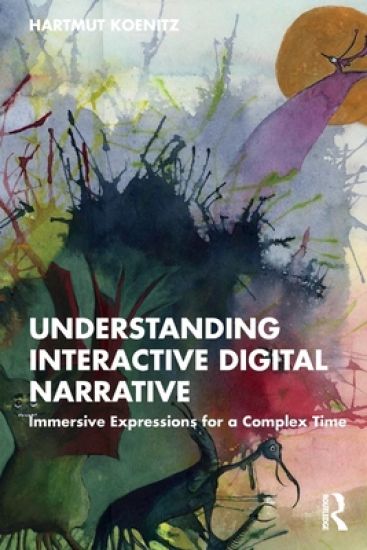
Understanding Interactive Digital Narrative

Understanding Interactive Digital Narrative

Hartmut Koenitz

TAYLOR FRANCIS LTD
2023
nidottu
This remarkably clearly written and timely critical evaluation of core issues in the study and application of interactive digital narrative (IDN) untangles the range of theories and arguments that have developed around IDN over the past three decades.Looking back over the past 30 years of theorizing around interactivity, storytelling, and the digital across the fields of game design/game studies, media studies, and narratology, as well as interactive documentary and other emerging forms, this text offers important and insightful correctives to common misunderstandings that pervade the field. This book also changes the perspective on IDN by introducing a comprehensive conceptual framework influenced by cybernetics and cognitive narratology, addressing limitations of perspectives originally developed for legacy media forms. Applying its framework, the book analyzes successful works and lays out concrete design advice, providing instructors, students, and practitioners with a more precise and specific understanding of IDN.This will be essential reading for courses in interactive narrative, interactive storytelling, and game writing, as well as digital media more generally.
Understanding Interactive Digital Narrative

Understanding Interactive Digital Narrative

Hartmut Koenitz

TAYLOR FRANCIS LTD
2023
sidottu
This remarkably clearly written and timely critical evaluation of core issues in the study and application of interactive digital narrative (IDN) untangles the range of theories and arguments that have developed around IDN over the past three decades.Looking back over the past 30 years of theorizing around interactivity, storytelling, and the digital across the fields of game design/game studies, media studies, and narratology, as well as interactive documentary and other emerging forms, this text offers important and insightful correctives to common misunderstandings that pervade the field. This book also changes the perspective on IDN by introducing a comprehensive conceptual framework influenced by cybernetics and cognitive narratology, addressing limitations of perspectives originally developed for legacy media forms. Applying its framework, the book analyzes successful works and lays out concrete design advice, providing instructors, students, and practitioners with a more precise and specific understanding of IDN.This will be essential reading for courses in interactive narrative, interactive storytelling, and game writing, as well as digital media more generally.
Poverty Orientated Agricultural and Rural Development
Over the last twenty years the proportion of development cooperation resources earmarked for agricultural development has dwindled to between six and seven per cent of total bi- and multilateral Official Development Assistance. This is despite the fact that eighty per cent of the world's poor live in rural agricultural areas and that the poor are disproportionately affected when political, military and natural events lead to regional or global food shortages.Brandt and Otzen's key book fills a gap in current literature, undertaking a wide-ranging conceptual reorientation of development cooperation, criticizing the current orthodoxy and its bias towards urban areas, and arguing that in order to effectively alleviate poverty across the world, agricultural and rural development measures need to be implemented both by central and subnational governments, aid agencies and the private sector. The authors investigate the world food question, the current pressures it is under and its link to rural poverty, and set out the policies that need to be undertaken to reduce global poverty.
Poverty Orientated Agricultural and Rural Development
Over the last twenty years the proportion of development cooperation resources earmarked for agricultural development has dwindled to between six and seven per cent of total bi- and multilateral Official Development Assistance. This is despite the fact that eighty per cent of the world's poor live in rural agricultural areas and that the poor are disproportionately affected when political, military and natural events lead to regional or global food shortages.Brandt and Otzen's key book fills a gap in current literature, undertaking a wide-ranging conceptual reorientation of development cooperation, criticizing the current orthodoxy and its bias towards urban areas, and arguing that in order to effectively alleviate poverty across the world, agricultural and rural development measures need to be implemented both by central and subnational governments, aid agencies and the private sector. The authors investigate the world food question, the current pressures it is under and its link to rural poverty, and set out the policies that need to be undertaken to reduce global poverty.
Politics of Difference

Politics of Difference

Hartmut Behr

Routledge
2014
sidottu
This book develops a notion of differences and 'otherness' beyond hegemonic and hierarchical thinking as represented by the legacies of Western philosophical and political thought.In doing so, it relates to the phenomenological discourse of the twentieth century, especially to Georg Simmel, Alfred Schütz, Emmanual Lévinas, and Jacques Derrida, and drafts our understanding of difference as a genuine human experience of a social and political world that is in motion and transformative, rather than static and predictable. On this basis of temporalized ontology and its normative consequences, differences are drafted as a positive social and political force and as powerful capacities of transformation and change. In practical terms, this understanding is most important for our theorizing and acting upon peace, peace-building, and conflict solution. Differences now appear not as obstacle to peace and reconciliation, but as lively and constructive articulations of 'otherness' and as a positive power of transformation, emancipation, and change.This book will be of interest to students of international relations, philosophy and political theory.