

Kirjahaku
Etsi kirjoja tekijän nimen, kirjan nimen tai ISBN:n perusteella.
162 tulosta hakusanalla Haruzo Hida

Women Religious Leaders in Japan's Christian Century, 1549-1650
Haruko Nawata Ward
Ashgate Publishing Limited
2009
sidottu
Meticulously researched and drawing on original source materials written in eight different languages, this study fills a lacuna in the historiography of Christianity in Japan, which up to now has paid little or no attention to the experience of women. Focusing on the century between the introduction of Christianity in Japan by Portuguese Jesuit missionaries in 1549 and the Japanese government's commitment to the eradication of Christianity in the mid-seventeenth century, this book outlines how women provided crucial leadership in the spread, nurture, and maintenance of the faith through various apostolic ministries. The author's research on the religious backgrounds of women from different schools of late medieval Japanese Shinto-Buddhism sheds light on individual women's choices to embrace or reject the Reformed Catholicism of the Jesuits, and explores the continuity and discontinuity of their religious expressions. The book is divided into four sections devoted to an in-depth study of different types of apostolates: nuns (women who took up monastic vocations), witches (the women leaders of the Shinto-Buddhist tradition who resisted Jesuit teachings), catechists (women who engaged in ministries of persuasion and conversion), and sisters (women devoted to missions of mercy). Analyzing primary sources including Jesuit histories, letters and reports, especially LuÃs Fróis' História de Japão, hagiography and family chronicles, each section provides a broad understanding of how these women, in the context of misogynistic society and theology, utilized resources from their traditional religions to new Christian adaptations and specific religio-social issues, creating unique hybrids of Catholicism and Buddhism. The inclusion of Portuguese, Spanish, Italian, and Japanese texts, many available for the first time in English, and the dramatic conclusion that women were largely responsible for the trajectory of Christianity in early modern Japan, makes this book an essential reading for scholars of women's history, religious history, history of Christianity, and Asian history.
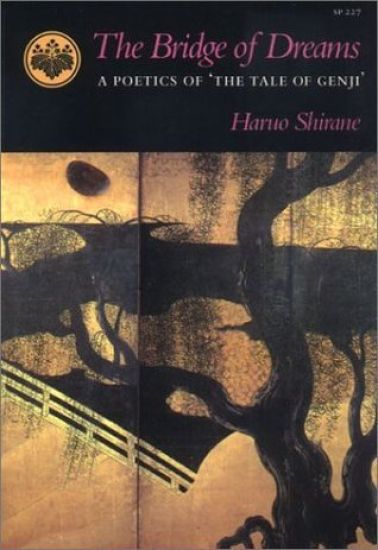
The Bridge of Dreams is a brilliant reading of The Tale of Genji that succeeds both as a sophisticated work of literary criticism and as an introduction this world masterpiece. Taking account of current literary theory and a long tradition of Japanese commentary, the author guides both the general reader and the specialist to a new appreciation of the structure and poetics of this complex and often seemingly baffling work. The Tale of Genji, written in the early eleventh century by a court lady, Murasaki Shikibu, is Japan's most outstanding work of prose fiction. Though bearing a striking resemblance to the modern psychological novel, the Genji was not conceived and written as a single work and then published and distributed to a mass audience as novels are today. Instead, it was issued in limited installments, sequence by sequence, to an extremely circumscribed, aristocratic audience. This study discusses the growth and evolution of the Genji and the manner in which recurrent concerns—political, social, and religious—are developed, subverted, and otherwise transformed as the work evolves from one stage to another. Throughout, the author analyzes the Genji in the context of those literary works and conventions that Murasaki explicitly or implicitly presupposed her contemporary audience to know, and reveals how the Genji works both within and against the larger literary and sociopolitical tradition. The book contains a color frontispiece by a seventeenth-century artist and eight pages of black-and-white illustrations from a twelfth-century scroll. Two appendixes present an analysis of biographical and textual problems and a detailed index of principal characters.

Basho (1644-94) is perhaps the best known Japanese poet in both Japan and the West, and yet there has been remarkably little serious scholarship in English on his achievement. This book is intended to address that virtual void by establishing the ground for critical discussion and reading of a central figure in Japanese culture, placing the works of Basho and his disciples in the context of broader social change. Intended for both the general reader and the specialist, Traces of Dreams examines the issues of language, landscape, cultural memory, and social practice in early modern Japan through a fundamental reassessment of haikai—popular linked verse that eventually gave birth to modern haiku—particularly that of Basho and his disciples. The author analyzes haikai not only as a specific poetic genre but as a mode of discourse that emerged from the profound engagement between the new commoner culture that came to the fore in the seventeenth century cities and the earlier traditions, which haikai parodied, transformed, and translated into the vernacular. Traces of Dreams explores the manner in which haikai both appropriated and recast the established cultural and poetic associations embodied in nature, historical objects, and famous places—the landscape that preserved the cultural memory and that became the source of authority as well as the contested ground for haikai re-visioning and re-mapping.
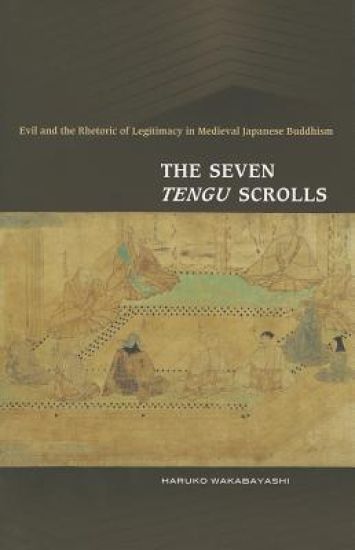
This is a study of visual and textual images of the mythical creature tengu from the late Heian (897-1185) to the late Kamakura (1185-1333) periods. Popularly depicted as half-bird, half-human creatures with beaks or long noses, wings, and human bodies, tengu today are commonly seen as guardian spirits associated with the mountain ascetics known as yamabushi. In the medieval period, however, the character of tengu most often had a darker, more malevolent aspect. Haruko Wakabashi focuses in this study particularly on tengu as manifestations of the Buddhist concept of Mara (or ma), the personification of evil in the form of the passions and desires that are obstacles to enlightenment. Her larger aim is to investigate the use of evil in the rhetoric of Buddhist institutions of medieval Japan. Through a close examination of tengu that appear in various forms and contexts, Wakabayashi considers the functions of a discourse on evil as defined by the Buddhist clergy to justify their position and marginalize others. Early chapters discuss Buddhist appropriations of tengu during the late twelfth and thirteenth centuries in relation to the concept of ma. Multiple interpretations of ma developed in response to changes in society and challenges to the Buddhist community, which recruited tengu in its efforts to legitimize its institutions. The highlight of the work discusses in detail the thirteenth-century narrative scroll Tengu zoshi (also known as the Shichi Tengu-e, or the Seven Tengu Scrolls), in which monks from prominent temples in Nara and Kyoto and leaders of "new" Buddhist sects (Pure Land and Zen) are depicted as tengu. Through a close analysis of the Tengu zoshi's pictures and text, the author reveals one aspect of the critique against Kamakura Buddhism and how tengu images were used to express this in the late thirteenth century. She concludes with a reexamination of the meaning of tengu and a discussion of how ma was essentially socially constructed not only to explain the problems that plague this world, but also to justify the existence of an institution that depended on the presence of evil for its survival. Drawing on a wide range of primary sources, Wakabayashi provides a thoughtful and innovative analysis of history and religion through art. The Seven Tengu Scrolls will therefore appeal to those with an interest in Japanese art, history, and religion, as well as in interdisciplinary approaches to socio-cultural history.

The United States' involvement in World War II began with the Japanese bombing of Pearl Harbor on December 7, 1941. But for Japan, the conflict began at a much earlier date. This book focuses on Japan and the events in its military history leading up to and including Pearl Harbor. Unique in its perspective, A Gathering Darkness shows how historical events in the 1920s and 1930s steered the country into war with America and its allies. A Gathering Darkness looks at what happened inside Japan in the 1920s to change its outlook on the West. There was a general repudiation of western values by Japanese society, and Japan turned its back on the outside world and an international order that were making life difficult for the country. The treaties made in Washington in the 1920s left Japan with a local supremacy that no other power, including Britain and the United States, could challenge on the account of their lack of forward bases and their commitments that precluded full deployment of forces in the western Pacific. A Gathering Darkness shows why Japan became increasingly militant in the 1930s. The authors look at Japanese military involvement in Manchuria beginning in September 1931. They cover the beginning of Japan's involvement in China in 1937, a conflict in which Japan would up in a deadlock with the China theater of operations in the period 1939–1941. The book then analyzes the first five months of the Pacific War, including the Pearl Harbor strike and the synchronization of offensive operations across more than four thousand miles of ocean. It also investigates the dilemma Japan faced as it realized in early 1942 that the United States was not going to collapse. A Gathering Darkness is the first volume in SR Books' trilogy on the Pacific War. This book offers a fascinating look at the prelude to the Pacific War and the early stages of the conflict that no one interested in World War II, military history, or Japanese history will want to miss.
Cuba’s Fidel Castro and Spain’s Francisco Franco were two men with very similar backgrounds but very different political ideologies. Both received a Catholic education and had strong connections to the Galicia region of Spain. Both were familiar with guerrilla tactics and came to power through fighting civil wars. However, Franco had support from fascists, who fought a vicious campaign against communist guerrillas, whereas Cuba was strategically aligned with the USSR after the revolution. The two countries nevertheless maintained strong relations, notably keeping a formal diplomatic relationship after the 1959 Cuban revolution despite the United States' severing of ties to Cuba. This relationship, Hosoda argues, would remain a vital back channel for communication between Cuba and the West.Using a mixture of primary and secondary sources, derived from Cuban, American and Spanish archives, Hosoda analyses the nature and wider role of diplomatic relations between Cuba and Spain during the Cold War. Addressing both the question of how this relationship was forged – whether through the personal strange "amity" of their leaders, mutual animosity toward the U.S., or the alignment of national interests – and the importance of the role that it played. Considering also the role of the Vatican, this book offers a fascinating insight into a rarely studied aspect of the Cold War, one that transcends the usual East-West binaries.
Cuba’s Fidel Castro and Spain’s Francisco Franco were two men with very similar backgrounds but very different political ideologies. Both received a Catholic education and had strong connections to the Galicia region of Spain. Both were familiar with guerrilla tactics and came to power through fighting civil wars. However, Franco had support from fascists, who fought a vicious campaign against communist guerrillas, whereas Cuba was strategically aligned with the USSR after the revolution. The two countries nevertheless maintained strong relations, notably keeping a formal diplomatic relationship after the 1959 Cuban revolution despite the United States' severing of ties to Cuba. This relationship, Hosoda argues, would remain a vital back channel for communication between Cuba and the West.Using a mixture of primary and secondary sources, derived from Cuban, American and Spanish archives, Hosoda analyses the nature and wider role of diplomatic relations between Cuba and Spain during the Cold War. Addressing both the question of how this relationship was forged – whether through the personal strange "amity" of their leaders, mutual animosity toward the U.S., or the alignment of national interests – and the importance of the role that it played. Considering also the role of the Vatican, this book offers a fascinating insight into a rarely studied aspect of the Cold War, one that transcends the usual East-West binaries.
Seismic Wave Propagation Through Random Media
Haruo Sato; Kentaro Emoto
Cambridge University Press
2024
sidottu
The solid Earth's medium is heterogeneous over a wide range of scales. Seismological observations, including envelope broadening with increasing distance from an earthquake source and the excitation of long-lasting coda waves, provide a means of investigating velocity inhomogeneities in the lithosphere. These phenomena have been studied primarily using radiative transfer theory with random medium modelling. This book presents the mathematical foundations of scalar- and vector-wave scattering in random media, using the Born or Eikonal approximation, which are useful for understanding random inhomogeneity spectra and the scattering characteristics of the solid Earth. A step-by-step Monte Carlo simulation procedure is presented for synthesizing the propagation of energy density for impulsive radiation from a source in random media. Simulation results are then verified by comparison with analytical solutions and finite-difference simulations. Presenting the latest seismological observations and analysis techniques, this is a useful reference for graduate students and researchers in geophysics and physics.

This work has been selected by scholars as being culturally important, and is part of the knowledge base of civilization as we know it. This work was reproduced from the original artifact, and remains as true to the original work as possible. Therefore, you will see the original copyright references, library stamps (as most of these works have been housed in our most important libraries around the world), and other notations in the work.This work is in the public domain in the United States of America, and possibly other nations. Within the United States, you may freely copy and distribute this work, as no entity (individual or corporate) has a copyright on the body of the work.As a reproduction of a historical artifact, this work may contain missing or blurred pages, poor pictures, errant marks, etc. Scholars believe, and we concur, that this work is important enough to be preserved, reproduced, and made generally available to the public. We appreciate your support of the preservation process, and thank you for being an important part of keeping this knowledge alive and relevant.


Projection Matrices, Generalized Inverse Matrices, and Singular Value Decomposition
Haruo Yanai; Kei Takeuchi; Yoshio Takane
Springer-Verlag New York Inc.
2011
sidottu
Aside from distribution theory, projections and the singular value decomposition (SVD) are the two most important concepts for understanding the basic mechanism of multivariate analysis. The former underlies the least squares estimation in regression analysis, which is essentially a projection of one subspace onto another, and the latter underlies principal component analysis, which seeks to find a subspace that captures the largest variability in the original space.This book is about projections and SVD. A thorough discussion of generalized inverse (g-inverse) matrices is also given because it is closely related to the former. The book provides systematic and in-depth accounts of these concepts from a unified viewpoint of linear transformations finite dimensional vector spaces. More specially, it shows that projection matrices (projectors) and g-inverse matrices can be defined in various ways so that a vector space is decomposed into a direct-sum of (disjoint) subspaces. Projection Matrices, Generalized Inverse Matrices, and Singular Value Decomposition will be useful for researchers, practitioners, and students in applied mathematics, statistics, engineering, behaviormetrics, and other fields.

Japan's Global Health Policy
Haruko Sugiyama; Ayaka Yamaguchi; Hiromi Murakami
Centre for Strategic International Studies,U.S.
2013
nidottu
Recent years have seen a considerable shift in the sources of financial assistance for global health activities. With the private sector as well as emerging economies joining the more developed nations as major players, the balance of power is changing, leading to a momentous shift in perceptions of “global health.” Japan has yet to adopt a comprehensive approach that acknowledges the new global health reality. With political changes, natural disasters, and a sluggish economy dominating the policy scene in recent years, there has been little appetite among decision-makers to develop -- in a practical sense – more effective ways to strategically support global health activities in facilitating a greater impact of Japan’s foreign policy. Japan must develop a comprehensive perspective of global health in order to maximize aid effectiveness and to promote transparency in order to boost the overall effectiveness of the country’s initiatives and benefit the people of Japan, as well.

Contemporary information networks are developing to meet social demands, and as a result new technologies and systems are being introduced. The fundamental problem in this process is the optimization of system dimensions and configuration for a particular level of performance. In the second edition of this innovative text, basic teletraffic theories and their applications are described in detail and practical formulae for advanced models, with references for further reading, are provided. Examples and exercises illustrate the theories' application to real systems. The revised and expanded text includes sections on ATM (asynchronous transfer mode) with the latest performance evaluations for mixed bursty traffic and bursty traffic with finite buffers, and LANs (local area networks) with an improved performance evaluation method for CSMD/CD (Ethernet). Explanations throughout the book have also been refined. The second edition of Teletraffic is a translation and expansion of the original Japanese text by two leading authors. It enables researchers, engineers and telecommunication and computer network managers, even those not experts in teletraffic, to put the latest theories and engineering into practice.

Seismic Wave Propagation and Scattering in the Heterogeneous Earth
Haruo Sato; Michael C. Fehler
Springer-Verlag New York Inc.
2012
nidottu
Seismic waves -- generated both by natural earthquakes and by man-made sources -- have produced an enormous amount of information about the Earth's interior. In classical seismology, the Earth is modeled as a sequence of uniform horizontal layers (or sperical shells) having different elastic properties and one determines these properties from travel times and dispersion of seismic waves. The Earth, however, is not made of horizontally uniform layers, and classic seismic methods can take large-scale inhomogeneities into account. Smaller-scale irregularities, on the other hand, require other methods. Observations of continuous wave trains that follow classic direct S waves, known as coda waves, have shown that there are heterogeneities of random size scattered randomly throughout the layers of the classic seismic model. This book focuses on recent developments in the area of seismic wave propagation and scattering through the randomly heterogeneous structure of the Earth, with emphasis on the lithosphere. The presentation combines information from many sources to present a coherent introduction to the theory of scattering in acoustic and elastic materials and includes analyses of observations using the theoretical methods developed. Written for advanced undergraduates or beginning graduate students of geophysics or planetary sciences, this book should also be of interest to civil engineers, seismologists, acoustical engineers, and others interested in wave propagation through inhomogeneoud elastic media.

Projection Matrices, Generalized Inverse Matrices, and Singular Value Decomposition
Haruo Yanai; Kei Takeuchi; Yoshio Takane
Springer-Verlag New York Inc.
2013
nidottu
Aside from distribution theory, projections and the singular value decomposition (SVD) are the two most important concepts for understanding the basic mechanism of multivariate analysis. The former underlies the least squares estimation in regression analysis, which is essentially a projection of one subspace onto another, and the latter underlies principal component analysis, which seeks to find a subspace that captures the largest variability in the original space.This book is about projections and SVD. A thorough discussion of generalized inverse (g-inverse) matrices is also given because it is closely related to the former. The book provides systematic and in-depth accounts of these concepts from a unified viewpoint of linear transformations finite dimensional vector spaces. More specially, it shows that projection matrices (projectors) and g-inverse matrices can be defined in various ways so that a vector space is decomposed into a direct-sum of (disjoint) subspaces. Projection Matrices, Generalized Inverse Matrices, and Singular Value Decomposition will be useful for researchers, practitioners, and students in applied mathematics, statistics, engineering, behaviormetrics, and other fields.



BREXIT CHANGES THE GAME DOLLAR CURRENCY TRADING HAS CHANGED FOREVER HOW CAN YOU PROFIT? How would you like to copy the trades of proven Forex experts for FREE? In Free FOREX Copycat Trader you will see how you can do this for FREE This is not about the latest popular trading robot, ineffective newsletters, expert advisers or internet signal services. I'm talking about trading with highly skilled and experienced traders who trade for a profit consistently. Have you ever had a piggy back ride? Someone gets on your back and you take them for a ride. That was the concept started in the early 2000's with copying expert traders. You just ride the trade of the expert. Your account will grow with the same consistency when you copy talented and successful traders. Free FOREX Copycat Trading is without a doubt the best way to trade the volatility currently in the FOREX market. Your trades will follow the banks and large institutions. You can start with as little as $50. Release yourself from the fear and greed of trading Stop your losses and follow the winners With BREXIT and other countries considering changes, currency trading has forever changed. Get your easy to read and understand copy or listen on audio book and get started today

A “deeply moving book” (Studs Terkel) and the first ever oral history to document the experience of ordinary Japanese people during World War II“Hereafter no one will be able to think, write, or teach about the Pacific War without reference to [the Cooks’] work.” —Marius B. Jansen, Emeritus Professor of Japanese History, Princeton UniversityThis pathbreaking work of oral history by Haruko Taya Cook and Theodore F. Cook was the first book ever to capture the experience of ordinary Japanese people during the war and remains the classic work on the subject. In a sweeping panorama, Japan at War takes us from the Japanese attacks on China in the 1930s to the Japanese home front during the inhuman raids on Tokyo, Hiroshima, and Nagasaki, offering glimpses of how the twentieth century’s most deadly conflict affected the lives of the Japanese population. The book “seeks out the true feelings of the wartime generation [and] illuminates the contradictions between the official views of the war and living testimony” (Yomiuri Shimbun, Japan). For decades, American and Japanese readers have turned to Japan at War for a candid portrait of the Japanese experience during World War II in all its complexity. Featuring essays that contextualize the oral histories of each tumultuous period covered, Japan at War is appropriate both as an introduction to those war-ravaged decades and as a riveting reference for those studying the war in the Pacific.