

Kirjahaku
Etsi kirjoja tekijän nimen, kirjan nimen tai ISBN:n perusteella.
1000 tulosta hakusanalla Heike Faller

""The Ten Foot Square Hut And Tales Of The Heike"" is a book written by A.L. Sadler that explores the history and culture of Japan through two distinct lenses. The first part of the book focuses on the Ten Foot Square Hut, a small dwelling traditionally used by Zen Buddhist monks for meditation and contemplation. Sadler delves into the history and significance of this humble abode, discussing its origins, construction, and symbolic meaning in Japanese culture.The second part of the book is dedicated to the Tales of the Heike, a collection of epic stories that recount the rise and fall of the Taira clan during the late twelfth century. These tales are considered some of the most important works of Japanese literature, and Sadler provides a detailed analysis of their themes, characters, and historical context. Through these tales, readers gain insight into the values and beliefs of medieval Japan, including the importance of loyalty, honor, and the warrior code.Overall, ""The Ten Foot Square Hut And Tales Of The Heike"" offers a fascinating glimpse into the rich cultural heritage of Japan, exploring both the spiritual and secular aspects of Japanese life. Whether you are a history buff, a literature lover, or simply curious about Japan, this book is sure to captivate and enlighten you.This is a new release of the original 1928 edition.This scarce antiquarian book is a facsimile reprint of the old original and may contain some imperfections such as library marks and notations. Because we believe this work is culturally important, we have made it available as part of our commitment for protecting, preserving, and promoting the world's literature in affordable, high quality, modern editions, that are true to their original work.


A personalised storybook for girls called HEIKE. The story is based on the letters of the child's own name. All books are different from one another. The girl wakes up but can't remember her name. Magic Mouse knows how to solve the problem. They go on a wonderful adventure in the Magic Bus Translated and adapted by the author from the top-selling Finnish language children's namebook series "Tytt /Poika, joka unohti nimens ". The beautiful hand-drawn pictures will delight both the young and the young-at-heart Looking for a namebook "What's my name?" but couldn't find a book for the name you are looking for? Please don't hesitate to contact me with your name request -Tiina Walsh Author fb.me/whatsmynamestorybooks for more details about the storybooks

Pharaonen, Monche Und Gelehrte: Auf Dem Pilgerweg Durch 5000 Jahre Agyptische Geschichte Uber Drei Kontinente. Heike Behlmer Zum 65. Geburtstag
Harrassowitz
2023
sidottu
Diese Festschrift ist der Initiatorin des Gottinger "Akademievorhabens Digitale Gesamtedition und Ubersetzung des koptisch-sahidischen Alten Testaments" und Professorin fur Koptologie und Agyptologie an der Universitat Gottingen Heike Behlmer zum 65. Geburtstag gewidmet. 57 Autorinnen und Autoren aus vier Kontinenten - Kolleg*innen, Freund*innen und Schuler*innen Heike Behlmers - haben in 52 Beitragen versucht, das ungewohnlich breite wissenschaftliche Betatigungsfeld, das die Jubilarin in Lehre und Forschung vertritt, widerzuspiegeln. Dazu gehoren verschiedenste agyptologische und koptologische Themen, die Bibelwissenschaften sowie Gender Studies und die Wissenschaftsgeschichte. Entstanden ist nicht weniger als eine Aufsatzsammlung zum pharaonischen und christlichen Agypten von anthologischer Breite.
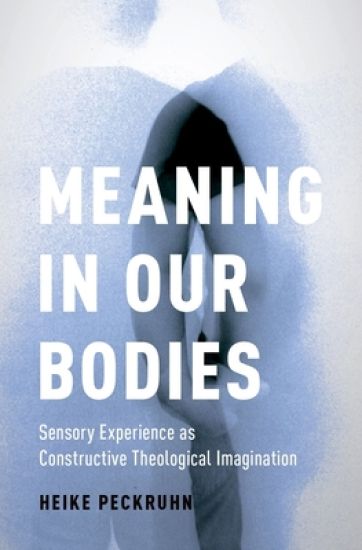
Movement, smell, vision, and other perceptual experiences are ways of thinking and orienting ourselves in the world. And yet the appeal to experience as resource for theology, though a significant shift in contemporary scholarship, has seldom received nuanced investigation. How do embodied differences like gender, race, disability, and sexuality highlight theological analysis and connect to perceptual experience and theological imagination? In Meaning in Our Bodies, Heike Peckruhn offers historical and cultural comparisons, showing how sensory experience may order normalcy, social status, or communal belonging. Ultimately, she argues that scholars who appeal to the importance of bodily experiences need to acquire a robust and nuanced understanding of how sensory perceptions and interactions are cultural and theological acts of making meaning.

Coalition Agreements as Control Devices
Heike Klüver; Hanna Bäck; Svenja Krauss
Oxford University Press
2023
sidottu
Many coalition cabinets negotiate lengthy coalition contracts outlining the agenda for the time in office. Not only does negotiating these agreements take up time and resources, but compromises have to be made, which may result in cabinet conflicts and electoral costs. This book explores why political parties negotiate such agreements, and argues that coalition agreements are important control devices that allow coalition parties to keep their partners in line. The authors show that their use varies with the preference configuration in cabinet and the allocation of ministerial portfolios. First, they posit that parties will only negotiate policy issues in a coalition agreement when they disagree on these issues and when they are important to all partners. Second, since controlling a ministry provides parties with important information and policy-making advantages, parties use agreements to constrain their partners particularly when they control the ministry in charge of a policy area. Finally, they argue that coalition agreements only work as effective control devices if coalition parties settle controversial issues in these contracts. The COALITIONAGREE Dataset is used to evaluate the expectations set out in the book; the dataset maps the content of 229 coalition agreements that were negotiated by 189 parties between 1945 and 2015 in 24 Western and Eastern European countries. The results show that coalition parties systematically use agreements to control their partners when policy issues are divisive and salient and when they are confronted with a hostile minister. These agreements only effectively contain conflicts, however, when parties negotiate a compromise on precisely the issues that divide them. Comparative Politics is a series for researchers, teachers, and students of political science that deals with contemporary government and politics. Global in scope, books in the series are characterized by a stress on comparative analysis and strong methodological rigour. The series is published in association with the European Consortium for Political Research. For more information visit: www.ecprnet.eu. The series is edited by Nicole Bolleyer, Chair of Comparative Political Science, Geschwister Scholl Institut, LMU Munich and Jonathan Slapin, Professor of Political Institutions and European Politics, Department of Political Science, University of Zurich.

Why can some interest groups influence policy-making while others cannot? Even though this question is central to the study of politics, we know little about the factors explaining interest group influence. Understanding lobbying success should be of particular concern to scholars of European politics since the European Union constitutes a promising political opportunity structure for organized interests. This book sheds light on the impact of interest groups on European policy-making and makes a major contribution to the study of both European Union politics and interest groups more generally. Klüver develops a comprehensive theoretical model for understanding lobbying success and presents an extensive empirical analysis of interest group influence on policy-making in the EU. The book relies on a large, new, and innovative dataset that combines a wide variety of data sources including a quantitative text analysis of European Commission consultations, an online survey of interest groups, information gathered on interest group websites, and legislative data retrieved from EU databases. This book analyzes interest group influence across 56 policy issues and 2,696 interest groups and shows that lobbying is an exchange relationship in which the European institutions trade influence for information, citizen support and economic power. Importantly, this book demonstrates that it is not sufficient to solely focus on individual interest groups, but that it is crucial how interest groups come together in issue-specific lobbying coalitions. Lobbying is a collective enterprise in which information supply, citizen support, and economic power of entire lobbying coalitions are decisive for lobbying success.

DAILY TELEGRAPH BOOKS OF THE YEAR and BBC HISTORY MAGAZINE BOOK CLUB title'I want to be a beautiful corpse, I will take poison' Eva Braun, 1945Eva Braun and Adolf Hitler were together for fourteen years, a relationship that ended only with their marriage and double suicide in Berlin. So who was Eva Braun? Heike Görtemaker's highly praised book is the first to take Braun's role in the Nazi hierarchy seriously. It uses her to throw fascinating light on a regime that prided itself on its harsh, coherent and unsentimental ideology, but which was in practice a chaos of competing individuals fighting for space around the overwhelmingly dominant figure of Hitler.'Finally gives Braun her place in the dark history of the Third Reich' Wall Street Journal
Symplectic Methods for the Symplectic Eigenproblem
Heike Fassbender
Kluwer Academic/Plenum Publishers
2000
sidottu
The solution of eigenvalue problems is an integral part of many scientific computations. For example, the numerical solution of problems in structural dynamics, electrical networks, macro-economics, quantum chemistry, and c- trol theory often requires solving eigenvalue problems. The coefficient matrix of the eigenvalue problem may be small to medium sized and dense, or large and sparse (containing many zeroelements). In the past tremendous advances have been achieved in the solution methods for symmetric eigenvalue pr- lems. The state of the art for nonsymmetric problems is not so advanced; nonsymmetric eigenvalue problems can be hopelessly difficult to solve in some situations due, for example, to poor conditioning. Good numerical algorithms for nonsymmetric eigenvalue problems also tend to be far more complex than their symmetric counterparts. This book deals with methods for solving a special nonsymmetric eig- value problem; the symplectic eigenvalue problem. The symplectic eigenvalue problem is helpful, e.g., in analyzing a number of different questions that arise in linear control theory for discrete-time systems. Certain quadratic eigenvalue problems arising, e.g., in finite element discretization in structural analysis, in acoustic simulation of poro-elastic materials, or in the elastic deformation of anisotropic materials can also lead to symplectic eigenvalue problems. The problem appears in other applications as well.

From one of Germany's leading young historians, the first comprehensive biography of Eva Braun, Hitler's devoted mistress, finally wife, and the hidden First Lady of the Third Reich. In this groundbreaking biography of Eva Braun, German historian Heike G rtemaker reveals Hitler's mistress as more than just a vapid blonde whose concerns never extended beyond her vanity table. Twenty-three years his junior, Braun first met Hitler when she took a position as an assistant to his personal photographer. Capricious, but uncompromising and fiercely loyal--she married Hitler two days before committing suicide with him in Berlin in 1945--her identity was kept secret by the Third Reich until the final days of the war. Through exhaustive research, newly discovered documentation, and anecdotal accounts, G rtemaker turns preconceptions about Eva Braun and Hitler on their head, and builds a portrait of the little-known Hitler far from the public eye.
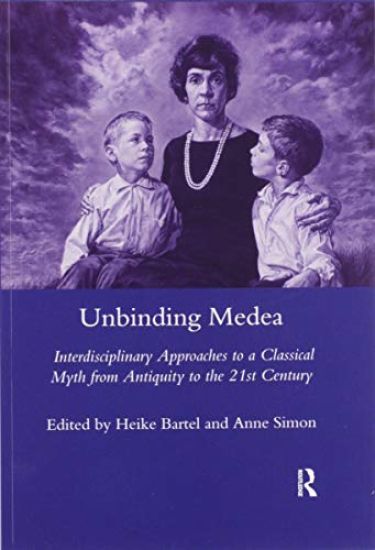
Unbinding Medea signals the very different answers to medea to provoke debate that transcends individual and discipline-specific approaches to the reception of her myth from antiquity to the twenty-first century and to present interdisciplinary parameters of engagement.
This study establishes age as a category of literary history, delineating age in its interaction with gender and narrative genre. Based on the historical premise that the view of ageing as a burden emerges as a specific narrative in the late eighteenth century, the study highlights how the changing experience of ageing is shaped by that of gender. By reading the Bildungsroman as a 'coming of age' novel, the book asks how the telling of a life in time affects individual age narratives. Bringing together the different perspectives of age and disability studies, the book argues that illness is already an important issue in the Bildungsroman's narratives of ageing. This theoretical stance provides new interpretations of canonical novels, visiting authors such as Johann Wolfgang Goethe, Frances Burney, Maria Edgeworth, Jane Austen, Charles Dickens, George Eliot, Samuel Beckett, and Jonathan Franzen. Drawing on the link between age and illness in the Bildungsroman's age narratives, the genre of 'dementia narrative' is presented as one of the directions which the Bildungsroman takes after its classical period. Applying these theoretical perspectives to canonical novels of the nineteenth century and to the new genre of 'dementia narrative', the volume also provides new insights into literary and genre history. This book introduces a new theoretical approach to cultural age studies and offers a comprehensive analysis of the connection between narratology, literary theory, gender and age studies.

Chick lit is the marketing label attributed to a surge of books published in the wake of Helen Fielding's Bridget Jones's Diary (1996) and Candace Bushnell's Sex and the City (1997). Branded by their pink or pastel-coloured book covers, chick-lit novels have been a highly successful and ubiquitous product of women's popular culture since the late 1990s. This study traces the evolution of chick lit not only as a genre of popular fiction, but as a cultural phenomenon. It complicates the genealogy of the texts by situating them firmly in the context of age-old debates about female literary creation, and by highlighting the dynamics of the popular-fiction market. Offering a convincing dissection of the formula which lies at the heart of chick lit, as well as in-depth analyses of a number of chick-lit titles ranging from classic to more recent and edgier texts, this book yields new insights into a relatively young field of academic study. Its close readings provide astute assessments of chick lit's notoriously skewed representational politics, especially with regard to sexuality and ethnicity, which feed into current discussions about postfeminism. Moreover, the study makes a unique contribution to the scholarly debate of chick lit by including an analysis of the (online) fan communities the genre has fostered. The Cultural Politics of Chick Lit weaves a sound methodological network, drawing on reader-response criticism; feminist, gender, and queer theory; affect studies; and whiteness studies. This book is an accessible and engaging study for anyone interested in postfeminism and popular culture.
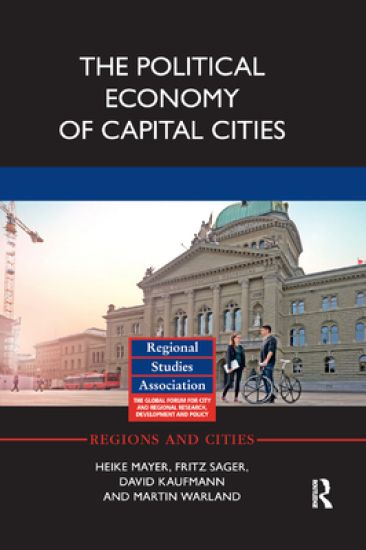
The Political Economy of Capital Cities
Heike Mayer; Fritz Sager; David Kaufmann; Martin Warland
Routledge
2019
nidottu
Capital cities that are not the dominant economic centers of their nations – so-called ‘secondary capital cities’ (SCCs) – tend to be overlooked in the fields of economic geography and political science. Yet, capital cities play an important role in shaping the political, economic, social and cultural identity of a nation. As the seat of power and decision-making, capital cities represent a nation’s identity not only through their symbolic architecture but also through their economies and through the ways in which they position themselves in national urban networks.The Political Economy of Capital Cities aims to address this gap by presenting the dynamics that influence policy and economic development in four in-depth case studies examining the SCCs of Bern, Ottawa, The Hague and Washington, D.C. In contrast to traditional accounts of capital cities, this book conceptualizes the modern national capital as an innovation-driven economy influenced by national, local and regional actors. Nationally, overarching trends in the direction of outsourcing and tertiarization of the public-sector influence the fate of capital cities. Regional policymakers in all four of the highlighted cities leverage the presence of national government agencies and stimulate the economy by way of various locational policy strategies.While accounting for their secondary status, this book illustrates how capital-city actors such as firms, national, regional and local governments, policymakers and planning practitioners are keenly aware of the unique status of their city. The conclusion provides practical recommendations for policymakers in SCCs and highlights ways in which they can help to promote economic development.

How is global togetherness possible? How does the availability of the Internet alter migrants' everyday lives and senses of belonging? This book introduces an 'alien people' inhabiting a specific common virtual space in the World Wide Web, while the members of this space - most of them ethnic Paraguayans - are physically located in many different parts of the world. By developing an innovative and 'uniquely adequate' set of research methods, the author explores the interrelation of media and migration practices in their own right and sheds light not only on the living conditions of contemporary (Paraguayan) migrants, but also on emerging global forms of living together. The concentration on a single case facilitates an in-depth understanding of contemporary migration practices, cultural meanings of digital media and senses of belonging. The book discusses empirical data, methods and theoretical concepts in a reflexive writing style, allowing readers to follow the research process, and to learn from its choices and challenges which are rarely visible in most research reports. The reflexive research procedure contributes not only to the understanding of social realities in the light of globalization, but also to an advancement of sociological methods and concepts for researching social phenomena in global landscapes and mediatization.

How is global togetherness possible? How does the availability of the Internet alter migrants' everyday lives and senses of belonging? This book introduces an 'alien people' inhabiting a specific common virtual space in the World Wide Web, while the members of this space - most of them ethnic Paraguayans - are physically located in many different parts of the world. By developing an innovative and 'uniquely adequate' set of research methods, the author explores the interrelation of media and migration practices in their own right and sheds light not only on the living conditions of contemporary (Paraguayan) migrants, but also on emerging global forms of living together. The concentration on a single case facilitates an in-depth understanding of contemporary migration practices, cultural meanings of digital media and senses of belonging. The book discusses empirical data, methods and theoretical concepts in a reflexive writing style, allowing readers to follow the research process, and to learn from its choices and challenges which are rarely visible in most research reports. The reflexive research procedure contributes not only to the understanding of social realities in the light of globalization, but also to an advancement of sociological methods and concepts for researching social phenomena in global landscapes and mediatization.
What constitutes our number concept? What makes it possible for us to employ numbers the way we do; which mental faculties contribute to our grasp of numbers? What do we share with other species, and what is specific to humans? How does our language faculty come into the picture? This 2003 book addresses these questions and discusses the relationship between numerical thinking and the human language faculty, providing psychological, linguistic and philosophical perspectives on number, its evolution and its development in children. Heike Wiese argues that language as a human faculty plays a crucial role in the emergence of systematic numerical thinking. She characterises number sequences as powerful and highly flexible mental tools that are unique to humans and shows that it is language that enables us to go beyond the perception of numerosity and to develop such mental tools.
What constitutes our number concept? What makes it possible for us to employ numbers the way we do; which mental faculties contribute to our grasp of numbers? What do we share with other species, and what is specific to humans? How does our language faculty come into the picture? This book addresses these questions and discusses the relationship between numerical thinking and the human language faculty, providing psychological, linguistic, and philosophical perspectives on number, its evolution, and its development in children. Heike Wiese argues that language as a human faculty plays a crucial role in the emergence of systematic numerical thinking. She characterises number sequences as powerful and highly flexible mental tools that are unique to humans and shows that it is language that enables us to go beyond the perception of numerosity and to develop such mental tools.

The Goddess in the Groove ~ Musings From the Goddess Within is "soul food" for the spirit! A collection of contemplations that will make you laugh, cry, rant, think; or jump up and take action! These stories are taken from real life, and you may recognize yourself as you read. You will find miracles, revelations, stories of spirit, and experiences of motherhood, issues; as well as interviews with three generations of women.