
Kirjahaku
Etsi kirjoja tekijän nimen, kirjan nimen tai ISBN:n perusteella.
1000 tulosta hakusanalla Helen C. Weeks
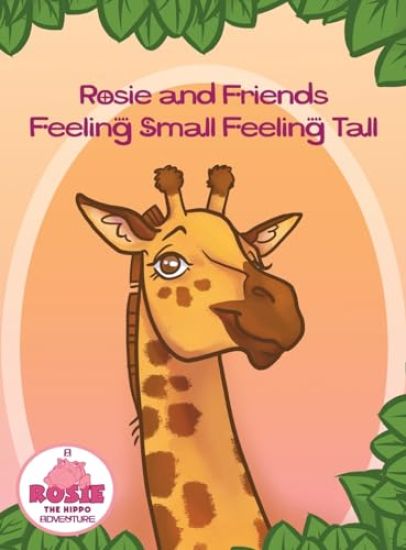
Facing a BIG world of BIG new challenges, Shorty the giraffe feeling tall, rather than small, discovers that he has grown up in his own way. Join Shorty the giraffe, Rosie the pink hippo, Ray, and Loiyan as they work together to help their friend.
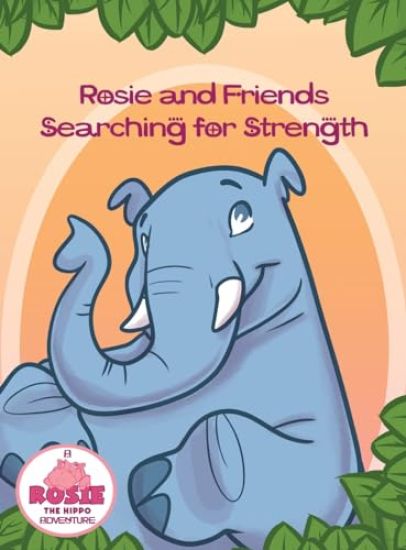
From the time he was little, Abel the elephant could always hear other elephants talking about his small ears and sensitive nature. Afraid of being rejected, Abel tried very hard to be like other elephants, but that did not work. Unlike them, he was unable to act tough or be seen as strong until he learned to look in the right places. Follow Abel as he, Rosie the hippo, and all their friends help him learn to find his strength.

Is the West to blame for the agony of Uganda and its neighbors?In this powerful account of Ugandan dictator Yoweri Museveni's 30 year reign, Helen Epstein chronicles how Western leaders' single-minded focus on the War on Terror and their naïve dealings with strongmen are at the root of much of the turmoil in eastern and central Africa.Museveni's involvement in the conflicts in Sudan, South Sudan, Rwanda, Congo, and Somalia has earned him substantial amounts of military and development assistance, as well as near-total impunity. It has also short-circuited the power the people of this region might otherwise have over their destiny. Epstein set out for Uganda more than 20 years ago to work as a public health consultant on an AIDS project. Since then, the roughly $20 billion worth of foreign aid poured into the country by donors has done little to improve the well-being of the Ugandan people, whose rates of illiteracy, mortality, and poverty surpass those of many neighboring countries. Money meant to pay for health care, education, and other public services has instead been used by Museveni to shore up his power through patronage, brutality, and terror. Another Fine Mess is a devastating indictment of the West's Africa policy and an authoritative history of the crises that have ravaged Uganda and its neighbors since the end of the Cold War.

This work has been selected by scholars as being culturally important and is part of the knowledge base of civilization as we know it.This work is in the public domain in the United States of America, and possibly other nations. Within the United States, you may freely copy and distribute this work, as no entity (individual or corporate) has a copyright on the body of the work.Scholars believe, and we concur, that this work is important enough to be preserved, reproduced, and made generally available to the public. To ensure a quality reading experience, this work has been proofread and republished using a format that seamlessly blends the original graphical elements with text in an easy-to-read typeface.We appreciate your support of the preservation process, and thank you for being an important part of keeping this knowledge alive and relevant.





Experiments that require the use of human participants are time consuming and costly: it is important to get the process right the first time. Planning and preparation are key to success. This practical book takes the human-computer interaction researcher through the complete experimental process, from identifying a research question to designing and conducting an experiment, and then to analysing and reporting the results. The advice offered in this book draws on the author's twenty years of experience running experiments. In describing general concepts of experimental design and analysis she refers to numerous worked examples that address the very real practicalities and problems of conducting an experiment, such as managing participants, getting ethical approval, pre-empting criticism, choosing a statistical method and dealing with unexpected events.

Caribbean Women Writers and Globalization offers a fresh reading of contemporary literature by Caribbean women in the context of global and local economic forces, providing a valuable corrective to much Caribbean feminist literary criticism. Departing from the trend towards thematic diasporic studies, Helen Scott considers each text in light of its national historical and cultural origins while also acknowledging regional and international patterns. Though the work of Caribbean women writers is apparently less political than the male-dominated literature of national liberation, Scott argues that these women nonetheless express the sociopolitical realities of the postindependent Caribbean, providing insight into the dynamics of imperialism that survive the demise of formal colonialism. In addition, she identifies the specific aesthetic qualities that reach beyond the confines of geography and history in the work of such writers as Oonya Kempadoo, Jamaica Kincaid, Edwidge Danticat, Pauline Melville, and Janice Shinebourne. Throughout, Scott's persuasive and accessible study sustains the dialectical principle that art is inseparable from social forces and yet always strains against the limits they impose. Her book will be an indispensable resource for literature and women's studies scholars, as well as for those interested in postcolonial, cultural, and globalization studies.
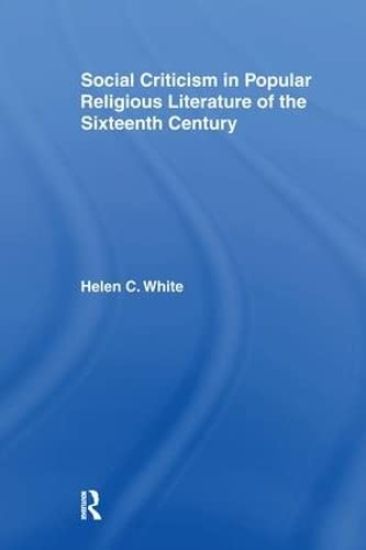
Social Criticism in Popular Religious Literature of the Sixteenth Century
Helen C. White
Routledge
2016
nidottu
First Published in 1966. This is a study into the question of whether religion in general, and the Christian religion in particular, is to be regarded as an instrument of social stimulation and disturbance, or as a means of social reconciliation and stabilisation by focusing on religious literature of the sixteenth century.
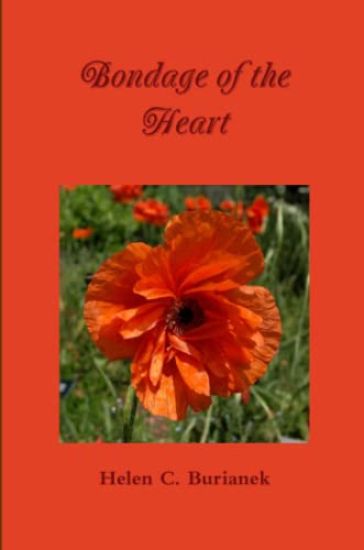


This is a romantic journey through the lives of four fictional characters. The story is loosely based on the author's family history. Just like real life, it is filled with hope and disappointment, grief and joy, love and loss. In the end, it is love that endures.
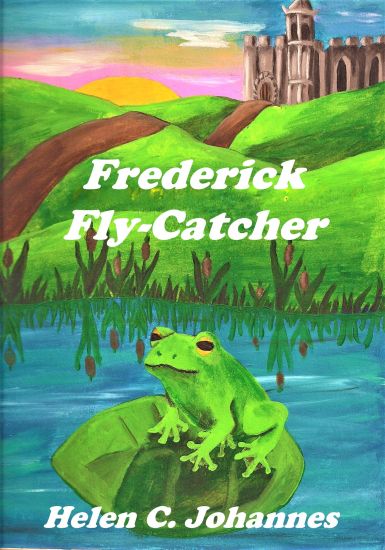
Frederick the frog isn't looking for adventure. His life in the family pond--hanging out and catching flies--is perfect. Or it would be if a bully wasn't harassing the youngest frogs. To defend them, Frederick accepts a fly-catching challenge, but what he catches isn't an insect. It's a magic ring, and Frederick has swallowed it Whenever he burps or coughs, something terrifying happens to the pond. "Frogs shouldn't have anything to do with human things," says wise Uncle Ben, so to protect his family, Frederick must leave the only world he knows. The world beyond the pond is frightening, but rather than hide or mope, Frederick sets out to get rid of this dangerous human thing. His only hope is to find the small human who tossed the ring into the pond, the boy chased by big men and bigger horses. The boy is in trouble, too, but how can Frederick, one little frog, save a human, much less the pond from an evil sorcerer? A middle grade chapter book, 16 chapters, approximately 18,000 words.
Lady Huntington And Her Friends; Or, The Revival Of The Work Of God
Helen C Knight
Read Books
2008
pokkari