Kirjojen hintavertailu. Mukana 11 717 486 kirjaa ja 12 kauppaa.

Kirjahaku

Etsi kirjoja tekijän nimen, kirjan nimen tai ISBN:n perusteella.

1000 tulosta hakusanalla Helen M. Stringer

Emile and Isaac Pereire

Emile and Isaac Pereire

Helen M. Davies

Manchester University Press
2014
sidottu
Emile (1800–75) and Isaac Pereire (1806–80) were pivotal and sensational figures, their lives and careers a lens through which to re-examine the history of France in the nineteenth century. Among the first generation of Jews emancipated by the French Revolution, they became significant Saint-Simonians, contributing to its philosophy of financial and economic reform. They were the first to implement the new rail technology in France and to launch the first investment bank of any size in Europe, the Crédit Mobilier. The Pereires ultimately came to stand behind banks and railways throughout Europe and in the Ottoman Empire. They were thus major players in France’s and Europe’s industrialisation and the modernisation of its banking system. This book is equally a social and cultural history of the Jews in France, addressing the means through which the Pereires managed their business empire and the contribution of family life to its success. It is their first full-scale biography in English.
Gender, Culture, and Physicality

Gender, Culture, and Physicality

Helen M. Sterk; Annelies Knoppers

Lexington Books
2009
sidottu
Although a plethora of scholarship analyzes gender dynamics, this book seeks to explore the paradoxes and taboos associated with gendered meanings given to human bodies in action, or "physicality." Physicality provides a particularly clear playing space for developing concepts of gender identity, structures, and cultural meanings. When people think about gender differences, they often refer to those associated with physicality, such as giving birth or playing contact sports. Helen M. Sterk and Annelies Knoppers attend to the meanings and values given to human bodies in motion that reflect cultural respect-or disrespect-for what is seen as "womanly" in particular times and places. In doing so, they show how these meanings can reinforce or challenge common ways of doing gender that, at first glance, may not seem to be related to physicality. Grappling with gender-based paradoxes and questioning gendered taboos, two goals animate the book: to reveal how gender continues to be enacted in ways that dehumanize women and men, and to stimulate thinking and action toward a fuller realization of human potential and partnership. Operating from an ethic of care, in which all people are understood as being created equal, Sterk and Knoppers argue that as long as women and all that is associated with them are devalued, cultural practices will remain implicitly gendered and humanity itself, reduced.
Health and Welfare for Families in the 21st Century

Health and Welfare for Families in the 21st Century

Helen M. Wallace; Gordon Green; Kenneth Jaros

Jones and Bartlett Publishers, Inc
2003
nidottu
2003 AJN BOOK OF THE YEAR AWARD WINNER! In Health and Welfare for Families in the 21st Century, Second Edition, leaders in the maternal and child health field analyze the revolutionizing effect of changes occurring today in the social, educational, political, and economic aspects of family health care. This authoritative collection of readings provides a basic overview of the health and social welfare systems, and the policy and insurance infrastructure surrounding those systems. In this edition, a major emphasis is placed on the effect of managed care on these systems, and the effect of new legislation on families and children.
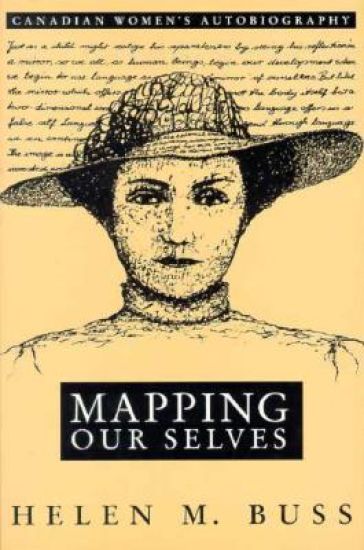
Mapping Our Selves

Mapping Our Selves

Helen M. Buss

McGill-Queen's University Press
1993
sidottu
Buss supplies a framework for her study by reviewing male-centred theories of identity and some of the ways in which theorists working with women's autobiographical accounts are changing these models. The texts selected by Buss include those by Elizabeth Simcoe, Susanna Moodie, Anna Jameson, Nellie McClung, Lucy Maud Montgomery, Emily Carr, Laura Salverson, Margaret Laurence, Dorothy Livesay, Daphne Marlatt, Mary Meigs, Maria Campbell, Kristjana Gunnars, and Aritha van Herk. Each section of the book opens with a short autobiographical introduction by Buss, allowing the reader to place the author's critical practice within the context of her sense of her own identity as critic, writer, and woman.
Mapping Our Selves

Mapping Our Selves

Helen M. Buss

McGill-Queen's University Press
1994
nidottu
Buss supplies a framework for her study by reviewing male-centred theories of identity and some of the ways in which theorists working with women's autobiographical accounts are changing these models. The texts selected by Buss include those by Elizabeth Simcoe, Susanna Moodie, Anna Jameson, Nellie McClung, Lucy Maud Montgomery, Emily Carr, Laura Salverson, Margaret Laurence, Dorothy Livesay, Daphne Marlatt, Mary Meigs, Maria Campbell, Kristjana Gunnars, and Aritha van Herk. Each section of the book opens with a short autobiographical introduction by Buss, allowing the reader to place the author's critical practice within the context of her sense of her own identity as critic, writer, and woman.
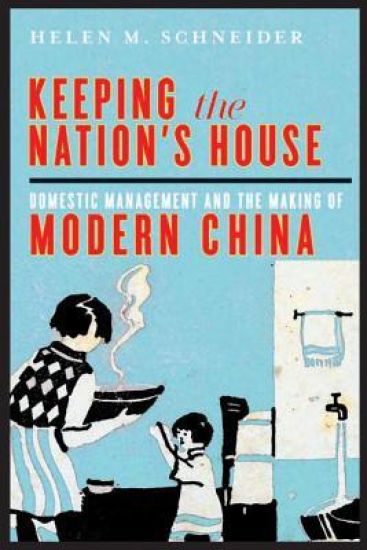
Keeping the Nation's House

Keeping the Nation's House

Helen M. Schneider

University of British Columbia Press
2011
sidottu
For many, the term home economics conjures images ofsterile classrooms where young girls and women learn to cook dinner andswaddle dolls, far removed from the seats of power. Keeping the Nation's House unsettles this assumptionby revealing how elite Chinese women helped to build modern China onefamily at a time. Trained between the 1920s and the early 1950s, homeeconomists believed that their discipline would transform the mostfundamental of political spaces – the home – byteaching women to nurture ideal families and manage projects of socialreform. Although their discipline came undone after 1949, it created alegacy of gendered professionalism and reinforced the idea that leadersshould shape domestic rituals of the people. By focusing on an overlooked group of Chinese women, this bookgenders the past by showing how these women helped make the present,and it reveals how a group of intellectuals made the transition to theCommunist era.
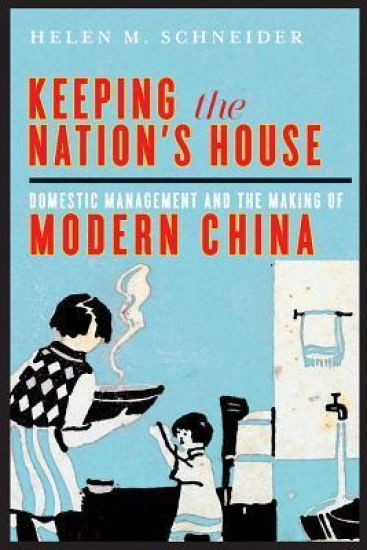
Keeping the Nation's House

Keeping the Nation's House

Helen M. Schneider

University of British Columbia Press
2012
pokkari
For many, the term home economics conjures images ofsterile classrooms where young girls and women learn to cook dinner andswaddle dolls, far removed from the seats of power. Keeping the Nation's House unsettles this assumptionby revealing how elite Chinese women helped to build modern China onefamily at a time. Trained between the 1920s and the early 1950s, homeeconomists believed that their discipline would transform the mostfundamental of political spaces – the home – byteaching women to nurture ideal families and manage projects of socialreform. Although their discipline came undone after 1949, it created alegacy of gendered professionalism and reinforced the idea that leadersshould shape domestic rituals of the people. By focusing on an overlooked group of Chinese women, this bookgenders the past by showing how these women helped make the present,and it reveals how a group of intellectuals made the transition to theCommunist era.
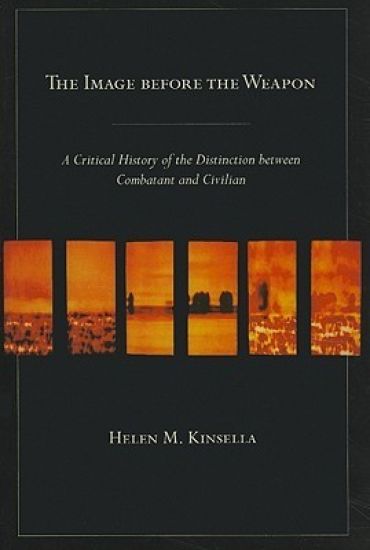
The Image Before the Weapon

The Image Before the Weapon

Helen M. Kinsella

Cornell University Press
2011
sidottu
Since at least the Middle Ages, the laws of war have distinguished between combatants and civilians under an injunction now formally known as the principle of distinction. The principle of distinction is invoked in contemporary conflicts as if there were an unmistakable and sure distinction to be made between combatant and civilian. As is so brutally evident in armed conflicts, it is precisely the distinction between civilian and combatant, upon which the protection of civilians is founded, cannot be taken as self-evident or stable. Helen M. Kinsella documents that the history of international humanitarian law itself admits the difficulty of such a distinction. In The Image before the Weapon, Kinsella explores the evolution of the concept of the civilian and how it has been applied in warfare. A series of discourses—including gender, innocence, and civilization—have shaped the legal, military, and historical understandings of the civilian and she documents how these discourses converge at particular junctures to demarcate the difference between civilian and combatant. Engaging with works on the law of war from the earliest thinkers in the Western tradition, including St. Thomas Aquinas and Christine de Pisan, to contemporary figures such as James Turner Johnson and Michael Walzer, Kinsella identifies the foundational ambiguities and inconsistencies in the principle of distinction, as well as the significant role played by Christian concepts of mercy and charity. She then turns to the definition and treatment of civilians in specific armed conflicts: the American Civil War and the U.S.-Indian wars of the nineteenth century, and the civil wars of Guatemala and El Salvador in the 1980s. Finally, she analyzes the two modern treaties most influential for the principle of distinction: the 1949 IV Geneva Convention Relative to the Protection of Civilian Persons in Times of War and the 1977 Protocols Additional to the 1949 Conventions, which for the first time formally defined the civilian within international law. She shows how the experiences of the two world wars, but particularly World War II, and the Algerian war of independence affected these subsequent codifications of the laws of war. As recognition grows that compliance with the principle of distinction to limit violence against civilians depends on a firmer grasp of its legal, political, and historical evolution, The Image before the Weapon is a timely intervention in debates about how best to protect civilian populations.
A Medical Teacher's Manual for Success

A Medical Teacher's Manual for Success

Helen M. Shields

Johns Hopkins University Press
2011
pokkari
Although most medical school faculty members are required to teach, the standard medical school curriculum doesn't tell them how to do it well. This book does. An award-winning clinician-teacher, Helen M. Shields has spent her career training future doctors, researchers, and medical school instructors. Here she shares classroom-tested methods for developing, implementing, and evaluating effective curricula for medical students. Shields's five steps emphasize * extensive behind-the-scenes preparation, with a focus on visualizing both one's own performance and the desired student feedback* clear and logical presentations that match the material being taught* controlled exploration of topics through prepared questions and management of group dynamics* reinforcement of important concepts throughout the teaching session* a five-minute summary of take-home points Shields's easy-to-follow guide discusses what teachers should do-and what they should not do. She provides pertinent beginning-of-chapter questions, sample teaching materials, tips for last-minute assignments, and other pearls of wisdom. Shields also describes the methods of dynamic and effective instructors, offers a step-by-step approach to preparation and presentation, and relates proven ways to address a variety of expected and unexpected situations. Innovative and practical, A Medical Teacher's Manual for Success is an essential resource for medical school faculty members who want to teach well.
Human Rights for the 21st Century

Human Rights for the 21st Century

Helen M. Stacy

Stanford University Press
2009
sidottu
A new moral, ethical, and legal framework is needed for international human rights law. Never in human history has there been such an elaborate international system for human rights, yet from massive disasters, such as the Darfur genocide, to everyday tragedies, such as female genital mutilation, human rights abuses continue at an alarming rate. As the world population increases and global trade brings new wealth as well as new problems, international law can and should respond better to those who live in fear of violence, neglect, or harm. Modern critiques global human rights fall into three categories: sovereignty, culture, and civil society. These are not new problems, but have long been debated as part of the legal philosophical tradition. Taking lessons from tradition and recasting them in contemporary light, Helen Stacy proposes new approaches to fill the gaps in current approaches: relational sovereignty, reciprocal adjudication, and regional human rights. She forcefully argues that law and courts must play a vital role in forging a better human rights vision in the future.
Human Rights for the 21st Century

Human Rights for the 21st Century

Helen M. Stacy

Stanford University Press
2009
pokkari
A new moral, ethical, and legal framework is needed for international human rights law. Never in human history has there been such an elaborate international system for human rights, yet from massive disasters, such as the Darfur genocide, to everyday tragedies, such as female genital mutilation, human rights abuses continue at an alarming rate. As the world population increases and global trade brings new wealth as well as new problems, international law can and should respond better to those who live in fear of violence, neglect, or harm. Modern critiques global human rights fall into three categories: sovereignty, culture, and civil society. These are not new problems, but have long been debated as part of the legal philosophical tradition. Taking lessons from tradition and recasting them in contemporary light, Helen Stacy proposes new approaches to fill the gaps in current approaches: relational sovereignty, reciprocal adjudication, and regional human rights. She forcefully argues that law and courts must play a vital role in forging a better human rights vision in the future.
Divided Waters

Divided Waters

Helen M. Ingram; Nancy R. Laney; David M Gillilan

University of Arizona Press
1995
nidottu
Among all natural resource and environmental problems between the United States and Mexico, water has been the most troublesome, with ongoing historic contests over water supply becoming superseded by new controversies over water quality. Divided Waters analyzes the politics of water management along the U.S.-Mexico border, using the case of Nogales, Arizona and Nogales, Sonora as a window on the problems and possibilities involved. The authors explore the water problems that Ambos Nogales shares with larger border communities surface and groundwater contamination, inadequate and insecure supplies, inequitable distribution of resources, flooding, and endangered riparian habitats considering both the physical characteristics of the water supply and the coping mechanisms of the people who make use of it. They review the prevailing confusion of laws, administrative practices, and political incentives, then recommend the design elements they believe must be included before successful improvements can occur at both the institutional and the resource management levels.
Leading Teachers

Leading Teachers

Helen M. Gunter

Continuum International Publishing Group Ltd.
2005
nidottu
Part of the Improving Schools Series Leading teachers are those who are researchers and who have developed their pedagogy based on both evidence and conceptually informed practice. This book will draw on three important resources: first, case studies of teachers researching and developing practice; second, research evidence on what we know about teacher leadership both nationally and internationally; and, third, models of pedagogy and teacher learning that can support the development of a teacher leadership culture within schools.
Whitehead's American Essays in Social Philosophy

Whitehead's American Essays in Social Philosophy

Helen M. Johnson

Praeger Publishers Inc
1975
sidottu
Whitehead's ten American essays in social philosophy are here reprinted in their original form, although not in chronological sequence. They have been rearranged to present first Whitehead's statement of general social principles and are followed by those essays in which he discusses problems of internal social reform and the factors which influence human societies. Next come those essays in which Whitehead is primarily concerned with international relations and last are the essays dealing specifically with educational problems.
Ho for the Gold Fields

Ho for the Gold Fields

Helen M. White

Minnesota Historical Society Press
2004
nidottu
Between 1862 and 1867, eight wagon trains carrying at least 1,400 people set out from Minnesota for the gold fields of Montana. These carefully edited letters and diaries trace their progress, revealing their day-to-day experiences, their success--or lack of it--in finding gold, and their lives in bustling mining settlements. "Private dreams of quick fortunes in El Dorado and public dreams of commercial empire and national greatness" moved the emigrants, writes Helen McCann White in her introduction, which places the three-month expeditions in their broader historical context and interprets their significance for the development of Minnesota, North and South Dakota, and Montana. An appendix identifies more than 850 members of the trains.
Differences That Make a Difference

Differences That Make a Difference

Helen M Sterk; Lynn H. Turner

Praeger Publishers Inc
1994
sidottu
Joining the debate on gender differences, this book presents a cross-section of current research in communication, language, and gender studies. The first part presents studies that ask how women and men differ on a range of communication variables and suggest reasons for these differences. The second part offers a variety of critiques of masculine cultural hegemony. The third part envisions how gender differences may be reconceptualized in order to open key cultural institutions to honor both women and men. Taken as a whole, the chapters inform one another in a creative, dialectical tension. Examining what researchers mean by gender differences and values implicit in the term is critical to understanding current trends in gender studies.
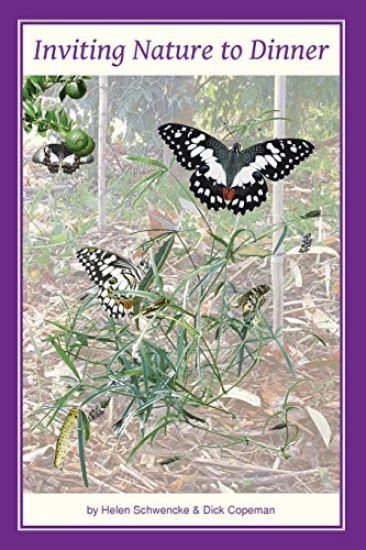
Inviting Nature to Dinner

Inviting Nature to Dinner

Helen M Schwencke; Dick Copeman

Earthling Enterprises Pty Ltd
2020
pokkari
Nature is at a crisis point. The living creatures with whom we share the planet are being decimated by our actions. We are clearing their habitat, changing the climate, poisoning them with chemicals and moving them around the globe so that some become invasive species that threaten others. We may feel powerless to challenge these global trends, but we are not. This book shows how, by starting in our own gardens, we can begin to make a difference, amply demonstrated by Helen's 33-year-old butterfly and wildlife garden.Insects comprise the great majority of all animal species and play key roles in the ecology of our world, including converting plants into food for other creatures. Many insects depend on specific plants to feed their larvae. By planting these native host plants in our gardens, we can support healthy populations of insects that will not only support the whole complex web of life but will also help protect our plants from the very small percentage of insects that can adversely affect them. An added bonus is that some of these native host plants are also edible for us.Helen Schwencke and Dick Copeman take the reader on an exciting journey into the world of small creatures. While their focus is on insects and other invertebrates from the central east coast of Australia and some of the diverse range of plants that provide their food and shelter, the principles they discuss are widely applicable. Based on both academic and citizen science, eminently readable and beautifully illustrated, their text also provides practical advice on designing your garden and sourcing plants for it, so that you too can join them in Inviting Nature to Dinner.This version is a preview version designed to start a discussion. We seek your feedback, we want to know what you want to know about the topic. If you purchase a copy through any channel other than directly from the authors, and you'd like to be notified when the 1st edition becomes available please join Inviting Nature to Dinner Facebook page: https: //www.facebook.com/groups/invitingnaturetodinner and/or the Earthling Enterprises email list: http: //eepurl.com/gvLH2n
High Risk Investing Is Not for Amateurs: Due Diligence Tips to Safeguard Your Investments
High Risk Investing is NOT for Amateurs Due diligence Tips to Safeguard Your Investments Scrambling to provide for retirement? Seeking ways to earn better investment returns? Willing to learn from another's mistakes? Describing experiences in diverse areas of high risk investment, this guide provides due diligence steps to take to safeguard your capital. This invaluable aid helps you profit more safely from higher returns. Topics covered; Buying joint venture real estate Do I really need training to invest? Setting investment goals Low, moderate and high risk investing Financial statement basics Evaluating investment condominiums Do you really want to be a landlord? Rooming house, duplex, and older apartment headaches Motels and Rental Pools How not to invest in the stock market Say No to pyramids Other opportunities