Kirjojen hintavertailu. Mukana 11 244 527 kirjaa ja 12 kauppaa.

Kirjahaku

Etsi kirjoja tekijän nimen, kirjan nimen tai ISBN:n perusteella.

1000 tulosta hakusanalla Helge Mercker (Compiler)

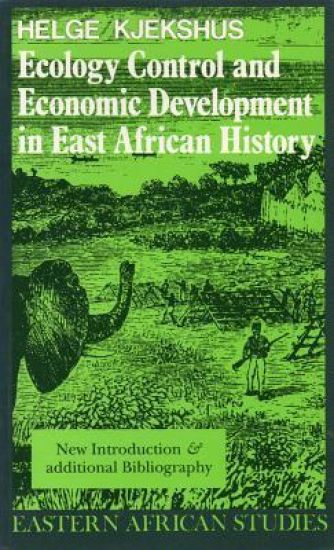
Ecology Control and Economic Development in East African History: The Case of Tanganyika 1850-1950
Ecology Control and Economic Development in East African History: The Case of Tanganyika, 1850-1950 explores a significant shift in East African historiography, particularly with the move toward political independence. This change has prompted a re-examination of the African past, with an emphasis on reclaiming African agency, rejecting colonial-era interpretations that focused predominantly on European actions. Scholars like Oliver, Mathew, Kimambo, and Temu have led the way in this new wave of historiography, arguing that the African past was dynamic and that Africans were active agents in shaping their history, particularly in the face of crises such as intertribal warfare and colonial incursions. However, this study seeks to go beyond political history and traditional frameworks, shifting the focus to the ecological and economic systems that shaped African life in the 19th century. The book argues that pre-colonial East Africans were not merely responding defensively to external crises but were actively engaged in managing their environment and developing their economy. Through ecological control, such as agricultural and pastoral practices, East Africans maintained a sustainable relationship with their land, even in the face of challenges like the tsetse fly and the disruptions caused by intertribal conflict. This study challenges the prevailing notion that East Africa was economically underdeveloped due to shifting cultivation and warfare. Instead, it highlights the prosperous agricultural and cattle economies that were able to thrive despite these challenges. By examining the economic activities such as agriculture, iron smelting, and trade, the study demonstrates the region's economic vibrancy and the agency of its people in controlling their environment and developing a complex economic system. Through this approach, the study calls for a reimagined understanding of East African history that emphasizes the active role of its peoples in shaping their destiny. This title is part of UC Press's Voices Revived program, which commemorates University of California Press's mission to seek out and cultivate the brightest minds and give them voice, reach, and impact. Drawing on a backlist dating to 1893, Voices Revived makes high-quality, peer-reviewed scholarship accessible once again using print-on-demand technology. This title was originally published in 1977.
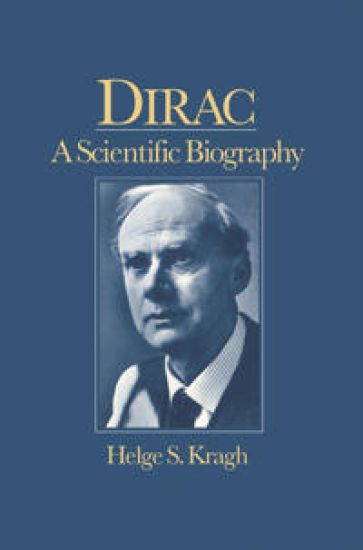
Dirac

Dirac

Helge Kragh

Cambridge University Press
2005
pokkari
Paul Adrien Maurice Dirac was undoubtedly one of the most brilliant and influential physicists of the twentieth century. Between 1925 and 1934, this Nobel Laureate revolutionized physics with his contributions to quantum theory. This book, the first full length biography of Dirac, offers a comprehensive account of his life and presents his physics in its historical context, including known areas such as cosmology and classical electron theory. The author examines Dirac's successes and failures, and pays particular attention to Dirac's opposition to modern quantum electrodynamics - an opposition based on aesthetic objections. This book, which draws extensively from unpublished sources, including Dirac's correspondence with Bohr, Heisenberg, Pauli, Schrödinger, Gamow, and other physicists, is a history of modern physics as seen through one scientist's career.
Dirac

Dirac

Helge Kragh

Cambridge University Press
1990
sidottu
Paul Adrien Maurice Dirac was undoubtedly one of the most brilliant and influential physicists of the twentieth century. Between 1925 and 1934, this Nobel Laureate revolutionized physics with his contributions to quantum theory. This book, the first full length biography of Dirac, offers a comprehensive account of his life and presents his physics in its historical context, including known areas such as cosmology and classical electron theory. The author examines Dirac’s successes and failures, and pays particular attention to Dirac’s opposition to modern quantum electrodynamics - an opposition based on aesthetic objections. This book, which draws extensively from unpublished sources, including Dirac’s correspondence with Bohr, Heisenberg, Pauli, Schrödinger, Gamow, and other physicists, is a history of modern physics as seen through one scientist’s career.
An Introduction to the Historiography of Science

An Introduction to the Historiography of Science

Helge S. Kragh

Cambridge University Press
1989
pokkari
This book introduces the methodological and philosophical problems with which modern history of science is concerned, offering a comprehensive and critical review through description and evaluation of significant historiographical viewpoints. Incorporating discussion of key problems in general historical writing, with examples drawn from a range of disciplines, this non-elementary introduction bridges the gap between general history and history of science. Following a review of the early development of the history of science, the theory of history as applied to science history is introduced, examining the basic problems which this generates, including problems of periodisation, ideological functions, and the conflict between diachronical and anachronical historiography. Finally, the book considers the critical use, and analysis, of historical sources, and the possibility of the experiemental reconstruction of history. Aimed primarily at students, the book's broad scope and integration of historical, philosophical and scientific matters will interest philosophers, sociologists and general historians, for whom there is no alternative introduction to the subject at this level.
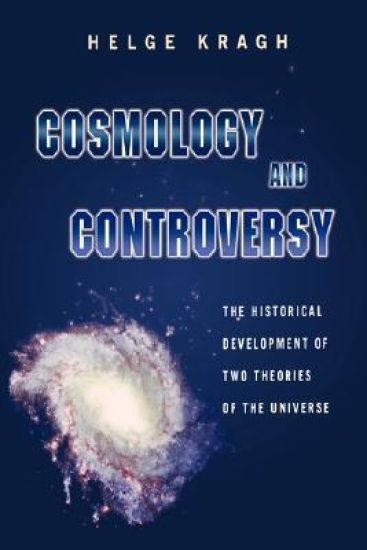
Cosmology and Controversy

Cosmology and Controversy

Helge Kragh

Princeton University Press
1999
pokkari
For over three millennia, most people could understand the universe only in terms of myth, religion, and philosophy. Between 1920 and 1970, cosmology transformed into a branch of physics. With this remarkably rapid change came a theory that would finally lend empirical support to many long-held beliefs about the origins and development of the entire universe: the theory of the big bang. In this book, Helge Kragh presents the development of scientific cosmology for the first time as a historical event, one that embroiled many famous scientists in a controversy over the very notion of an evolving universe with a beginning in time. In rich detail he examines how the big-bang theory drew inspiration from and eventually triumphed over rival views, mainly the steady-state theory and its concept of a stationary universe of infinite age. In the 1920s, Alexander Friedmann and Georges Lemaitre showed that Einstein's general relativity equations possessed solutions for a universe expanding in time. Kragh follows the story from here, showing how the big-bang theory evolved, from Edwin Hubble's observation that most galaxies are receding from us, to the discovery of the cosmic microwave background radiation. Sir Fred Hoyle proposed instead the steady-state theory, a model of dynamic equilibrium involving the continuous creation of matter throughout the universe. Although today it is generally accepted that the universe started some ten billion years ago in a big bang, many readers may not fully realize that this standard view owed much of its formation to the steady-state theory. By exploring the similarities and tensions between the theories, Kragh provides the reader with indispensable background for understanding much of today's commentary about our universe.
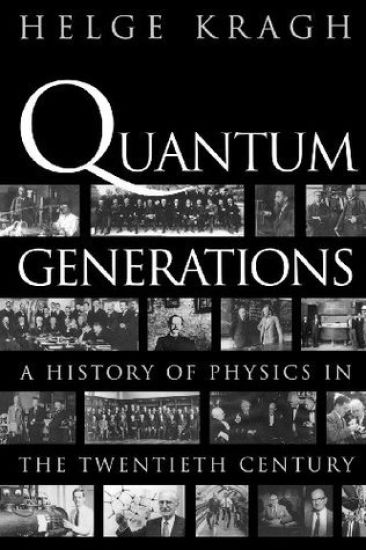
Quantum Generations

Quantum Generations

Helge Kragh

Princeton University Press
2002
pokkari
At the end of the nineteenth century, some physicists believed that the basic principles underlying their subject were already known, and that physics in the future would only consist of filling in the details. They could hardly have been more wrong. The past century has seen the rise of quantum mechanics, relativity, cosmology, particle physics, and solid-state physics, among other fields. These subjects have fundamentally changed our understanding of space, time, and matter. They have also transformed daily life, inspiring a technological revolution that has included the development of radio, television, lasers, nuclear power, and computers. In Quantum Generations, Helge Kragh, one of the world's leading historians of physics, presents a sweeping account of these extraordinary achievements of the past one hundred years. The first comprehensive one-volume history of twentieth-century physics, the book takes us from the discovery of X rays in the mid-1890s to superstring theory in the 1990s. Unlike most previous histories of physics, written either from a scientific perspective or from a social and institutional perspective, Quantum Generations combines both approaches. Kragh writes about pure science with the expertise of a trained physicist, while keeping the content accessible to nonspecialists and paying careful attention to practical uses of science, ranging from compact disks to bombs. As a historian, Kragh skillfully outlines the social and economic contexts that have shaped the field in the twentieth century. He writes, for example, about the impact of the two world wars, the fate of physics under Hitler, Mussolini, and Stalin, the role of military research, the emerging leadership of the United States, and the backlash against science that began in the 1960s. He also shows how the revolutionary discoveries of scientists ranging from Einstein, Planck, and Bohr to Stephen Hawking have been built on the great traditions of earlier centuries. Combining a mastery of detail with a sure sense of the broad contours of historical change, Kragh has written a fitting tribute to the scientists who have played such a decisive role in the making of the modern world.
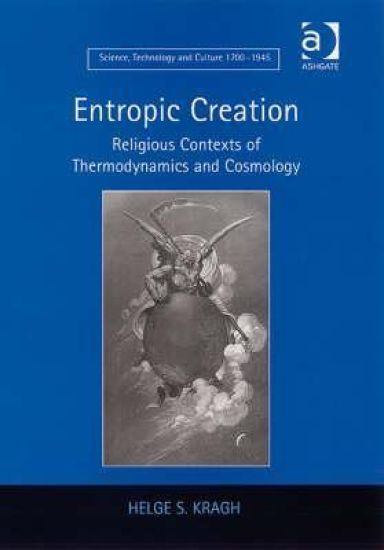
Entropic Creation

Entropic Creation

Helge S. Kragh

Ashgate Publishing Limited
2008
sidottu
Entropic Creation is the first English-language book to consider the cultural and religious responses to the second law of thermodynamics, from around 1860 to 1920. According to the second law of thermodynamics, as formulated by the German physicist Rudolf Clausius, the entropy of any closed system will inevitably increase in time, meaning that the system will decay and eventually end in a dead state of equilibrium. Application of the law to the entire universe, first proposed in the 1850s, led to the prediction of a future 'heat death', where all life has ceased and all organization dissolved. In the late 1860s it was pointed out that, as a consequence of the heat death scenario, the universe can have existed only for a finite period of time. According to the 'entropic creation argument', thermodynamics warrants the conclusion that the world once begun or was created. It is these two scenarios, allegedly consequences of the science of thermodynamics, which form the core of this book. The heat death and the claim of cosmic creation were widely discussed in the period 1870 to 1920, with participants in the debate including European scientists, intellectuals and social critics, among them the physicist William Thomson and the communist thinker Friedrich Engels. One reason for the passion of the debate was that some authors used the law of entropy increase to argue for a divine creation of the world. Consequently, the second law of thermodynamics became highly controversial. In Germany in particular, materialists and positivists engaged in battle with Christian - mostly Catholic - scholars over the cosmological consequences of thermodynamics. This heated debate, which is today largely forgotten, is reconstructed and examined in detail in this book, bringing into focus key themes on the interactions between cosmology, physics, religion and ideology, and the public way in which these topics were discussed in the latter half of the nineteenth and the first years of the twentieth century.
Flexible Organizations and the New Working Life

Flexible Organizations and the New Working Life

Helge Ramsdal

Ashgate Publishing Limited
2009
sidottu
What are we actually talking about when we talk of flexibility in organizational settings? Do flexible forms of organization lead to varied, challenging and autonomous work or do they have a negative impact on working conditions? These questions are confronted by a group of specialist authors including Stephen Ackroyd, Harriet Bradley, Jan Ch. Karlsson, Philippe Mossé and Michael Rose, who discuss the concept of flexibility in relation to employment practices, organizational structure, cultural peculiarities and network arrangements in France, Italy, Norway, Sweden and the UK. While the question of workplace flexibility has been much debated in recent years, the main issues discussed have been the practice of non-standard forms of employment such as part-time work. This book is distinctive in dealing with flexibility related to organizational arrangements, organizational culture and network arrangements, and in assessing the combined effects of different arrangements in terms of manpower, structure, culture and networks on flexibility.
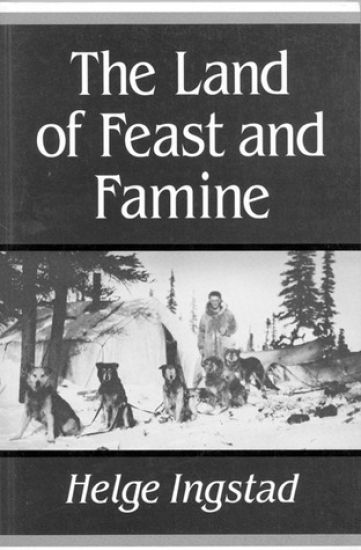
The Land of Feast and Famine

The Land of Feast and Famine

Helge Ingstad

McGill-Queen's University Press
1992
nidottu
The young Norwegian was Helge Ingstad, now famous for his discovery in 1960 of a Viking village at L'Anse aux Meadows (on the northern tip of Newfoundland) -- the oldest known European settlement in North America. Ingstad recorded his adventures in the Canadian North in The Land of Feast and Famine, originally published in Norwegian in 1931 and first released in English two years later. Now, after being out of print in English for more than forty years, The Land of Feast and Famine is once again available, with its description of youthful adventure and its vivid portrayal of the people and ways of the Northwest Territories in the last days of the fur trading era. After making his way into the Canadian Arctic interior, Ingstad spent one winter with a fellow trapper in a log cabin they built themselves, and another living and hunting with a tribe of Inuit known as the Caribou-Eaters. During his final winter in the North, Ingstad lived in a tent in an area called the Barren Lands, hunting caribou and wolves, alone with his five dogs. In 1937, a small river in the Barren Lands was renamed Ingstad Creek. The life Ingstad describes is harsh and full of danger. He recounts many close calls of his own as well as the fates of those far less fortunate. On his way out of the North, Ingstad learned that the colourful adventurer John Hornby and two of his companions starved to death while on a expedition to the Barren Lands -- one of them outliving the others by months. But Ingstad's life in the Canadian Arctic was also full of heart-warming experiences. He describes the native companions and fellow trappers with whom he shared adventures and relates stories of numerous hunts and how he learned first hand about beaver, caribou, wolf, and other wildlife. He also provides a remarkable body of knowledge about native medicine. The arrival of the age of aviation opened up the North and, as Ingstad prophetically observed in 1931, the way of life of the native people, who were "still pursuing the free nomadic existence of their forefathers," would be irrevocably changed. At a time when the ways of life of Canada's native and Inuit people are more threatened than ever before, The Land of Feast and Famine provides a fascinating glimpse at a time already far in the past.
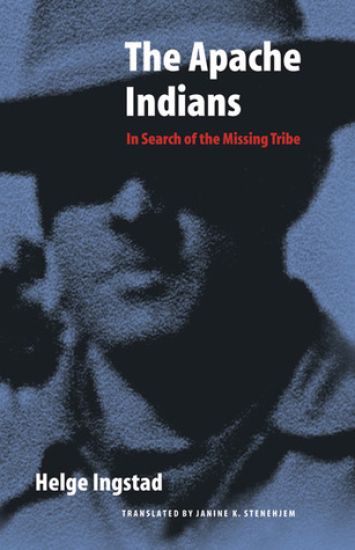
The Apache Indians

The Apache Indians

Helge Ingstad

University of Nebraska Press
2012
pokkari
Available in English for the first time, The Apache Indians tells the story of the Norwegian explorer Helge Ingstad's sojourn among the Apaches near the White Mountain Reservation in Arizona and his epic journey to locate the "lost" group of their brethren in the Sierra Madres in the 1930s. Ingstad traveled to Canada, where he lived as a trapper for four years with the Chipewyan Indians. The Chipewyans told him tales about people from their tribe who traveled south, never to return. He decided to go south to find the descendants of his Chipewyan friends and determine if they had similar stories. In 1936 Ingstad arrived in the White Mountains and worked as a cowboy with the Apaches. His hunch about the Apaches' northern origins was confirmed by their stories, but the elders also told him about another group of Apaches who had fled from the reservation and were living in the Sierra Madres in Mexico. Ingstad launched an expedition on horseback to find these "lost" people, hoping to record more tales of their possible northern origin but also to document traditions and knowledge that might have been lost among the Apaches living on the reservation.Through Ingstad's keen and observant eyes, we catch unforgettable glimpses of the landscape and inhabitants of the southwestern borderlands as he and his Apache companions, including one of Geronimo's warriors, embark on a dangerous quest to find the elusive Sierra Madre Apaches. The Apache Indians is a powerful echo of a past that has now become a myth.
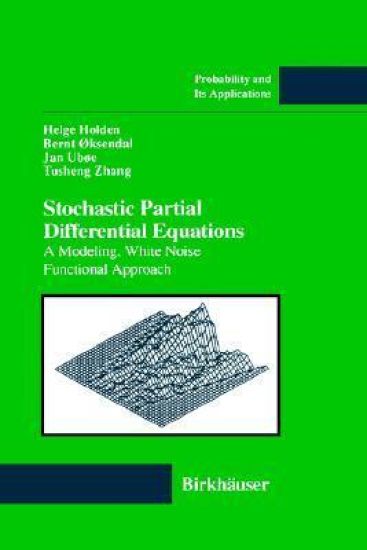
Stochastic Partial Differential Equations

Stochastic Partial Differential Equations

Helge Holden; Bernt Oksendal; Jan Uboe; Tusheng Zhang

Birkhauser Boston Inc
1996
sidottu
This book is based on research that, to a large extent, started around 1990, when a research project on fluid flow in stochastic reservoirs was initiated by a group including some of us with the support of VISTA, a research coopera­ tion between the Norwegian Academy of Science and Letters and Den norske stats oljeselskap A.S. (Statoil). The purpose of the project was to use stochastic partial differential equations (SPDEs) to describe the flow of fluid in a medium where some of the parameters, e.g., the permeability, were stochastic or "noisy". We soon realized that the theory of SPDEs at the time was insufficient to handle such equations. Therefore it became our aim to develop a new mathematically rigorous theory that satisfied the following conditions. 1) The theory should be physically meaningful and realistic, and the corre­ sponding solutions should make sense physically and should be useful in applications. 2) The theory should be general enough to handle many of the interesting SPDEs that occur in reservoir theory and related areas. 3) The theory should be strong and efficient enough to allow us to solve th,~se SPDEs explicitly, or at least provide algorithms or approximations for the solutions.
Positive Definite Functions on Infinite-Dimensional Convex Cones
This memoir is devoted to the study of positive definite functions on convex subsets of finite- or infinite-dimensional vector spaces, and to the study of representations of convex cones by positive operators on Hilbert spaces. Given a convex subset $\Omega\sub V$ of a real vector space $V$, we show that a function $\phi\!:\Omega\to\mathbb{R}$ is the Laplace transform of a positive measure $\mu$ on the algebraic dual space $V^*$ if and only if $\phi$ is continuous along line segments and positive definite. If $V$ is a topological vector space and $\Omega\sub V$ an open convex cone, or a convex cone with non-empty interior, we describe sufficient conditions for the existence of a representing measure $\mu$ for $\phi$ on the topological dual space$V$.The results are used to explore continuity properties of positive definite functions on convex cones, and their holomorphic extendibility to positive definite functions on the associated tubes $\Omega+iV\sub V_{\mathbb{C}}$.We also study the interplay between positive definite functions and representations of convex cones, and derive various characterizations of those representations of convex cones on Hilbert spaces which are Laplace transforms of spectral measures. Furthermore, for scalar- or operator-valued positive definite functions which are Laplace transforms, we realize the associated reproducing kernel Hilbert space as an $L^2$-space $L^2(V^*,\mu)$ of vector-valued functions and link the natural translation operators on the reproducing kernel space to multiplication operators on $L^2(V^*,\mu)$, which gives us refined information concerning the norms of these operators.
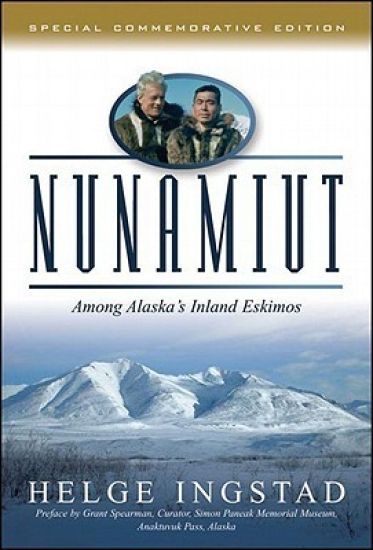
Nunamuit

Nunamuit

Helge Ingstad

Countryman Press Inc.
2006
nidottu
In 1949 Helge Ingstad flew into Northern Alaska where the Nunamiut people, a caribou-hunting group, resided. Ingstad was the first Westerner to visit the region. After living with the Nunamiut for nine months, such was the admiration for Ingstad that they wanted to name a beautiful mountain in their territory after him. And, in the 50+ years since then the mountain has been known locally as Ingstad Mountain. When Ingstad passed away in 2001 at the age of 101, a petition was made to the U.S. Geological Survey to officially name the mountain after Ingstad. In 2006 Ingstad Mountain officially enters the U.S. Geological Survey maps.Nunamiut is Ingstad's fascinating account of that nine-month visit with the Nunamiut. He learned their language, recorded their legends and superstitions, and participated in their caribou hunts and fishing expeditions. His personal account is an engrossing and original work. 45 black & white photographs, 21 black & white illustrations, index.
Paleo-Eskimo Cultures in Disko Bugt, West Greenland

Paleo-Eskimo Cultures in Disko Bugt, West Greenland

Helge Eyvin 1905- Larsen

Hassell Street Press
2021
sidottu
This work has been selected by scholars as being culturally important and is part of the knowledge base of civilization as we know it.This work is in the public domain in the United States of America, and possibly other nations. Within the United States, you may freely copy and distribute this work, as no entity (individual or corporate) has a copyright on the body of the work.Scholars believe, and we concur, that this work is important enough to be preserved, reproduced, and made generally available to the public. To ensure a quality reading experience, this work has been proofread and republished using a format that seamlessly blends the original graphical elements with text in an easy-to-read typeface.We appreciate your support of the preservation process, and thank you for being an important part of keeping this knowledge alive and relevant.
Paleo-Eskimo Cultures in Disko Bugt, West Greenland

Paleo-Eskimo Cultures in Disko Bugt, West Greenland

Helge Eyvin 1905- Larsen

Hassell Street Press
2021
nidottu
This work has been selected by scholars as being culturally important and is part of the knowledge base of civilization as we know it.This work is in the public domain in the United States of America, and possibly other nations. Within the United States, you may freely copy and distribute this work, as no entity (individual or corporate) has a copyright on the body of the work.Scholars believe, and we concur, that this work is important enough to be preserved, reproduced, and made generally available to the public. To ensure a quality reading experience, this work has been proofread and republished using a format that seamlessly blends the original graphical elements with text in an easy-to-read typeface.We appreciate your support of the preservation process, and thank you for being an important part of keeping this knowledge alive and relevant.