

Kirjahaku
Etsi kirjoja tekijän nimen, kirjan nimen tai ISBN:n perusteella.
1000 tulosta hakusanalla Henri Pillet

What makes Henri Matisse a “modernist,” when so much of his work harks back to older French traditions and the artist himself never seems entirely at home in the twentieth century? Bock-Weiss addresses the paradox of Matisse’s status as a canonical modern artist, but one whose work and career cannot be mapped onto conventional histories of an insurrectionary modernism. She frames this issue by positioning the artist in surprising contexts: his manipulation of mass media in shaping his public image, his singular relationship with Gertrude Stein, and his painterly use of cinematic devices in the 1920s to respond to the crisis of cubism. Equally unprecedented is the author’s close examination of two major critical responses to Matisse’s work: a formalist defense by the Russian dance critic André Levinson, and the claim by Pierre Schneider and others that Matisse is a spiritual artist on the Byzantine/Islamic model. Providing neither a unified portrait of the artist nor a new definition of modernism itself, the author considers the many-faceted elements of the artist’s life, work, and reputation to present a comprehensive new framework for viewing both Matisse and modernism.

Henri Rousseau
YALE UNIVERSITY PRESS
2025
sidottu
Two of the greatest collections of Rousseau’s work come together in a new exhibition that offers fresh insights into the painter’s art and life The Barnes Foundation is home to the world’s largest collection of works by the self-taught artist Henri Rousseau (1844–1910). Many of them were bought by Dr. Albert C. Barnes from the Paris art dealer Paul Guillaume, also an avid collector of Rousseau’s works. This publication offers a comprehensive study of the eighteen works at the Barnes and places them in dialogue with works from around the globe, including those from Guillaume’s collection (now housed at the Musée de l’Orangerie in Paris). This unprecedented overview of the artist’s work reunites paintings that have been apart for more than one hundred years, marking the first time that works from the Foundation’s galleries will form part of an exhibition devoted to Rousseau. Working closely with Barnes Foundation conservation staff, Christopher Green and Nancy Ireson consider Rousseau’s novel artistic practice and explore his process of adapting works to new purposes. They also examine how Rousseau navigated the art world, driven by the need to market his works in the hope of furthering his career. Richly illustrated with Rousseau’s idiosyncratic jungle scenes, landscapes, portraits, and still lifes, this volume presents new findings and includes essays that discuss the market for the artist in the 1920s and the veiled eroticism of the painter’s jungle scenes. Distributed for the Barnes Foundation Exhibition Schedule: Barnes Foundation, Philadelphia (October 19, 2025–February 22, 2026) Musée de l’Orangerie, Paris (March 24–July 20, 2026)
Henri Sauguet's music remains little known outside his native France and portions of Belgium. Even there a younger generation of listeners and practitioners only vaguely associate his name with the ballet Les Forains, the popular song Le Chemin des forains, and a handful of other minor masterworks. Yet, during his lifetime, impresarios, poets, stage directors, choreographers, and film directors eagerly sought his collaboration on important projects. Henri Sauguet: A Bio-Bibliography is the first English-language book to treat Sauguet not only as a composer, but as a music critic and observer of the French music scene for more than sixty years. No other single source highlights the multi-faceted talents of a man who may be called the grand old man of French music. The volume is organized into five parts, beginning with a brief biography of Sauguet's life. This is followed by the most complete list of works and performances compiled to date. This section is subdivided by genre--operas, ballets, instrumental music, vocal music, electronic music, music for the cinema, stage, and broadcast; each item within a genre chronologically follows the name of that kind of work. Performances appear chronologically with premieres listed first, and a sampling of prose writings and speeches by Sauguet is included. Music and drama reviews are presented separately in chronological order under the name of the journal in which they appeared. The complete discography is organized alphanumerically, an arrangement dictated by record manufacturers' labels and numbers. The bibliography of writings about the composer is organized alphabetically by author with anonymous works inserted alphabetically by title. Two appendixes follow the work proper: organizing the music alphabetically by title, and chronologically to give a clearer picture of the progression and disposition of works during the composer's career. An index of the people, organizations, and events cited throughout completes the volume. Music libraries will want to add this reference work to their collections. Other libraries and scholars with an interest in theatre, media, and French cultural history will also want to acquire this volume.
The elegant Matisse retrospective at New York's Museum of Modern Art in the fall of 1992 was the first king-sized retrospective of Matisse's work anywhere in the world for more than twenty years. Appropriately labelled the most beautiful show in the world, this giant new look at Matisse and his pursuit of pleasure was a consummate success. Henri Matisse: A Bio-Bibliography provides the scholar, student, artist, and layperson with an extended primary and secondary bibliography with which to study and enjoy this great artist. These works cover his life, career, oeuvre, and influence on other artists. Though many of the entries are annotated, this is not meant to be a critical guide; rather, it is a way to get to know a great artist through the literature surrounding him and his art.
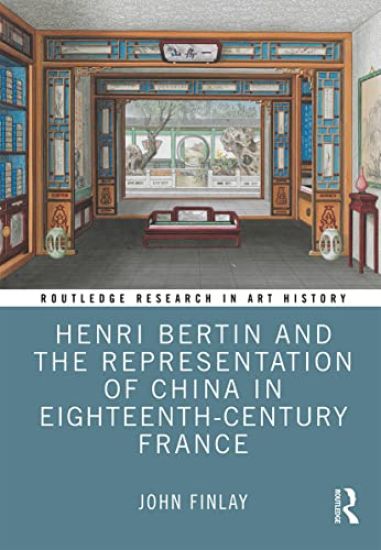
Henri Bertin and the Representation of China in Eighteenth-Century France
John Finlay
TAYLOR FRANCIS LTD
2022
nidottu
This is an in-depth study of the intellectual, technical, and artistic encounters between Europe and China in the late eighteenth century, focusing on the purposeful acquisition of information and images that characterized a direct engagement with the idea of "China."The central figure in this story is Henri-Léonard Bertin (1720–1792), who served as a minister of state under Louis XV and, briefly, Louis XVI. Both his official position and personal passion for all things Chinese placed him at the center of intersecting networks of like-minded individuals who shared his ideal vision of China as a nation from which France had much to learn. John Finlay examines a fascinating episode in the rich history of cross-cultural exchange between China and Europe in the early modern period, and this book will be an important and timely contribution to a very current discussion about Sino-French cultural relations.This book will be of interest to scholars in art history, visual culture, European and Chinese history.
Henri Fayol is one of the most important management theorists of the twentieth century. Guthrie and Peaucelle present a study of Fayol's management, comparing the theories set out in his book with his hands-on experience and practice. The first English translation of the third part of Industrial and General Management appears as an Appendix.


Henri Fayol
Routledge
2001
muu
Henri Fayol, (1841-1925) along with F. W. Taylor, is one of the founders of 'classical management'. Fayol's work was the first significant attempt to develop principles of top-level management and one of the first attempts to analyse the different activities that constitute management. Fayol viewed management as a process of administration consisting of five activities: planning/forecasting, organizing, co-ordinating, commanding and controlling. These two volumes place Fayol's ideas in their historical context and provide access to his key writings. The set includes assessments of his work by his contemporaries, as well as current thinking about his ideas on management.
While certain aspects of Henri Lefebvre’s writings have been examined extensively within the disciplines of geography, social theory, urban planning and cultural studies, there has been no comprehensive consideration of his work within legal studies. Henri Lefebvre: Spatial Politics, Everyday Life and the Right to the City provides the first serious analysis of the relevance and importance of this significant thinker for the study of law and state power. Introducing Lefebvre to a legal audience, this book identifies the central themes that run through his work, including his unorthodox, humanist approach to Marxist theory, his sociological and methodological contributions to the study of everyday life and his theory of the production of space. These elements of Lefebvre’s thought are explored through detailed investigations of the relationships between law, legal form and processes of abstraction; the spatial dimensions of neoliberal configurations of state power; the political and aesthetic aspects of the administrative ordering of everyday life; and the ‘right to the city’ as the basis for asserting new forms of spatial citizenship. Chris Butler argues that Lefebvre’s theoretical categories suggest a way for critical legal scholars to conceptualise law and state power as continually shaped by political struggles over the inhabitance of space. This book is a vital resource for students and researchers in law, sociology, geography and politics, and all readers interested in the application of Lefebvre’s social theory to specific legal and political contexts.

While certain aspects of Henri Lefebvre’s writings have been examined extensively within the disciplines of geography, social theory, urban planning and cultural studies, there has been no comprehensive consideration of his work within legal studies. Henri Lefebvre: Spatial Politics, Everyday Life and the Right to the City provides the first serious analysis of the relevance and importance of this significant thinker for the study of law and state power. Introducing Lefebvre to a legal audience, this book identifies the central themes that run through his work, including his unorthodox, humanist approach to Marxist theory, his sociological and methodological contributions to the study of everyday life and his theory of the production of space. These elements of Lefebvre’s thought are explored through detailed investigations of the relationships between law, legal form and processes of abstraction; the spatial dimensions of neoliberal configurations of state power; the political and aesthetic aspects of the administrative ordering of everyday life; and the ‘right to the city’ as the basis for asserting new forms of spatial citizenship. Chris Butler argues that Lefebvre’s theoretical categories suggest a way for critical legal scholars to conceptualise law and state power as continually shaped by political struggles over the inhabitance of space. This book is a vital resource for students and researchers in law, sociology, geography and politics, and all readers interested in the application of Lefebvre’s social theory to specific legal and political contexts.

During his lifetime Henri Lefebvre (1901-1991) was renowned in France as a philosopher, sociologist and activist. Although he published more than 70 books, few were available in English until The Production of Space was translated in 1991. While this work - often associated with geography - has influenced educational theory’s ‘spatial turn,’ educationalists have yet to consider Lefebvre’s work more broadly.This book engages in an educational reading of the selection of Lefebvre’s work that is available in English translation. After introducing Lefebvre’s life and works, the book experiments with his concepts and methods in a series of five ‘spatial histories’ of educational theories. In addition to The Production of Space, these studies develop themes from Lefebvre’s other translated works: Rhythmanalysis, The Explosion, the three volumes of Critique of Everyday Life and a range of his writings on cities, Marxism, technology and the bureaucratic state. In the course of these inquiries, Lefebvre’s own passionate interest in education is uncovered: his critiques of bureaucratised schooling and universities, the analytic concepts he devised to study educational phenomena, and his educational methods.Throughout the book Middleton demonstrates how Lefebvre’s conceptual and methodological tools can enhance the understanding of the spatiotemporal location of educational philosophy and theory. Bridging disciplinary divides, it will be key reading for researchers and academics studying the philosophy, sociology and history of education, as well as those working in fields beyond education including geography, history, cultural studies and sociology.
During his lifetime Henri Lefebvre (1901-1991) was renowned in France as a philosopher, sociologist and activist. Although he published more than 70 books, few were available in English until The Production of Space was translated in 1991. While this work - often associated with geography - has influenced educational theory’s ‘spatial turn,’ educationalists have yet to consider Lefebvre’s work more broadly.This book engages in an educational reading of the selection of Lefebvre’s work that is available in English translation. After introducing Lefebvre’s life and works, the book experiments with his concepts and methods in a series of five ‘spatial histories’ of educational theories. In addition to The Production of Space, these studies develop themes from Lefebvre’s other translated works: Rhythmanalysis, The Explosion, the three volumes of Critique of Everyday Life and a range of his writings on cities, Marxism, technology and the bureaucratic state. In the course of these inquiries, Lefebvre’s own passionate interest in education is uncovered: his critiques of bureaucratised schooling and universities, the analytic concepts he devised to study educational phenomena, and his educational methods.Throughout the book Middleton demonstrates how Lefebvre’s conceptual and methodological tools can enhance the understanding of the spatiotemporal location of educational philosophy and theory. Bridging disciplinary divides, it will be key reading for researchers and academics studying the philosophy, sociology and history of education, as well as those working in fields beyond education including geography, history, cultural studies and sociology.
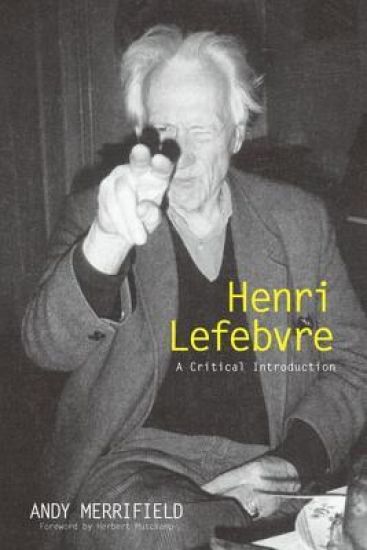
Philosopher, sociologist and urban theorist, Henri Lefebvre is one of the great social theorists of the twentieth century. This accessible and innovative introduction to the work of Lefebvre combines biography and theory in a critical assessment of the dynamics of Lefebvre's character, thought, and times. Exploring key Lefebvrian concepts, Andy Merrifield demonstrates the evolution of Lefebvre's philosophy, while stressing the way his long and adventurous life of ideas and political engagement live on as an enduring and inspiring interrelated whole.

Philosopher, sociologist and urban theorist, Henri Lefebvre is one of the great social theorists of the twentieth century. This accessible and innovative introduction to the work of Lefebvre combines biography and theory in a critical assessment of the dynamics of Lefebvre's character, thought, and times. Exploring key Lefebvrian concepts, Andy Merrifield demonstrates the evolution of Lefebvre's philosophy, while stressing the way his long and adventurous life of ideas and political engagement live on as an enduring and inspiring interrelated whole.
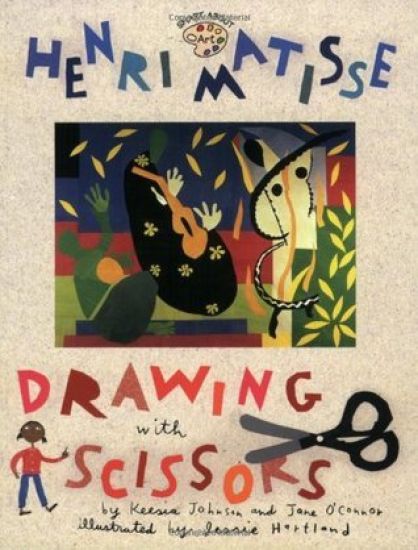
Presents the life and work of Henri Matisse in the form of a child's school report, where Keesia learns that over his long career, Matisse made paintings, sculpture, books, costumes, and cut-outs. Simultaneous.
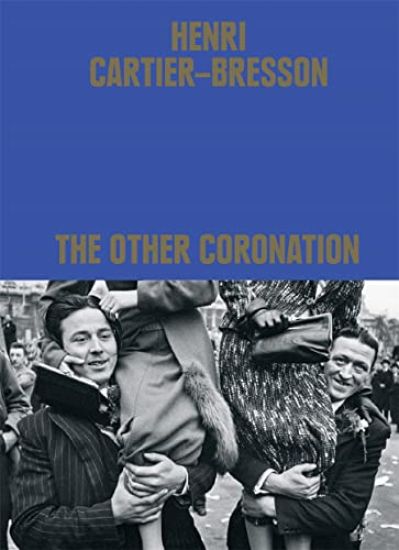
The coronation of George VI on 12 May 1937 was one of the biggest media events of the interwar period. While other photographers focused on the new King, his family and the ceremonial splendour of the day, Henri Cartier-Bresson turned his lens on the crowds that gathered in the streets of London to watch the pageantry. In a witty reversal of the expected order of proceedings, he shows us ordinary people of all ages and walks of life, some climbing on monuments or each other’s shoulders, others straining to get a better view with cardboard periscopes and mirrors on sticks. A few even slump on the ground, the festivities having proved too much. Presented alongside contemporary news clippings from around the world, these remarkable images reflect Cartier-Bresson’s unmistakeable photographic eye and capture the British public at a unique historical moment.
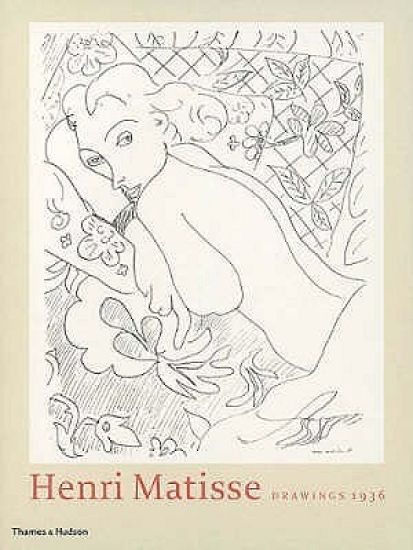
Henri Matisse: Drawings 1936
Thames Hudson Ltd
2005
sidottu
In 1936, publisher Christian Zervos released a collection of drawings by Henri Matisse as part of his Cahiers d Art series. This faithful facsimile edition features 39 Matisse drawings and translations by Pulitzer-prize winning poet and scholar Richard Howard. The beauty of Matisse s simple drawings, as powerful today as in 1936, remains accessible to art lovers and a general audience alike.