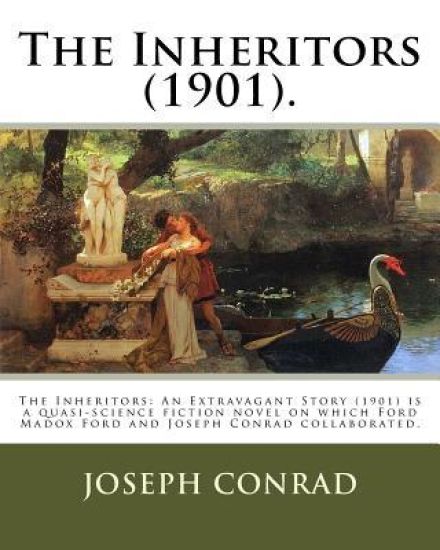
The Inheritors: An Extravagant Story (1901) is a quasi-science fiction novel on which Ford Madox Ford and Joseph Conrad collaborated. It looks at society's mental evolution and what is gained and lost in the process. Written before the first World War, its themes of corruption and the effect of the 20th Century on British aristocracy appeared to predict history. Plot: The inheritors are a breed of cold materialists, calling themselves Fourth Dimensionists, whose task is to occupy the earth. An unsuccessful English writer meets a fascinating woman by chance, who seems to talk in metaphors. She claims to be from the Fourth Dimension and a major player in a plan to "inherit the earth". They go their separate ways with her pledge they will meet again and again. At their next meeting, the woman freely reveals her "identity" and two others in their circle, one a cabinet minister (Charles Gurnard) and Fox, the editor of a new paper - all of them competing with each other. She has taken on his name and pretends to be his sister, invading firstly his down-on-their-luck aristocratic family by financing improvements to their estate, until she moves with his aunt, to Paris. Each time she turns up, she is in greater connection with prominent political people and appears more dazzlingly beautiful and more desirable to Arthur.... Joseph Conrad (Polish pronunciation: born J zef Teodor Konrad Korzeniowski; 3 December 1857 - 3 August 1924) was a Polish-British writer regarded as one of the greatest novelists to write in the English language. He joined the British merchant marine in 1878, and was granted British nationality in 1886. Though he did not speak English fluently until his twenties, he was a master prose stylist who brought a non-English sensibility into English literature.He wrote stories and novels, many with a nautical setting, that depict trials of the human spirit in the midst of an impassive, inscrutable universe. Conrad is considered an early modernist, though his works still contain elements of 19th-century realism. His narrative style and anti-heroic characters have influenced many authors, including F. Scott Fitzgerald, William Faulkner, Ernest Hemingway, Andr Malraux, 6] George Orwell: 254 Graham Greene, Gabriel Garc a M rquez, John le Carr , V. S. Naipaul, Philip Roth, J. M. Coetzee, and Salman Rushdie. Many films have been adapted from, or inspired by, Conrad's works... Ford Madox Ford (born Ford Hermann Hueffer (17 December 1873 - 26 June 1939) was an English novelist, poet, critic and editor whose journals, The English Review and The Transatlantic Review, were instrumental in the development of early 20th-century English literature.
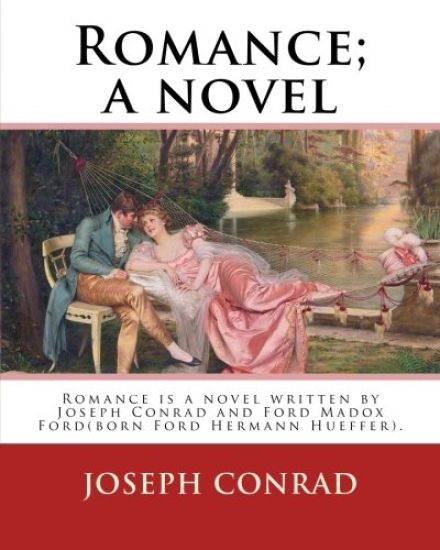
Romance is a novel written by Joseph Conrad and Ford Madox Ford. It was the second of their three collaborations. Romance was eventually published by George Bell and Sons in London in 1903 and by McClure, Phillips in New York in March 1904. According to Max Saunders, Conrad, in his quest to obtain a literary collaborator, had been recommended by several literary figures. W. E. Henley pointed to Ford as a suitable choice for Conrad. Literary collaboration was not particularly uncommon when Conrad proposed it to Ford, but neither was it considered the proper way for serious novelists, as Ford was aware: "The critics of our favoured land do not believe in collaboration.". In his biography of Conrad, Joseph Conrad: A Personal Remembrance (1924), Ford alleges that some opponents and critics did not hold the same reverence for his "literary friendship" with Conrad as that which he maintained. But his bond with Conrad had been "for its lack of jealousy a very beautiful thing." Indeed, Ford took the position that he gave Conrad some benefit as a bonding partner, writing: "I was useful to Conrad as a writer and as a man in a great many subordinate ways during his early days of struggle and deep poverty..." In an unpublished section, he withheld a frank passage of confession about his team writer where he contradicts the argument that Conrad "chose to live on terms of intimacy with a parasitic person", stating that such an accusation was as damaging to himself as it was to Conrad. Ford continued in the same vein about the choices open to Conrad, defending himself from criticism and showing awareness of the psychology behind co-writing: ..."if he chose to consult the person as to the most private details of his personal life and - what is still more important - as to the form and the very wording of his books, - if he chose for this intimacy a person of a parasitic type, he was less upright a man than might reasonably be supposed... And less of a psychologist." A critic and friend of Ford, R. A. Scott-James, reveals in an introduction to one of Ford's works, rather unbelievably, that Ford had spiritedly claimed to have taught Conrad English. Ford made a number of claims about Conrad that may not have been completely true. The writers' wives were involved behind the scenes in the collaborations, often to the despair of Ford, who omitted any mention of Jessie Conrad in his biography. Conrad and Ford agreed upon a collaboration on Seraphina, a novel that Ford had already begun work on. Conrad wrote to Ford encouraging him to visit: "Come when you like ... You will always find me here. I would be very pleased to hear Seraphina read. I would afterwards read it myself. Consult your own convenience and (especially) your own whim. It's the only thing worth deferring to." Another instance where making objections to collaborating occurred when Conrad wrote to Galsworthy commenting: "I am drooping still. Working at Seraphina. Bosh Horrors " and again after a further bonding session Conrad wrote that Ford's visit had left him "half dead and he] crawled into bed for two days". Joseph Conrad (Polish pronunciation: born J zef Teodor Konrad Korzeniowski; 3 December 1857 - 3 August 1924) was a Polish-British writer regarded as one of the greatest novelists to write in the English language. He joined the British merchant marine in 1878, and was granted British nationality in 1886. Though he did not speak English fluently until his twenties, he was a master prose stylist who brought a non-English sensibility into English literature.He wrote stories and novels, many with a nautical setting, that depict trials of the human spirit in the midst of an impassive, inscrutable universe. Ford Madox Ford (born Ford Hermann Hueffer ( 17 December 1873 - 26 June 1939) was an English novelist, poet, critic and editor whose journals.
Dive into the rich history of chess with "The Chess-monthly, Volume 8", a fascinating glimpse into the world of 19th-century chess strategy and culture. Authored by chess masters Leopold Hoffer and Johannes Hermann Zukertort, this volume offers a wealth of insights into the games, players, and controversies that shaped the era. Originally published as a periodical, "The Chess-monthly" provided enthusiasts with detailed game analyses, tournament reports, and biographical sketches of prominent chess figures. This particular volume captures a pivotal moment in chess history, showcasing the evolution of tactics and the growing popularity of the game across Europe. Whether you're a seasoned chess player, a history buff, or simply curious about the intellectual pursuits of the past, "The Chess-monthly, Volume 8" offers a captivating and informative journey into the world of chess. This work has been selected by scholars as being culturally important, and is part of the knowledge base of civilization as we know it. This work was reproduced from the original artifact, and remains as true to the original work as possible. Therefore, you will see the original copyright references, library stamps (as most of these works have been housed in our most important libraries around the world), and other notations in the work. This work is in the public domain in the United States of America, and possibly other nations. Within the United States, you may freely copy and distribute this work, as no entity (individual or corporate) has a copyright on the body of the work. As a reproduction of a historical artifact, this work may contain missing or blurred pages, poor pictures, errant marks, etc. Scholars believe, and we concur, that this work is important enough to be preserved, reproduced, and made generally available to the public. We appreciate your support of the preservation process, and thank you for being an important part of keeping this knowledge alive and relevant.
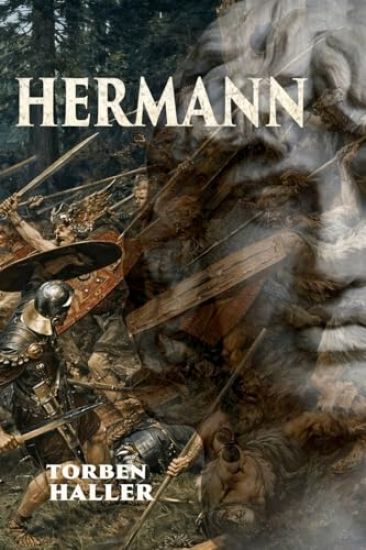
When Rome first casts its shadow across the Rhine, a boy of the Cherusci tribe is taken from his homeland and remade in the image of his conquerors. Raised in the heart of the empire, Hermann-renamed Arminius-learns the art of war as a Roman officer. He earns rank, honor, and the trust of the highest and most powerful men. Yet as he witnesses the ruthless machinery of expansion, the question of loyalty begins to divide him from within. Returning to Germania under Roman command, he stands between two worlds: the empire that shaped him and the forest homeland struggling to remain free. Around him, rival tribes fracture, fathers and sons clash, and even brothers choose opposing allegiances. Love deepens old feuds as ambition threatens unity, and every decision carries the weight of blood. As decisive battles rage in the storm-dark woods-at the earth-shaking Teutoburgerwald, where three entire Roman legions are devoured, at the Long Bridges, at the Angrivarian Wall, on the Plains of Idistaviso, and many more-the personal cost mounts ever higher. Yet Rome returns again and again until... Based on the true story of Hermann the Cheruscan-the German prince who altered the course of history by halting Rome's advance into Germany-this is an epic tale of identity, betrayal, and sacrifice. It is the story of a man who broke an empire's momentum, yet could not escape the terrible cost of defiance.
This book introduces and assesses the main contributions of Hermann Lotze (1817-1881) to philosophy of psychology and philosophy of mind. Lotze was the most influential thinker of his time; he revitalised German philosophy after Hegel's death, inspiring American pragmatists as well as British idealists. He brought medical research, metaphysics, and psychology together in his work to argue for an approach to psychology in which the soul is central. Lotze defended the soul, the irreducibility of the mental, and the interaction between soul and body; in doing so, he proposed views of feeling, attention, self-consciousness, and the unity of consciousness. While Lotze's views were widely discussed at the end of the nineteenth and the beginning of the twentieth century, they are now unjustly neglected. In this volume, Mark Textor provides a rational reconstruction of Lotze's philosophy of psychology. He examines in detail Lotze's affective theory of self-consciousness and his account of comparing, the activity in which we attain awareness of relations. The latter fuels an original argument for the existence of the soul and its importance for psychology. This argument is also seen as a refutation of panpsychism, the view that fundamental reality is made of 'mind-stuff'. The book pays close attention to the historical background of Lotze's thought, as well as discussions of his work in American and British philosophy, and thereby sheds light on how his thought shaped American Pragmatism and British Idealism.
This book is the first complete intellectual biography of Hermann Cohen (1842-1918) and the only work to cover all his major philosophical and Jewish writings. Frederick C. Beiser pays special attention to all phases of Cohen's intellectual development, its breaks and its continuities, throughout seven decades. The guiding goal behind Cohen's intellectual career, he argues, was the development of a radical rationalism, one committed to defending the rights of unending enquiry and unlimited criticism. Cohen's philosophy was therefore an attempt to defend and revive the Enlightenment belief in the authority of reason; his critical idealism an attempt to justify this belief and to establish a purely rational worldview. According to this interpretation, Cohen's thought is resolutely opposed to any form of irrationalism or mysticism because these would impose arbitrary and artificial limits on criticism and enquiry. It is therefore critical of those interpretations which see Cohen's philosophy as a species of proto-existentialism (Rosenzweig) or Jewish mysticism (Adelmann and Köhnke). Hermann Cohen: An Intellectual Biography attempts to unify the two sides of Cohen's thought, his philosophy and his Judaism. Maintaining that Cohen's Judaism was not a limit to his radical rationalism but a consistent development of it, Beiser contends that his religion was one of reason. He concludes that most critical interpretations have failed to appreciate the philosophical depth and sophistication of his Judaism, a religion which committed the believer to the unending search for truth and the striving to achieve the cosmopolitan ideals of reason.