Kirjojen hintavertailu. Mukana 11 342 296 kirjaa ja 12 kauppaa.

Kirjahaku

Etsi kirjoja tekijän nimen, kirjan nimen tai ISBN:n perusteella.

1000 tulosta hakusanalla Hugo

Hugo Wolf and the Wagnerian Inheritance

Hugo Wolf and the Wagnerian Inheritance

Glauert Amanda

Cambridge University Press
2006
pokkari
Wolf has been regarded as a composer who followed the style and aesthetics of Wagnerian music drama without question, while writing in a genre often seen as less challenging than the symphony or opera. This 1999 book re-examines the evidence concerning Wolf's responses to Wagner and Wagnerism and suggests ways in which he voiced his criticism through song, and his one completed opera Der Corregidor. This opens up insights into the kind of impact Wagner had on those following in his wake, and into the complexity and subtlety of the late nineteenth-century Lied. From this perspective, Wolf emerges as a persuasive and articulate figure of wide musical and artistic significance.
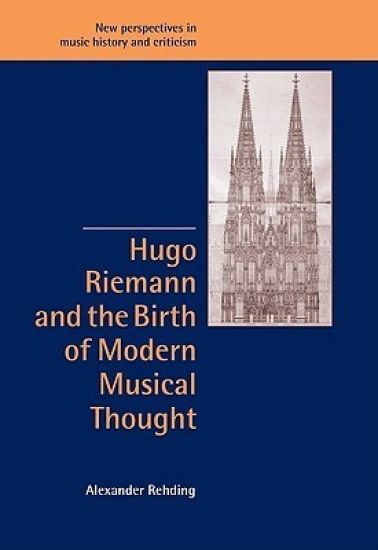
Hugo Riemann and the Birth of Modern Musical Thought

Hugo Riemann and the Birth of Modern Musical Thought

Rehding Alexander

Cambridge University Press
2009
pokkari
Generally acknowledged as the most important German musicologist of his age, Hugo Riemann (1849–1919) shaped the ideas of generations of music scholars, not least because his work coincided with the institutionalisation of academic musicology around the turn of the last century. This influence, however, belies the contentious idea at the heart of his musical thought, an idea he defended for most of his career - harmonic dualism. By situating Riemann's musical thought within turn-of-the-century discourses about the natural sciences, German nationhood and modern technology, this book reconstructs the cultural context in which Riemann's ideas not only 'made sense' but advanced an understanding of the tonal tradition as both natural and German. Riemann's musical thought - from his considerations of acoustical properties to his aesthetic and music-historical views - thus regains the coherence and cultural urgency that it once possessed.
Hugo von Hofmannsthal

Hugo von Hofmannsthal

Benjamin Bennett

Cambridge University Press
2009
pokkari
This book focuses on Hugo von Hofmannsthal's intense, lifelong concentration upon a single cohesive set of poetic, philosophical and ethical concerns, a quality of his work which has been neglected in the bulk of existing scholarship. Professor Bennett examines Hofmannsthal's work in the context of literary theory and the history of philosophy, referring especially to Nietzsche, German Idealism and the poetics of German Classicism. He identifies three principal areas of concern to Hofmannsthal: the theory of genre, the question of the role of literature in society and the search for a fruitful response to the problem of the historical development of culture. The argument proceeds by way of detailed interpretation of texts, including Der Tor und der Tod, the Chandos letter, Ariadne auf Naxos, Der Schwierige, Das Salzburger Grosse Welttheater and Der Turm.
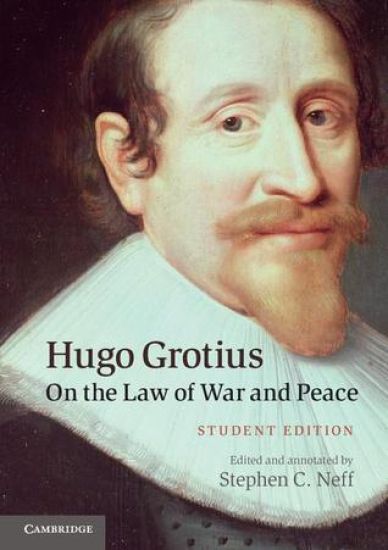
Hugo Grotius on the Law of War and Peace
Despite its significant influence on international law, international relations, natural law and political thought in general, Grotius's Law of War and Peace has been virtually unavailable for many decades. Stephen Neff's edited and annotated version of the text rectifies this situation. Containing the substantive portion of the classic text, but shorn of extraneous material, this edited and annotated edition of one of the classic works of Western legal and political thought is intended for students and teachers in four primary areas: history of international law, history of political thought, history of international relations and history of philosophy.
Hugo Grotius on the Law of War and Peace
Despite its significant influence on international law, international relations, natural law and political thought in general, Grotius's Law of War and Peace has been virtually unavailable for many decades. Stephen Neff's edited and annotated version of the text rectifies this situation. Containing the substantive portion of the classic text, but shorn of extraneous material, this edited and annotated edition of one of the classic works of Western legal and political thought is intended for students and teachers in four primary areas: history of international law, history of political thought, history of international relations and history of philosophy.
Hugo von Hofmannsthal

Hugo von Hofmannsthal

Benjamin Bennett

Cambridge University Press
1988
sidottu
This book focuses on Hugo von Hofmannsthal's intense, lifelong concentration upon a single cohesive set of poetic, philosophical and ethical concerns, a quality of his work which has been neglected in the bulk of existing scholarship. Professor Bennett examines Hofmannsthal's work in the context of literary theory and the history of philosophy, referring especially to Nietzsche, German Idealism and the poetics of German Classicism. He identifies three principal areas of concern to Hofmannsthal: the theory of genre, the question of the role of literature in society and the search for a fruitful response to the problem of the historical development of culture. The argument proceeds by way of detailed interpretation of texts, including Der Tor und der Tod, the Chandos letter, Ariadne auf Naxos, Der Schwierige, Das Salzburger Grosse Welttheater and Der Turm.
Hugo Wolf and the Wagnerian Inheritance

Hugo Wolf and the Wagnerian Inheritance

Glauert Amanda

Cambridge University Press
1999
sidottu
In spite of growing interest in the songs of Hugo Wolf, there is still a lack of serious critical discussion of the nature of his achievements, in particular his relationship to Richard Wagner. Wolf has been regarded as a composer who followed the style and aesthetics of Wagnerian music drama without question, while writing in a genre often seen as less challenging than the symphony or opera. This book re-examines the evidence concerning Wolf’s responses to Wagner and Wagnerism and suggests ways in which he voiced his criticism through song, and his one completed opera Der Corregidor. This opens up new insights into the kind of impact Wagner had on those following in his wake, and into the complexity and subtlety of the late nineteenth-century Lied. From this perspective, Wolf emerges as a persuasive and articulate figure, of wider musical and artistic significance than has yet been recognised.
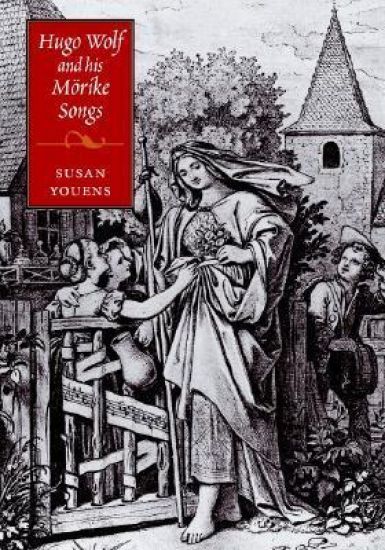
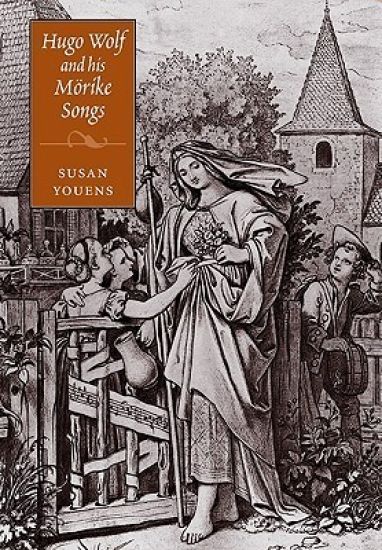
Hugo Wolf and his Mörike Songs

Hugo Wolf and his Mörike Songs

Youens Susan

Cambridge University Press
2000
sidottu
Viennese composer Hugo Wolf produced one of the most important song collections of the nineteenth century when he set to music fifty-three poems by the great German poet Eduard Mörike. Susan Youens reappraises this singular collaboration to shed new light on the sophisticated interplay between poetry and music in the songs. Wolf is customarily described as 'the Poet's Composer', someone who revered poetry and served it faithfully in his music. Yet, as Youens reveals, this cliché overlooks the rich terrain in which his songs are often at cross purposes with his chosen poetry. Although Wolf did much to draw the world's attention to the neglected Swabian poet, his musical interpretation of the poetry was also influenced by his own life, psychology and experiences. This book examines selected Mörike songs in detail, demonstrating that the poems and music each have their own distinctive stories which at times intersect but also diverge.
Hugo Riemann and the Birth of Modern Musical Thought

Hugo Riemann and the Birth of Modern Musical Thought

Alexander Rehding

Cambridge University Press
2003
sidottu
Generally acknowledged as the most important German musicologist of his age, Hugo Riemann (1849-1919) shaped the ideas of generations of music scholars, not least because his work coincided with the institutionalisation of academic musicology around the turn of the last century. This influence, however, belies the contentious idea at the heart of his musical thought, an idea he defended for most of his career - harmonic dualism. By situating Riemann's musical thought within turn-of-the-century discourses about the natural sciences, German nationhood and modern technology, this book reconstructs the cultural context in which Riemann's ideas not only 'made sense' but advanced an understanding of the tonal tradition as both natural and German. Riemann's musical thought - from his considerations of acoustical properties to his aesthetic and music-historical views - thus regains the coherence and cultural urgency that it once possessed.
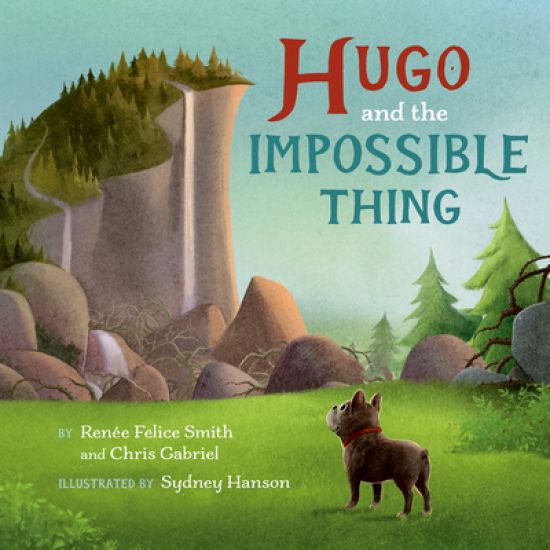
Hugo and the Impossible Thing

Hugo and the Impossible Thing

Renée Felice Smith; Chris Gabriel

Flamingo Books
2021
sidottu
Hugo has one goal - to conquer the Impossible Thing. At the edge of the forest stood the Impossible Thing. All the animals in the forest often wondered what was beyond the Impossible Thing, but since everyone said getting through it would be impossible, no animal ever tried. Until a brave little dog named Hugo decides he just might be up to the challenge. With determination and some unexpected help from his friends, Hugo learns that what may seem impossible might just be possible after all.
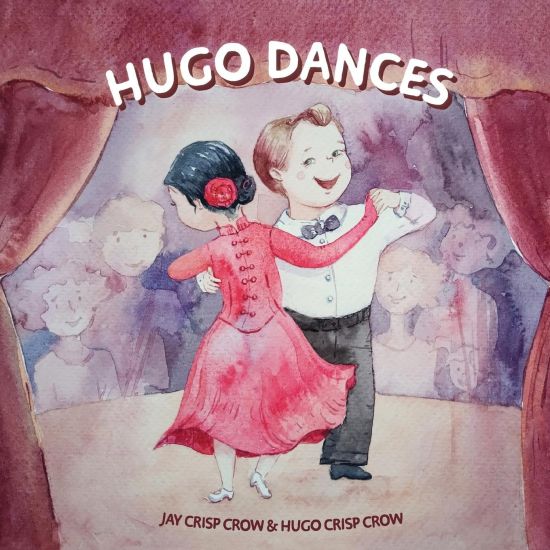
Hugo Dances

Hugo Dances

Jay Crisp Crow; Hugo Crisp Crow

various Australia publishers
2023
pokkari
Hugo is a boy with a passion for dance. He tries different sports at the urging of his family, but can't escape the rhythmic beat of his true calling. With unwavering determination, he convinces his mother to let him explore Ballroom Dancing.It seems as if Hugo has found his happiness, but doubt creeps in when he realises he looks different from the other dancers.Hugo Dances is a gentle tale of self-discovery, embracing uniqueness, and the power of following your dreams.
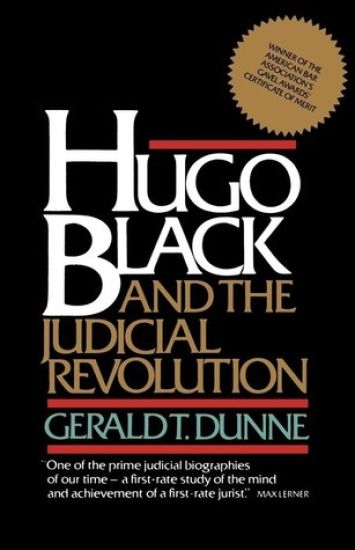
Hugo Black and the Judicial Revolution
From Simon & Schuster, Hugo Black and the Judicial Revolution is "one of the prime judicial biographies of our time." (Max Lerner)A native of St. Louis, Professor Dunne is a graduate of Georgetown University and St. Louis University Law School. He is the author of Monetary Decisions of the Supreme Court and Justice Joseph Story and The Rise of the Supreme Court.
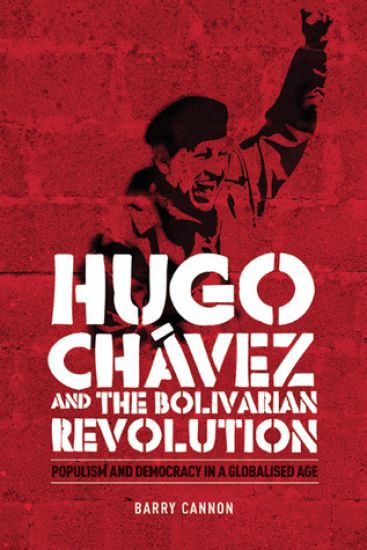
Hugo CháVez and the Bolivarian Revolution

Hugo CháVez and the Bolivarian Revolution

Barry Cannon

Manchester University Press
2009
sidottu
The emergence of Hugo Chávez in Venezuela has revived analysis of one of Latin America’s most enduring political traditions – populism. Yet Latin America has changed since the heyday of Perón and Evita. Globalisation, implemented through harsh IMF inspired Structural Adjustment Programmes, has taken hold throughout the region and democracy is supposedly the ‘only game in town’. This book examines the phenomenon that is Hugo Chávez within these contexts, assessing to what extent his government fits into established ideas on populism in Latin America. The book also provides a comprehensive and critical analysis of Chávez’s emergence, his government’s social and economic policies, its foreign policy, as well as assessing the charges of authoritarianism brought against him. Written in clear, accessible prose, the book carries debate beyond current polarised views on the Venezuelan president, to consider the prospects of the new Bolivarian model surviving beyond its leader and progenitor, Hugo Chávez.
Hugo CháVez and the Bolivarian Revolution

Hugo CháVez and the Bolivarian Revolution

Barry Cannon

Manchester University Press
2009
nidottu
The emergence of Hugo Chávez in Venezuela has revived analysis of one of Latin America’s most enduring political traditions – populism. Yet Latin America has changed since the heyday of Perón and Evita. Globalisation, implemented through harsh IMF inspired Structural Adjustment Programmes, has taken hold throughout the region and democracy is supposedly the ‘only game in town’. This book examines the phenomenon that is Hugo Chávez within these contexts, assessing to what extent his government fits into established ideas on populism in Latin America. The book also provides a comprehensive and critical analysis of Chávez’s emergence, his government’s social and economic policies, its foreign policy, as well as assessing the charges of authoritarianism brought against him. Written in clear, accessible prose, the book carries debate beyond current polarised views on the Venezuelan president, to consider the prospects of the new Bolivarian model surviving beyond its leader and progenitor, Hugo Chávez.
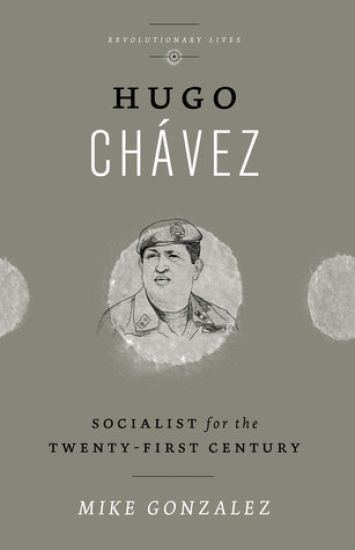
Hugo Chavez

Hugo Chavez

Mike Gonzalez

Pluto Press
2014
pokkari
When Hugo Chavez, then President of Venezuela, died in 2013, millions across the globe mourned. In an age where most politicians inspire only apathy and cynicism, Chavez's popularity, radicalism and vibrant personality were truly unique. Released one year after Chavez's unexpected death, this dramatic and intimate biography traces Chavez's life from an impoverished rural family to the Miraflores Presidential Palace in Caracas. Mike Gonzalez shows how Chavez's 'Bolivarian revolution' aimed to complete Simon Bolivar's promise of a Latin America free from imperialism. Gonzalez details Chavez's close connection to the masses and how he enraged wealthy elites by declaring his support for 21st century socialism. He concludes that the struggle for social justice inspired by Chavez can and must continue. This is an ideal guide to Chavez's inspiring life and legacy.
Hugo Chavez

Hugo Chavez

Pluto Press
2014
sidottu
When Hugo Chavez, then President of Venezuela, died in 2013, millions across the globe mourned. In an age where most politicians inspire only apathy and cynicism, Chavez's popularity, radicalism and vibrant personality were truly unique. Released one year after Chavez's unexpected death, this dramatic and intimate biography traces Chavez's life from an impoverished rural family to the Miraflores Presidential Palace in Caracas. Mike Gonzalez shows how Chavez's 'Bolivarian revolution' aimed to complete Simon Bolivar's promise of a Latin America free from imperialism. Gonzalez details Chavez's close connection to the masses and how he enraged wealthy elites by declaring his support for 21st century socialism. He concludes that the struggle for social justice inspired by Chavez can and must continue. This is an ideal guide to Chavez's inspiring life and legacy.
Hugo, the Lost Hamburger

Hugo, the Lost Hamburger

Ratna Tantra

New Generation Publishing
2010
pokkari
Hugo was once a mascot steak sitting on the windowsill of a butcher's shop in New York City. His job was simple: Sitting pretty and doing his very best to entice customers to the shop. He was made employee of the year, year after year and this made Hugo very arrogant. He wanted to venture out and see what the city has to offer. He felt that he would be better off elsewhere, he was much too good for Mr. Rosalby's butcher's shop. One day, through the cruel hand of fate, he found himself transformed to a hamburger and lost in the city! We see the start of his adventure in the city. Has Hugo finally found happiness being on his own in the Big Apple? Or was the grass greener on the other side?
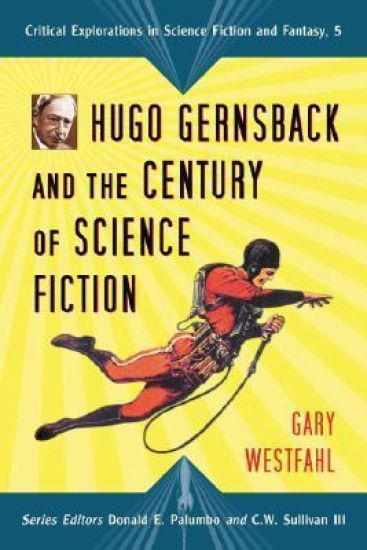
Hugo Gernsback and the Century of Science Fiction
An examination of science fiction editor and author Hugo Gernsback's career, this critical study explores the many ways in which his work influenced the genre. It summarizes the science fiction theories of Gernsback and his successors, considers his efforts to define science fiction both verbally and visually, and for the first time offers detailed studies of his rarest periodicals, including Technocracy Review, Superworld Comics, and Science-Fiction Plus. An analysis of his ground-breaking novel, Ralph 124C 41+: A Romance of the Year 2660, and its influences on a variety of science fiction novels, films and television programs is also offered.
Hugo Friedhofer: The Best Years of His Life
Hugo Friedhofer: The Best Years of His Life surveys the impressive career of one of Hollywood's extraordinary composers of music for the movies. Friedhofer became the leading orchestrator for Max Steiner, Erich Wolfgang Korngold, and Alfred Newman soon after his 1929 arrival in Hollywood. He went on to compose music for over 120 films, earning 9 Oscar nominations and receiving the award for his masterful score to The Best Years of Our Lives in 1946. Friedhofer's life is examined through essays, personal letters, and interviews with film historians and friends of the composer. The largest contribution is by Friedhofer himself in the form of an oral history conducted by Irene Kahn Atkins in 1974 for the American Film Institute. In addition to illuminating discussions of his own work, Friedhofer offers unique and humorous insight into the process of Hollywood filmmaking from 1929 up to the time of his death in 1981. He discusses working with Samuel Goldwyn, Billy Wilder, George Stevens, and William Wyler, as well as his association with composers Arnold Schoenberg, Aaron Copland, George Gershwin, and other prominent musicians of the time. Contributions to the book include essays by Hollywood historian Tony Thomas, film music historian Linda Danly, music journalist Gene Lees, and composer David Raskin. A wonderful collection that provides perspectives ranging from the personal to the critical on one of the most respected musical figures of the twentieth century.