

Kirjahaku
Etsi kirjoja tekijän nimen, kirjan nimen tai ISBN:n perusteella.
1000 tulosta hakusanalla Hussein Alshaima Taleb




Known for his most famous works, such as The Myth of the Lazy Native (1977) and The Problem of Corruption (1986), as well as his concept of the "captive mind," Syed Hussein Alatas (1928-2007) has made significant contributions to decolonization theory, social theory, and other forms of thought critical of the current neo-colonial and neoliberal world. Although Edward Said acknowledged his debt to Syed Hussein Alatas' work, especially its influence on Edward W. Said's most famous book, Orientalism, Syed Hussein Alatas' work has long been overlooked by Western academia, trapped in its Eurocentric perspective. Spurred by the commitment to continue the development of Syed Hussein Alatas' work, this edited volume attempts to demonstrate the relevance of Syed Hussein Alatas to numerous academic fields, and the potential for his thought to be transformative in the international socio-political realm. Twenty authors from various disciplines and countries have contributed to Syed Hussein Alatas and Critical Social Theory: Decolonizing the Captive Mind, in the hopes of bringing his work to the forefront of social and political theory. Contributors are: Mona Abaza, Joseph Alagha, Masturah Alatas, Sharifah Munirah Alatas, Syed Farid Alatas, Syed Imad Alatas, Hira Amin, Dustin J. Byrd, Zawawi Ibrahim, N. Jayaram, Teo Lee Ken, Habibul Haque Khondker, Victor T. King, Jo o Marcelo E. Maia, Seyed Javad Miri, Carimo Mohomed, Chandra Muzaffar, Norshahril Saat, Mostafa Soueid, and Esmaeil Zeiny.
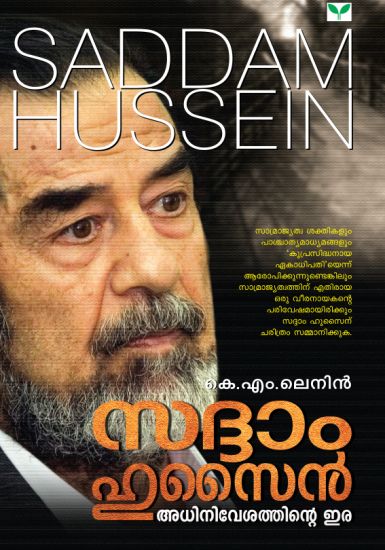


Saddam Hussein maître des mots
Editions L'Harmattan
2025
pokkari

This book studies the six-year period in modern Jordanian political history when the Hashemite kingdom was in crisis. Based on exclusive interviews and newly-released archival resources, this stylish political history is the first scholarly study of the early years of King Hussein's rule when power rested in the hands of the King's advisers.
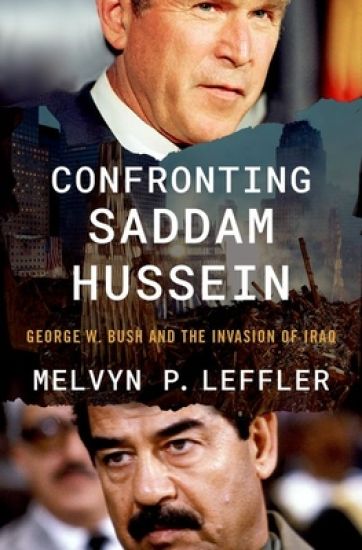
A vivid portrayal of what drove George W. Bush to invade Iraq in 2003--an outcome that was in no way predetermined. America's decision to go to war in Iraq in 2003 is arguably the most important foreign policy choice of the entire post-Cold War era. Nearly two decades after the event, it remains central to understanding current international politics and US foreign relations. In Confronting Saddam Hussein, the eminent historian of US foreign policy Melvyn P. Leffler analyzes why the US chose war and who was most responsible for the decision. Employing a unique set of personal interviews with dozens of top officials and declassified American and British documents, Leffler vividly portrays the emotions and anxieties that shaped the thinking of the president after the shocking events of 9/11. He shows how fear, hubris, and power influenced Bush's approach to Saddam Hussein's Iraq. At the core of Leffler's account is his compelling portrait of Saddam Hussein. Rather than stressing Bush's preoccupation with promoting freedom or democracy, Leffler emphasizes Hussein's brutality, opportunism, and unpredictability and illuminates how the Iraqi dictator's record of aggression and intransigence haunted the president and influenced his calculations. Bush was not eager for war, and the decision to invade Iraq was not a fait accompli. Yet the president was convinced that only by practicing coercive diplomacy and threatening force could he alter Hussein's defiance, a view shared by British Prime Minister Tony Blair and other leaders around the world, including Hans Blix, the chief UN inspector. Throughout, Leffler highlights the harrowing anxieties surrounding the decision-making process after the devastating attack on 9/11 and explains the roles of contingency, agency, rationality, and emotion. As the book unfolds, Bush's centrality becomes more and more evident, as does the bureaucratic dysfunctionality that contributed to the disastrous occupation of Iraq. A compelling reassessment of George W. Bush's intervention in Iraq, Confronting Saddam Hussein provides a provocative reinterpretation of the most important international event of the 21st century.
A vivid portrayal of what drove George W. Bush to invade Iraq in 2003--an outcome that was in no way predetermined. America's decision to go to war in Iraq in 2003 is arguably the most important foreign policy choice of the entire post-Cold War era. Nearly two decades after the event, it remains central to understanding current international politics and US foreign relations. In Confronting Saddam Hussein, the eminent historian of US foreign policy Melvyn P. Leffler analyzes why the US chose war and who was most responsible for the decision. Employing a unique set of personal interviews with dozens of top officials and declassified American and British documents, Leffler vividly portrays the emotions and anxieties that shaped the thinking of the president after the shocking events of 9/11. He shows how fear, hubris, and power influenced Bush's approach to Saddam Hussein's Iraq. At the core of Leffler's account is his compelling portrait of Saddam Hussein. Rather than stressing Bush's preoccupation with promoting freedom or democracy, Leffler emphasizes Hussein's brutality, opportunism, and unpredictability and illuminates how the Iraqi dictator's record of aggression and intransigence haunted the president and influenced his calculations. Bush was not eager for war, and the decision to invade Iraq was not a fait accompli. Yet the president was convinced that only by practicing coercive diplomacy and threatening force could he alter Hussein's defiance, a view shared by British Prime Minister Tony Blair and other leaders around the world, including Hans Blix, the chief UN inspector. Throughout, Leffler highlights the harrowing anxieties surrounding the decision-making process after the devastating attack on 9/11 and explains the roles of contingency, agency, rationality, and emotion. As the book unfolds, Bush's centrality becomes more and more evident, as does the bureaucratic dysfunctionality that contributed to the disastrous occupation of Iraq. A compelling reassessment of George W. Bush's intervention in Iraq, Confronting Saddam Hussein provides a provocative reinterpretation of the most important international event of the 21st century.

Playing Atari with Saddam Hussein: Based on a True Story
Jennifer Roy; Ali Fadhil
Clarion Books
2019
nidottu
At the start of 1991, eleven-year-old Ali Fadhil was consumed by his love for soccer, video games, and American television shows. Then, on January 17, Iraq's dictator, Saddam Hussein, went to war with thirty-four nations led by the United States. Over the next forty-three days, Ali and his family survived bombings, food shortages, and constant fear. Ali and his brothers played soccer on the abandoned streets of their Basra neighborhood, wondering when or if their medic father would return from the war front. Cinematic, accessible, and timely, this is the story of one ordinary kid's view of life during war.
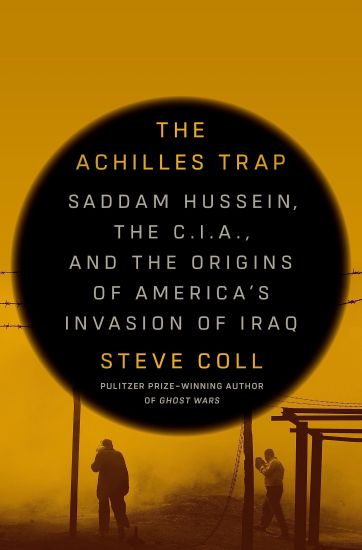
The Achilles Trap: Saddam Hussein, the C.I.A., and the Origins of America's Invasion of Iraq
Steve Coll
PENGUIN PRESS
2024
sidottu
A New York Times and Washington Post Notable Book - Named a Best Book of the Year by The New Yorker - Nominated for a National Book Critics Circle Award in Nonfiction - Finalist for the PEN America Literary Award "Excellent . . . A more intimate picture of the dictator's thinking about world politics, local power and his relationship to the United States than has been seen before." --The New York Times "Another triumph from one of our best journalists." --The Washington Post "Voluminously researched and compulsively readable." --Air Mail From bestselling and Pulitzer Prize-winning author Steve Coll, the definitive story of the decades-long relationship between the United States and Saddam Hussein, and a deeply researched and news-breaking investigation into how human error, cultural miscommunication, and hubris led to one of the costliest geopolitical conflicts of our timeWhen the United States invaded Iraq in 2003, its message was clear: Iraq, under the control of strongman Saddam Hussein, possessed weapons of mass destruction that, if left unchecked, posed grave danger to the world. But when no WMDs were found, the United States and its allies were forced to examine the political and intelligence failures that had led to the invasion and the occupation, and the civil war that followed. One integral question has remained unsolved: Why had Saddam seemingly sacrificed his long reign in power by giving the false impression that he had hidden stocks of dangerous weapons? The Achilles Trap masterfully untangles the people, ploys of power, and geopolitics that led to America's disastrous war with Iraq and, for the first time, details America's fundamental miscalculations during its decades-long relationship with Saddam Hussein. Beginning with Saddam's rise to power in 1979 and the birth of Iraq's secret nuclear weapons program, Steve Coll traces Saddam's motives by way of his inner circle. He brings to life the diplomats, scientists, family members, and generals who had no choice but to defer to their leader--a leader directly responsible for the deaths of hundreds of thousands of Iraqis, as well as the torture or imprisonment of hundreds of thousands more. This was a man whose reasoning was impossible to reduce to a simple explanation, and the CIA and successive presidential administrations failed to grasp critical nuances of his paranoia, resentments, and inconsistencies--even when the stakes were incredibly high. Calling on unpublished and underreported sources, interviews with surviving participants, and Saddam's own transcripts and audio files, Coll pulls together an incredibly comprehensive portrait of a man who was convinced the world was out to get him and acted accordingly. A work of great historical significance, The Achilles Trap is the definitive account of how corruptions of power, lies of diplomacy, and vanity--on both sides--led to avoidable errors of statecraft, ones that would enact immeasurable human suffering and forever change the political landscape as we know it.
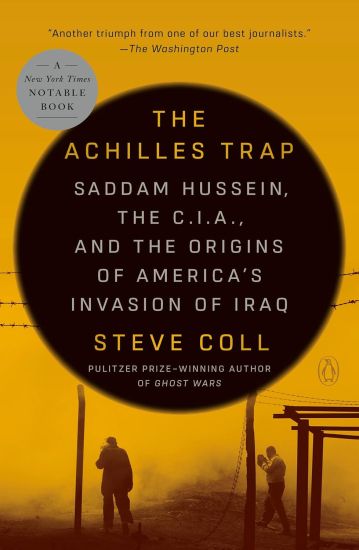
The Achilles Trap: Saddam Hussein, the C.I.A., and the Origins of America's Invasion of Iraq
Steve Coll
PENGUIN BOOKS
2025
nidottu
A New York Times and Washington Post Notable Book - Named a Best Book of the Year by The New Yorker - Nominated for a National Book Critics Circle Award in Nonfiction "Excellent . . . A more intimate picture of the dictator's thinking about world politics, local power and his relationship to the United States than has been seen before." --The New York Times "Another triumph from one of our best journalists." --The Washington Post "Voluminously researched and compulsively readable." --Air Mail From bestselling and Pulitzer Prize-winning author Steve Coll, the definitive story of the decades-long relationship between the United States and Saddam Hussein, and a news-breaking investigation into one of the costliest geopolitical conflicts of our time. When the United States invaded Iraq in 2003, its message was clear: Iraq, under the control of strongman Saddam Hussein, possessed weapons of mass destruction that, if left unchecked, posed grave danger to the world. But when no WMDs were found, the United States and its allies were forced to examine the political and intelligence failures that had led to the invasion and the occupation, and the civil war that followed. One integral question has remained unsolved: Why had Saddam seemingly sacrificed his long reign in power by giving the false impression that he had hidden stocks of dangerous weapons? The Achilles Trap masterfully untangles the people, ploys of power, and geopolitics that led to America's disastrous war with Iraq and, for the first time, details America's fundamental miscalculations during its decades-long relationship with Saddam Hussein. Calling on unpublished and underreported sources, interviews with surviving participants, and Saddam's own transcripts and audio files, Steve Coll pulls together an incredibly comprehensive portrait of a man who was convinced the world was out to get him and acted accordingly. A work of great historical significance, The Achilles Trap exposes how corruptions of power, lies of diplomacy, and vanity--on both sides--led to avoidable errors of statecraft, ones that would enact immeasurable human suffering and forever change the political landscape as we know it.

Playing Atari with Saddam Hussein: Based on a True Story
Jennifer Roy; Ali Fadhil
Clarion Books
2018
sidottu
At the start of 1991, eleven-year-old Ali Fadhil was consumed by his love for soccer, video games, and American television shows. Then, on January 17, Iraq's dictator Saddam Hussein went to war with thirty-four nations led by the United States. Over the next forty-three days, Ali and his family survived bombings, food shortages, and constant fear. Ali and his brothers played soccer on the abandoned streets of their Basra neighborhood, wondering when or if their medic father would return from the war front. Cinematic, accessible, and timely, this is the story of one ordinary kid's view of life during war.