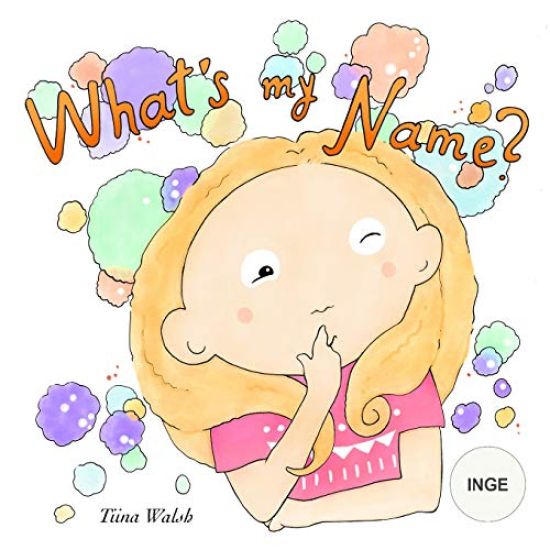
A personalised storybook for girls called INGE. The story is based on the letters of the child's own name. All books are different from one another.The girl wakes up but can't remember her name. Magic Mouse knows how to solve the problem. They go on a wonderful adventure in the Magic Bus Translated and adapted by the author from the top-selling Finnish language children's namebook series "Tytt /Poika, joka unohti nimens ". The beautiful hand-drawn pictures will delight both the young and the young-at-heart Looking for a namebook "What's my name?" but couldn't find a book for the name you are looking for? Please don't hesitate to contact me with your name request -Tiina WalshAuthorfb.me/whatsmynamestorybooks for more details about the storybooks
Studienarbeit aus dem Jahr 2011 im Fachbereich Germanistik - Neuere Deutsche Literatur, Note: 2,0, Universit t Leipzig (Institut f r Germanistik), Veranstaltung: Feministische Literaturwissenschaft und Gender-Kritik, Sprache: Deutsch, Abstract: Die Konstellation von Mann und Frau ist sowohl im geschichtlichen R ckblick als auch heute spannungsgeladen und wird kontrovers diskutiert. Sicherlich wird es auch in Zukunft so blei-ben. "Mann" und "Frau" werden h ufig als mitunter sehr gegens tzliche Pole, im Sinne von "Mann sein" gegen ber "Frau sein," betrachtet und dabei als vermeintlich klar voneinander abgrenzbar verstanden. Doch eine strikte Unterscheidung in Schwarz-Wei -Manier w re zu einfach und w rde dieser Konstellation nicht gerecht werden k nnen. An Beispiel von Dora Heldts "Tante Inge haut ab" werden stereotype Merkmale (typisch m nnlich - typisch weiblich) untersucht, herausgearbeitet und miteinander verglichen. Lassen sich bei m nnlichen Figuren auch Merkmale bzw. Charaktereigenschaften finden, die als "typisch weiblich" angesehen werden? Und lassen sich umgekehrt bei weiblichen Figuren "typisch m nnliche" Eigenschaften finden?
This work has been selected by scholars as being culturally important and is part of the knowledge base of civilization as we know it.This work is in the public domain in the United States of America, and possibly other nations. Within the United States, you may freely copy and distribute this work, as no entity (individual or corporate) has a copyright on the body of the work.Scholars believe, and we concur, that this work is important enough to be preserved, reproduced, and made generally available to the public. To ensure a quality reading experience, this work has been proofread and republished using a format that seamlessly blends the original graphical elements with text in an easy-to-read typeface.We appreciate your support of the preservation process, and thank you for being an important part of keeping this knowledge alive and relevant.
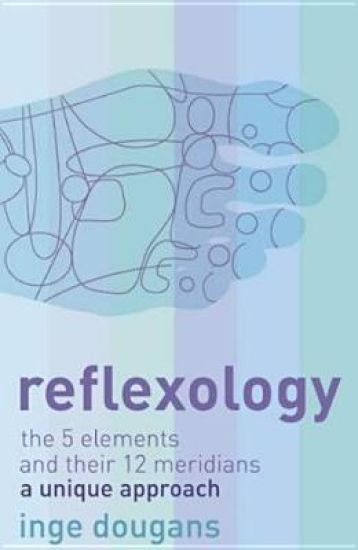
This complete self-teaching guide is the perfect handbook for beginners and students alike. It uniquely links Eastern and Western approaches to reflexology and health, making this a comprehensive guide to using the meridians and pressure points of the feet to treat a wide range of ailments. Reflexology, the gentle but highly effective form of therapeutic foot massage, has gained wide acceptance as a powerful, natural healing art. Remarkable results have been achieved with ailments such as back pain, chronic fatigue (ME), digestive problems, eczema, insomnia and migraine. Inge Dougans’s new book includes her latest research into the benefits of her unique techniques and is a complete self-teaching guide suitable for beginners and students alike. Bringing together East and West by making clear the close connection between reflexology and Chinese meridian theory, internationally respected reflexologist Inge Dougans shows how the human body has its own internal energy lines – or acupuncture meridians – and reveals how to find and use the reflexology points and associated meridians on the foot to restore the body to its natural balance, prevent ill health and assist relaxation. This comprehensive handbook includes: • the history of reflexology and the Chinese meridian therapy • an explanation of how reflexology and the meridian theory work • illustrated step-by-step reflexology treatments for specific ailments • treatments of meridian disorders • case histories.
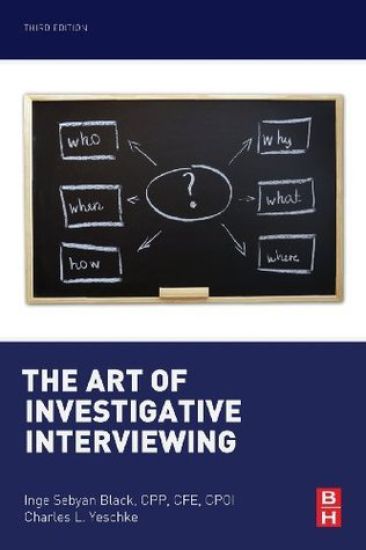
The Art of Investigative Interviewing, Third Edition can be used by anyone who is involved in investigative interviewing. It is a perfect combination of real, practical, and effective techniques, procedures, and actual cases. Learn key elements of investigative interviewing, such as human psychology, proper interview preparation, tactical concepts, controlling the interview environment, and evaluating the evidence obtained from the interview. Inge Sebyan Black updated the well-respected work of Charles L. Yeschke to provide everything an interviewer needs to know in order to conduct successful interviews professionally, with integrity, and within the law. This book covers the myriad factors of an interview — including issues of evidence, rapport, deception, authority, and setting — clearly and effectively. It also includes a chapter on personnel issues and internal theft controls.
The Art of Investigative Interviewing, Fourth Edition, builds on the successes of the previous editions providing the reader guidance on conducting investigative interviews, both ethically and professionally. The book can be used by anyone who is involved in investigative interviewing. It is a perfect combination of real, practical, and effective techniques, procedures, and actual cases. The reader learns key elements of investigative interviewing, such as human psychology, proper interview preparation, tactical concepts, controlling the interview environment, and evaluating the evidence obtained from the interview. New to this edition will be coverage of Open Source Intelligence (OSINT) tools, workplace investigations, fraud investigations and the role of audit. Larry Fennelly joins original author Inge Sebyan Black, both well-known and respected in the field, providing everything an interviewer needs to know in order to conduct successful interviews with integrity and within the law. Written for anyone involved in investigative interviewing.
An excellent critical analysis and scientific assessment of the nature and actual level of risk leading environmental health hazards pose to the public. Issues such as radiation from nuclear testing, radon in the home, and the connection between electromagnetic fields and cancer, environmental factors and asthma, pesticides and breast cancer and leukaemia clusters around nuclear plants are discussed and how scientists assesa these risks is illuminated. This book will enable readers to better understand environmental health issues and with the proper scientific understanding, make informed, rational decisions about them.
The world's agenda of international cooperation has changed. The conventional concerns of foreign affairs, international trade, and development assistance, are increasingly sharing the political center stage with a new set of issues. These include trans-border concerns such as global financial stability and market efficiency, risk of global climate change, bio-diversity conservation, control of resurgent and new communicable diseases, food safety, cyber crime and e-commerce, control of drug trafficking, and international terrorism and weapons of mass destruction. Globalization and increasing porosity of national borders have been key driving forces that have led to growing interdependence and interlocking of the public domains--and therefore, public policy concerns--of countries, governments, private businesses, civil society, and people at large. Thus, new and different issues are now occupying top places on national policy agendas, and consequently, on the agendas of international negotiating forums. The policy approaches to global challenges are also changing. A proliferation and diversification of international cooperation efforts include focus on financing arrangements. Financing of international cooperation in most instances is a haphazard and non-transparent process and often seems to run parallel to international negotiations. There are many unfunded mandates and many-non-mandatory funds. To agree on and to achieve international economic goals, we need to understand how financing of international cooperation efforts actually works. Our understanding is hampered by two gaps: 1) lack of an integrated and cohesive theoretical framework; 2) lack of consolidated empirical and operational knowledge in the form of a comprehensive inventory of past, current and possible future (i.e. currently deliberated) financing mechanisms. This book reduces these two gaps and provides a guide to improve our ability to finance international cooperation.
Africa often remains neglected in studies that discuss the historical relationship between international law and imperialism during the nineteenth century. When it does feature, focus tends to be on the Scramble for Africa, and the treaties concluded between European powers and African polities in which sovereignty and territory were ceded. Drawing on a wide range of archival material, Inge Van Hulle brings a fresh new perspective to this traditional narrative. She reviews the use and creation of legal instruments that expanded or delineated the boundaries between British jurisdiction and African communities in West Africa, and uncovers the practicality and flexibility with which international legal discourse was employed in imperial contexts. This legal experimentation went beyond treaties of cession, and also encompassed commercial treaties, the abolition of the slave trade, extraterritoriality, and the use of force. The book argues that, by the 1880s, the legal techniques that were fashioned in the language of international law in West Africa had largely developed their own substantive characteristics. Legal ordering was not done in reference to adjudication before Western courts or the writings of Western lawyers, but in reference to what was deemed politically expedient and practically feasible by imperial agents for the preservation of social peace, commercial interaction, and humanitarian agendas.