
Kirjahaku
Etsi kirjoja tekijän nimen, kirjan nimen tai ISBN:n perusteella.
425 tulosta hakusanalla Inka Mero
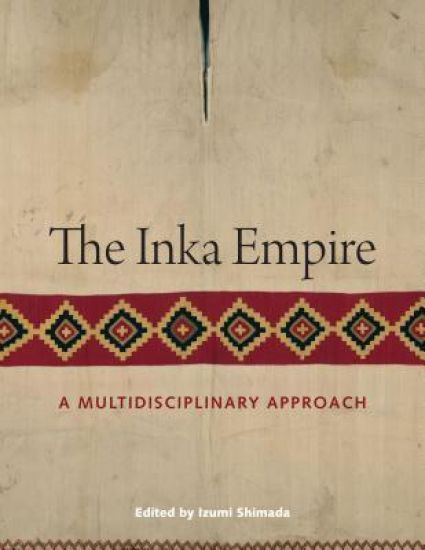
The Inka Empire
University of Texas Press
2015
sidottu
Massive yet elegantly executed masonry architecture and andenes (agricultural terraces) set against majestic and seemingly boundless Andean landscapes, roads built in defiance of rugged terrains, and fine textiles with orderly geometric designs-all were created within the largest political system in the ancient New World, a system headed, paradoxically, by a single, small minority group without wheeled vehicles, markets, or a writing system, the Inka. For some 130 years (ca. A.D. 1400 to 1533), the Inka ruled over at least eighty-six ethnic groups in an empire that encompassed about 2 million square kilometers, from the northernmost region of the Ecuador–Colombia border to northwest Argentina.The Inka Empire brings together leading international scholars from many complementary disciplines, including human genetics, linguistics, textile and architectural studies, ethnohistory, and archaeology, to present a state-of-the-art, holistic, and in-depth vision of the Inkas. The contributors provide the latest data and understandings of the political, demographic, and linguistic evolution of the Inkas, from the formative era prior to their political ascendancy to their post-conquest transformation. The scholars also offer an updated vision of the unity, diversity, and essence of the material, organizational, and symbolic-ideological features of the Inka Empire. As a whole, The Inka Empire demonstrates the necessity and value of a multidisciplinary approach that incorporates the insights of fields beyond archaeology and ethnohistory. And with essays by scholars from seven countries, it reflects the cosmopolitanism that has characterized Inka studies ever since its beginnings in the nineteenth century.

Imperial frontiers are a fascinating stage for studying the interactions of people, institutions, and their environments. In one of the first books to explore the Inka frontier through archaeology, Sonia Alconini examines part of present-day Bolivia that was once a territory at the edge of the Inka empire. Along this frontier, one of the New World’s most powerful polities came into repeated conflict with tropical lowland groups that it could never subject to its rule.Using extensive field research, Alconini explores the multifaceted socioeconomic processes that transpired in the frontier region. Her unprecedented study shows how the Inka empire exercised control over vast expanses of land and peoples in a territory located hundreds of miles away from the capital city of Cusco, and how people on the frontier navigated the cultural and environmental divide that separated the Andes and the Amazon.
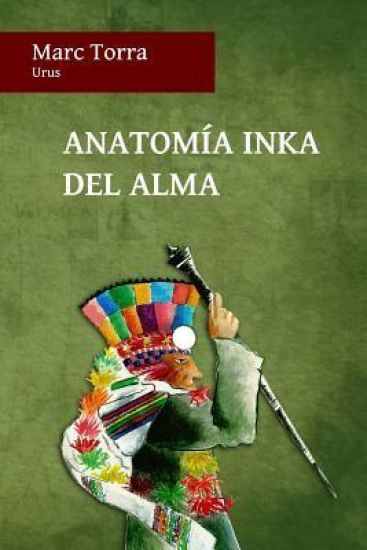
Con la entrada en la era de la materialidad, hace ahora 5 mil a os, el conocimiento sobre la anatom a del alma pas a formar parte de las distintas tradiciones esot ricas. Ello hizo que fuera reservado a unos pocos iniciados.En los Himalayas fue un saber transmitido oralmente, de maestro a disc pulo, y registrado en libros como los puranas o los tantras. En el Antiguo Egipto y Sumeria, se transmiti a partir de las diversas escuelas m sticas. Con la llegada del islam, muchas de dichas escuelas se convirtieron en hermandades suf es. En occidente, dado el poder que tal saber confer a, a la sombra del mismo se fundaron diversas sociedades secretas, reserv ndolo a unos pocos adeptos y especialmente al grupo aun m s reducido de sus altas jerarqu as.No fue hasta finales del siglo XIX que tal informaci n empez a trascender el c rculo de disc pulos, iniciados y adeptos, para serle accesible al resto de los comunes.Sin embargo, en los Andes no fue as . Tal como nos revela la presente obra, la civilizaci n inka lo transmiti abiertamente. Lo comunic en sus mitos y leyendas, en el urbanismo, en los actos y festividades, en las danzas, en los s mbolos y emblemas, y en el lenguaje. En ellos fue 'escrito' para que pudiera ser 'le do' por todos, pues por definici n en una sociedad en la que no existi la escritura, tampoco pudo haber analfabetismo.

"Are my paintings good enough to keep on painting?" Inka is on a quest to discover if she is good enough at painting to pursue it as her lifelong dream. But how would she ever find out and who would be able to tell her?Abandoned on the roadside in a rainstorm at a young age, Inka was lucky enough to have been adopted by a finishing school for girls. But that roof over her head wouldn't last forever. After finding an advertisement for a psychic, Inka puts her trust in the universe and recklessly jumps ship, intent on finding her way across the country to the great Madga Gaska where she believes she will find peace in finally knowing her destiny. On the way, she gets caught up in a whirlwind of outlaws and bandits, twirling through the colours of the world around her, and Inka's desire to know her fate before it's due to arrive lands her in the terrifying truth of a life worth painting.This is the illustrated edition of Eternal Inka: A Novel.

"Are my paintings good enough to keep on painting?" Inka is on a quest to discover if she is good enough at painting to pursue it as her lifelong dream. But how would she ever find out and who would be able to tell her?Abandoned on the roadside in a rainstorm at a young age, Inka was lucky enough to have been adopted by a finishing school for girls. But that roof over her head wouldn't last forever. After finding an advertisement for a psychic, Inka puts her trust in the universe and recklessly jumps ship, intent on finding her way across the country to the great Madga Gaska where she believes she will find peace in finally knowing her destiny. On the way, she gets caught up in a whirlwind of outlaws and bandits, twirling through the colours of the world around her, and Inka's desire to know her fate before it's due to arrive lands her in the terrifying truth of a life worth painting.

Provincia Inka de Pachacamac
Miguel Antonio Cornejo Guerrero
Ediciones Nuestro Conocimiento
2020
nidottu

Christin, Antonia och Marie, tre läkarkandidater från Stockholm, försvinner spårlöst efter att de har vandrat Inkaleden i Peru. Eva Duveholm, mamma till Christin, är oroad över den peruanska polisens passivitet. Hon beslutar sig för att på egen hand söka efter sin dotter och hennes kompisar i Peru, och får hjälp av sin väninna Cecilia Tornudd. När ytterligare en svensk flicka försvinner i Argentina, tillsammans med sin pojkvän, blir den svenska polisen fundersam. Finns det ett samband mellan de försvunna ungdomarna? Svart Inka är författaren Ingrid Boströms fjärde fristående deckare.
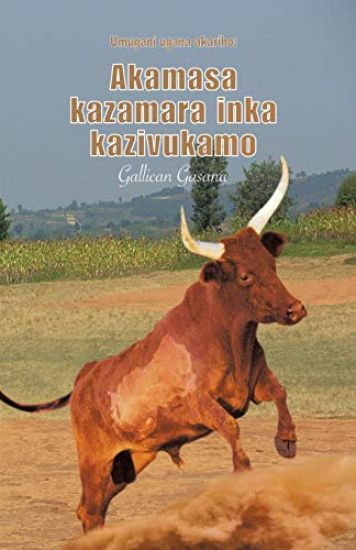
Iriburiro Umugani ugana akariho: « Akamasa kazamara inka kazivukamo "Akamasa kazamara inka kazivukamo" Ni umugani w'ikinyarwanda w'abakurambere umaze imyaka amagana. Uwo mugani bawifashisha kenshi iyo havutse ikibazo mu muryango, kandi kizannywe n'umwe muri bo. Niyo mpanvu bavuga ko akazazimara kazivukamo. Zimwe mu nyandiko nanditse ku mbuga nkoranyambaga, 26 muri zo nifashishije uyu mugani ngira ngo nsobanure ibizazane byinshi biba mu muryango nyarwanda, kandi bitewe na bamwe(n'umwe) muri twe; bitandukanye cyane no gutukana nkuko bamwe (bigiza nkana) bakomeje kubinshinja birengagiza ko ari umugani w'abakurambere. Mboneyeho gushimira mwebwe mwese muzisanga muri izi nyandiko, kuko nta gushidikanya mwazigizemo uruhare rukomeye; ari abanyunganiye, abanshimye, abankosoye, ntibagiwe nabatukanye kuko burya ngo uburiye mu kwe ntako aba atagize. Iyi nkusanya-nyandiko 26 n'impaka ziziherekeje, nyituye abanyarwanda mwese mwabashije kuzisoma; nkaba nzishyize hamwe ngo abazifuza kwongera kuzisoma bongere bazisome, yemwe n'abatarazisomye nabo babonereho. By'umwihariko kandi, iyi nkusanya-nyandiko nyituye umuryango wanjye, abasangirangendo, abavandimwe n'inshuti. Muhorane amahoro y'Imana.
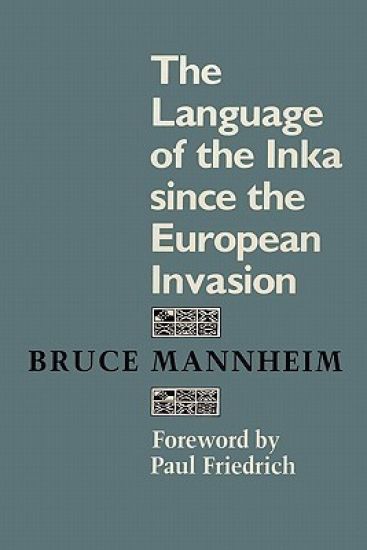
The Language of the Inka since the European Invasion
Bruce Mannheim
University of Texas Press
1991
pokkari
The Inka empire, Tawantinsuyu, fell to Spanish invaders within a year's time (1532-1533), but Quechua, the language of the Inka, is still the primary or only language of millions of Inka descendants throughout the southern Andes. In this innovative study, Bruce Mannheim synthesizes all that is currently known about the history of Southern Peruvian Quechua since the Spanish invasion, providing new insights into the nature of language change in general, into the social and historical contexts of language change, and into the cultural conditioning of linguistic change.Mannheim first discusses changes in the social setting of language use in the Andes from the time of the first European contact in the sixteenth century until today. He reveals that the modern linguistic homogeneity of Spanish and Quechua is a product of the Spanish conquest, since multilingualism was the rule in the Inka empire. He identifies the social and political forces that have influenced the kinds of changes the language has undergone. And he provides the first synthetic history of Southern Peruvian Quechua, making it possible at last to place any literary document or written text in a chronological and social context.Mannheim also studies changes in the formal structure of Quechua. He finds that changes in the sound system were motivated primarily by phonological factors and also that the changes were constrained by a set of morphological and syntactic conditions. This last conclusion is surprising, since most historical linguists assume that sound change is completely independent of other aspects of language. Thus, The Language of the Inka since the European Invasion makes an empirical contribution to a general theory of linguistic change.Written in an engaging style that is accessible to the nonlinguist, this book will have a special appeal to readers interested in the history and anthropology of native South America.

Memory Landscapes of the Inka Carved Outcrops
Jessica Joyce Christie; Frank Meddens
Lexington Books
2015
sidottu
Memory Landscapes of the Inka Carved Outcrops: From Past to Present presents a comprehensive analysis of the carved rocks the Inka created in the Andean highlands during the fifteenth and early sixteenth centuries. It provides an overview of Inka history, a detailed analysis of the techniques and styles of carving, and five comprehensive case studies. It opens in the Inka capital, Cusco, one of the two locations where the geometric style of Inka carving was authored by the ninth ruler Pachakuti Inka Yupanki. The following chapters move to the origin places on the Island of the Sun in Lake Titicaca and at Pumaurqu, southwest of Cusco, where the Inka constructed the emergence of the first members of their dynasty from sacred rock outcrops. The final case studies focus upon the royal estates of Machu Picchu and Chinchero. Machu Picchu is the second site where Pachakuti appears to have authored the geometric style. Chinchero was built by his son, Thupa Inka Yupanki, who adopted his father’s strategy of rock carving and associated political messages. The methodology used in this book reconstructs relational networks between the sculpted outcrops, the land and people and examines how such networks have changed over time. The primary focus documents the specific political context of Inka carved rocks expanded into the performance of a stone ideology, which set Inka stone cults decidedly apart from earlier and later agricultural as well as ritual uses of empowered stones. When the Inka state formed in the mid-fifteenth century, carved rocks were used to mark local territories in and around Cusco. In the process of imperial expansion, selected outcrops were sculpted in peripheral regions to map Inka presence and showcase the cultivated and ordered geography of the state.


Rethinking the Inka
University of Texas Press
2022
sidottu
2023 Book Award, Society for American Archaeology A dramatic reappraisal of the Inka Empire through the lens of Qullasuyu. The Inka conquered an immense area extending across five modern nations, yet most English-language publications on the Inka focus on governance in the area of modern Peru. This volume expands the range of scholarship available in English by collecting new and notable research on Qullasuyu, the largest of the four quarters of the empire, which extended south from Cuzco into contemporary Bolivia, Argentina, and Chile. From the study of Qullasuyu arise fresh theoretical perspectives that both complement and challenge what we think we know about the Inka. While existing scholarship emphasizes the political and economic rationales underlying state action, Rethinking the Inka turns to the conquered themselves and reassesses imperial motivations. The book's chapters, incorporating more than two hundred photographs, explore relations between powerful local lords and their Inka rulers; the roles of nonhumans in the social and political life of the empire; local landscapes remade under Inka rule; and the appropriation and reinterpretation by locals of Inka objects, infrastructure, practices, and symbols. Written by some of South America's leading archaeologists, Rethinking the Inka is poised to be a landmark book in the field.