Kirjahaku
Etsi kirjoja tekijän nimen, kirjan nimen tai ISBN:n perusteella.
1000 tulosta hakusanalla Israel Zangwill

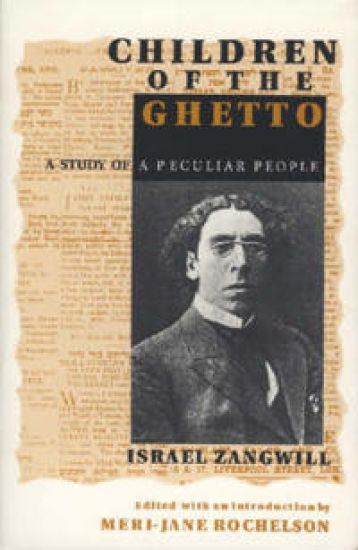
In its first appearance in 1892, Israel Zangwill's ""Children of the Ghetto"" created a sensation in both England and America, becoming the first Anglo-Jewish bestseller and establishing Zangwill as the literary voice of Anglo-Jewry. A novel set in late-19th-century London, ""Children of the Ghetto"" gave an inside look into an immigrant community that was almost as mysterious to the more established middle-class Jews of Britain as to the non-Jewish population, providing an analysis of a generation caught between the ghetto and modern British life. ""Children of the Ghetto"" remains a landmark work of modern Jewish fiction as well as an essential late Victorian text. As the first Jewish East End novel, the book ignited an important 20th-century genre. In a period that saw the development of the working-class novel and the novel of spiritual malaise, ""Children of the Ghetto"" encompassed both. The novel conveys details of life in the ghetto and explores a spiritual crisis among young Jews at a time when a questioning of beliefs appeared in Christian novels as well. Zangwill's realistic portrayal intrigued middle-class Jews and elicited nostalgia in those who started out in the East End. Although a novel about British Jews, ""Children of the Ghetto"" also found success in the US as the first work of fiction published by the Jewish Publication Society of America. This volume brings back to print the 1895 edition of ""Children of the Ghetto"", the latest American version known to have been corrected by the author. Meri-Jane Rochelson places the novel in proper context by providing a biographical, historical and critical introduction; a bibliography of primary and secondary sources, and notes on the text, making this accessible to both Jewish and non-Jewish readers.
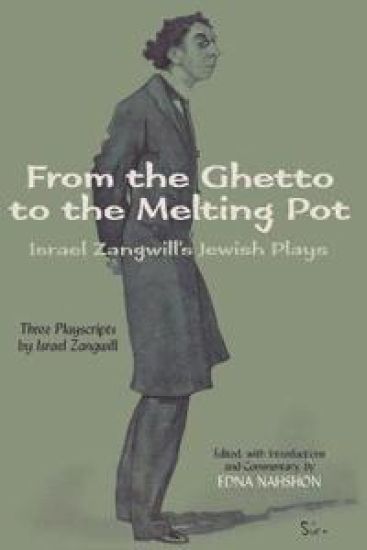
In his historic play ""The Melting Pot"", Israel Zangwill (1864-1926) introduced into our discourse a potent metaphor that for nearly a hundred years has served as a key definition of the United States. The play, enthusiastically espoused by President Theodore Roosevelt, to whom it was dedicated, offered a grand vision of America as a dynamic process of ethnic and racial amalgamation. By his own admission, ""The Melting Pot"" grew out of Zangwill's intense involvement in issues of Jewish immigration and resettlement and was grounded in his interpretation of Jewish history. Zangwill, Anglo Jewry's most renowned writer, began writing seriously for the stage in the late 1890s. At the time, the negative stereotype of the so-called Stage Jew was still deeply entrenched in the theatrical mainstream, so much so that Jewish playwrights writing for the English-language stage avoided altogether the portrayal of Jewish life. Zangwill shattered this silence in 1899 with the American premiere of ""Children of the Ghetto"" - his first full-length drama, and the first English-language play devoted in its entirety to the depiction of Jewish life in an authentic and positive fashion. The play's groundbreaking production drew tremendous attention and generated heated debates, but since the script was never published, the memory of the passions it generated dimmed, and its whereabouts eventually became unknown. After more than a century, theater historian Edna Nahshon has discovered the original manuscript of this milestone text, as well as that of another unpublished Zangwill play, ""The King of Schnorrers"", and the original version of ""The Melting Pot"". Nahshon brings these three works together in print for the first time in ""From the Ghetto to the Melting Pot"". Though written and produced over a period of twenty-five years and not conceived as a trilogy, the three plays are united in this volume by virtue of their shared Jewish subject matter. Read in historical sequence, they take us on a two-hundred-year journey that begins in eighteenth-century London, with its intra-jewish tensions farcically depicted in ""The King of Schnorrers"", then proceeds to the nineteenth-century London Ghetto struggling at a crossroads between tradition and modernity, as portrayed in ""Children of the Ghetto"", and finally reaches the shores of twentieth-century America, where the survivor of a Russian pogrom advocates intermarriage and delivers a messianic gospel of tolerance and racial fusion in ""The Melting Pot"". Edna Nahshon's in-depth introduction to this volume includes a biography of Israel Zangwill that especially pertains to these works and situates them within the Anglo-American theater of the time. The essays preceding each play provide rich and hitherto unknown information on the scripts, their stage productions, and their popular and critical reception. While some issues addressed in ""From the Ghetto to the Melting Pot"" are uniquely Jewish, others are universal and typical of the negotiation of self-presentation by ethnic and minority groups, particularly within the American experience.


In Israel Zangwill's "Merely Mary Ann," readers are transported to early 20th century London, where themes of social class and romance intertwine in a poignant narrative. This historical fiction explores the life of a woman working in domestic service, navigating the complexities of her position and the possibilities of love. The story delicately portrays the experiences of women household employees, offering a glimpse into their daily lives and the societal expectations they faced. With its literary merit and exploration of historical context, "Merely Mary Ann" resonates as a timeless story of finding connection and forging one's own path. Though the characters grapple with unique challenges, the themes of love, belonging, and social mobility remain universally relevant. This meticulously prepared edition offers readers an opportunity to rediscover this classic work of historical romance.This work has been selected by scholars as being culturally important, and is part of the knowledge base of civilization as we know it.This work is in the public domain in the United States of America, and possibly other nations. Within the United States, you may freely copy and distribute this work, as no entity (individual or corporate) has a copyright on the body of the work.Scholars believe, and we concur, that this work is important enough to be preserved, reproduced, and made generally available to the public. We appreciate your support of the preservation process, and thank you for being an important part of keeping this knowledge alive and relevant.
Explore the historical concept of a "Chosen People" in Israel Zangwill's "Chosen Peoples." This compelling work, originally delivered as the inaugural Arthur Davis Memorial Lecture before the Jewish Historical Society in 1918, delves into the doctrine of election and its significance within Jewish history and thought. Zangwill examines the multifaceted implications of this concept, providing historical context and exploring its enduring relevance. This meticulously prepared print edition offers readers a unique opportunity to engage with a foundational idea in Judaism. A vital resource for those interested in Jewish history, religious thought, and the intersection of religion and science, "Chosen Peoples" provides valuable insights into a complex and enduring theme. Its exploration of Jewish identity and the notion of a chosen people makes it a timeless contribution to the understanding of Jewish history and religious doctrine.This work has been selected by scholars as being culturally important, and is part of the knowledge base of civilization as we know it.This work is in the public domain in the United States of America, and possibly other nations. Within the United States, you may freely copy and distribute this work, as no entity (individual or corporate) has a copyright on the body of the work.Scholars believe, and we concur, that this work is important enough to be preserved, reproduced, and made generally available to the public. We appreciate your support of the preservation process, and thank you for being an important part of keeping this knowledge alive and relevant.