
Kirjahaku
Etsi kirjoja tekijän nimen, kirjan nimen tai ISBN:n perusteella.
489 tulosta hakusanalla Ivor Brown


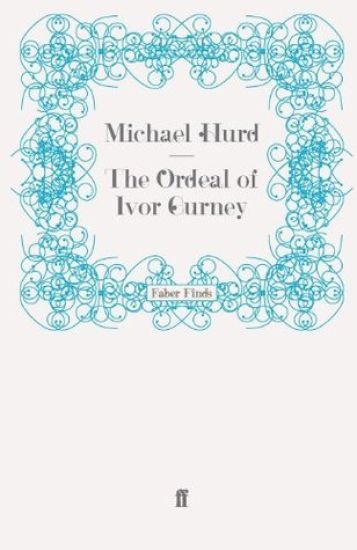
First published in 1978 The Ordeal of Ivor Gurney is a moving and extraordinary account of a tragic genius penned by the composer Michael Hurd. Born in Gloucester in 1890 Ivor Gurney began writing songs and poems in his teens, taking his inspiration from the Severn Valley countryside where he grew up. Sent to the Western Front during the First World War Gurney experienced desolation and horror that made a profound impression on him. He ended his days in an asylum, but at his death in 1937 he was beginning to be acknowledged as one of England's finest composers. Still, it took several more decades for his work as a war poet to be fully appreciated. 'Hurd compresses into a taut, sympathetic outline the initial optimism and later torment of Gurney's ill-starred life... distinguished by its crisp use of poetic extracts.' PN Review


Ivor Goodson is an immense and vital contributor to the study of education and to educational research. His in?uence extends across continents, taking in theory and practice, and including topics as diverse as curriculum history and the history of school subjects; change management and reform; teachers’ lives and careers; professional and learning identities; narrative and educational policy and life politics. To all this he brings a coherence born of his convictions and his commitment to social justice. This book traces the contours of his morally inflected approach to scholarship, highlighting its contribution to a politics of transformation, all the while acknowledging and encapsulating the practical, passionate, principled humanity that continues to drive Goodson’s scholarship. This book will be of interest to students and teachers of education, to teachers and educational researchers, as well as to those with a passion for the history and politics of education.
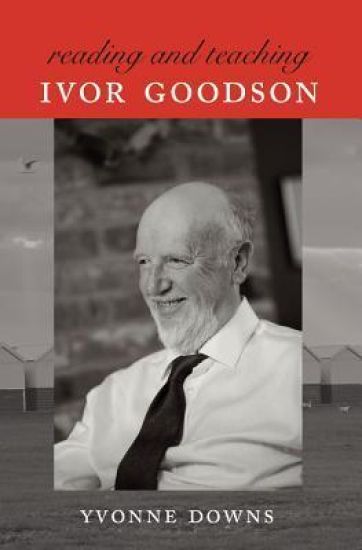
Ivor Goodson is an immense and vital contributor to the study of education and to educational research. His in?uence extends across continents, taking in theory and practice, and including topics as diverse as curriculum history and the history of school subjects; change management and reform; teachers’ lives and careers; professional and learning identities; narrative and educational policy and life politics. To all this he brings a coherence born of his convictions and his commitment to social justice. This book traces the contours of his morally inflected approach to scholarship, highlighting its contribution to a politics of transformation, all the while acknowledging and encapsulating the practical, passionate, principled humanity that continues to drive Goodson’s scholarship. This book will be of interest to students and teachers of education, to teachers and educational researchers, as well as to those with a passion for the history and politics of education.
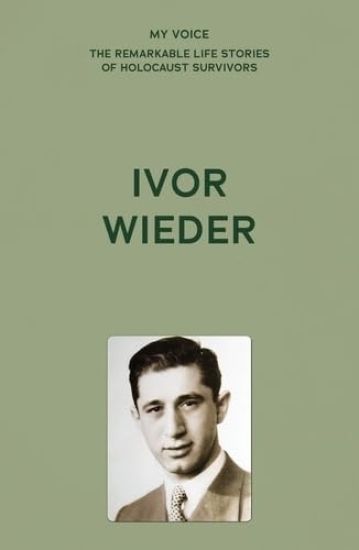
My Voice: Ivor Wieder
MANCHESTER UNIVERSITY PRESS
2025
nidottu
Ivor was born in 1931 and grew up in the village of Barsana, Romania, with his parents and siblings.In August 1940, the village was occupied by the Hungarians, allies of Nazi Germany, and began to pass anti-Jewish laws. Jewish men and children were beaten up and Ivor couldn’t go to school without children chasing after him, calling him, ‘a dirty Jew.’In 1944, at 12 years old, Ivor was forced onto a cramped cattle train to Auschwitz, where he was shaved, tattooed, and witnessed the worst cruelty imaginable. His father was killed, after sustaining a hand injury. Later, Ivor and his brother were taken to Bergen-Belsen where they were liberated by the British Army.In October 1945, Ivor was flown to Southampton, and he later settled in north-west London, starting a business from nothing with his brother, manufacturing bags, which soon flourished. Ivor met his wife, Marion, and they had two sons. Ivor now has quite a legacy, with seven grandchildren and 17 great-grandchildren.Ivor's book is part of the My Voice book collection, a stand-alone project of The Fed, the leading Jewish social care charity in Manchester, dedicated to preserving the life stories of Holocaust survivors and refugees from Nazi persecution who settled in the UK. The oral history, which is recorded and transcribed, captures their entire lives from before, during and after the war years. The books are written in the words of the survivor so that future generations can always hear their voice. The My Voice book collection is a valuable resource for Holocaust awareness and education.

WINNER OF THE EDINBURGH BOOK FESTIVAL FIRST BOOK AWARDA gloriously heartfelt, funny novel set on a Scottish island from musician Colin MacIntyre aka Mull Historical Society.
A Performer's Guide to Ivor Gurney's The Western Playland
Chauvin Ridley
LAP Lambert Academic Publishing
2015
pokkari
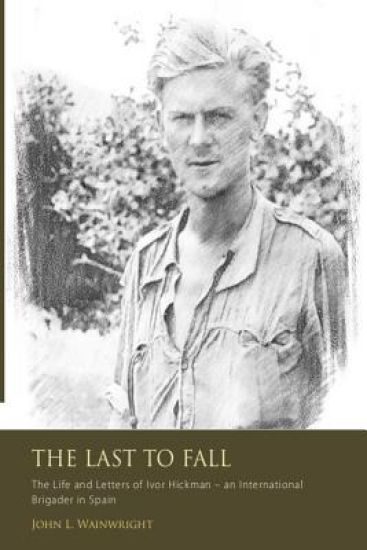
The Last to Fall.: The Life and Letters of Ivor Hickman- an International Brigade
John L. Wainwright
Open Eyes Press
2014
nidottu
King's Rhapsody: Based on the Play by Ivor Novello
Hester W. Chapman
Literary Licensing, LLC
2013
nidottu

Primitive Paintings, Oriental, Italian, and Other Furniture, XVI-XVII Century Tapestries, Oriental Rugs, Stained Glass Panels, Syrio-Roman Glass, Ivor
Anderson Ga American Art Association
Hassell Street Press
2021
nidottu
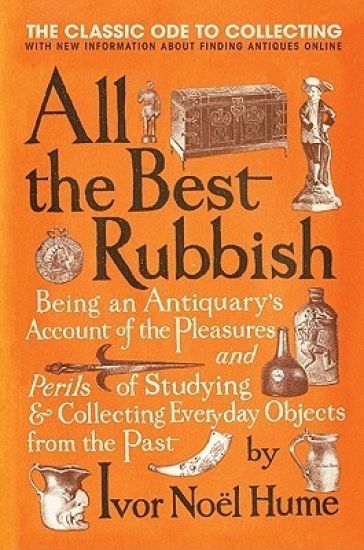
"A delight. All the Best Rubbish is one of those rare volumes that both instruct and entertain. I recommend it to any collector." --Harold L. Peterson, Chief Curator, US National Park ServiceIvor Noel Hume, the former chief archaeologist of Colonial Williamsburg, offers a delightful, anecdotal, and informative celebration of the joys of collecting. In his newly revised edition, All the Best Rubbish traces the fascinating history of collecting from its recorded beginnings and describes the remarkable detective work that goes into establishing the probable facts about uncovered and often underappreciated treasures. Now expanded with hints, tips, and helpful information about antique-hunting online, All the Best Rubbish is the ideal book for the antiquarian or amateur.No l Hume has pursued bottles, pottery, clocks, and coins through junk shops, street markets, attics, and cellars on two continents. He's unearthed the most fascinating--and valuable--rubbish from the most unlikely places: the shores of the Thames in London; the lagoons of the Caribbean; the bottom of Martha Washington's well. Hume knows everything that's worth knowing about collecting--why we do it, what we can find, where we can find it, and what we can learn from it.
The ultimate inside story of the Katrina tragedy--from the cofounder of the LSU Hurricane Center After warning for years about the looming threat of catastrophic flooding in New Orleans, Ivor van Heerden was one of the highest-profile media experts during the Katrina disaster. Over the following eighteen months, he was even more prominent as he challenged the official version of those events and campaigned for an engineering plan that would protect all of southeastern Louisiana, once and for all. In The Storm, van Heerden lays out in full detail the stunning incompetence among the bureaucrats, the politicians, and the Army Corps of Engineers that culminated in the catastrophe that crippled, perhaps forever, a great American city.
The second edition of this book is long overdue. The first edition was published before Mr Justice Goff's landmark judgment in re Nielson, the passing of the 1989 Extradition Act, the implementation of the European Convention on Extradition, and the UK's adoption of the European Convention on Human Rights. These developments reflect the strong political forces and emerging political structures of the last twenty years. This edition puts the development of the UK's extradition law into its political and evolutionary context. Drawing from the practice and law of many countries, the authors illustrate the growing convergence of international principles of extradition. In some areas this convergence responds directly to new political structures such as the European Union. In others to the increasing influence of norms of international law in the area of human rights. This area in particular will increasingly influence the development of extradition both in the UK and elsewhere. The UK's incorporation of the European Convention on Human Rights guarantees this trend and now requires practitioners in the UK to have regard to the growing international jurisprudence in this area. This book is the first in this field to grasp this development and it devotes a full chapter to the new human rights dimension in extradition. Despite the impressive development of extradition since the first edition, the Authors do not believe that UK extradition law is well equipped to deal with the ever increasing volume of international crime. Conservatism, suspicion of foreigners, and a misplaced inherent distrust of civil law systems prevent the UK from having much influence on the international development of extradition. An international based system is essential and in any case inevitable. It would be infinitely preferable for the UK to be in the vanguard of the development rather than - as so often these days - a late arrival. The Authors, both barristers, bring an unusually broad insight to their work. Ivor Stanbrook, then an MP, was on the Common Committee that scrutinized the Extradition bill that subsequently became the 1989 Extradition Act. Clive Stanbrook practices primarily in Brussels specialising in European Union Law as well as Human Rights Law.