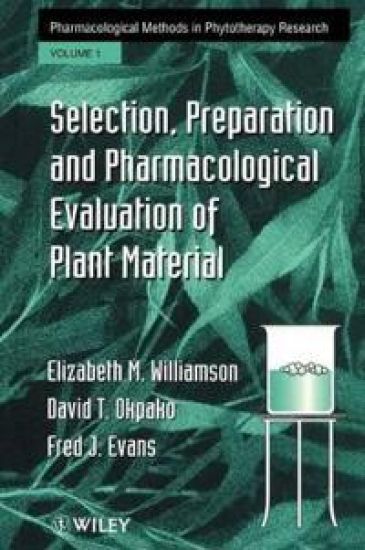
Laboratory protocols for pharmacological investigation of plant material Pharmacological Methods in Phytotherapy Research, Vol. 1: Selection, Preparation, and Pharmaceutical Evaluation of Plant Materials provides invaluable reference for anyone working with medicinal plants. Clear protocols detail methods for selection and extraction of plant material, as well as pharmacological investigation and presentation of results. Organized by therapeutic area, coverage includes methods for investigation of compounds relating to the gastrointestinal tract, respiratory system, nervous system, cardiovascular system, and more, with special guidance toward anti-inflammatories, analgesics, and diabetes mellitus.
"This book is awesome! What stood out to me was the deep understanding I was able to have about what fluency actually means. Too often the message has been fluency and accuracy, especially at the middle school level. By providing teachers with tools for building fluency with integers, expressions, and algebra, this book shifts that message to also focus on flexibility and strategy selection." Lindsey Henderson Secondary Mathematics Specialist, Utah State Board of Education Salt Lake City, UT Because fluency practice is not a worksheet. Fluency in mathematics is more than adeptly using basic facts or implementing algorithms. It is not about speed or recall. Real fluency is about choosing strategies that are efficient, flexible, lead to accurate solutions, and are appropriate for the given situation. Developing fluency is also a matter of equity and access for all learners. The landmark book Figuring Out Fluency in Mathematics Teaching and Learning offered educators the inspiration to develop a deeper understanding of procedural fluency, along with a plethora of pragmatic tools for shifting classrooms toward a fluency approach. Now, teachers have the chance to apply that inspiration through explicit instruction and practice every day with the classroom companion Figuring Out Fluency—Operations With Rational Numbers and Algebraic Equations. With this book, teachers can Dive deeper into the Significant Strategies for fluency explained in the anchor book as they apply to rational number operations Explore how these strategies can be applied for proportional reasoning, solving equations for unknowns, and solving systems of linear equations Access over 100 classroom-ready activities, including worked examples, routines, and games.Find activities to explicitly teach students how to use and choose strategies to operate on rational numbers and solve algebraic equationsDownload all of the needed support tools, game boards, and other resources from the companion website for immediate implementation Give each and every student the knowledge and power to become skilled and confident mathematical thinkers and doers.
In this new short biography of Ulysses S. Grant, leading scholars provide an accessible introduction to Grant and his legacy. Grant led Federal forces to victory in the Civil War, was the first modern American president, and authored his memoirs, which would eventually become one of the greatest books of nonfiction by an American author. The authors present a thematic exploration of Grant, providing the necessary insight to appreciate Grant and correct the myths that for too long clouded his true importance. They highlight specific moments or relationships in Grant’s life—including his connection to such key figures as Abraham Lincoln and Mark Twain—and elaborate on the more controversial elements of Grant’s legacy, such as accusations about his drinking and corruption during the Grant presidency. Not to overlook his military accomplishments, they devote time to the study of Grant’s war strategy and military career, beginning as early as his reluctant enrollment into West Point.From humble birth to tragic death, this new take on Ulysses S. Grant instills readers with a deeper understanding of the military legend’s nuanced personal history and an appreciation for the late president’s tragic and triumphant story.
M. Donald Hancock; Michelle H. Williams; Marjorie Castle; Christopher J. Carman; David P. Conradt; Alan Convery; Robert Leonardi; Raffaella Y. Nanetti; Jan Teorell; Sofia Tipaldou
Politics in Europe introduces students to the power of the EU and seven political systems—the UK, France, Germany, Italy, Sweden, Russia, and Poland—while addressing key social and political issues including globalization, terrorism, immigration, gender, and religion. Packed with robust country descriptions from regional specialists, the Eighth Edition encourages critical thinking and meaningful cross-national comparisons.
Bayesian inference networks, a synthesis of statistics and expert systems, have advanced reasoning under uncertainty in medicine, business, and social sciences. This innovative volume is the first comprehensive treatment exploring how they can be applied to design and analyze innovative educational assessments.Part I develops Bayes nets’ foundations in assessment, statistics, and graph theory, and works through the real-time updating algorithm. Part II addresses parametric forms for use with assessment, model-checking techniques, and estimation with the EM algorithm and Markov chain Monte Carlo (MCMC). A unique feature is the volume’s grounding in Evidence-Centered Design (ECD) framework for assessment design. This “design forward” approach enables designers to take full advantage of Bayes nets’ modularity and ability to model complex evidentiary relationships that arise from performance in interactive, technology-rich assessments such as simulations. Part III describes ECD,situates Bayes nets as an integral component of a principled design process, and illustrates the ideas with an in-depth look at the BioMass project: An interactive, standards-based, web-delivered demonstration assessment of science inquiry in genetics.This book is both a resource for professionals interested in assessment and advanced students. Its clear exposition, worked-through numerical examples, and demonstrations from real and didactic applications provide invaluable illustrations of how to use Bayes nets in educational assessment. Exercises follow each chapter, and the online companion site provides a glossary, data sets and problem setups, and links to computational resources.
Bayesian inference networks, a synthesis of statistics and expert systems, have advanced reasoning under uncertainty in medicine, business, and social sciences. This innovative volume is the first comprehensive treatment exploring how they can be applied to design and analyze innovative educational assessments.Part I develops Bayes nets’ foundations in assessment, statistics, and graph theory, and works through the real-time updating algorithm. Part II addresses parametric forms for use with assessment, model-checking techniques, and estimation with the EM algorithm and Markov chain Monte Carlo (MCMC). A unique feature is the volume’s grounding in Evidence-Centered Design (ECD) framework for assessment design. This “design forward” approach enables designers to take full advantage of Bayes nets’ modularity and ability to model complex evidentiary relationships that arise from performance in interactive, technology-rich assessments such as simulations. Part III describes ECD,situates Bayes nets as an integral component of a principled design process, and illustrates the ideas with an in-depth look at the BioMass project: An interactive, standards-based, web-delivered demonstration assessment of science inquiry in genetics.This book is both a resource for professionals interested in assessment and advanced students. Its clear exposition, worked-through numerical examples, and demonstrations from real and didactic applications provide invaluable illustrations of how to use Bayes nets in educational assessment. Exercises follow each chapter, and the online companion site provides a glossary, data sets and problem setups, and links to computational resources.
Simon Oliver; Sara Novic; Matthew Loftus; Arlie Coles; David Schaengold; Hannah Arendt; J. L. Wall; Alastair Roberts; Julian Peters; Robert Lee Williams
How can we live well with tech, without it becoming our master? These days, the heady promises of Silicon Valley seem suspect: the internet didn’t bring all of humanity together; neither did smartphones or social media. We have long since stopped associating tech with utopian visions of global harmony, instead blaming it for distraction, polarization, addictions to porn and gambling, the trivialization of culture, loss of privacy and work-life balance, and fears that automation may push millions out of a job. Advances in artificial intelligence seem poised to bring us to the next technological watershed. It’s a good time to ask how we can learn to live well with tech, and how we might push back against technologies that shape humans in anti-human ways. On this theme: Find out why computers can’t do math and humans can.When parenting from prison, a little tech can make a big difference.Glucose monitoring systems transform life for children with diabetes.Should ChatGPT write sermons and prayers?From scrolls to scrolling, tech has changed the way Jewish people read scriptureWill AI bring the end of the world, or is it already here?An intentional community tries to be intentional about personal technology.Our struggle with technology goes back to the Tower of Babel in Genesis.A farmer praises a simple piece of technology – the rock bar. Also in this issue: A photo essay about children on the frontlines in UkraineA philosopher’s proposal for a gift economyThe winners of the 2024 Rhina Espaillat Poetry AwardInsights from Gerard Manley Hopkins, E. F. Schumacher, Antoine de Saint-Exupéry, Jean-Pierre Dupuy, and Hannah ArendtReviews of Birding to Change the World, The Heaven & Earth Grocery Store, and All Things Are Too Small Plough Quarterly features stories, ideas, and culture for people eager to apply their faith to the challenges we face. Each issue includes in-depth articles, interviews, poetry, book reviews, and art.
Jan De Boer; Clemens van Blitterswijk; Peter Thomsen; Jeffrey Hubbell; Ranieri Cancedda; J.D. de Bruijn; Anders Lindahl; Jerome Sohier; David F. Williams
Tissue Engineering is a comprehensive introduction to the engineering and biological aspects of this critical subject. With contributions from internationally renowned authors, it provides a broad perspective on tissue engineering for students and professionals who are developing their knowledge of this important topic. Key topics covered include stem cells; morphogenesis and cellular signaling; the extracellular matrix; biocompatibility; scaffold design and fabrication; controlled release strategies; bioreactors; tissue engineering of skin, cartilage, bone and organ systems; and ethical issues.
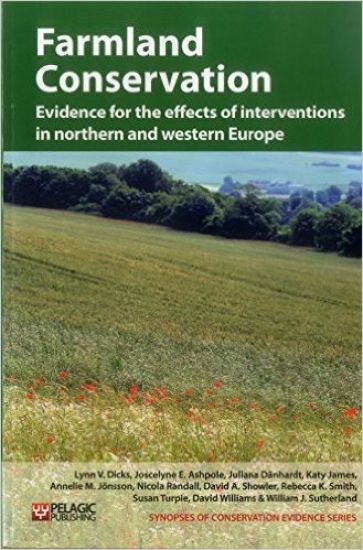
Lynn V. Dicks; Joscelyne E. Ashpole; Juliana Dänhardt; Katy James; Annelie M. Jönsson; Nicola Randall; David A. Showler; Rebecca K. Smith; Susan Turpie; David R. Williams; William J. Sutherland
This synopsis covers evidence for the effects of conservation interventions for native farmland wildlife. It is restricted to evidence captured on the website www.conservationevidence.com. It includes papers published in the journal Conservation Evidence, evidence summarized on our database and systematic reviews collated by the Collaboration for Environmental Evidence. It is the thrid volume in the series Synopses of Conservation Evidence. Evidence was collected from all European countries west of Russia, but not those south of France, Switzerland, Austria, Hungary and Romania. A list of interventions to conserve wildlife on farmland was developed collaboratively by a team of thirteen experts. A number of interventions that are not currently agri-environment options were added during this process, such as ‘Provide nest boxes for bees (solitary or bumblebees)’ and ‘Implement food labelling schemes relating to biodiversity-friendly farming’. Interventions relating to the creation or management of habitats not considered commercial farmland (such as lowland heath, salt marsh and farm woodland) were removed. The list of interventions was organized into categories based on the International Union for the Conservation of Nature (IUCN) classifications of direct threats and conservation actions. Interventions that fall under the threat category ‘Agriculture’ are grouped by farming system, with separate sections for interventions that apply to arable or livestock farms, or across all farming types.
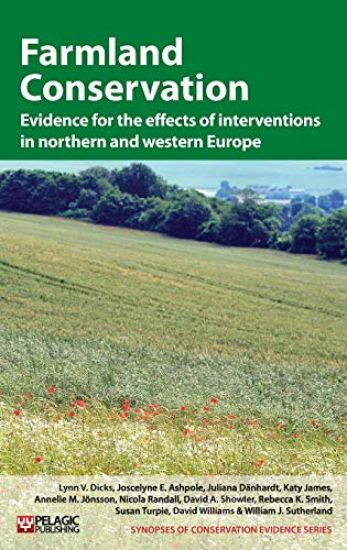
Lynn V. Dicks; Joscelyne E. Ashpole; Juliana Dänhardt; Katy James; Annelie M. Jönsson; Nicola Randall; David A. Showler; Rebecca K. Smith; Susan Turpie; David R. Williams; William J. Sutherland
This synopsis covers evidence for the effects of conservation interventions for native farmland wildlife. It is restricted to evidence captured on the website www.conservationevidence.com. It includes papers published in the journal Conservation Evidence, evidence summarized on our database and systematic reviews collated by the Collaboration for Environmental Evidence. It is the thrid volume in the series Synopses of Conservation Evidence. Evidence was collected from all European countries west of Russia, but not those south of France, Switzerland, Austria, Hungary and Romania. A list of interventions to conserve wildlife on farmland was developed collaboratively by a team of thirteen experts. A number of interventions that are not currently agri-environment options were added during this process, such as ‘Provide nest boxes for bees (solitary or bumblebees)’ and ‘Implement food labelling schemes relating to biodiversity-friendly farming’. Interventions relating to the creation or management of habitats not considered commercial farmland (such as lowland heath, salt marsh and farm woodland) were removed. The list of interventions was organized into categories based on the International Union for the Conservation of Nature (IUCN) classifications of direct threats and conservation actions. Interventions that fall under the threat category ‘Agriculture’ are grouped by farming system, with separate sections for interventions that apply to arable or livestock farms, or across all farming types.
"It was very different from most books that I have read. I was captivated from the beginning and had to keep turning the pages to find out what happened next.": Judge/Reviewer of Eternal City at the 12th Annual International Self-Published Book Awards competition, Eternal City also receiving perfect scores for its storyline~~~What would any human being not give to be 20 or 25 for always? A Russian prince of the nobility enters the world behind the looking-glass of our reality, a reality most of us are glad not to know. He enters the ongoing war between Good and Evil, as a conscript. He meets angels and demons, vampire-hunters, and vampires from super-ancient civilizations, long dead and forgotten. He encounters a world of secret societies and of the hidden government of vampires, which put him on trial. He made a bargain for immortality and got what he wanted most; he can live forever--more or less--but he also learns the hardest lesson there is to be learned: you don't dance with the Devil for free.
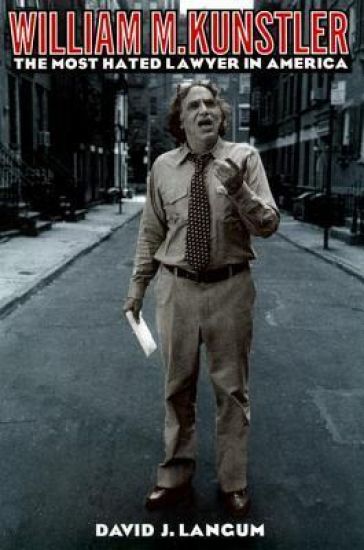
The true story of the defender of the Chicago 7 Alternately vilified as a publicity-seeking egoist and lauded as a rambunctious, fearless advocate, William Kunstler consistently embodied both of these qualities. Kunstler's unrelenting, radical critique of American racism and the legal system took shape as a result of his efforts to enlist the federal judicial system to support the civil rights movement. In the late 60s and the 70s, Kunstler, refocusing his attention on the Black Power and anti-war movement, garnered considerable public attention as defender of the Chicago Seven, and went on to represent such controversial figures as Leonard Peltier, the American Indian Movement leader charged with killing an FBI agent, and Jack Ruby, the killer of Lee Harvey Oswald. Later, Kunstler briefly represented Colin Ferguson, the Long Island Railroad mass murderer, outraging fans and detractors alike with his invocation of the infamous "black rage" defense. Defending those most loathed by mainstream, conventional America, William Kunstler delighted in taking on fiercely political cases, usually representing society's outcasts and pariahs free of charge and often achieving remarkable courtroom results in seemingly hopeless cases. Though Kunstler never gave up his revolutionary underpinnings, he gradually turned from defending clients whose political beliefs he personally supported to taking on apolitical clients, falling back on the broad rationale that his was a general struggle against an oppressive government. What ideological and tactical motives explain Kunstler's obsessive craving for media attention, his rhetorical flourishes in the courtroom and his instinctive and relentless drive for action? How did Kunstler migrate from a comfortable middle-class background to a life as a staunchly rebellious figure in social and legal history? David Langum's portrait gives depth to the already notorious breadth of William Kunstler's life.
The true story of the defender of the Chicago 7 Alternately vilified as a publicity-seeking egoist and lauded as a rambunctious, fearless advocate, William Kunstler consistently embodied both of these qualities. Kunstler's unrelenting, radical critique of American racism and the legal system took shape as a result of his efforts to enlist the federal judicial system to support the civil rights movement. In the late 60s and the 70s, Kunstler, refocusing his attention on the Black Power and anti-war movement, garnered considerable public attention as defender of the Chicago Seven, and went on to represent such controversial figures as Leonard Peltier, the American Indian Movement leader charged with killing an FBI agent, and Jack Ruby, the killer of Lee Harvey Oswald. Later, Kunstler briefly represented Colin Ferguson, the Long Island Railroad mass murderer, outraging fans and detractors alike with his invocation of the infamous "black rage" defense. Defending those most loathed by mainstream, conventional America, William Kunstler delighted in taking on fiercely political cases, usually representing society's outcasts and pariahs free of charge and often achieving remarkable courtroom results in seemingly hopeless cases. Though Kunstler never gave up his revolutionary underpinnings, he gradually turned from defending clients whose political beliefs he personally supported to taking on apolitical clients, falling back on the broad rationale that his was a general struggle against an oppressive government. What ideological and tactical motives explain Kunstler's obsessive craving for media attention, his rhetorical flourishes in the courtroom and his instinctive and relentless drive for action? How did Kunstler migrate from a comfortable middle-class background to a life as a staunchly rebellious figure in social and legal history? David Langum's portrait gives depth to the already notorious breadth of William Kunstler's life.
This work has been selected by scholars as being culturally important and is part of the knowledge base of civilization as we know it.This work is in the public domain in the United States of America, and possibly other nations. Within the United States, you may freely copy and distribute this work, as no entity (individual or corporate) has a copyright on the body of the work.Scholars believe, and we concur, that this work is important enough to be preserved, reproduced, and made generally available to the public. To ensure a quality reading experience, this work has been proofread and republished using a format that seamlessly blends the original graphical elements with text in an easy-to-read typeface.We appreciate your support of the preservation process, and thank you for being an important part of keeping this knowledge alive and relevant.