Kirjojen hintavertailu. Mukana 11 244 527 kirjaa ja 12 kauppaa.

Kirjahaku

Etsi kirjoja tekijän nimen, kirjan nimen tai ISBN:n perusteella.

1000 tulosta hakusanalla J. D. Riley

J. D. Salinger's The Catcher in the Rye

J. D. Salinger's The Catcher in the Rye

Josef Benson

BLOOMSBURY PUBLISHING PLC
2023
nidottu
Since its publication in 1951, The Catcher in the Rye has been a cultural phenomenon, not only as an assigned text for English courses, but as a touchstone for generations of alienated youth. As the focus of recent major films and a successful off-Broadway play attest, J.D. Salinger and his novel continue to fascinate an American reading public. But who was J.D. Salinger, and how did he come to write a novel whose impact continues to resonate with millions of readers? In J.D. Salinger’s The Catcher in the Rye: A Cultural History, Josef Benson examines the legacy of an elusive author and his work. After exploring how the novel reflected Salinger’s tortured psyche, the study discusses how the book made an impact on multiple generations of readers—from 1960s counter-culture youth and followers of the Black Power movement of the 1970s to the disenfranchised teens of the Reagan era and the celebrity-fixated masses of the present day. Benson also unravels the mystery behind Salinger’s reclusiveness, the effects the novel had on the reading public who adored it, and why three American assassins cited the novel as an inspiration.The author also considers why this work of fiction has been among the most widely taught—and most frequently banned—books of all time. By looking at the novel as both an artifact of the 1950s as well as a living testament to the turmoil of teenage angst, J.D. Salinger’s The Catcher in the Rye provides a riveting discussion of one of the most enigmatic novels and authors of all time.
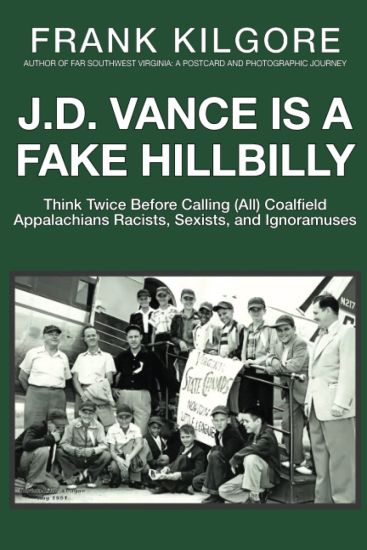
J. D. Vance Is a Fake Hillbilly

J. D. Vance Is a Fake Hillbilly

Frank Kilgore

Fake Hillbilly Publishing
2022
pokkari
Discover the Point of View of a Real MountaineerFor far too many decades, the residents of the Appalachian Mountains have faced the ridicule, prejudice, and misunderstanding from those outside the region.With this book, author Frank Kilgore, a lifetime resident of Virginia's coalfield counties and descendant of generations of hard-working mountaineers, sheds light on the grit, tenacity, and multiculturalism found among the hills and "hollers" of this beautiful region.Come see the Appalachian Mountains and those who call this wild and wonderful land home through the eyes of one who not only knows the land and her people, but who knows how to share the best of our mountain culture and calls out the worst of those who would disparage others for personal or political gain. Contents: 1. A Real Mountaineer's Challenge to J.D. Vance2. Think Twice Before Calling (All) Coalfield Appalachians Racists, Sexists, And Ignoramuses3. We're More Multi-Racial Than You May Think 4. Women and Other Innovators5. Education and Athletics6. Appalachian Military Participation and Standouts7. Coal Mining8. West Virginia9. Eastern Kentucky10. Eastern Tennessee11. The United Mine Workers of America12. The History Channel Insults All Appalachians and Their AncestorsBonus SectionsGiving President Carter a Jar of Honey From Honey BranchUnsolicited Advice From An OWG Regarding Current Issues of InterestParting Thoughts From a Real Mountaineer About the AuthorFrank Kilgore resides in Russell County, Virginia, and graduated from Clinch Valley College (now the University of Virginia's College at Wise), where he designed and completed the nation's first Appalachian Studies college major. He is the descendant of a dozen or so Patriots that fought at the Battle of King's Mountain, and the son, grandson, nephew, and cousin of dozens of coal miners.The author has been a country trial lawyer for nearly forty years, an Appalachian conservationist, historian, author, and he's the proud founder of the Appalachian College of Pharmacy located in Buchanan County, Virginia. Frank has also designed and helped build over seventy miles of hiking and biking trails in what is known as Far Southwest Virginia and mentored over a hundred at-risk young mountaineers along the way. In addition to this book, Frank is the author of The Clinch River: A World-class Treasure, a science textbook highlighting the natural resources and conservation activities within the watershed. Soon thereafter he researched and edited The Virginia Headwaters of the Big Sandy River: A Story of Revitalization and Nature's Resilience, a textbook focusing on a neighboring watershed. Both books were donated to high school students as part of a place-based science studies project within their watersheds.Frank's book Far Southwest Virginia: A Postcard Journey, co-authored with Katharine Shearer, came out in 2004. An expanded and redesigned edition titled Far Southwest Virginia: A Postcard and Photographic Journey, was published in 2014.When he has time and takes a notion, Frank publishes a new edition of Mountain Peeks Magazine.
J. D. Vance Is a Fake Hillbilly

J. D. Vance Is a Fake Hillbilly

Frank Kilgore

Fake Hillbilly Publishing
2022
pokkari
Discover the Point of View of a Real MountaineerFor far too many decades, the residents of the Appalachian Mountains have faced the ridicule, prejudice, and misunderstanding from those outside the region.With this book, author Frank Kilgore, a lifetime resident of Virginia's coalfield counties and descendant of generations of hard-working mountaineers, sheds light on the grit, tenacity, and multiculturalism found among the hills and "hollers" of this beautiful region.Come see the Appalachian Mountains and those who call this wild and wonderful land home through the eyes of one who not only knows the land and her people, but who knows how to share the best of our mountain culture and calls out the worst of those who would disparage others for personal or political gain.Contents: 1. A Real Mountaineer's Challenge to J.D. Vance2. Think Twice Before Calling (All) Coalfield Appalachians Racists, Sexists, And Ignoramuses3. We're More Multi-Racial Than You May Think 4. Women and Other Innovators5. Education and Athletics6. Appalachian Military Participation and Standouts7. Coal Mining8. West Virginia9. Eastern Kentucky10. Eastern Tennessee11. The United Mine Workers of America12. The History Channel Insults All Appalachians and Their AncestorsBonus SectionsGiving President Carter a Jar of Honey From Honey BranchUnsolicited Advice From An OWG Regarding Current Issues of InterestParting Thoughts From a Real MountaineerAbout the AuthorFrank Kilgore resides in Russell County, Virginia, and graduated from Clinch Valley College (now the University of Virginia's College at Wise), where he designed and completed the nation's first Appalachian Studies college major. He is the descendant of a dozen or so Patriots that fought at the Battle of King's Mountain, and the son, grandson, nephew, and cousin of dozens of coal miners.The author has been a country trial lawyer for nearly forty years, an Appalachian conservationist, historian, author, and he's the proud founder of the Appalachian College of Pharmacy located in Buchanan County, Virginia. Frank has also designed and helped build over seventy miles of hiking and biking trails in what is known as Far Southwest Virginia and mentored over a hundred at-risk young mountaineers along the way.In addition to this book, Frank is the author of The Clinch River: A World-class Treasure, a science textbook highlighting the natural resources and conservation activities within the watershed. Soon thereafter he researched and edited The Virginia Headwaters of the Big Sandy River: A Story of Revitalization and Nature's Resilience, a textbook focusing on a neighboring watershed. Both books were donated to high school students as part of a place-based science studies project within their watersheds.Frank's book Far Southwest Virginia: A Postcard Journey, co-authored with Katharine Shearer, came out in 2004. An expanded and redesigned edition titled Far Southwest Virginia: A Postcard and Photographic Journey, was published in 2014.When he has time and takes a notion, Frank publishes a new edition of Mountain Peeks Magazine.
J. D. Vance Is a Fake Hillbilly

J. D. Vance Is a Fake Hillbilly

Frank Kilgore

Fake Hillbilly Publishing
2022
sidottu
Discover the Point of View of a Real MountaineerFor far too many decades, the residents of the Appalachian Mountains have faced the ridicule, prejudice, and misunderstanding from those outside the region.With this book, author Frank Kilgore, a lifetime resident of Virginia's coalfield counties and descendant of generations of hard-working mountaineers, sheds light on the grit, tenacity, and multiculturalism found among the hills and "hollers" of this beautiful region.Come see the Appalachian Mountains and those who call this wild and wonderful land home through the eyes of one who not only knows the land and her people, but who knows how to share the best of our mountain culture and calls out the worst of those who would disparage others for personal or political gain.Contents: 1. A Real Mountaineer's Challenge to J.D. Vance2. Think Twice Before Calling (All) Coalfield Appalachians Racists, Sexists, And Ignoramuses3. We're More Multi-Racial Than You May Think 4. Women and Other Innovators5. Education and Athletics6. Appalachian Military Participation and Standouts7. Coal Mining8. West Virginia9. Eastern Kentucky10. Eastern Tennessee11. The United Mine Workers of America12. The History Channel Insults All Appalachians and Their AncestorsBonus SectionsGiving President Carter a Jar of Honey From Honey BranchUnsolicited Advice From An OWG Regarding Current Issues of InterestParting Thoughts From a Real MountaineerAbout the AuthorFrank Kilgore resides in Russell County, Virginia, and graduated from Clinch Valley College (now the University of Virginia's College at Wise), where he designed and completed the nation's first Appalachian Studies college major. He is the descendant of a dozen or so Patriots that fought at the Battle of King's Mountain, and the son, grandson, nephew, and cousin of dozens of coal miners.The author has been a country trial lawyer for nearly forty years, an Appalachian conservationist, historian, author, and he's the proud founder of the Appalachian College of Pharmacy located in Buchanan County, Virginia. Frank has also designed and helped build over seventy miles of hiking and biking trails in what is known as Far Southwest Virginia and mentored over a hundred at-risk young mountaineers along the way.In addition to this book, Frank is the author of The Clinch River: A World-class Treasure, a science textbook highlighting the natural resources and conservation activities within the watershed. Soon thereafter he researched and edited The Virginia Headwaters of the Big Sandy River: A Story of Revitalization and Nature's Resilience, a textbook focusing on a neighboring watershed. Both books were donated to high school students as part of a place-based science studies project within their watersheds.Frank's book Far Southwest Virginia: A Postcard Journey, co-authored with Katharine Shearer, came out in 2004. An expanded and redesigned edition titled Far Southwest Virginia: A Postcard and Photographic Journey, was published in 2014.When he has time and takes a notion, Frank publishes a new edition of Mountain Peeks Magazine.
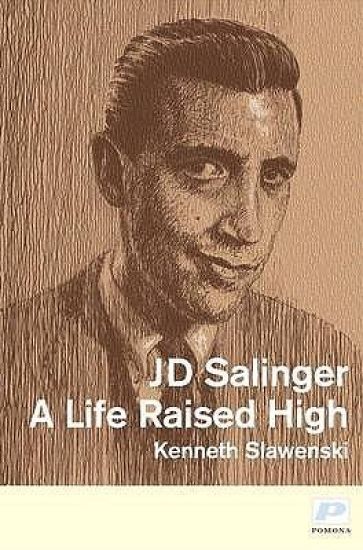
J. D. Salinger

J. D. Salinger

Kenneth Slawenski

Pomona
2010
sidottu
A definitive biography of one of the most famous and bestselling authors of our time. Salinger's 'Catcher in the Rye' has sold more than 65 million copies and, today, still sells 250,000 a year. Famously reclusive (his last interview was nearly 30 years ago), little, until now, has been known of Salinger. The author, Kenneth Slawenski, finally provides a detailed but highly readable account of Salinger's life.
J. D. Beresford, best novels

J. D. Beresford, best novels

J. D. Beresford

Createspace Independent Publishing Platform
2017
nidottu
John Davys Beresford (17 March 1873 - 1 February 1947) was an English writer, now remembered for his early science fiction and some short stories in the horror story and ghost story genres. Beresford was a great admirer of H. G. Wells, and wrote the first critical study of Wells in 1915. His Wellsian novel The Hampdenshire Wonder was a major influence on Olaf Stapledon. His other science-fiction novels include The Riddle of the Tower, about a dystopian, hive-like society. In this book: The Wonder, 1911 H. G. Wells, 1915 The Hampdenshire Wonder, 1911
The house in Demetrius Road. / NOVEL / By: J. D. Beresford

The house in Demetrius Road. / NOVEL / By: J. D. Beresford

J. D. Beresford

Createspace Independent Publishing Platform
2018
nidottu
John Davys Beresford (17 March 1873 - 1 February 1947) was an English writer, now remembered for his early science fiction and some short stories in the horror story and ghost story genres. Beresford was a great admirer of H.G. Wells, and wrote the first critical study of Wells in 1915. His Wellsian novel The Hampdenshire Wonder was a major influence on Olaf Stapledon.His other science-fiction novels include The Riddle of the Tower, about a dystopian, hive-like society.His father was a clergyman in Castor, now in Cambridgeshire near Peterborough. J. D. Beresford was affected by infantile paralysis, which left him partially disabled. He was educated at Oundle. After training to become an architect, he became a professional writer, first as a dramatist, and journalist. In early adulthood he broke away from his father's views and became a "determined but defensive" agnostic. He combined a prominent place in Edwardian literary London with time spent in the provinces, in particular Cornwall where D. H. Lawrence had an extended stay in his Porthcothan cottage. Later in life Beresford abandoned his earlier agnosticism and described himself as a Theosophist and a pacifist. Beresford was also interested in psychology, and attended several meetings organised by A.R. Orage to discuss psychological issues. Other attendees at these meetings included Havelock Ellis, Clifford Sharp, David Eder and Maurice Nicoll. Beresford also contributed to numerous publications; in addition to being a book reviewer for The Manchester Guardian, he also wrote for the New Statesman, 8] The Spectator, Westminster Gazette, and the Theosophist magazine The Aryan Path.At one point, Beresford was offered the editorship of the pacifist magazine Peace News but declined because he felt he "would be a bad editor". Beresford's interest in the spiritual and philosophical may be best illustrated by the publisher notes to his novel, On A Huge Hill: "Mr Beresford's readers have long known that that for him there are more things in heaven or earth than are dreamt of in official medical philosophy. He has used his novelist's skill to convince the sensitive reader that the age of miracles is not over, and that, in certain circumstances, the spirit may exercise what seem to us miraculous powers over the substance of the body. This he did in 'The Camberwell Miracle' and 'Peckover'; and in this absorbing novel, he returns to the theme, with the study of a man fitting himself to become a great healer."
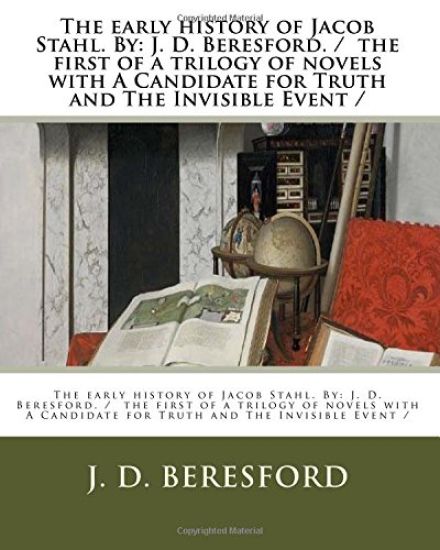
The early history of Jacob Stahl. By: J. D. Beresford. / the first of a trilogy of novels with A Candidate for Truth and The Invisible Event /
John Davys Beresford (17 March 1873 - 1 February 1947) was an English writer, now remembered for his early science fiction and some short stories in the horror story and ghost story genres. Beresford was a great admirer of H.G. Wells, and wrote the first critical study of Wells in 1915. His Wellsian novel The Hampdenshire Wonder was a major influence on Olaf Stapledon.His other science-fiction novels include The Riddle of the Tower, about a dystopian, hive-like society.His father was a clergyman in Castor, now in Cambridgeshire near Peterborough. J. D. Beresford was affected by infantile paralysis, which left him partially disabled. He was educated at Oundle. After training to become an architect, he became a professional writer, first as a dramatist, and journalist. In early adulthood he broke away from his father's views and became a "determined but defensive" agnostic. He combined a prominent place in Edwardian literary London with time spent in the provinces, in particular Cornwall where D. H. Lawrence had an extended stay in his Porthcothan cottage. Later in life Beresford abandoned his earlier agnosticism and described himself as a Theosophist and a pacifist. Beresford was also interested in psychology, and attended several meetings organised by A.R. Orage to discuss psychological issues. Other attendees at these meetings included Havelock Ellis, Clifford Sharp, David Eder and Maurice Nicoll. Beresford also contributed to numerous publications; in addition to being a book reviewer for The Manchester Guardian, he also wrote for the New Statesman, The Spectator, Westminster Gazette, and the Theosophist magazine The Aryan Path.At one point, Beresford was offered the editorship of the pacifist magazine Peace News but declined because he felt he "would be a bad editor".
The Hampdenshire wonder. By: J.D. Beresford. / science fiction NOVEL /

The Hampdenshire wonder. By: J.D. Beresford. / science fiction NOVEL /

J. D. Beresford

Createspace Independent Publishing Platform
2018
nidottu
The Hampdenshire Wonder is a 1911 science fiction novel by J.D. Beresford. It is one of the first novels to involve a wunderkind. The child in it, Victor Stott, is the son of a famous cricket player. This origin is perhaps a reference to H.G. Wells's father Joseph Wells. The novel concerns his progress from infant to almost preternaturally brilliant child. Victor Stott is subtly deformed to allow for his powerful brain. One prominent, and unpleasant, character is the local minister. As J.D. Beresford's father was a minister, and Beresford was himself partially disabled, some see autobiographical aspects to the story. However this is unproven. What is more concrete is that the story of Christian Friedrich Heinecken was an inspiration for the story. Whether the biography of that child prodigy was accurate or not, "the Lubeck prodigy" is mentioned in the work. Also, in the original version, the ideas of Henri Bergson on evolution are also significant.
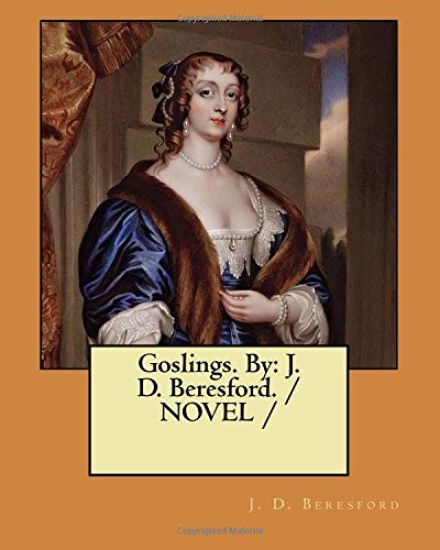
Goslings. By: J. D. Beresford. / NOVEL /

Goslings. By: J. D. Beresford. / NOVEL /

J. D. Beresford

Createspace Independent Publishing Platform
2018
nidottu
John Davys Beresford (17 March 1873 - 1 February 1947) was an English writer, now remembered for his early science fiction and some short stories in the horror story and ghost story genres. Beresford was a great admirer of H.G. Wells, and wrote the first critical study of Wells in 1915. His Wellsian novel The Hampdenshire Wonder was a major influence on Olaf Stapledon.His other science-fiction novels include The Riddle of the Tower, about a dystopian, hive-like society.His father was a clergyman in Castor, now in Cambridgeshire near Peterborough. J. D. Beresford was affected by infantile paralysis, which left him partially disabled. He was educated at Oundle. After training to become an architect, he became a professional writer, first as a dramatist, and journalist. In early adulthood he broke away from his father's views and became a "determined but defensive" agnostic. He combined a prominent place in Edwardian literary London with time spent in the provinces, in particular Cornwall where D. H. Lawrence had an extended stay in his Porthcothan cottage. Later in life Beresford abandoned his earlier agnosticism and described himself as a Theosophist and a pacifist. Beresford was also interested in psychology, and attended several meetings organised by A.R. Orage to discuss psychological issues. Other attendees at these meetings included Havelock Ellis, Clifford Sharp, David Eder and Maurice Nicoll. Beresford also contributed to numerous publications; in addition to being a book reviewer for The Manchester Guardian, he also wrote for the New Statesman, The Spectator, Westminster Gazette, and the Theosophist magazine The Aryan Path.At one point, Beresford was offered the editorship of the pacifist magazine Peace News but declined because he felt he "would be a bad editor."
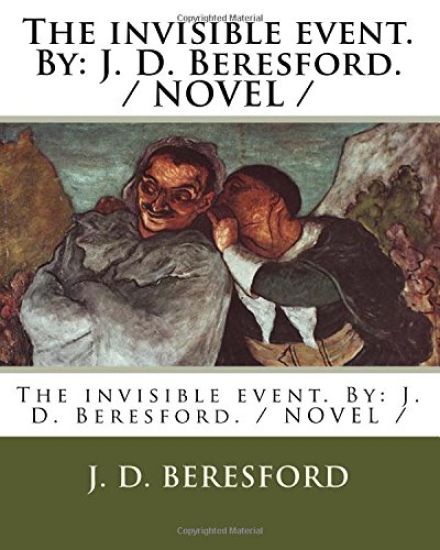
The invisible event. By: J. D. Beresford. / NOVEL /

The invisible event. By: J. D. Beresford. / NOVEL /

J. D. Beresford

Createspace Independent Publishing Platform
2018
nidottu
John Davys Beresford (17 March 1873 - 1 February 1947) was an English writer, now remembered for his early science fiction and some short stories in the horror story and ghost story genres. Beresford was a great admirer of H.G. Wells, and wrote the first critical study of Wells in 1915. His Wellsian novel The Hampdenshire Wonder was a major influence on Olaf Stapledon.His other science-fiction novels include The Riddle of the Tower, about a dystopian, hive-like society.His father was a clergyman in Castor, now in Cambridgeshire near Peterborough. J. D. Beresford was affected by infantile paralysis, which left him partially disabled. He was educated at Oundle. After training to become an architect, he became a professional writer, first as a dramatist, and journalist. In early adulthood he broke away from his father's views and became a "determined but defensive" agnostic. He combined a prominent place in Edwardian literary London with time spent in the provinces, in particular Cornwall where D. H. Lawrence had an extended stay in his Porthcothan cottage. Later in life Beresford abandoned his earlier agnosticism and described himself as a Theosophist and a pacifist. Beresford was also interested in psychology, and attended several meetings organised by A.R. Orage to discuss psychological issues. Other attendees at these meetings included Havelock Ellis, Clifford Sharp, David Eder and Maurice Nicoll. Beresford also contributed to numerous publications; in addition to being a book reviewer for The Manchester Guardian, he also wrote for the New Statesman, The Spectator, Westminster Gazette, and the Theosophist magazine The Aryan Path.At one point, Beresford was offered the editorship of the pacifist magazine Peace News but declined because he felt he "would be a bad editor". Beresford's interest in the spiritual and philosophical may be best illustrated by the publisher notes to his novel, On A Huge Hill:
House-mates. By: J. D. Beresford. / NOVEL /

House-mates. By: J. D. Beresford. / NOVEL /

J. D. Beresford

Createspace Independent Publishing Platform
2018
nidottu
John Davys Beresford (17 March 1873 - 1 February 1947) was an English writer, now remembered for his early science fiction and some short stories in the horror story and ghost story genres. Beresford was a great admirer of H.G. Wells, and wrote the first critical study of Wells in 1915. His Wellsian novel The Hampdenshire Wonder was a major influence on Olaf Stapledon.His other science-fiction novels include The Riddle of the Tower, about a dystopian, hive-like society.His father was a clergyman in Castor, now in Cambridgeshire near Peterborough. J. D. Beresford was affected by infantile paralysis, which left him partially disabled. He was educated at Oundle. After training to become an architect, he became a professional writer, first as a dramatist, and journalist. In early adulthood he broke away from his father's views and became a "determined but defensive" agnostic. He combined a prominent place in Edwardian literary London with time spent in the provinces, in particular Cornwall where D. H. Lawrence had an extended stay in his Porthcothan cottage. Later in life Beresford abandoned his earlier agnosticism and described himself as a Theosophist and a pacifist. Beresford was also interested in psychology, and attended several meetings organised by A.R. Orage to discuss psychological issues. Other attendees at these meetings included Havelock Ellis, Clifford Sharp, David Eder and Maurice Nicoll. Beresford also contributed to numerous publications; in addition to being a book reviewer for The Manchester Guardian, he also wrote for the New Statesman, The Spectator, Westminster Gazette, and the Theosophist magazine The Aryan Path.At one point, Beresford was offered the editorship of the pacifist magazine Peace News but declined because he felt he "would be a bad editor". Beresford's interest in the spiritual and philosophical may be best illustrated by the publisher notes to his novel, On A Huge Hill:
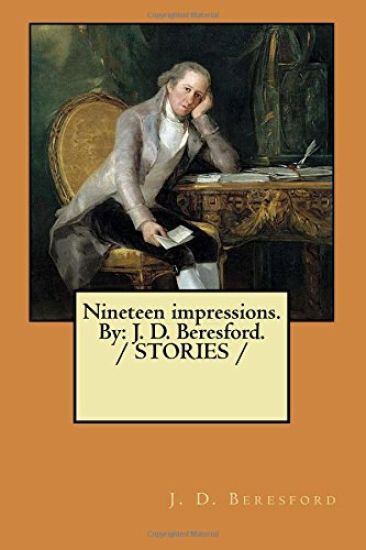
Nineteen impressions. By: J. D. Beresford. / STORIES /

Nineteen impressions. By: J. D. Beresford. / STORIES /

J. D. Beresford

Createspace Independent Publishing Platform
2018
nidottu
John Davys Beresford (17 March 1873 - 1 February 1947) was an English writer, now remembered for his early science fiction and some short stories in the horror story and ghost story genres. Beresford was a great admirer of H.G. Wells, and wrote the first critical study of Wells in 1915. His Wellsian novel The Hampdenshire Wonder was a major influence on Olaf Stapledon.His other science-fiction novels include The Riddle of the Tower, about a dystopian, hive-like society.His father was a clergyman in Castor, now in Cambridgeshire near Peterborough. J. D. Beresford was affected by infantile paralysis, which left him partially disabled. He was educated at Oundle. After training to become an architect, he became a professional writer, first as a dramatist, and journalist. In early adulthood he broke away from his father's views and became a "determined but defensive" agnostic. He combined a prominent place in Edwardian literary London with time spent in the provinces, in particular Cornwall where D. H. Lawrence had an extended stay in his Porthcothan cottage. Later in life Beresford abandoned his earlier agnosticism and described himself as a Theosophist and a pacifist. Beresford was also interested in psychology, and attended several meetings organised by A.R. Orage to discuss psychological issues. Other attendees at these meetings included Havelock Ellis, Clifford Sharp, David Eder and Maurice Nicoll. Beresford also contributed to numerous publications; in addition to being a book reviewer for The Manchester Guardian, he also wrote for the New Statesman, The Spectator, Westminster Gazette, and the Theosophist magazine The Aryan Path.At one point, Beresford was offered the editorship of the pacifist magazine Peace News but declined because he felt he "would be a bad editor". Beresford's interest in the spiritual and philosophical may be best illustrated by the publisher notes to his novel, On A Huge Hill: "Mr Beresford's readers have long known that that for him there are more things in heaven or earth than are dreamt of in official medical philosophy. He has used his novelist's skill to convince the sensitive reader that the age of miracles is not over, and that, in certain circumstances, the spirit may exercise what seem to us miraculous powers over the substance of the body. This he did in 'The Camberwell Miracle' and 'Peckover'; and in this absorbing novel, he returns to the theme, with the study of a man fitting himself to become a great healer."
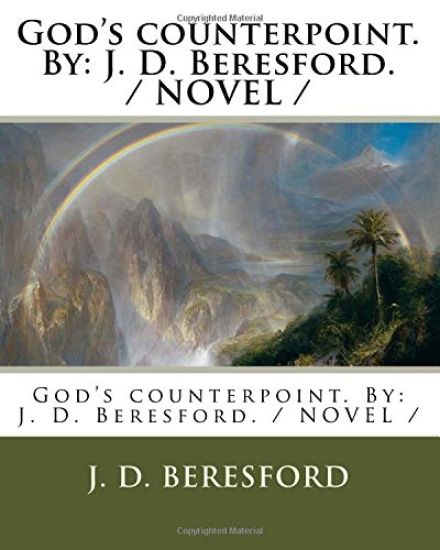
God's counterpoint. By: J. D. Beresford. / NOVEL /

God's counterpoint. By: J. D. Beresford. / NOVEL /

J. D. Beresford

Createspace Independent Publishing Platform
2018
nidottu
John Davys Beresford (17 March 1873 - 1 February 1947) was an English writer, now remembered for his early science fiction and some short stories in the horror story and ghost story genres. Beresford was a great admirer of H.G. Wells, and wrote the first critical study of Wells in 1915. His Wellsian novel The Hampdenshire Wonder was a major influence on Olaf Stapledon.His other science-fiction novels include The Riddle of the Tower, about a dystopian, hive-like society.His father was a clergyman in Castor, now in Cambridgeshire near Peterborough. J. D. Beresford was affected by infantile paralysis, which left him partially disabled. He was educated at Oundle. After training to become an architect, he became a professional writer, first as a dramatist, and journalist. In early adulthood he broke away from his father's views and became a "determined but defensive" agnostic. He combined a prominent place in Edwardian literary London with time spent in the provinces, in particular Cornwall where D. H. Lawrence had an extended stay in his Porthcothan cottage. Later in life Beresford abandoned his earlier agnosticism and described himself as a Theosophist and a pacifist. Beresford was also interested in psychology, and attended several meetings organised by A.R. Orage to discuss psychological issues. Other attendees at these meetings included Havelock Ellis, Clifford Sharp, David Eder and Maurice Nicoll. Beresford also contributed to numerous publications; in addition to being a book reviewer for The Manchester Guardian, he also wrote for the New Statesman, The Spectator, Westminster Gazette, and the Theosophist magazine The Aryan Path.At one point, Beresford was offered the editorship of the pacifist magazine Peace News but declined because he felt he "would be a bad editor." Beresford's interest in the spiritual and philosophical may be best illustrated by the publisher notes to his novel, On A Huge Hill:
An imperfect mother. By: J. D. Beresford. / NOVEL /

An imperfect mother. By: J. D. Beresford. / NOVEL /

J. D. Beresford

Createspace Independent Publishing Platform
2018
nidottu
John Davys Beresford (17 March 1873 - 1 February 1947) was an English writer, now remembered for his early science fiction and some short stories in the horror story and ghost story genres. Beresford was a great admirer of H.G. Wells, and wrote the first critical study of Wells in 1915. His Wellsian novel The Hampdenshire Wonder was a major influence on Olaf Stapledon.His other science-fiction novels include The Riddle of the Tower, about a dystopian, hive-like society.His father was a clergyman in Castor, now in Cambridgeshire near Peterborough. J. D. Beresford was affected by infantile paralysis, which left him partially disabled. He was educated at Oundle. After training to become an architect, he became a professional writer, first as a dramatist, and journalist. In early adulthood he broke away from his father's views and became a "determined but defensive" agnostic. He combined a prominent place in Edwardian literary London with time spent in the provinces, in particular Cornwall where D. H. Lawrence had an extended stay in his Porthcothan cottage. Later in life Beresford abandoned his earlier agnosticism and described himself as a Theosophist and a pacifist. Beresford was also interested in psychology, and attended several meetings organised by A.R. Orage to discuss psychological issues. Other attendees at these meetings included Havelock Ellis, Clifford Sharp, David Eder and Maurice Nicoll. Beresford also contributed to numerous publications; in addition to being a book reviewer for The Manchester Guardian, he also wrote for the New Statesman, The Spectator, Westminster Gazette, and the Theosophist magazine The Aryan Path.At one point, Beresford was offered the editorship of the pacifist magazine Peace News but declined because he felt he "would be a bad editor". Beresford's interest in the spiritual and philosophical may be best illustrated by the publisher notes to his novel, On A Huge Hill:
A common enemy. By: J. D. Beresford. / NOVEL /

A common enemy. By: J. D. Beresford. / NOVEL /

J. D. Beresford

Createspace Independent Publishing Platform
2018
nidottu
John Davys Beresford (17 March 1873 - 1 February 1947) was an English writer, now remembered for his early science fiction and some short stories in the horror story and ghost story genres. Beresford was a great admirer of H.G. Wells, and wrote the first critical study of Wells in 1915. His Wellsian novel The Hampdenshire Wonder was a major influence on Olaf Stapledon.His other science-fiction novels include The Riddle of the Tower, about a dystopian, hive-like society.His father was a clergyman in Castor, now in Cambridgeshire near Peterborough. J. D. Beresford was affected by infantile paralysis, which left him partially disabled. He was educated at Oundle. After training to become an architect, he became a professional writer, first as a dramatist, and journalist. In early adulthood he broke away from his father's views and became a "determined but defensive" agnostic. He combined a prominent place in Edwardian literary London with time spent in the provinces, in particular Cornwall where D. H. Lawrence had an extended stay in his Porthcothan cottage. Later in life Beresford abandoned his earlier agnosticism and described himself as a Theosophist and a pacifist. Beresford was also interested in psychology, and attended several meetings organised by A.R. Orage to discuss psychological issues. Other attendees at these meetings included Havelock Ellis, Clifford Sharp, David Eder and Maurice Nicoll. Beresford also contributed to numerous publications; in addition to being a book reviewer for The Manchester Guardian, he also wrote for the New Statesman, The Spectator, Westminster Gazette, and the Theosophist magazine The Aryan Path.At one point, Beresford was offered the editorship of the pacifist magazine Peace News but declined because he felt he "would be a bad editor". Beresford's interest in the spiritual and philosophical may be best illustrated by the publisher notes to his novel, On A Huge Hill: