Letters from Percy Bysshe Shelley to Thomas Jefferson Hogg - with notes by W. M. Rossetti and H. Buxton Forman is an unchanged, high-quality reprint of the original edition of 1897. Hansebooks is editor of the literature on different topic areas such as research and science, travel and expeditions, cooking and nutrition, medicine, and other genres. As a publisher we focus on the preservation of historical literature. Many works of historical writers and scientists are available today as antiques only. Hansebooks newly publishes these books and contributes to the preservation of literature which has become rare and historical knowledge for the future.
Stimulated by the increasing importance of chiral molecules as pharmaceuticals and the need for enantiomerically pure drugs, techniques in chiral chemistry have been expanded and refined, especially in the areas of chromatography, asymmetric synthesis, and spectroscopic methods for chiral molecule structural characterization. In addition to synthetic chiral molecules, naturally occurring molecules, which are invariably chiral and generally enantiomerically enriched, are of potential interest as leads for new drugs.VCD Spectroscopy for Organic Chemists discusses the applications of vibrational circular dichroism (VCD) spectroscopy to the structural characterization of chiral organic molecules. The book provides all of the information about VCD spectroscopy that an organic chemist needs in order to make use of the technique. The authors, experts responsible for much of the existing literature in this field, discuss the experimental measurement of VCD and the theoretical prediction of VCD. In addition, they evaluate the advantages and limitations of the technique in determining molecular structure. Given the availability of commercial VCD instrumentation and quantum chemistry software, it became possible in the late 1990s for chemists to use VCD in elucidating the stereochemistries of chiral organic molecules. This book helps organic chemists become more aware of the utility of VCD spectroscopy and provides them with sufficient knowledge to incorporate the technique into their own research.
Economic conditions can change dramatically over time, requiring significant changes in interest rates. Loans that appeared desirable methods of expansion when taken out can, with a change in interest rates, become massive outgoings that leave the unprepared business exposed to potentially crippling debt. Whether borrowing, investing, saving or trading, a company will always have to take into account the cost of capital and therefore interest rate risk. The efficient management of this risk is essential for the survival of a company and any business that is exposed to such a risk should ensure that it is fully prepared to manage it. Aimed at senior managers within businesses, this book is a practical primer on how to reduce risk from changes in interest rates.
Currency fluctuations cause more financial losses to business than any other single factor. Exchange rates between one currency and another can change dramatically in a short period of time, leaving the unprepared business exposed to potentially crippling losses. Every business that traders internationally or relies on imported goods is exposed to the effects of currency fluctuations. The efficient management of this risk is essential for the survival of a company and any business that is exposed to such a risk should ensure that it is fully prepared to manage it. Aimed at senior managers within businesses, this book is a practical primer on how to reduce risk from volatility in the foreign markets.
Most businesses will face commodity risk in some form. It is how the company manages this risk that will help to determine the success of the firm. In this highly practical book, John J. Stephens explains in a clear concise manner the best techniques for managing such risks. Aimed at the ordinary businessperson, this book is a practical primer for those who wish to manage and minimise the risk to their industry, through instruments such as commodity futures, without wishing to have the technical knowledge of professional financiers. This book provides the ideal starting point for the good manager not only to minimise commodity risk but to gain benefit also.
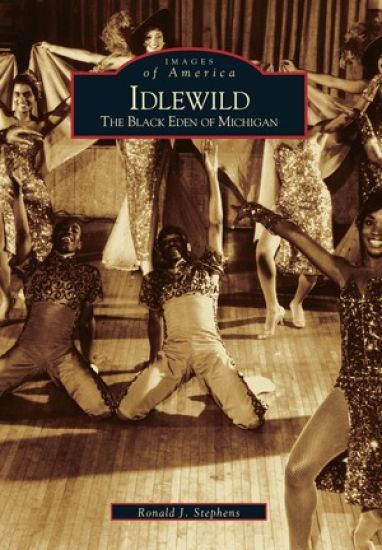
In 1912, white land developers founded Idlewild, an African American resort community in western Michigan. Over the following decades, the town became one of the country’s foremost vacation destinations for the black middle class, during its peak drawing tens of thousands of visitors annually and hosting the era’s premier entertainers, such as The Four Tops, Della Reese, Brook Benton, and George Kirby. With the civil rights movement and the resulting expansion of recreation options available to African Americans, Idlewild suffered a sharp social and economic decline, and by the early 1980s the town had become a struggling retirement community in the midst of financial and political crises. Meticulously researched and unearthing never-before-seen historical material, Ronald J. Stephens’s book examines the rapid rise and decline of this pivotal landmark in African American and leisure history, in the process exploring intersections among race, class, tourism, entertainment, and historic preservation in the United States. Featuring a wealth of fieldwork on contemporary Idlewild, the book also takes a candid look at recent revitalization efforts and analyzes the possibilities for a future resurgence of this national treasure.
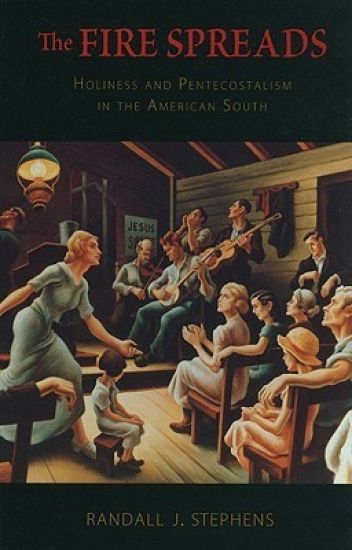
Today pentecostalism claims nearly 500 million followers worldwide. An early stronghold was the American South, where believers spoke in unknown tongues, worshipped in free-form churches, and broke down social barriers that had long divided traditional Protestants. Thriving denominations made their headquarters in the region and gathered white and black converts from the Texas plains to the Carolina low country. Pentecostalism was, in fact, a religious import. It came to the South following the post-Civil War holiness revival, a northern-born crusade that emphasized sinlessness and religious empowerment. Adherents formed new churches in the Jim Crow South and held unconventional beliefs about authority, power, race, and gender. Such views set them at odds with other Christians in the region. By 1900 nearly all southern holiness folk abandoned mainline churches and adopted a pessimistic, apocalyptic theology. Signs of the last days, they thought, were all around them. The faith first took root among anonymous religious zealots. It later claimed southern celebrities and innovators like televangelists Oral Roberts, Jimmy Swaggart, T. D. Jakes, and John Hagee; rock-and-roll icons Elvis Presley, Jerry Lee Lewis, and Little Richard; and, more recently, conservative political leaders such as John Ashcroft.With the growth of southern pentecostal denominations and the rise of new, affluent congregants, the movement moved cautiously into the evangelical mainstream. By the 1980s the once-apolitical faith looked entirely different. Many still watched and waited for spectacular signs of the end. Yet a growing number did so as active political conservatives.
American evangelicalism often appears as a politically monolithic, textbook red-state fundamentalism that elected George W. Bush, opposes gay marriage, abortion, and evolution, and promotes apathy about global warming. Prominent public figures hold forth on these topics, speaking with great authority for millions of followers. Authors Stephens and Giberson, with roots in the evangelical tradition, argue that this popular impression understates the diversity within evangelicalism—an often insular world where serious disagreements are invisible to secular and religiously liberal media consumers. Yet, in the face of this diversity, why do so many people follow leaders with dubious credentials when they have other options? Why do tens of millions of Americans prefer to get their science from Ken Ham, founder of the creationist Answers in Genesis, who has no scientific expertise, rather than from his fellow evangelical Francis Collins, current Director of the National Institutes of Health?Exploring intellectual authority within evangelicalism, the authors reveal how America’s populist ideals, anti-intellectualism, and religious free market, along with the concept of anointing—being chosen by God to speak for him like the biblical prophets—established a conservative evangelical leadership isolated from the world of secular arts and sciences.Today, charismatic and media-savvy creationists, historians, psychologists, and biblical exegetes continue to receive more funding and airtime than their more qualified counterparts. Though a growing minority of evangelicals engage with contemporary scholarship, the community’s authority structure still encourages the “anointed” to assume positions of leadership.
When rock ’n’ roll emerged in the 1950s, ministers denounced it from their pulpits and Sunday school teachers warned of the music’s demonic origins. The big beat, said Billy Graham, was “ever working in the world for evil.” Yet by the early 2000s Christian rock had become a billion-dollar industry. The Devil’s Music tells the story of this transformation.Rock’s origins lie in part with the energetic Southern Pentecostal churches where Elvis, Little Richard, James Brown, and other pioneers of the genre worshipped as children. Randall J. Stephens shows that the music, styles, and ideas of tongue-speaking churches powerfully influenced these early performers. As rock ’n’ roll’s popularity grew, white preachers tried to distance their flock from this “blasphemous jungle music,” with little success. By the 1960s, Christian leaders feared the Beatles really were more popular than Jesus, as John Lennon claimed.Stephens argues that in the early days of rock ’n’ roll, faith served as a vehicle for whites’ racial fears. A decade later, evangelical Christians were at odds with the counterculture and the antiwar movement. By associating the music of blacks and hippies with godlessness, believers used their faith to justify racism and conservative politics. But in a reversal of strategy in the early 1970s, the same evangelicals embraced Christian rock as a way to express Jesus’s message within their own religious community and project it into a secular world. In Stephens’s compelling narrative, the result was a powerful fusion of conservatism and popular culture whose effects are still felt today.
Stimulated by the increasing importance of chiral molecules as pharmaceuticals and the need for enantiomerically pure drugs, techniques in chiral chemistry have been expanded and refined, especially in the areas of chromatography, asymmetric synthesis, and spectroscopic methods for chiral molecule structural characterization. In addition to synthetic chiral molecules, naturally occurring molecules, which are invariably chiral and generally enantiomerically enriched, are of potential interest as leads for new drugs.VCD Spectroscopy for Organic Chemists discusses the applications of vibrational circular dichroism (VCD) spectroscopy to the structural characterization of chiral organic molecules. The book provides all of the information about VCD spectroscopy that an organic chemist needs in order to make use of the technique. The authors, experts responsible for much of the existing literature in this field, discuss the experimental measurement of VCD and the theoretical prediction of VCD. In addition, they evaluate the advantages and limitations of the technique in determining molecular structure. Given the availability of commercial VCD instrumentation and quantum chemistry software, it became possible in the late 1990s for chemists to use VCD in elucidating the stereochemistries of chiral organic molecules. This book helps organic chemists become more aware of the utility of VCD spectroscopy and provides them with sufficient knowledge to incorporate the technique into their own research.
Some might say that Bettie J. Stephens lives in Florida, and that's true; she's lived there for most of her life. But while Pensacola is filled with a family that's almost as big as her heart, it is, after all, just a place. Bettie might say she lives right here in these pages. These are the poems of her life.
Separated from his fianc e by a survival reality show, Tanner Corbin has a lot on his mind. Naturally, he is concerned for Shera's safety but something about the show just doesn't feel right and his fears are confirmed when his old mentor shows up to deliver some bad news. Now the former assassin must evade deadly K-agents and mutant trackers to discover the secrets behind The Paragon Adventure and the challenges that Shera and the other team members face on planet Paragon. What will he do? What can he do?