Kirjojen hintavertailu. Mukana 11 717 486 kirjaa ja 12 kauppaa.

Kirjahaku

Etsi kirjoja tekijän nimen, kirjan nimen tai ISBN:n perusteella.

1000 tulosta hakusanalla J. M.

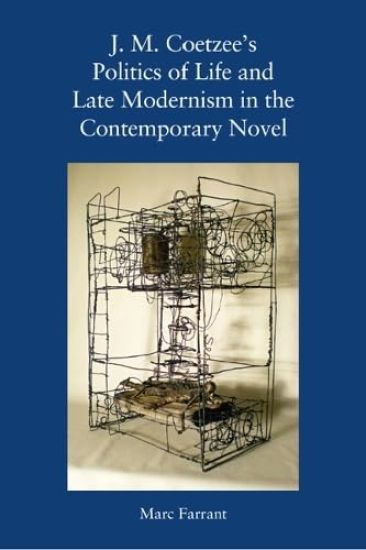
J. M. Coetzee's Politics of Life and Late Modernism in the Contemporary Novel
Surveying the full breadth of J. M. Coetzee's career as both academic and novelist, this book argues for the necessity of rethinking his profound indebtedness to literary modernism in terms of a politics of life. Isolating a particular strain of late modernism, epitomised by Kafka and Beckett, Farrant claims that Coetzee's writings consistently demonstrate an agonistic engagement with the concept of life that involves an entanglement of politics and ethics, which supersedes the singular theoretical frameworks often applied to Coetzee, such as postcolonialism, posthumanism and animal studies. Running throughout his engagement with questions of modernity and colonialism, storytelling and life writing, human and non-human life, religion and post-Enlightenment subjectivity, Coetzee's politics of life yield a new literary cosmopolitanism for the twenty-first century; a powerful commentary on our interrelatedness that emphasises finitude and contingency as fundamental to the way we live together.
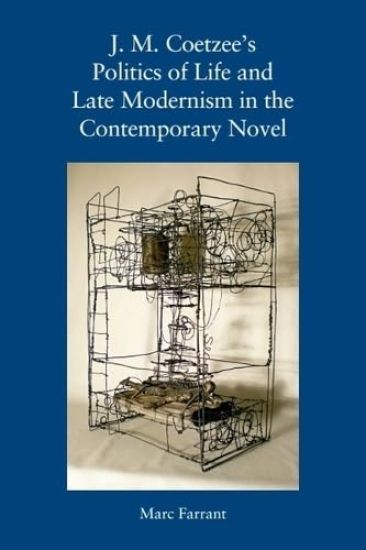
J. M. Coetzee's Politics of Life and Late Modernism in the Contemporary Novel
Surveying the full breadth of J. M. Coetzee's career as both academic and novelist, this book argues for the necessity of rethinking his profound indebtedness to literary modernism in terms of a politics of life. Isolating a particular strain of late modernism, epitomised by Kafka and Beckett, Farrant claims that Coetzee's writings consistently demonstrate an agonistic engagement with the concept of life that involves an entanglement of politics and ethics, which supersedes the singular theoretical frameworks often applied to Coetzee, such as postcolonialism, posthumanism and animal studies. Running throughout his engagement with questions of modernity and colonialism, storytelling and life writing, human and non-human life, religion and post-Enlightenment subjectivity, Coetzee's politics of life yield a new literary cosmopolitanism for the twenty-first century; a powerful commentary on our interrelatedness that emphasises finitude and contingency as fundamental to the way we live together.
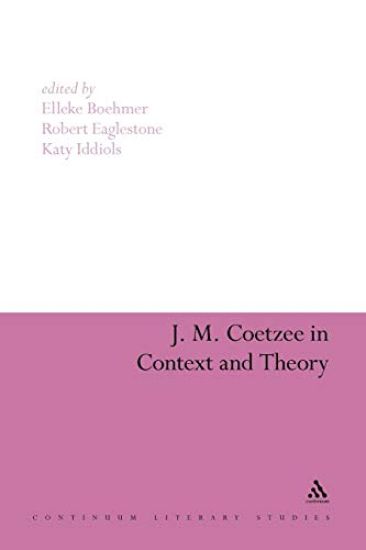
J. M. Coetzee in Context and Theory

J. M. Coetzee in Context and Theory

Continuum Publishing Corporation
2011
nidottu
Nobel Laureate and the first author to win the Booker Prize twice, J.M. Coetzee is perhaps the world's leading living novelist writing in English. Including an international roster of world leading critics and novelists, and drawing on new research, this innovative book analyses the whole range of Coetzee's work, from his most recent novels through his memoirs and critical writing. It offers a range of perspectives on his relationship with the historical, political, cultural and social context of South Africa. It also contextualises Coetzee's work in relation to his literary influences, colonial and post-colonial history, the Holocaust and colonial genocides, the 'politics' and meaning of the Nobel prize in South Africa and Coetzee's very public move from South Africa to Australia. Including a major unpublished essay by leading South African novelist Andre Brink, this book offers the most up-to-date study of Coetzee's work currently available.
J. M. Coetzee’s The Childhood of Jesus
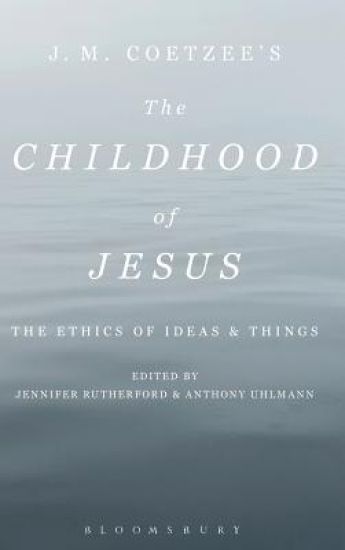
Since the controversy and acclaim that surrounded the publication of Disgrace (1999), the awarding of the Nobel Prize for literature and the publication of Elizabeth Costello: Eight Lessons (both in 2003), J. M. Coetzee’s status has begun to steadily rise to the point where he has now outgrown the specialized domain of South African literature. Today he is recognized more simply as one of the most important writers in the English language from the late 20th and early 21st century. Coetzee’s productivity and invention has not slowed with old age. The Childhood of Jesus, published in 2013, like Elizabeth Costello, was met with a puzzled reception, as critics struggled to come to terms with its odd setting and structure, its seemingly flat tone, and the strange affectless interactions of its characters. Most puzzling was the central character, David, linked by the title to an idea of Jesus. J.M. Coetzee’s The Childhood of Jesus: The Ethics of Ideas and Things is at the forefront of an exciting process of critical engagement with this novel, which has begun to uncover its rich dialogue with philosophy, theology, mathematics, politics, and questions of meaning.
J. M. Coetzee’s The Childhood of Jesus
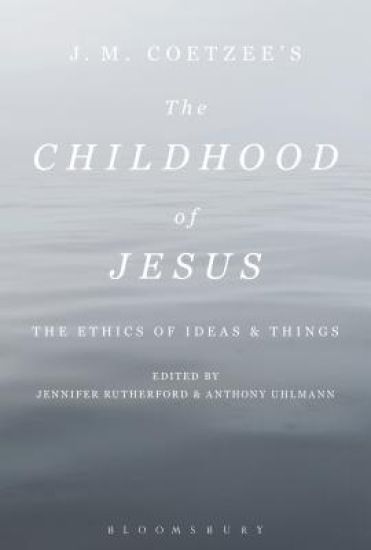
Since the controversy and acclaim that surrounded the publication of Disgrace (1999), the awarding of the Nobel Prize for literature and the publication of Elizabeth Costello: Eight Lessons (both in 2003), J. M. Coetzee’s status has begun to steadily rise to the point where he has now outgrown the specialized domain of South African literature. Today he is recognized more simply as one of the most important writers in the English language from the late 20th and early 21st century. Coetzee’s productivity and invention has not slowed with old age. The Childhood of Jesus, published in 2013, like Elizabeth Costello, was met with a puzzled reception, as critics struggled to come to terms with its odd setting and structure, its seemingly flat tone, and the strange affectless interactions of its characters. Most puzzling was the central character, David, linked by the title to an idea of Jesus. J.M. Coetzee’s The Childhood of Jesus: The Ethics of Ideas and Things is at the forefront of an exciting process of critical engagement with this novel, which has begun to uncover its rich dialogue with philosophy, theology, mathematics, politics, and questions of meaning.
J. M. Coetzee

J. M. Coetzee

Anthony Uhlmann

Bloomsbury Academic USA
2020
nidottu
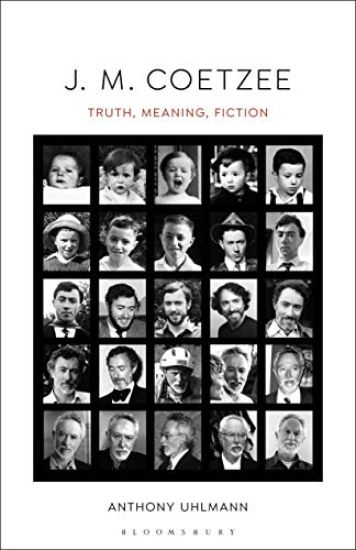
J. M. Coetzee: Truth, Meaning, Fiction illuminates the intellectual and philosophical interests that drive Coetzee’s writing. In doing so, it makes the case for Coetzee as an important and original thinker in his own right. Whilst looking at Coetzee’s writing career, from his dissertation through to The Schooldays of Jesus (2016), and interpreting running themes and scenarios, style and evolving attitudes to literary form, Anthony Uhlmann also offers revealing glimpses, informed by archival research, of Coetzee’s writing process. Among the main themes that Uhlmann sees in Coetzee’s writing, and which remains highly relevant today, is the awareness that there is truth in fiction, or that fiction can provide valuable insights into real world problems, and that there are also fictions of the truth: that we are surrounded, in our everyday lives, by stories we wish to believe are true. J. M. Coetzee: Truth, Meaning, Fiction offers a revealing new account of one of arguably our most important contemporary writers.
J. M. Coetzee

J. M. Coetzee

Anthony Uhlmann

Bloomsbury Academic USA
2020
sidottu
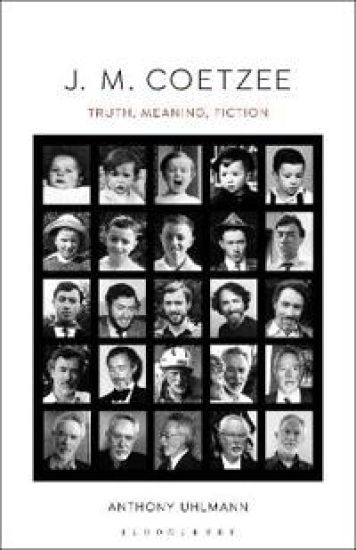
J. M. Coetzee: Truth, Meaning, Fiction illuminates the intellectual and philosophical interests that drive Coetzee’s writing. In doing so, it makes the case for Coetzee as an important and original thinker in his own right. Whilst looking at Coetzee’s writing career, from his dissertation through to The Schooldays of Jesus (2016), and interpreting running themes and scenarios, style and evolving attitudes to literary form, Anthony Uhlmann also offers revealing glimpses, informed by archival research, of Coetzee’s writing process. Among the main themes that Uhlmann sees in Coetzee’s writing, and which remains highly relevant today, is the awareness that there is truth in fiction, or that fiction can provide valuable insights into real world problems, and that there are also fictions of the truth: that we are surrounded, in our everyday lives, by stories we wish to believe are true. J. M. Coetzee: Truth, Meaning, Fiction offers a revealing new account of one of arguably our most important contemporary writers.