The friendship between J.R.R. Tolkien and C.S. Lewis lasted over 40 years and was for each the most important creative collaboration in their lives. Colin Duriez's book focuses primarily on this remarkable literary association, exploring the origins of the mythological worlds which both writers placed at the centre of their fiction.
This first entry of a series covers the fascinating and enigmatic world of J.R.R. Tolkien, examining his place in literary history, his books and his iconic characters. The reader can explore facts and trivia from Tolkien’s life and works, including his early life in southern Africa and Birmingham, Tolkien on the silver screen, his role in the two world wars and his friendship with C.S. Lewis, as well as the places that inspired his fictional world of Middle-earth. Both light-hearted and highly informative, this book offers an insight for new and old Tolkien fans into one of the great writers of the twentieth century.
The birth of modern fantasy in 1930s Britain and America saw the development of new literary and film genres. J.R.R. Tolkien created modern fantasy with The Lord of the Rings, set in a fictional world based upon his life in the early 20th century British Empire, and his love of language and medieval literature. In small-town Texas, Robert E. Howard pounded out his own fantasy realm in his Conan stories, published serially in the ephemeral pulp magazines he loved. Jerry Siegel created Superman with Joe Shuster, and laid the foundation for perhaps the most far-reaching fantasy worlds: the universe of DC and Marvel comics. The work of extraordinary people who lived in an extraordinary decade, this modern fantasy canon still provides source material for the most successful literary and film franchises of the 21st century. Modern fantasy speaks to the human experience and still shows its origins from the lives and times of its creators.
Artist and activist JR exhibits freely in the streets of the world, catching the attention of people who are not typical museum visitors. Known for plastering cities with huge black-and-white wheatpaste photographic portraits of the people who live there, JR won a $1 million TED Prize in 2011 with his TED Wish: to create a large-scale participatory art project that transforms messages of personal identity into pieces of artistic work by making digitally uploaded images into posters to display in diverse communities. To accomplish this, JR has visited cities on nearly every continent. Since the project s inception, approximately 200,000 people have contributed their portraits. From the suburbs of Paris to Israel and Palestine, and from the villages of Kenya to the favelas of Brazil, his art is inextricably linked with activism: his art advocates for universal women s rights, peace and equality, and maintaining an idealism about humanity. Inside Out captures the scope of his vision and his innovative model for creating a global art. Packed with hundreds of images from the project, it includes contributions about how JR s art functions as a worldwide platform for social change, where people either participate in an existing campaign or launch a new action in their own community. Inside Out is a never-before-seen look at the work that is nearest and dearest to the artist s heart and is sure to appeal not only to JR fans but also to fans of public art and street art.
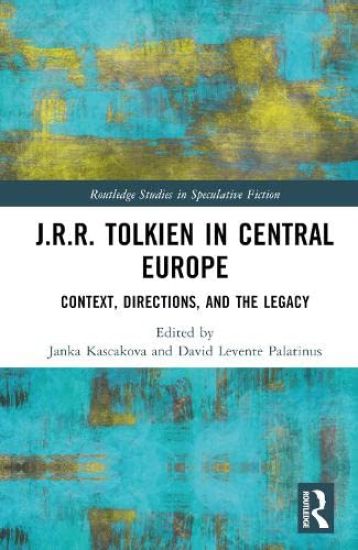
This volume is a long overdue contribution to the dynamic, but unevenly distributed study of fantasy and J.R.R. Tolkien’s legacy in Central Europe. The chapters move between and across theories of cultural and social history, reception, adaptation, and audience studies, and offer methodological reflections on the various cultural perceptions of Tolkien’s oeuvre and its impact on twenty-first century manifestations. They analyse how discourses about fantasy are produced and mediated, and how processes of re-mediation shape our understanding of the historical coordinates and local peculiarities of fantasy in general, and Tolkien in particular, all that in Central Europe in an age of global fandom. The collection examines the entanglement of fantasy and Central European political and cultural shifts across the past 50 years and traces the ways in which its haunting legacy permeates and subverts different modes and aesthetics across different domains from communist times through today’s media-saturated culture.
This volume is a long overdue contribution to the dynamic, but unevenly distributed study of fantasy and J.R.R. Tolkien’s legacy in Central Europe. The chapters move between and across theories of cultural and social history, reception, adaptation, and audience studies, and offer methodological reflections on the various cultural perceptions of Tolkien’s oeuvre and its impact on twenty-first century manifestations. They analyse how discourses about fantasy are produced and mediated, and how processes of re-mediation shape our understanding of the historical coordinates and local peculiarities of fantasy in general, and Tolkien in particular, all that in Central Europe in an age of global fandom. The collection examines the entanglement of fantasy and Central European political and cultural shifts across the past 50 years and traces the ways in which its haunting legacy permeates and subverts different modes and aesthetics across different domains from communist times through today’s media-saturated culture.
This edited collection of brand new essays examines The Hobbit and The Lord of the Rings in the light of children's literature theory and approaches. Exploring issues such as gender, language, narrative, and ecocriticism, the volume also places Tolkien's most popular works in the context of a range of visual media including the film adaptations.
This edited collection of brand new essays examines The Hobbit and The Lord of the Rings in the light of children's literature theory and approaches. Exploring issues such as gender, language, narrative, and ecocriticism, the volume also places Tolkien's most popular works in the context of a range of visual media including the film adaptations.
Title: The First Newcastle Directory (Whitehead's Newcastle Directory for 1778) ... Reprinted in facsimile. With an introduction by J. R. Boyle.Publisher: British Library, Historical Print EditionsThe British Library is the national library of the United Kingdom. It is one of the world's largest research libraries holding over 150 million items in all known languages and formats: books, journals, newspapers, sound recordings, patents, maps, stamps, prints and much more. Its collections include around 14 million books, along with substantial additional collections of manuscripts and historical items dating back as far as 300 BC.The HISTORY OF BRITAIN & IRELAND collection includes books from the British Library digitised by Microsoft. As well as historical works, this collection includes geographies, travelogues, and titles covering periods of competition and cooperation among the people of Great Britain and Ireland. Works also explore the countries' relations with France, Germany, the Low Countries, Denmark, and Scandinavia. ++++The below data was compiled from various identification fields in the bibliographic record of this title. This data is provided as an additional tool in helping to insure edition identification: ++++ British Library Boyle, J.R.; Boyle, John Roberts.; 1889. 28. 57 p.; 8 . 10353.h.24.
A close colleague of Tolkein for many years, Zettersten offers here a personally informed analysis of his fiction. In light of his unusual life experience and enthusiasm for the study of languages, Zettersten finds in Tolkein's fiction the same animating passions that drove that great author as a youth, a soldier, a linguist, and an Oxford Don.
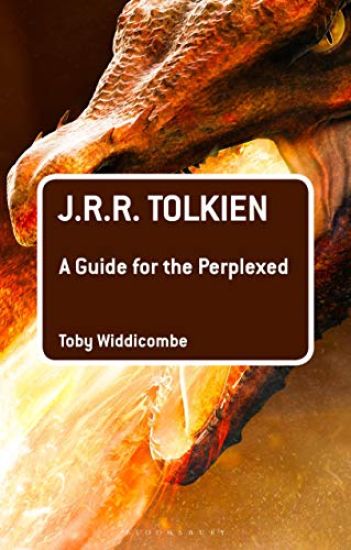
With his richly detailed world of Middle Earth and the epic tales he told around it, J.R.R. Tolkien invented the modern fantasy novel. For readers and students getting to grips with this world for the first time, J.R.R. Tolkien: A Guide for the Perplexed is an essential guide to the author’s life and work.The book helps readers explore:· Tolkien’s life and times· Tolkien’s mythical world· The languages of Middle Earth· The major works – The Hobbit and The Lord of the Rings· Posthumously published writings – from The Silmarillion to the recently discovered The Fall of GondolinWith reference to adaptations of Tolkien’s work including the Peter Jackson films, notes on Tolkien’s sources and surveys of key scholarly and critical writings, this is an accessible and authoritative guide to one of the 20th century’s greatest and most popular writers.
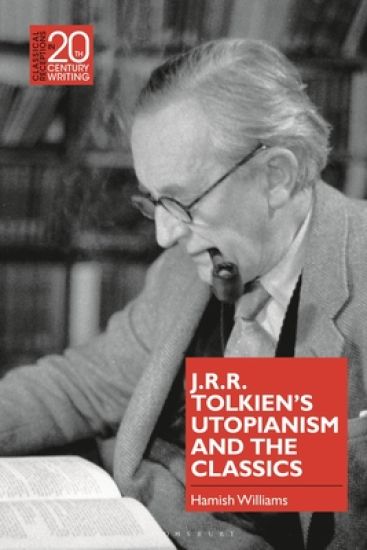
This book opens up new perspectives on the English fantasy writer J.R.R. Tolkien, arguing that he was an influential thinker of utopianism in 20th-century fiction and that his scrutiny of utopias can be assessed through his dialogue with antiquity. Tolkien’s engagement with the ancient world often reflects an interest in retrotopianism: his fictional places – cities, forests, homes – draw on a rich (post-)classical narrative imagination of similar spaces. Importantly for Tolkien, such narratives entail ‘eutopian’ thought experiments: the decline and fall of distinctly ‘classical’ communities provide an utopian blueprint for future political restorations; the home as oikos becomes a space where an ideal ethical reciprocity between host and guest can be sought; the ‘ancient forest’ is an ambiguous, unsettling site where characters can experience necessary forms of awakening. From these perspectives, tokens of Platonic moderation, Augustan restoration, Homeric xenophilia, and the Ovidian material sublime are evident in Tolkien’s writing. Likewise, his retrotopianism also always entails a rewriting of ancient narratives in post-classical and modern terms. This study then explores how Tolkien’s use of the classical past can help us to align classical and utopian studies, and thus to reflect on the ranges and limits of utopianism in classical literature and thought.
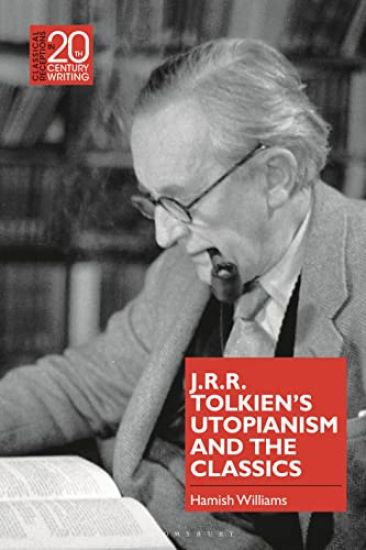
This book opens up new perspectives on the English fantasy writer J.R.R. Tolkien, arguing that he was an influential thinker of utopianism in 20th-century fiction and that his scrutiny of utopias can be assessed through his dialogue with antiquity. Tolkien’s engagement with the ancient world often reflects an interest in retrotopianism: his fictional places – cities, forests, homes – draw on a rich (post-)classical narrative imagination of similar spaces. Importantly for Tolkien, such narratives entail ‘eutopian’ thought experiments: the decline and fall of distinctly ‘classical’ communities provide an utopian blueprint for future political restorations; the home as oikos becomes a space where an ideal ethical reciprocity between host and guest can be sought; the ‘ancient forest’ is an ambiguous, unsettling site where characters can experience necessary forms of awakening. From these perspectives, tokens of Platonic moderation, Augustan restoration, Homeric xenophilia, and the Ovidian material sublime are evident in Tolkien’s writing. Likewise, his retrotopianism also always entails a rewriting of ancient narratives in post-classical and modern terms. This study then explores how Tolkien’s use of the classical past can help us to align classical and utopian studies, and thus to reflect on the ranges and limits of utopianism in classical literature and thought.
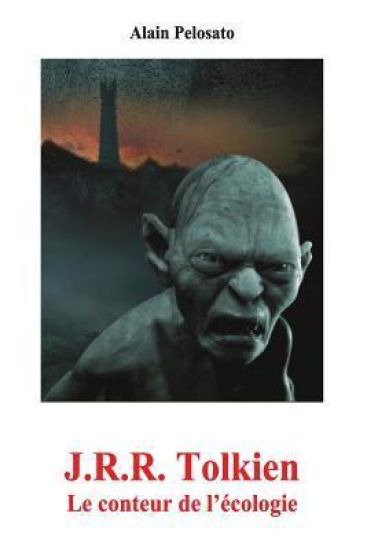
Tolkien a invent la Fantasy, dit-on.Sans aucun doute.Mais son oeuvre poss de plus de profondeur.Cet essai explore l'id ologie, l' cologie et la psychanalyse, pr sentes dans l'oeuvre de l'auteur du Seigneur des anneaux .
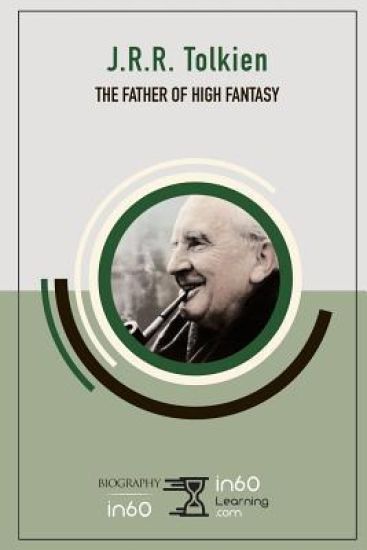
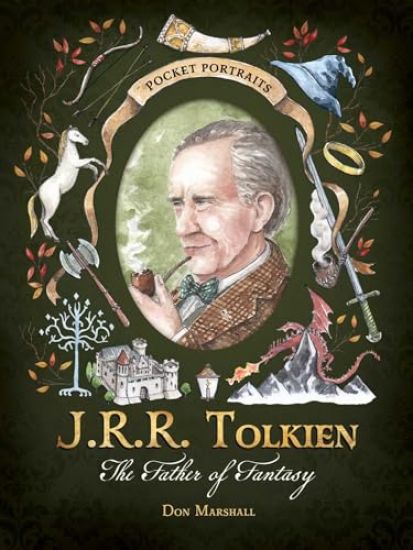
Explore the extraordinary life of J.R.R. Tolkien, the legendary creator of The Lord of the Rings and The Hobbit, in this captivating literary biography that celebrates the father of modern fantasy and his profound influence on fantasy literature and mythological storytelling.This captivating volume goes beyond the epic tales of The Hobbit and The Lord of the Rings to explore J.R.R. Tolkien’s incredible life and the experiences that shaped his legendary works. From his early days as a linguist to his passion for mythology and languages, this book provides fascinating insights into Tolkien’s extraordinary mind. This beautifully curated book is both an inspiring biography and a celebration of literary brilliance. Whether you’re a longtime admirer of Tolkien or just beginning your literary adventure, Pocket Portraits: J.R.R. Tolkien will leave you fascinated, inspired, and longing for more.