Electromagnetic pollution is the permeation of the environment with undesirable static and alternating electric and magnetic fields. The undesirable fields are usually man-made. Electromagnetic pollution is different from other types of pollution, such as air, water, and noise pollution, in two ways. First, it is almost always invisible, and second, there are sometimes therapeutic effects. This book is mainly concerned with the effects of electromagnetism on the physiology of man. The most prevalent sources of man-made electromagnetic fields are the generation, the transmission and distribution systems of electrical power, and the countless number of electrical devices which use electricity. The world’s use of electricity has increased exponentially as the standard of living of man has improved. Specific sources of man-made electromagnetic fields are listed and described. Some of the obvious thermal effects on man, particularly from ultra-high-frequency and microwaves, are cited, as well as lesser known non-thermal physiological effects. Related to these are the therapeutic uses of electric and magnetic fields. In addition to electrodiathermy, electrotherapy is widely used in Eastern European countries, and electric fields have been used to promote bone regeneration in the USA. The controversy over the legitimacy of non-thermal electrotherapy is of great importance to the final judgment regarding the significance of electromagnetic pollution. A convenient method of specifying what is meant by low-level electromagnetic fields is the examination of human exposure standards which have been established by regulatory agencies. The book lists the standards the USA, Russia, and other countries have formulated, and discusses the significance of the large differences in allowable exposure levels. Finally, the book provides an overall discussion of the effects of electromagnetic fields.
This book discusses how humankind is affected by the electric, magnetic and electromagnetic fields which exist by virtue of the present technological age. It presents both a dispassionate and objective appraisal of electrical pollution.
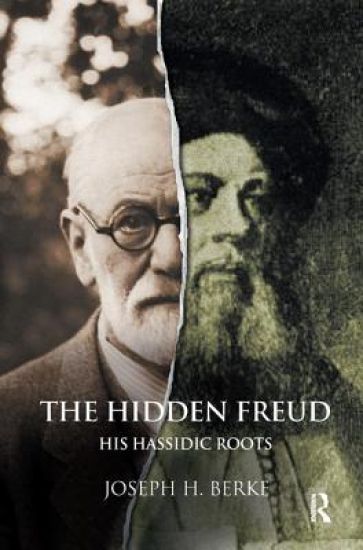
This book explores Sigmund Freud and his Jewish roots and demonstrates the input of the Jewish mystical tradition into Western culture via psychoanalysis. It shows how Freud utilized the Jewish mystical tradition to develop a science of subjectivity.
This book considers the experience of envy, greed, jealousy, and narcissism and how they operate between parents and children, brothers and sisters. It focuses on the object of these harmful emotions, what attracts malice to them, and how they may arouse it.
This book develops and applies the theory of lethal moralism to explain the different types and growth of terrorism over the last half century from 1970-2020. Drawing on data from The Global Terrorism Database, supplemented with original research differentiating groups based on their ideological orientations, it delves into the social and cultural forces that influence those who engage in terrorism, including the dynamic processes of “othering” that produce the social polarization crucial for understanding why some groups resort to lethal violence to handle their grievances. It systematically applies the theory of lethal moralism to the explain the main types of terrorism rooted in different ideological frameworks, including: left-wing terrorism, nationalist and separatist movements, religious terrorism (including a separate chapter on radical Islam), and right-wing extremism and hate groups. As a theoretically informed study of the main varieties of terrorism and the evolution of terrorism in the digital age, Terrorism as Moralistic Violence will appeal to scholars of sociology, criminology, social theory and politics with interests in political violence and terrorist movements.
This book addresses a prominent group of virtues and vices as portrayed in popular films to further our understanding of these moral character traits. The discussions emphasize the interplay between the philosophical conception of the virtues and vices and the cinematic representations of character.Joseph H. Kupfer explores how fictional characters possessing certain moral strengths and weaknesses concretize our abstract understanding of them. Because the actions that flow from these traits occur in cinematic contexts mirroring real world conditions, the narrative portrayals of these moral characteristics can further our appreciation of their import. Humility, integrity, and perseverance, for example, are depicted in Chariots of Fire, The Fabulous Baker Boys, and Billy Elliot, while the vices of envy, arrogance and vanity are captured in Amadeus, Whiplash, and Young Adult. This interdisciplinary work in philosophy and film criticism will be of great interest to scholars and students of film studies, philosophy of film, ethics, aesthetics, and popular culture.
This book addresses a prominent group of virtues and vices as portrayed in popular films to further our understanding of these moral character traits. The discussions emphasize the interplay between the philosophical conception of the virtues and vices and the cinematic representations of character.Joseph H. Kupfer explores how fictional characters possessing certain moral strengths and weaknesses concretize our abstract understanding of them. Because the actions that flow from these traits occur in cinematic contexts mirroring real world conditions, the narrative portrayals of these moral characteristics can further our appreciation of their import. Humility, integrity, and perseverance, for example, are depicted in Chariots of Fire, The Fabulous Baker Boys, and Billy Elliot, while the vices of envy, arrogance and vanity are captured in Amadeus, Whiplash, and Young Adult. This interdisciplinary work in philosophy and film criticism will be of great interest to scholars and students of film studies, philosophy of film, ethics, aesthetics, and popular culture.
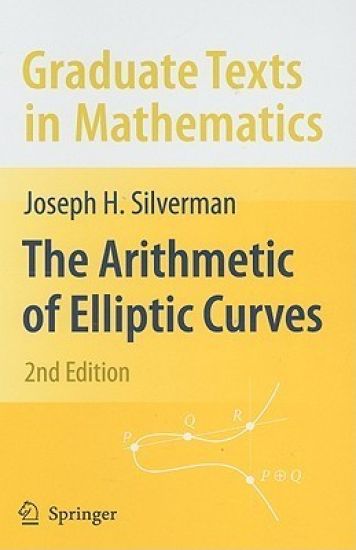
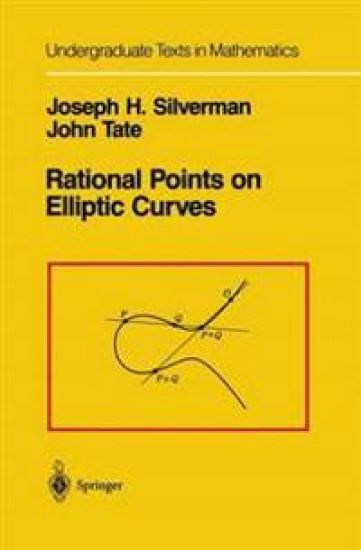
The theory of elliptic curves is distinguished by its long history and by the diversity of the methods that have been used in its study. This book treats the arithmetic approach in its modern formulation, through the use of basic algebraic number theory and algebraic geometry. Following a brief discussion of the necessary algebro-geometric results, the book proceeds with an exposition of the geometry and the formal group of elliptic curves, elliptic curves over finite fields, the complex numbers, local fields, and global fields. Final chapters deal with integral and rational points, including Siegels theorem and explicit computations for the curve Y = X + DX, while three appendices conclude the whole: Elliptic Curves in Characteristics 2 and 3, Group Cohomology, and an overview of more advanced topics.
In the introduction to the first volume of The Arithmetic of Elliptic Curves (Springer-Verlag, 1986), I observed that "the theory of elliptic curves is rich, varied, and amazingly vast," and as a consequence, "many important topics had to be omitted." I included a brief introduction to ten additional topics as an appendix to the first volume, with the tacit understanding that eventually there might be a second volume containing the details. You are now holding that second volume. it turned out that even those ten topics would not fit Unfortunately, into a single book, so I was forced to make some choices. The following material is covered in this book: I. Elliptic and modular functions for the full modular group. II. Elliptic curves with complex multiplication. III. Elliptic surfaces and specialization theorems. IV. Neron models, Kodaira-Neron classification of special fibers, Tate's algorithm, and Ogg's conductor-discriminant formula. V. Tate's theory of q-curves over p-adic fields. VI. Neron's theory of canonical local height functions.
In the introduction to the first volume of The Arithmetic of Elliptic Curves (Springer-Verlag, 1986), I observed that "the theory of elliptic curves is rich, varied, and amazingly vast," and as a consequence, "many important topics had to be omitted." I included a brief introduction to ten additional topics as an appendix to the first volume, with the tacit understanding that eventually there might be a second volume containing the details. You are now holding that second volume. it turned out that even those ten topics would not fit Unfortunately, into a single book, so I was forced to make some choices. The following material is covered in this book: I. Elliptic and modular functions for the full modular group. II. Elliptic curves with complex multiplication. III. Elliptic surfaces and specialization theorems. IV. Neron models, Kodaira-Neron classification of special fibers, Tate's algorithm, and Ogg's conductor-discriminant formula. V. Tate's theory of q-curves over p-adic fields. VI. Neron's theory of canonical local height functions.
The theory of elliptic curves involves a pleasing blend of algebra, geometry, analysis, and number theory. "Rational Points on Elliptic Curves" stresses this interplay as it develops the basic theory, thereby providing an opportunity for advance undergraduates to appreciate the unity of modern mathematics.
A great way for busy business professionals to acquaint themselves with today's most important management trends The Guru Guide is for businesspeople who need to keep abreast of the latest trends in management, but who simply don't have the time to read every book that hits the business bestseller list. Written by authors who are themselves internationally respected business authors and consultants, it provides you with concise yet penetrating discussions of the best of today's thinking on management and leadership. A quick, easy way to improve your business literacy, The Guru Guide: * Distills and demystifies essential terms, concepts, and theories of today's top consultants and management thinkers * Profiles more than 75 top names in management, including Warren Bennis, Stephen Covey, Peter Drucker, Michael Hammer, Peter Senge, and Margaret Wheatley * Explores the categories of leadership, managing change, the learning organization, teamwork, strategy, managing and motivating people, and more * Cross-links important ideas to provide a clearer picture of which issues the gurus agree on and which ones they don't * Provides insightful commentaries along with real-world case studies * Arms you with quick-reference charts, bulleted lists, chapter-end summaries, and other creative, quick-learning tools "It's tough to keep up with the latest management thinking. This book can help . . . and stimulate you to go to original sources of greatest value to you." -B. Joseph White, Dean, University of Michigan Business School You are a business professional. And like a physician, attorney, or any other type of professional, you have an important responsibility to your company, your clients, and yourself to stay on top of the latest trends in your field. But if you are like most managers today, you're too busy putting out fires and contributing to the bottom line to find the time for more than an occasional BusinessWeek or Fortune article. The fact is, even if you could spare an hour or two each day, you still wouldn't have the time to digest all of the "essential" business books and periodicals. Just to give you an idea of the scope of the problem, Amazon.com currently lists 700 "bestsellers" under the topics of management and leadership alone! Pretty daunting, but before you throw in the towel, consider this alternative-The Guru Guide. The Guru Guide is a concise digest of the key ideas from 79 of the world's most influential management experts. It provides instant access to the best thinking on leadership, managing change, teamwork, managing and motivating people, business strategy, and other management topics of crucial importance to today's business professional. In researching The Guru Guide, Joseph and Jimmie Boyett -widely read and respected management theorists in their own right-perused more than 200 books and 3,000 articles by Stephen Covey, Peter Senge, Tom Peters, Peter Drucker, Margaret Wheatley, Michael Hammer, Warren Bennis, Robert K. Greenleaf, and dozens of other top names in management. Out of that mountain of business wisdom, they distilled the essence of each thinker's core ideas. They cross-link the ideas in order to give you a clear picture of how thinking about critical management topics has evolved, and they provide valuable insights into the major conflicts and points of agreement among influential schools of thought. Their critical commentaries and case studies illustrate how each guru's ideas have been received and executed in the real world. And they packaged it all in a creative, easy-to-read format with quick-reference charts, bulleted lists, and chapter-end summaries of key concepts that make learning quicker and easier than ever for even the most time-starved manager. A great way to fine-tune your business literacy, The Guru Guide is must reading for all business professionals.
When Gottfried Wilhelm Leibniz first arrived in Paris in 1672 he was a well-educated, sophisticated young diplomat who had yet to show any real sign of his latent mathematical abilities. Over his next four crowded, formative years, which Professor Hofmann analyses in detail, he grew to be one of the outstanding mathematicians of the age and to found the modern differential calculus. In Paris, Leibniz rapidly absorbed the advanced exact science of the day. During a short visit to London in 1673 he made a fruitful contact with Henry Oldenburg, the secretary of the Royal Society, who provided him with a wide miscellany of information regarding current British scientific activities. Returning to Paris, Leibniz achieved his own first creative discoveries, developing a method of integral `transmutation' through which lie derived the 'arithmetical' quadrature of the circle by an infinite series. He also explored the theory of algebraic equations. Later, by codifying existing tangent and quadrature methods and expressing their algorithmic structure in a `universal' notation, lie laid the foundation of formal 'Leibnizian' calculus.
This book examines Paul's letter to the Philippians against the social background of the colony at Philippi. After an extensive survey of Roman social values, Professor Hellerman argues that the cursus honorum, the formalized sequence of public offices that marked out the prescribed social pilgrimage for aspiring senatorial aristocrats in Rome (and which was replicated in miniature in municipalities and in voluntary associations), forms the background against which Paul has framed his picture of Jesus in the great Christ hymn in Philippians 2. In marked contrast to the values of the dominant culture, Paul portrays Jesus descending what the author describes as a cursus pudorum ('course of ignominies'). The passage has thus been intentionally framed to subvert Roman cursus ideology and, by extension, to redefine the manner in which honour and power were to be utilized among the Christians at Philippi.
An issue in engineering design is a system's design lifetime. Economists study durability choice problems for consumer goods but seldom address lifetime problem(s) of complex engineering systems. The issues for engineering systems are complex and multidisciplinary and require an understanding of the 'technicalities of durability' and the economic implications of the marginal cost of durability and value maximization. Commonly the design lifetime for an infrastructure is set between 30 and 70 years. Satellite lifetimes are also assigned arbitrarily or with limited analysis. This book provides a systemic qualitative and quantitative approach to these problems addressing, first, the technicality of durability, second, the marginal cost of durability, and third, the durability choice problem for complex engineering systems with network externalities (competition and market uncertainty) and obsolescence effects (technology evolution). Since the analyses are system-specific, a satellite example is used to illustrate the essence and provide a quantitative application of said analyses.