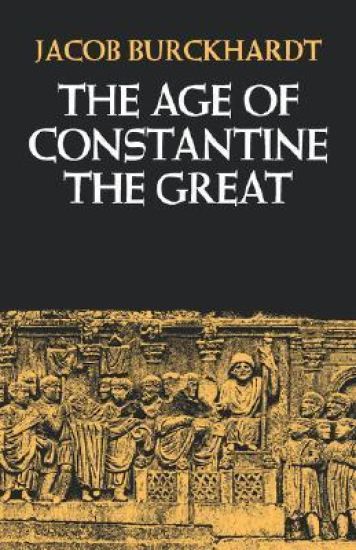
In the present work it has been the author's design to describe the remarkable half century from the accession of Diocletian to the death of Constantine in its quality as a period of transition. What was intended was not a history of the life and reign of Constantine, nor yet an encyclopedia of all worth-while information pertaining to this period. Rather were the significant and essential characteristics of the contemporary world to be outlined and shaped into a perspicuous sketch of the whole.
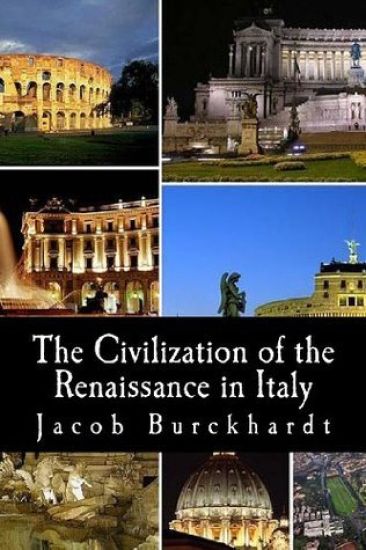
Jacob Burckhardt's "Civilization of Renaissance in Italy" remains a cornerstone work for understanding the Italian Renaissance. Delve into the heart of Italy during this transformative period, exploring its art, history, and the burgeoning philosophy of Humanism. Burckhardt meticulously examines the unique societal and cultural factors that allowed the Renaissance to flourish, shaping not only Italy but the course of Western civilization. This classic work offers invaluable insights into the political landscape, artistic achievements, and intellectual ferment that defined the era. A detailed study of Italian civilization, this book is essential for anyone seeking a deeper understanding of Renaissance history and its lasting impact. Explore the world of Renaissance art, the intricacies of Italian society, and the enduring legacy of this pivotal epoch.This work has been selected by scholars as being culturally important, and is part of the knowledge base of civilization as we know it.This work is in the public domain in the United States of America, and possibly other nations. Within the United States, you may freely copy and distribute this work, as no entity (individual or corporate) has a copyright on the body of the work.Scholars believe, and we concur, that this work is important enough to be preserved, reproduced, and made generally available to the public. We appreciate your support of the preservation process, and thank you for being an important part of keeping this knowledge alive and relevant.
Jacob Burckhardt's "Civilization of Renaissance in Italy" remains a cornerstone work for understanding the Italian Renaissance. Delve into the heart of Italy during this transformative period, exploring its art, history, and the burgeoning philosophy of Humanism. Burckhardt meticulously examines the unique societal and cultural factors that allowed the Renaissance to flourish, shaping not only Italy but the course of Western civilization. This classic work offers invaluable insights into the political landscape, artistic achievements, and intellectual ferment that defined the era. A detailed study of Italian civilization, this book is essential for anyone seeking a deeper understanding of Renaissance history and its lasting impact. Explore the world of Renaissance art, the intricacies of Italian society, and the enduring legacy of this pivotal epoch.This work has been selected by scholars as being culturally important, and is part of the knowledge base of civilization as we know it.This work is in the public domain in the United States of America, and possibly other nations. Within the United States, you may freely copy and distribute this work, as no entity (individual or corporate) has a copyright on the body of the work.Scholars believe, and we concur, that this work is important enough to be preserved, reproduced, and made generally available to the public. We appreciate your support of the preservation process, and thank you for being an important part of keeping this knowledge alive and relevant.
Western Civilisation was in its pomp when Jacob Burckhardt delivered his Judgements on History and Historians; European Empires spanned the globe, while the modern age was being forged in the nationalist revolutions of 1848. As a tutor to the young Friedrich Nietzsche as well as one of the first historians to take 'culture' as his subject rather than the triumphs and travails of kings and generals, Burckhardt was at the vanguard of this modern sensibility. Ambitious in its scope, ranging from the days of Ancient Egypt, through the Reformation to the time of Napoleon, this is indeed a history of 'Western Civilization', written before two monstrous world wars threw such a concept into disrepute.
Republished in 1949, Jacob Burckhardt’s brilliant study, first published in Germany in 1852, has survived all its critics and presents today perhaps a more intelligible and a more valid picture of events, their nexus, and their relevance than any later study. This English version is apt to the moment. No epoch of remote history can be so relevant to modern interests as the period of transition between the ancient and the medieval world, when a familiar order of things visibly died and was supplanted by a new. Other transitions become apparent only in retrospect; that of the age of Constantine, like our own, was patent to contemporaries. Old institutions, in the sphere of culture as of government, had grown senile; economic balances were altered; peoples hitherto on the peripheries of civilization demanded attention, and a new and revolutionary social doctrine with an enormous emotional appeal was spread abroad by men with a religious zeal for a new and authoritarian cosmopolitanism and with a religious certainty that their end justified their means. For us, contemporary developments have made the analogy inescapable, but Jacob Burckhardt’s insight led him to a singularly clear apprehension of the meaning of the transition almost a century ago, and the analogy implicit in his book is the more impressive as it was unpremeditated.
Republished in 1949, Jacob Burckhardt’s brilliant study, first published in Germany in 1852, has survived all its critics and presents today perhaps a more intelligible and a more valid picture of events, their nexus, and their relevance than any later study. This English version is apt to the moment. No epoch of remote history can be so relevant to modern interests as the period of transition between the ancient and the medieval world, when a familiar order of things visibly died and was supplanted by a new. Other transitions become apparent only in retrospect; that of the age of Constantine, like our own, was patent to contemporaries. Old institutions, in the sphere of culture as of government, had grown senile; economic balances were altered; peoples hitherto on the peripheries of civilization demanded attention, and a new and revolutionary social doctrine with an enormous emotional appeal was spread abroad by men with a religious zeal for a new and authoritarian cosmopolitanism and with a religious certainty that their end justified their means. For us, contemporary developments have made the analogy inescapable, but Jacob Burckhardt’s insight led him to a singularly clear apprehension of the meaning of the transition almost a century ago, and the analogy implicit in his book is the more impressive as it was unpremeditated.
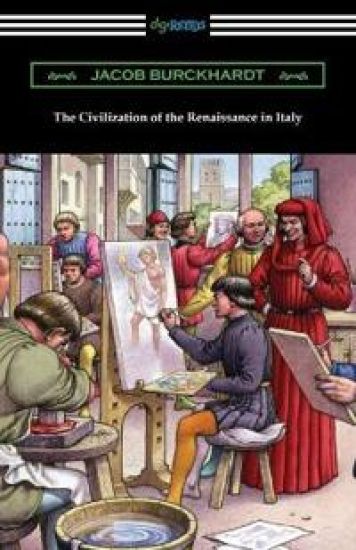
Jacob Burckhardt was a European historian and critic of the nineteenth century who is commonly referred to as the world's first cultural historian. He believed that historical writings should describe the spirit, forms of expression, people, and setting of a particular era. He viewed the Italian Renaissance as the world's finest period of culture and chose it as the subject of his most well-known work, "The Civilization of the Renaissance in Italy". At the time of its publication it was the most influential interpretation of the Italian Renaissance ever written due to its expansive look into the opulent culture and artistic movements which were created during that time. In the work, Burckhardt seeks to compare the Renaissance with other important eras in order to show how the Italians rose above those cultures. The text, however, is not so much "scientific" as it is opinionated, which has earned it a reputation for being wholly biased. Still, Burckhardt is able to weave together a masterful narrative which creates a holistic story for the Renaissance and its influence on Western Civilization. This edition is printed on premium acid-free paper and follows the translation of S. G. C. Middlemore.