Kirjojen hintavertailu. Mukana 11 244 527 kirjaa ja 12 kauppaa.

Kirjahaku

Etsi kirjoja tekijän nimen, kirjan nimen tai ISBN:n perusteella.

1000 tulosta hakusanalla Jacques Derrida

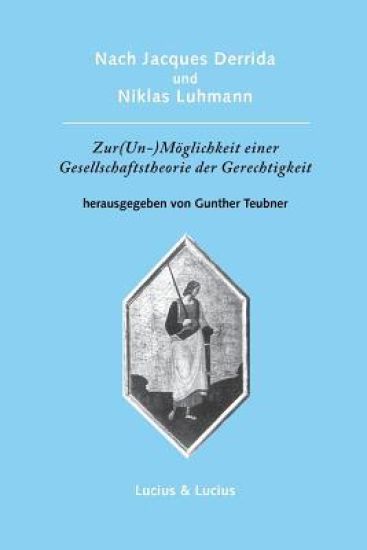
Nach Jacques Derrida Und Niklas Luhmann: Zur (Un-)Möglichkeit Einer Gesellschaftstheorie Der Gerechtigkeit
Gegenüber der aktuellen sozial- und rechtsphilosophischen Debatte zur Gerechtigkeit, die zwischen den Polen der Universalität und der Alterität oszilliert, arbeiten die Autoren des Bandes eine dritte, eine sozialtheoretische, Argumentationslinie heraus. Ausgangspunkt sind die Paradoxien des Rechts, wie sie von Jacques Derrida und Niklas Luhmann formuliert worden sind. In Luhmanns "Kontingenzformel des Rechts" erscheint Gerechtigkeit nicht primär als philosophische Frage, sondern als konkrete Praxis der jeweiligen Selbstbeschreibungen des Rechtssystems, welche die bloße Konsistenz des Recht übersteigt und sich an den Anforderungen der Umwelten des Rechts orientiert. Die Autoren des Bandes konfrontieren die Luhmannsche Kontingenzformel mit dem Gerechtigkeitskonzept von Derrida, die auf eine Transzendenz des Rechts in ganz anderer Richtung zielt. Diese ist für die Rechtsoperationen prinzipiell nicht erreichbar, ihren Anforderungen aber sind sie ständig und ohne Ausweichmöglichkeit ausgesetzt. Was ergibt sich aus dieser Konfrontation für die Neuformulierung von Grundbegriffen des Rechts: Gerechtigkeit, Rechtssubjektivität, subjektives Recht, Rechtsgenese, Rechtsargumentation?
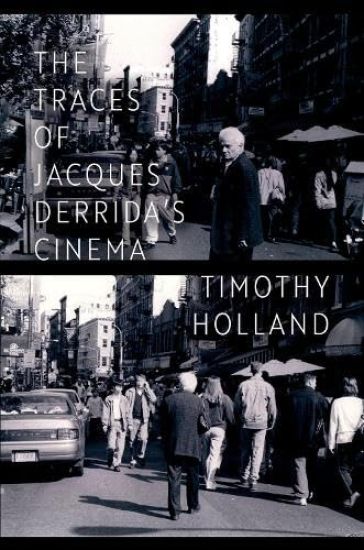
The Traces of Jacques Derrida's Cinema

The Traces of Jacques Derrida's Cinema

Timothy Holland

OXFORD UNIVERSITY PRESS INC
2024
nidottu
Situated at the intersection of film and media studies, literary theory, and continental philosophy, The Traces of Jacques Derrida's Cinema provides a trenchant account of the role of cinema in the oeuvre of one of the most influential philosophers of the twentieth century, Jacques Derrida (1930-2004). The book is animated by Derrida's self-confessed passion for the movies, his reluctance to write about film despite the range of his corpus, and the generative encounters arising between his legacy and the field of film and media studies as a result. Given the expanse of its references, interdisciplinarity, and consideration of Derrida's approach to the experience of both spectatorship and the act of being filmed, The Traces of Jacques Derrida's Cinema contributes to the ongoing close analyses of the philosopher's work while also providing a rigorous introduction to deconstruction. Author Timothy Holland interweaves historical and speculative modes of research and writing to articulate the peripheral-yet surprisingly crucial-place of the cinematic medium for Derrida and his philosophical enterprise. The outcome is a meticulously detailed survey of the centers and margins of Derrida's oeuvre that include forays into such terrain as: his notable appearances in films; an unrealized project on cinema and belief that Derrida proposed in a 2001 interview; the correspondences between the strategies of deconstruction and the traditions, homecomings, and wordplay of David Lynch's cinematic media; and the questions wedded to the future of film studies amid the vicissitudes of the modern, virtual university. Ultimately, Holland pursues the thinking activated by the flickering of Derrida's cinema-not only the absence and presence of film in Derrida's professional and personal life, but also the rigor of academic discourse and the pleasures of the movies, ghosts and technology, religious faith and scientific knowledge, and ruination and survival-as a critical chance for reflection.
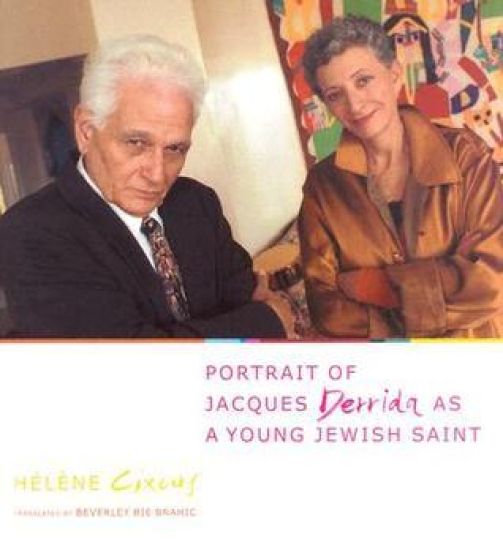
Portrait of Jacques Derrida as a Young Jewish Saint

Portrait of Jacques Derrida as a Young Jewish Saint

Hélène Cixous

Columbia University Press
2004
sidottu
Who can say "I am Jewish?" What does "Jew" mean? What especially does it mean for Jacques Derrida, founder of deconstruction, scoffer at boundaries and fixed identities, explorer of the indeterminate and undecidable? In Portrait of Jacques Derrida as a Young Jewish Saint, French feminist philosopher Helene Cixous follows the intertwined threads of Jewishness and non-Jewishness that play through the life and works of one of the greatest living philosophers. Cixous is a lifelong friend of Derrida. They both grew up as French Jews in Algeria and share a "belonging constituted of exclusion and nonbelonging"-not Algerian, rejected by France, their Jewishness concealed or acculturated. In Derrida's family "one never said 'circumcision'but 'baptism,'not 'Bar Mitzvah'but 'communion.'" Judaism cloaked in Catholicism is one example of the undecidability of identity that influenced the thinker whom Cixous calls a "Jewish Saint." An intellectual contemporary of Derrida, Cixous's ideas on writing have an affinity with his philosophy of deconstruction, which sought to overturn binary oppositions-such as man/woman, or Jew/non-Jew-and blur boundaries of exclusion inherent in Western thought. In portraying Derrida, Cixous uses metonymy, alliteration, rhyme, neologisms, and puns to keep the text in constant motion, freeing language from any rigidity of meaning. In this way she writes a portrait of "Derrida in flight," slipping from one appearance to the next, unable to be fixed in one spot, yet encompassing each point he passes. From the circumcision act to family relationships, through Derrida's works to those of Celan, Rousseau, and Beaumarchais, Cixous effortlessly merges biography and textual commentary in this playful portrait of the man, his works, and being (or not being) Jewish.
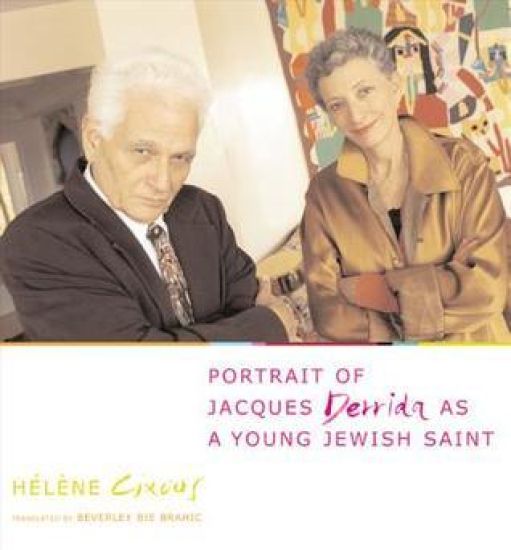
Portrait of Jacques Derrida as a Young Jewish Saint

Portrait of Jacques Derrida as a Young Jewish Saint

Hélène Cixous

Columbia University Press
2005
pokkari
Who can say "I am Jewish?" What does "Jew" mean? What especially does it mean for Jacques Derrida, founder of deconstruction, scoffer at boundaries and fixed identities, explorer of the indeterminate and undecidable? In Portrait of Jacques Derrida as a Young Jewish Saint, French feminist philosopher Helene Cixous follows the intertwined threads of Jewishness and non-Jewishness that play through the life and works of one of the greatest living philosophers. Cixous is a lifelong friend of Derrida. They both grew up as French Jews in Algeria and share a "belonging constituted of exclusion and nonbelonging"-not Algerian, rejected by France, their Jewishness concealed or acculturated. In Derrida's family "one never said 'circumcision'but 'baptism,'not 'Bar Mitzvah'but 'communion.'" Judaism cloaked in Catholicism is one example of the undecidability of identity that influenced the thinker whom Cixous calls a "Jewish Saint." An intellectual contemporary of Derrida, Cixous's ideas on writing have an affinity with his philosophy of deconstruction, which sought to overturn binary oppositions-such as man/woman, or Jew/non-Jew-and blur boundaries of exclusion inherent in Western thought. In portraying Derrida, Cixous uses metonymy, alliteration, rhyme, neologisms, and puns to keep the text in constant motion, freeing language from any rigidity of meaning. In this way she writes a portrait of "Derrida in flight," slipping from one appearance to the next, unable to be fixed in one spot, yet encompassing each point he passes. From the circumcision act to family relationships, through Derrida's works to those of Celan, Rousseau, and Beaumarchais, Cixous effortlessly merges biography and textual commentary in this playful portrait of the man, his works, and being (or not being) Jewish.
Appositions of Jacques Derrida and Emmanuel Levinas

Appositions of Jacques Derrida and Emmanuel Levinas

John Llewelyn

Indiana University Press
2002
pokkari
"This is a book of scintillating intelligence, a book whose range of references, whose extraordinary ethical sensibility and linguistic creativity, set a standard for philosophy that few if any contemporary thinkers other than Derrida and Levinas themselves can match. . . . On every page, there is Llewelean sparkle." —David Wood If not simple opposition or simple juxtaposition, what is the relation between the writings to which Derrida and Levinas appose their signatures? What would each endorse in the writings of the other? What is it to sign and endorse? How does one assume responsibility, and how does one avoid assuming it? These are some of the probing questions that the prominent Continental philosopher John Llewelyn takes up in Appositions, which brings together and synthesizes 15 essays written during the past 20 years. This book by a powerfully original thinker and first-rate interpreter is essential reading for all those interested in the writings of Derrida and Levinas and in the ways in which their thinking intersects.
Who Was Jacques Derrida?

Who Was Jacques Derrida?

David Mikics

Yale University Press
2010
pokkari
Who Was Jacques Derrida? is the first intellectual biography of Derrida, the first full-scale appraisal of his career, his influence, and his philosophical roots. It is also the first attempt to define his crucial importance as the ambassador of "theory," the phenomenon that has had a profound influence on academic life in the humanities. Mikics lucidly and sensitively describes for the general reader Derrida's deep connection to his Jewish roots. He succinctly defines his vision of philosophy as a discipline that resists psychology. While pointing out the flaws of that vision and Derrida’s betrayal of his most adamantly expounded beliefs, Mikics ultimately concludes that “Derrida was neither so brilliantly right nor so badly wrong as his enthusiasts and critics, respectively, claimed."
The Cambridge Introduction to Jacques Derrida

The Cambridge Introduction to Jacques Derrida

Leslie Hill

Cambridge University Press
2007
pokkari
Few thinkers of the latter half of the twentieth century have so profoundly and radically transformed our understanding of writing and literature as Jacques Derrida (1930–2004). Derridian deconstruction remains one of the most powerful intellectual movements of the present century, and Derrida's own innovative writings on literature and philosophy are crucially relevant for any understanding of the future of literature and literary criticism today. Derrida's own manner of writing is complex and challenging and has often been misrepresented or misunderstood. In this book, Leslie Hill provides an accessible introduction to Derrida's writings on literature which presupposes no prior knowledge of Derrida's work. He explores in detail Derrida's relationship to literary theory and criticism, and offers close readings of some of Derrida's best known essays. This introduction will help those coming to Derrida's work for the first time, and suggests further directions to take in studying this hugely influential thinker.
The Cambridge Introduction to Jacques Derrida

The Cambridge Introduction to Jacques Derrida

Leslie Hill

Cambridge University Press
2007
sidottu
Few thinkers of the latter half of the twentieth century have so profoundly and radically transformed our understanding of writing and literature as Jacques Derrida (1930–2004). Derridian deconstruction remains one of the most powerful intellectual movements of the present century, and Derrida's own innovative writings on literature and philosophy are crucially relevant for any understanding of the future of literature and literary criticism today. Derrida's own manner of writing is complex and challenging and has often been misrepresented or misunderstood. In this book, Leslie Hill provides an accessible introduction to Derrida's writings on literature which presupposes no prior knowledge of Derrida's work. He explores in detail Derrida's relationship to literary theory and criticism, and offers close readings of some of Derrida's best known essays. This introduction will help those coming to Derrida's work for the first time, and suggests further directions to take in studying this hugely influential thinker.
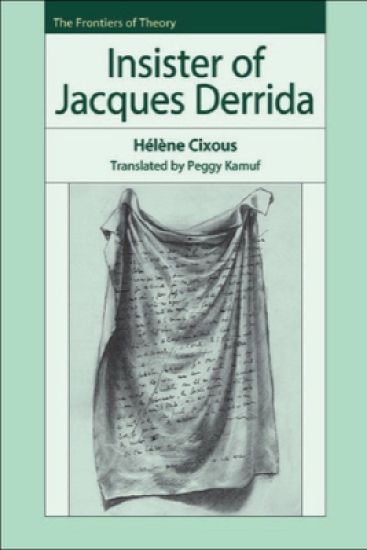
Insister of Jacques Derrida

Insister of Jacques Derrida

Helene Cixous

Edinburgh University Press
2007
sidottu
'I have often declared my admiration for Helene Cixous, for the person and for the work: immense, powerful, so multiple but unique in this century.' - Jacques Derrida 'Insister of Jacques Derrida, so expertly translated by Derrida's principal and most faithful translator, Peggy Kamuf, is an indispensable, daring, heartfelt and moving book...It presents a flawless, committed reading that is in the spirit of Derrida in its serious playfulness, its poetic sinuousness, its elegant reasoning and rhetoric while also being wholly in Cixous' own singular voice. This is not merely a study of Derrida, it is a haunting dialogue with his memory and with his phantom.' - Julian Wolfreys, Professor of Modern Literature and Culture, Loughborough University Helene Cixous is arguably the most insightful and unbridled reader of Jacques Derrida today. In Insister she brings a unique mixture of theoretical speculation, breath-taking textual explication and scholarly erudition to an extremely close reading of Derrida's work, always attentive to the details of his thinking. At the same time, Insister is an extraordinarily poetic meditation, a work of literature and of mourning for Jacques Derrida the person, who was a close friend and accomplice of Cixous's from the beginning of their careers. Insister of Jacques Derrida joins Dream I Tell You by Helene Cixous and Geneses, Genealogies, Genres and Genius by Jacques Derrida, also published in The Frontiers of Theory series.
In Memory of Jacques Derrida

In Memory of Jacques Derrida

Nicholas Royle

Edinburgh University Press
2009
sidottu
Jacques Derrida (1930-2004) was the most original and inspiring writer and philosopher of our time. In a series of distinctive essays that are at once self-contained and intricately linked, Royle explores the legacies of Derrida's thinking in the context of philosophy, language, globalisation, war, terrorism, justice, the democracy to come, poetry, literature, memory, mourning, the gift, friendship and dreams. Lucid, inventive and at times funny, Royle allows us to appreciate how much Derrida's work has altered the ways we read and think. Autobiography, children's literature, the Gothic and modernist fiction, for example, figure together with philosophy, queer studies, speech act theory and psychoanalysis. The writings of Horace Walpole, Herman Melville, E. M. Forster, Elizabeth Bowen, Joe Brainard and David McKee are illuminatingly put in play alongside Shakespeare. Royle's book suggests that one of Derrida's most profound legacies has to do with the combination of responsibility and freedom his work inspires for both reading and writing. In Memory of Jacques Derrida offers an exceptionally clear overview of Derrida's work, while also tracing directions in which it might productively be read in the future.
In Memory of Jacques Derrida

In Memory of Jacques Derrida

Nicholas Royle

Edinburgh University Press
2009
nidottu
Jacques Derrida (1930-2004) was the most original and inspiring writer and philosopher of our time. In a series of distinctive essays that are at once self-contained and intricately linked, Royle explores the legacies of Derrida's thinking in the context of philosophy, language, globalisation, war, terrorism, justice, the democracy to come, poetry, literature, memory, mourning, the gift, friendship and dreams. Lucid, inventive and at times funny, Royle allows us to appreciate how much Derrida's work has altered the ways we read and think. Autobiography, children's literature, the Gothic and modernist fiction, for example, figure together with philosophy, queer studies, speech act theory and psychoanalysis. The writings of Horace Walpole, Herman Melville, E. M. Forster, Elizabeth Bowen, Joe Brainard and David McKee are illuminatingly put in play alongside Shakespeare. Royle's book suggests that one of Derrida's most profound legacies has to do with the combination of responsibility and freedom his work inspires for both reading and writing. In Memory of Jacques Derrida offers an exceptionally clear overview of Derrida's work, while also tracing directions in which it might productively be read in the future.
The French Connections of Jacques Derrida

The French Connections of Jacques Derrida

State University of New York Press
1999
pokkari
Addresses for the first time the issue of Derrida's relation to French poetics, writing, thought, and culture.The French Connections of Jacques Derrida offers stimulating and accessible essays that address, for the first time, the issue of Derrida's relation to French poetics, writing, thought, and culture. In addition to offering considerations of Derrida through studies of such significant French authors as Mallarmé, Baudelaire, Valéry, Laporte, Ponge, Perec, Blanchot, and Barthes, the book also reassesses the development of Derrida's work in the context of structuralism, biology, and linguistics in the 1960s, and looks at the possible relationships between Derrida's writing and that of the Surrealist and Oulipa groups. Derrida is introduced as one whose work is as much poetic as it is philosophical, and who is strikingly French and yet not unproblematically so.[Contributors include Boris Belay, John Brannigan, Christopher Johnson, John P. Leavey, Jr., Ian Maclachlan, Jessica Maynard, Laurent Milesi, Ruth Robbins, Michael Syrotinski, Michael Temple, Burhan Tufail, and Julian Wolfreys.]
Insister of Jacques Derrida

Insister of Jacques Derrida

Hélène Cixous

Stanford University Press
2008
sidottu
Helene Cixous is arguably the most insightful and unbridled reader of Jacques Derrida today. In Insister, she brings a unique mixture of scholarly erudition, theoretical speculation, and breathtaking textual explication to an extremely close reading of Derrida's work. At the same time, Insister is an extraordinarily poetic meditation, a work of literature and of mourning for Jacques Derrida the person, who was a close friend and accomplice of Cixous's from the beginning of their careers. In a melodic stream-of-consciousness Cixous speaks to Derrida, to his memory and to the words he left behind. She delves into the philosophical spaces that separated them, filling them out to create new understandings, bringing Derrida's words back to life while insisting on our inability to ever truly communicate through words. "More than once we say the same words," Cixous writes, "but we do not live them in the same tone." Insister of Jacques Derrida joins Veils, the two loosely autobiographical texts of Derrida and Cixous published together by Stanford in 2001.
Insister of Jacques Derrida

Insister of Jacques Derrida

Hélène Cixous

Stanford University Press
2008
pokkari
Helene Cixous is arguably the most insightful and unbridled reader of Jacques Derrida today. In Insister, she brings a unique mixture of scholarly erudition, theoretical speculation, and breathtaking textual explication to an extremely close reading of Derrida's work. At the same time, Insister is an extraordinarily poetic meditation, a work of literature and of mourning for Jacques Derrida the person, who was a close friend and accomplice of Cixous's from the beginning of their careers. In a melodic stream-of-consciousness Cixous speaks to Derrida, to his memory and to the words he left behind. She delves into the philosophical spaces that separated them, filling them out to create new understandings, bringing Derrida's words back to life while insisting on our inability to ever truly communicate through words. "More than once we say the same words," Cixous writes, "but we do not live them in the same tone." Insister of Jacques Derrida joins Veils, the two loosely autobiographical texts of Derrida and Cixous published together by Stanford in 2001.
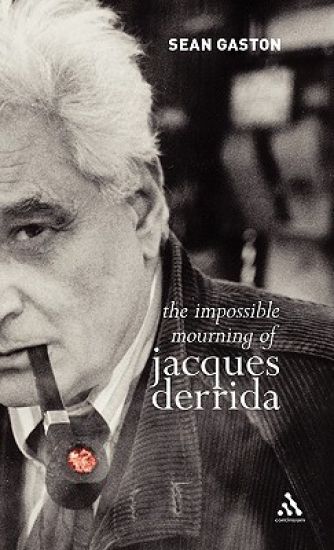
The Impossible Mourning of Jacques Derrida

The Impossible Mourning of Jacques Derrida

Sean Gaston

BLOOMSBURY PUBLISHING PLC
2006
sidottu
At the time of his death in 2004, Jacques Derrida was arguably the most influential and controversial thinker in contemporary philosophy. But how does one respond to the death of Derrida? How does one mourn for Derrida, who spent thirty years warning of the dangers of mourning, while insisting that mourning is both unavoidable and impossible? "The Impossible Mourning of Jacques Derrida" was written in the first two months after Derrida's death. In this original and engaging response, Sean Gaston re-examines his own relationship with this great thinker and traces his own mourning, while examining the very nature of mourning in Derrida's work. In exploring the gap that the death of Derrida has left open, Gaston traces the gaps (ecarts), and the history of the gap, in Derrida's work. He argues that the inescapable gaps that cannot be bridged play a central role in Derrida's thought and in our response to his death. In tracing the ecarts in Derrida's work, Gaston also takes in Plato, Hegel, Descartes, Kant, Husserl, Heidegger, Levinas and Lyotard. The book explores how, after the death of Derrida, we think of him in a history of philosophy and asserts the importance not only of literature, but also of history in Derrida's thought. Written in the immediate aftermath of Derrida's death, this insightful and touching account offers a fresh analysis of a vital element of Derrida's thought and a genuine reflection on the implications of Derrida's death for how we will now address his work.
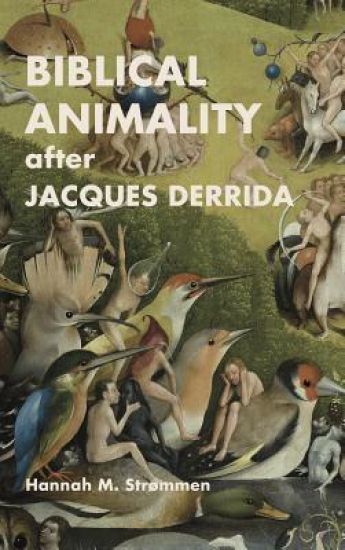
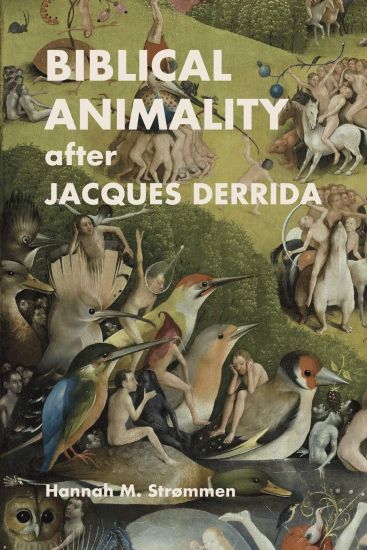
Biblical Animality after Jacques Derrida

Biblical Animality after Jacques Derrida

Hannah M Strømmen

Society of Biblical Literature
2018
sidottu
According to Genesis, humans are made in God's image but animals are not. Hannah M. Str mmen challenges this view by critiquing the boundary between humans and animals in the Bible through the work of philosopher Jacques Derrida. Building on Derrida's The Animal That Therefore I Am, Str mmen brings to light significant moments where the lines between the divine, human, and animal are ambiguous. A rich range of biblical texts are covered, from Noah as the first carnivorous man in Genesis 9 to the vision of clean and unclean animals in Acts 10 and from Daniel's political and apocalyptic animals to Revelation's beasts.
Biblical Animality after Jacques Derrida

Biblical Animality after Jacques Derrida

Hannah M Strømmen

Society of Biblical Literature
2018
pokkari
According to Genesis, humans are made in God's image but animals are not. Hannah M. Str mmen challenges this view by critiquing the boundary between humans and animals in the Bible through the work of philosopher Jacques Derrida. Building on Derrida's The Animal That Therefore I Am, Str mmen brings to light significant moments where the lines between the divine, human, and animal are ambiguous. A rich range of biblical texts are covered, from Noah as the first carnivorous man in Genesis 9 to the vision of clean and unclean animals in Acts 10 and from Daniel's political and apocalyptic animals to Revelation's beasts.
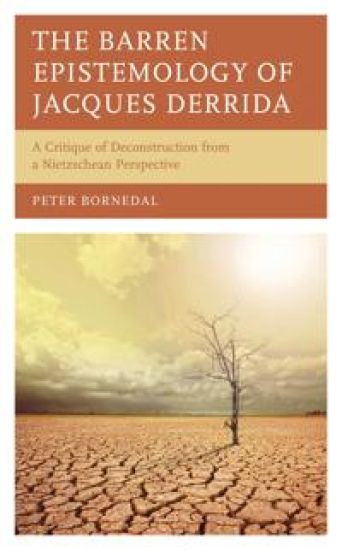
The Barren Epistemology of Jacques Derrida

The Barren Epistemology of Jacques Derrida

Peter Bornedal

BLOOMSBURY PUBLISHING PLC
2024
sidottu
This book presents a critique of Derrida from a Nietzschean perspective. Questioning the often-advertised association between Nietzsche and Derrida, it focuses instead on important differences and incompatibilities between Nietzsche’s naturalistic paradigm and Derrida’s textual paradigm. Peter Bornedal argues that Nietzsche’s position points us toward a pragmatic and constructionist epistemology based on a naturalist world-view, which was cutting-edge in his days, while Derrida’s epistemology reduces theories of knowledge to a general textualism. In short, Nietzsche is not the predecessor of deconstruction—or, generally, postmodernism—that he is often portrayed to be. His thinking does not advocate postmodernism’s suspension of truth, reason, logic, and understanding, but rather replicates the paradigms of emerging disciplines of his day, such as biology, psychology, cognitive science, and linguistics. His thinking is not playfulness for its own sake and does not defend formal transcendentalist principles such as ‘différance.’ The Barren Epistemology of Jacques Derrida: A Critique of Deconstruction from a Nietzschean Perspective argues instead that Derrida’s introduction of the supposedly novel différance-logic may be analyzed as a transcendentalist validation of logical errors often addressed in earlier Western thinking in order to be avoided, such as the contradiction in Aristotle, or the paralogism in Kant. With this critical view, the work re-examines différance-thinking and questions whether inconsistencies are manufactured rather than discovered in deconstructionist interpretation.